Door to Door service
Welcome to Holidaypac Packaging Solutions Factory!

tiger@holidaypac.com

+86 136 5233 6188
Welcome to Holidaypac Packaging Solutions Factory!
1-2 Days Free Customization
7-12 Days Production Time
12000m2+ Factory Since 2008
Door to Door service
 Custom Biodegradable Cylinder Paper Tube Packaging for Candy Chocolate and Gum | Holidaypacfactory
  Chocolate Paper Tube Packaging for Premium Confectionery Gifts | Holidaypacfactory
  Christmas Paper Tube Gift Packaging for Candles Candy and Holiday Sets | Holidaypacfactory
  Custom Handle Round Chocolate Gift Box Packaging with Cylinder Carry Style | Holidaypacfactory
 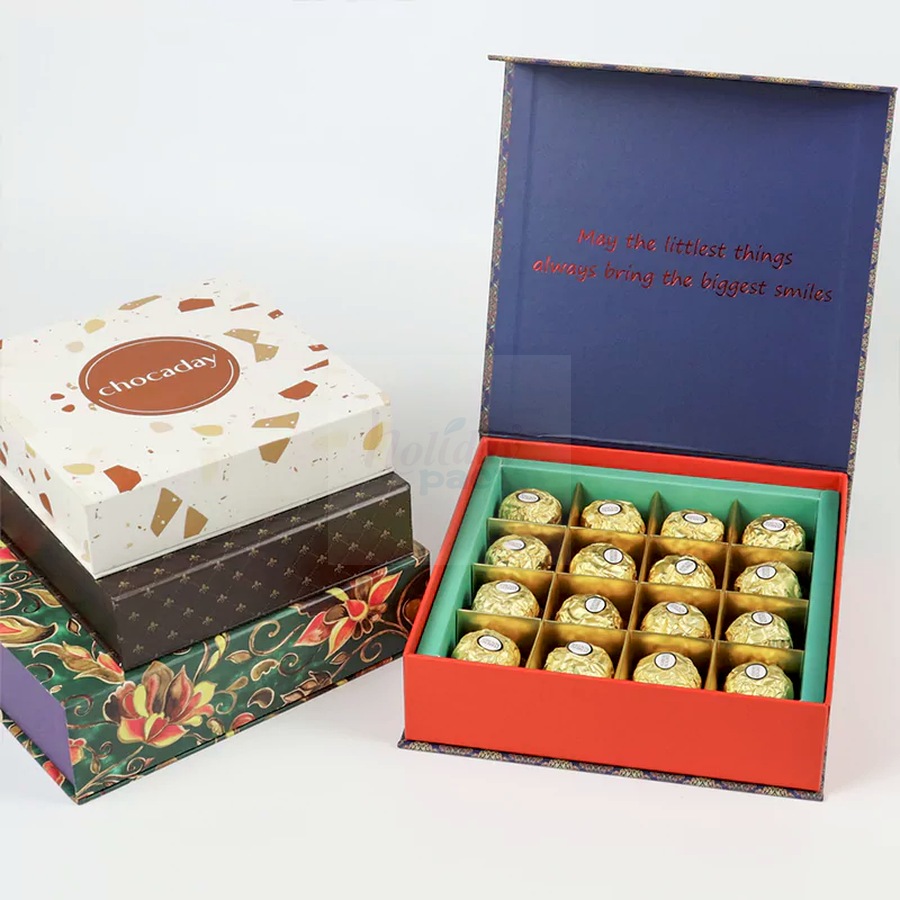 Custom Printed Chocolate Packaging Boxes for Boutique Candy Brands | Holidaypacfactory
 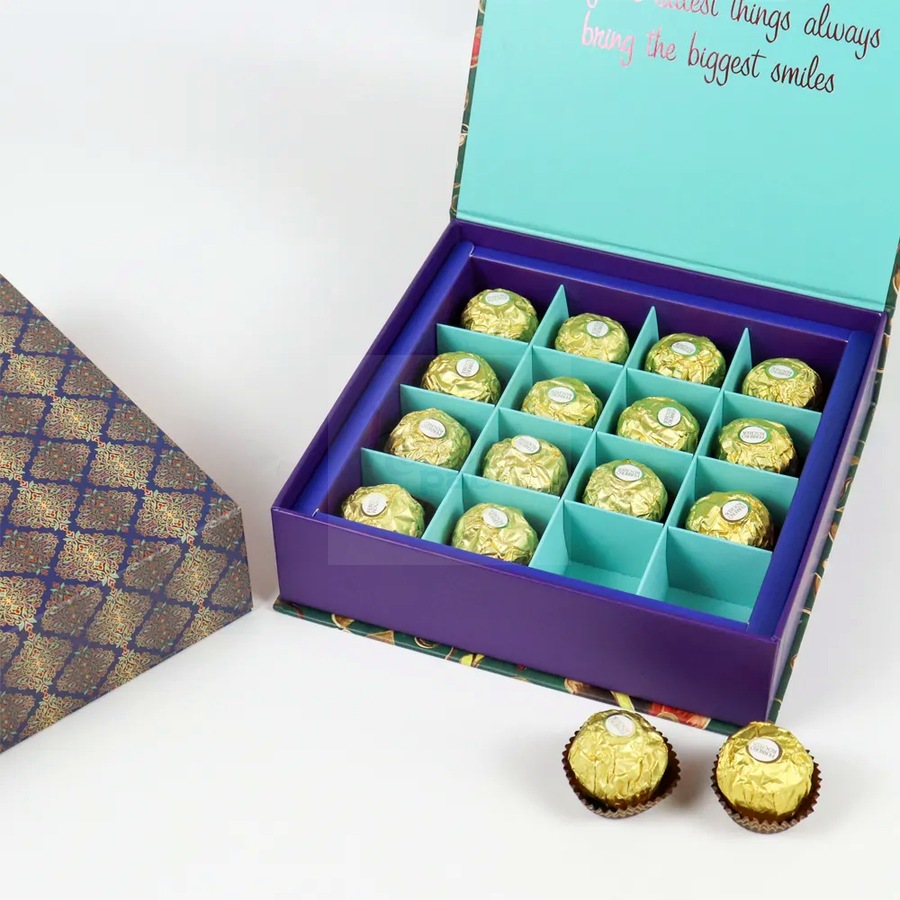 Food Grade Chocolate and Candy Box with 16 Slots Insert | Holidaypacfactory
 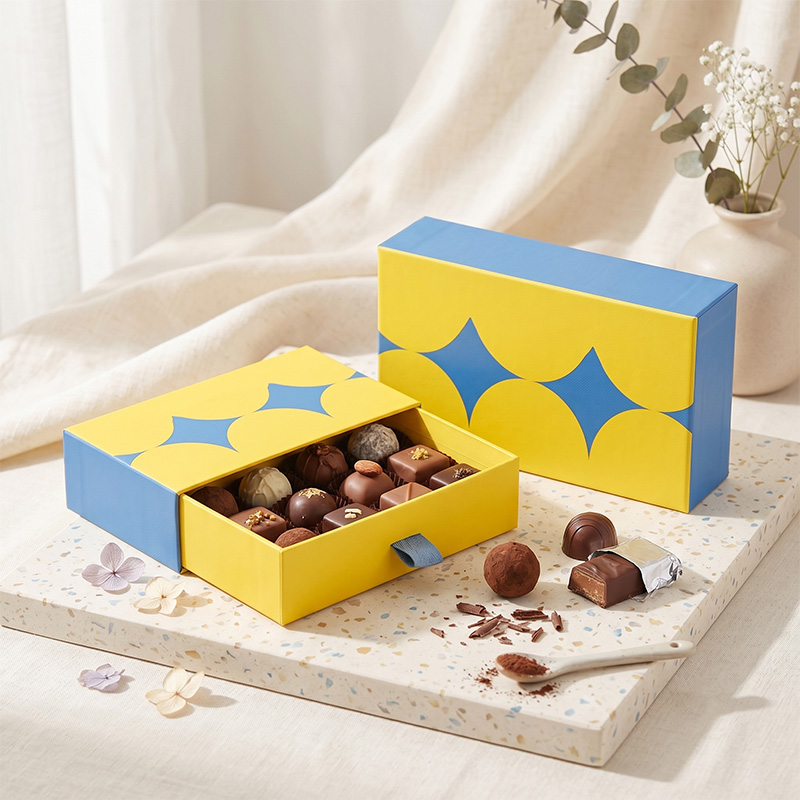 Custom Modern Drawer Style Chocolate Packaging Box with Fabric Pull Tab | Holidaypacfactory
 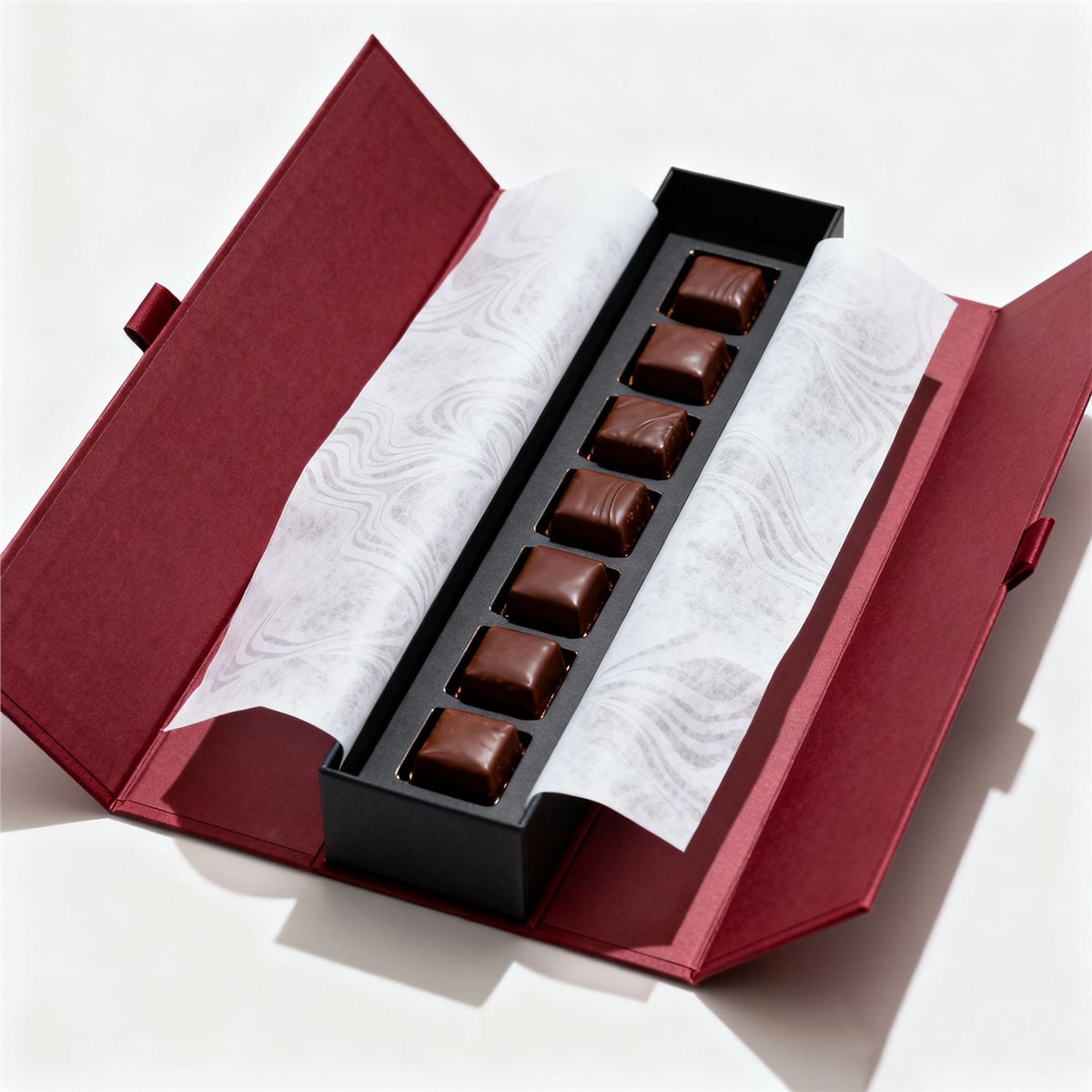 Custom Burgundy Magnetic Chocolate Gift Box with Tray Inserts | Holidaypacfactory
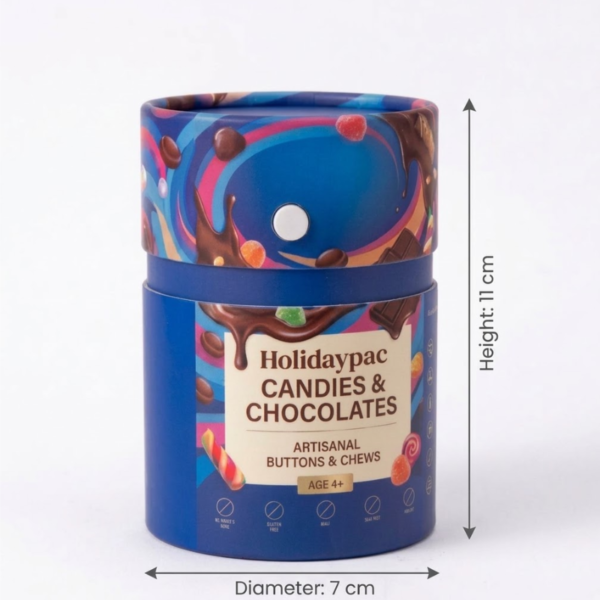
 This custom recyclable food-grade candy and chocolate paper tube packaging gives confectionery brands a compact round container with a vivid printed body, removable lid and strong shelf presence. The reference design is approximately 7 cm in diameter and 11 cm high, with final dimensions tailored to the actual candy, chocolate, gum or snack assortment.
Holidaypacfactory can adjust the tube size, board, inner liner, lid fit, full-wrap artwork, finishing and wholesale production plan for retail, gifting, seasonal campaigns and promotional programs.
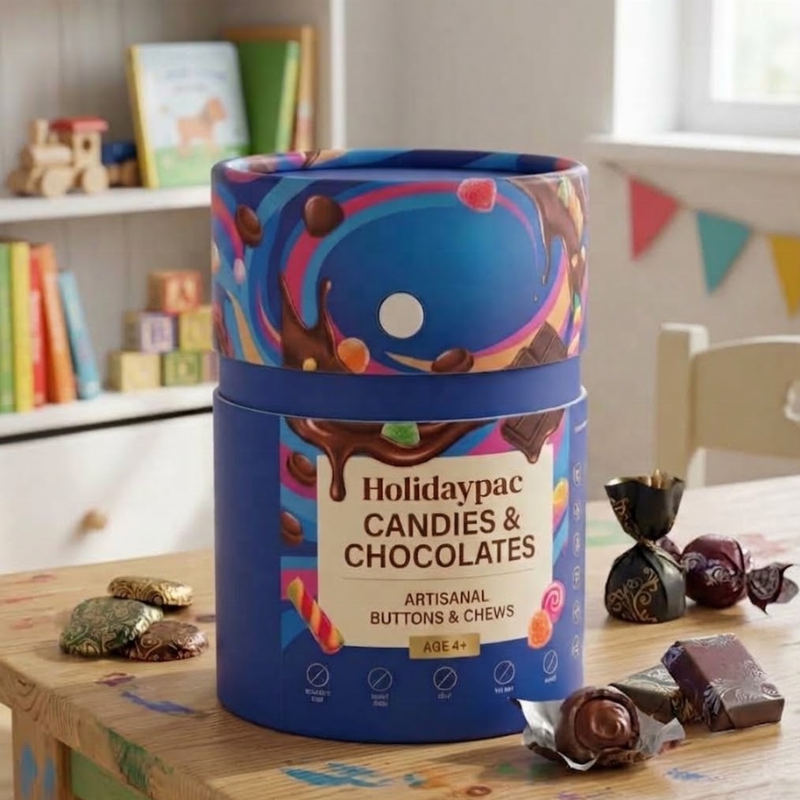
This custom recyclable food-grade candy and chocolate paper tube packaging is designed for confectionery brands that want a round format with strong shelf presence and a memorable hand feel. The printed blue cylindrical body creates a recognizable silhouette, while the removable lid keeps the contents enclosed until the recipient is ready to open the package.
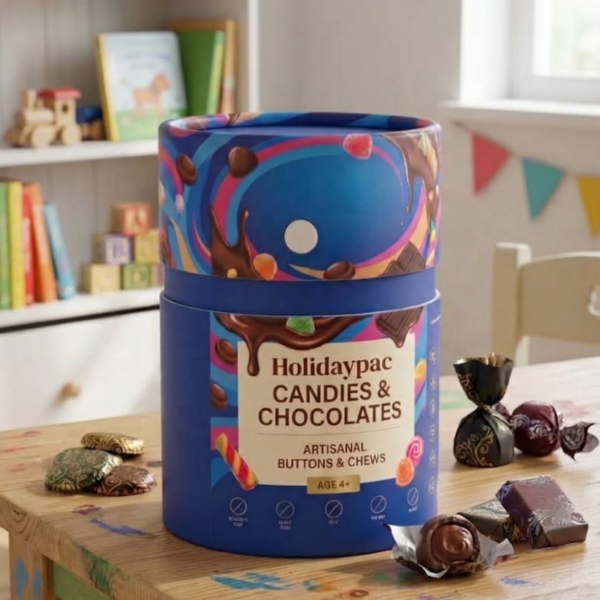
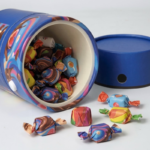
The supplied images show the tube filled with colorful wrapped sweets and chocolate pieces, displayed both in a family-friendly setting and in clean product views. That combination communicates the two jobs of the package: it needs to look attractive at the point of sale and remain practical when the customer handles, opens, stores and reuses it.
A round tube can help a candy, chocolate, gum or snack collection stand apart from conventional rectangular cartons. The curved surface provides a continuous print area for patterns, flavor cues, illustrations, claims, logos and seasonal graphics. The format can be positioned as an everyday confectionery container, a giftable snack pack or a special campaign package.
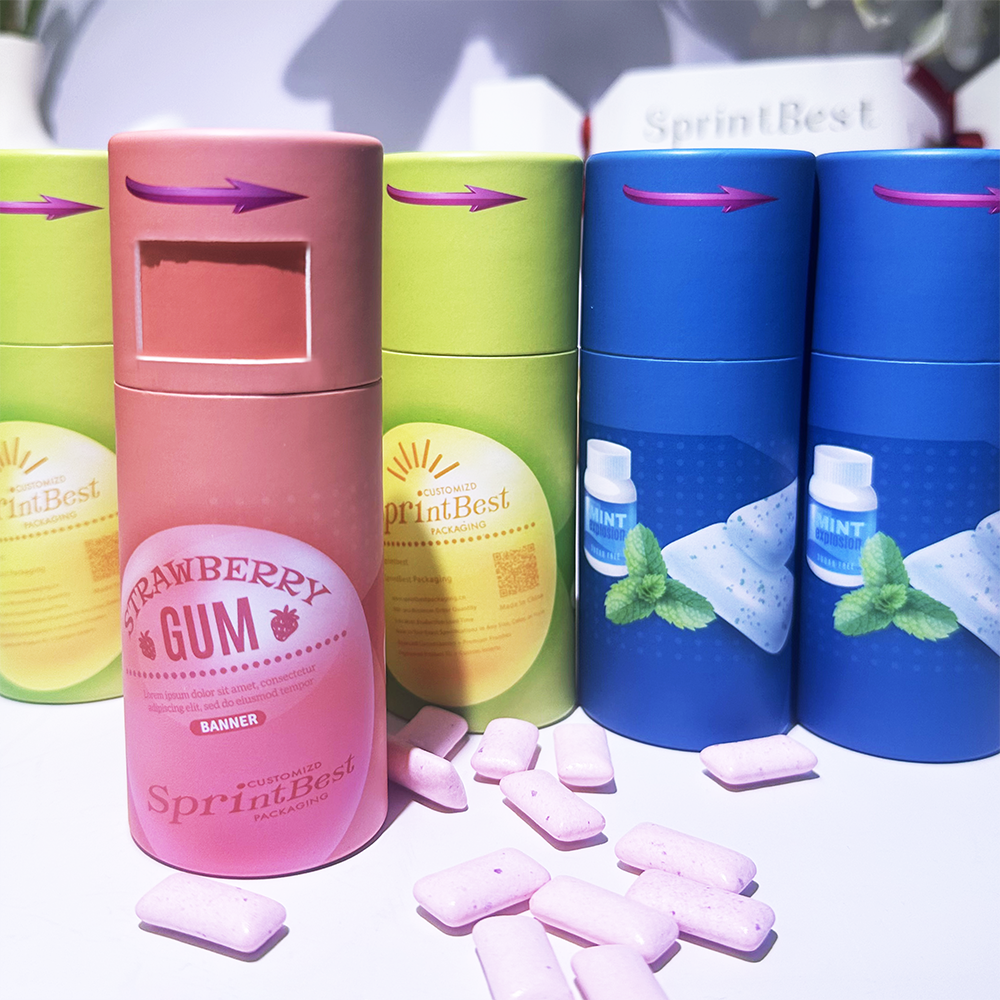
For another candy-focused cylindrical option, Custom Biodegradable Cylinder Paper Tube Packaging for Candy Chocolate and Gum offers a useful comparison. This design is a strong choice when the buyer wants a bold printed body, a fitted top and a compact round package for small treats.
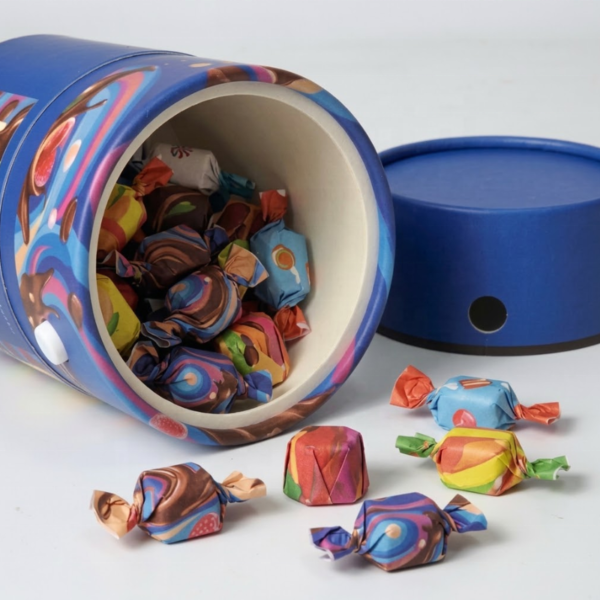
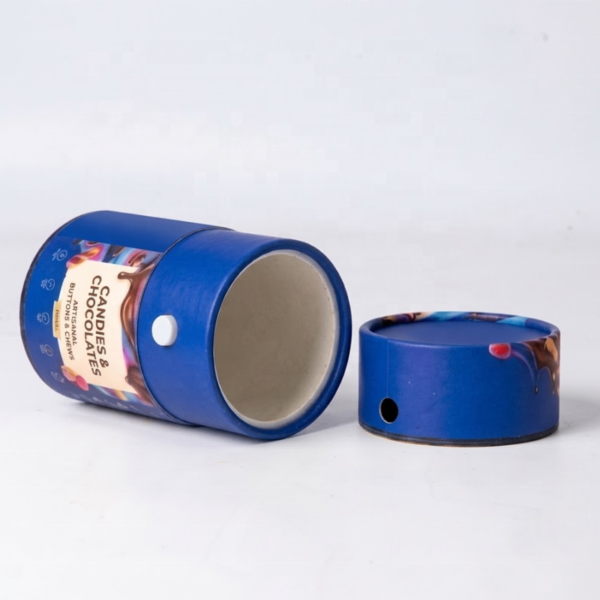
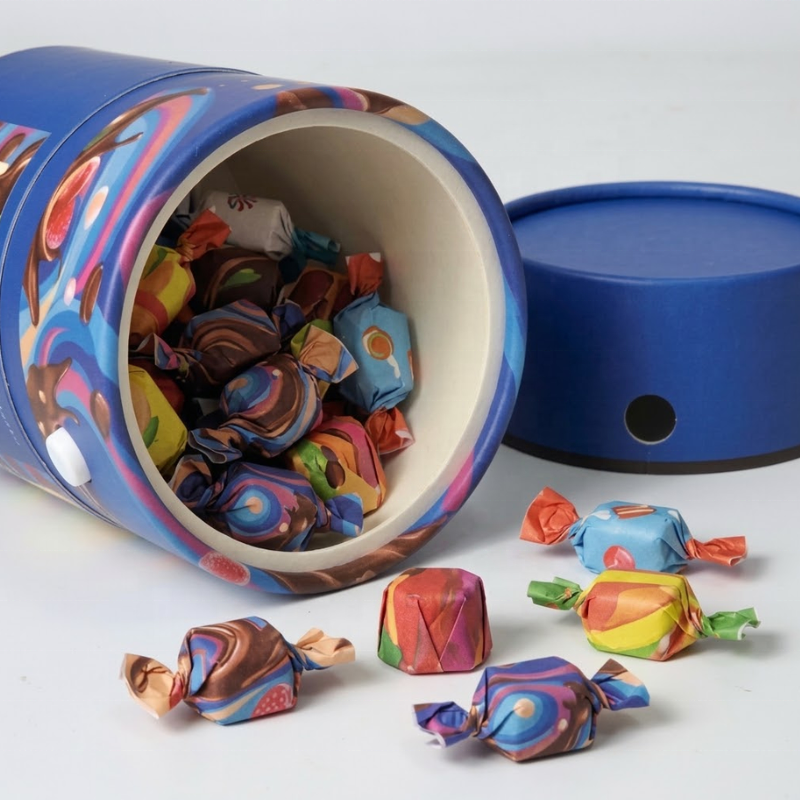
The open view shows the paper tube holding individually wrapped candies and chocolate pieces inside a clean circular cavity. The rounded wall gives the contents a natural boundary and allows the package to be filled from the top without the visual bulk of a large square carton. This makes the format suitable for assorted sweets, promotional candy, chocolate buttons, gum and small snack collections.
The internal diameter and usable height should be planned around the actual product. Individually wrapped pieces may need more room than loose chocolate buttons, while larger confectionery pieces may require a wider opening or a shallow internal support. The final capacity should be tested with the real assortment so the tube looks full without forcing the lid or leaving too much empty space.
An inner paper liner, barrier layer, paper insert or food-contact solution can be reviewed according to the product, filling method and regional requirements. For dry, wrapped sweets, the tube may focus on structure and presentation. For more sensitive products, the packaging team should evaluate the appropriate barrier and inner protection before approving a production specification.
The opening should also support efficient packing. A co-packer or production team needs to fill, inspect and close each unit consistently. A clear top opening and stable base can reduce handling time and make it easier to control the finished weight or piece count across a wholesale run.
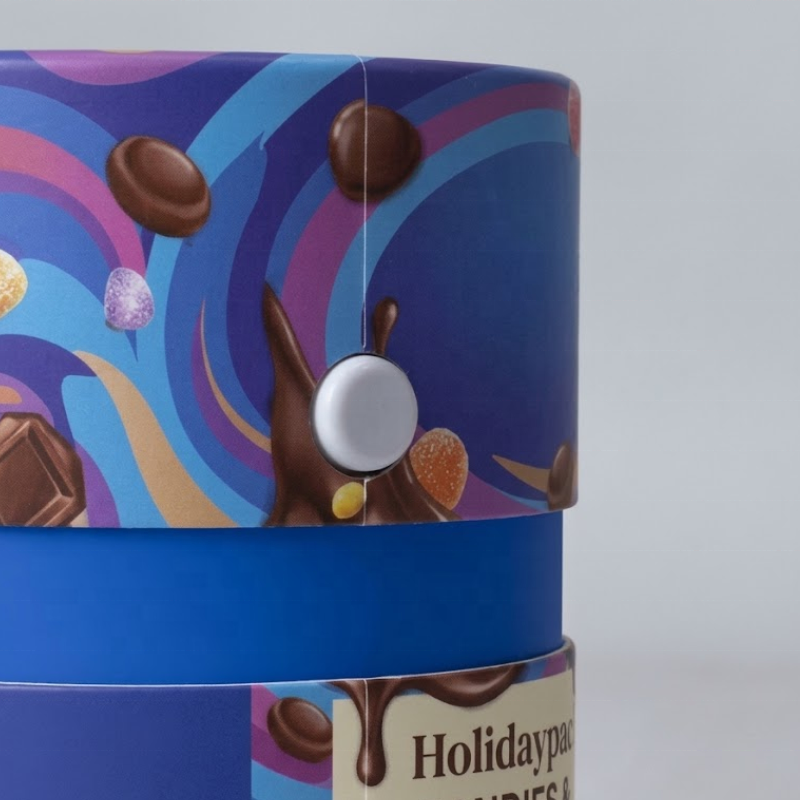
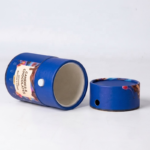
The separate-lid image shows the simple relationship between the cylindrical body and the removable top. This closure keeps the outside profile clean and gives the customer a clear opening action. It can be used for a straightforward confectionery pack, a gift tube, a promotional container or a reusable storage format after the original sweets have been enjoyed.
The lid fit should be matched to the board thickness, the internal lining and the expected handling route. It needs to stay secure during storage and delivery, while remaining comfortable for the customer to remove without damaging the printed surface. If the package will be stacked or placed inside a mailer, the closure should be tested under realistic movement and compression conditions.
A round lid also creates an additional branding surface. The top can carry a logo, flavor name, small icon, seasonal message or a continuation of the side-wall artwork. A contrasting top color can make the opening easy to identify, while a coordinated print can give the tube a more premium, seamless appearance.
The closure can be developed in a range of board and finish combinations. Buyers may choose a smooth matte surface, controlled gloss, a paper texture, spot varnish or a small foil detail depending on the product positioning. The final choice should keep the lid easy to handle and the artwork legible around the curved form.
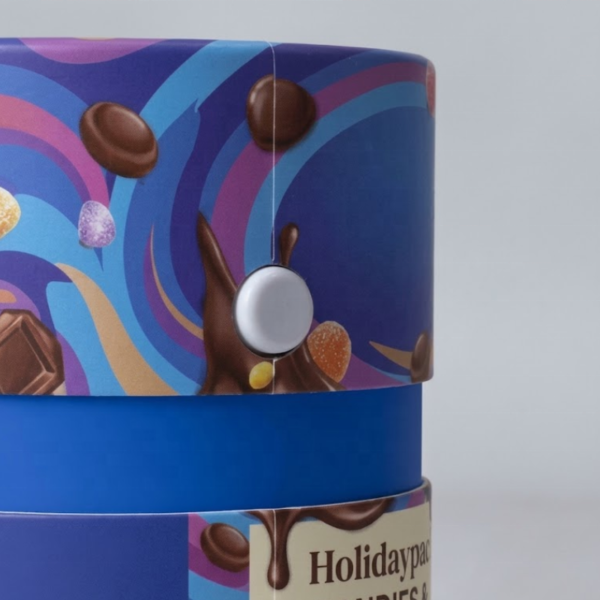
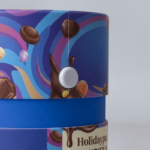
The curved outer wall gives a candy or chocolate brand more room to build a visual story. Swirling colors, chocolate drips, fruit pieces, flavor cues, playful characters and ingredient illustrations can flow around the tube instead of stopping at a single front panel. That can help the package remain recognizable from several shelf angles.
The supplied design uses a vivid blue base with multicolor candy and chocolate artwork, creating a lively family-friendly direction. The same cylindrical structure can be adapted for a premium dark chocolate line, a seasonal gift collection, a corporate promotion or a minimalist specialty confectionery brand. The artwork can be bright and playful or restrained and refined without changing the basic format.
Print planning should account for the curved seam, the lid overlap and the viewing height of the final product. Important information such as flavor, net weight, ingredients, age guidance or a brand mark should be placed where it remains readable when the tube is standing on a shelf. Repeated patterns can occupy the side area while the main label zone carries the strongest message.
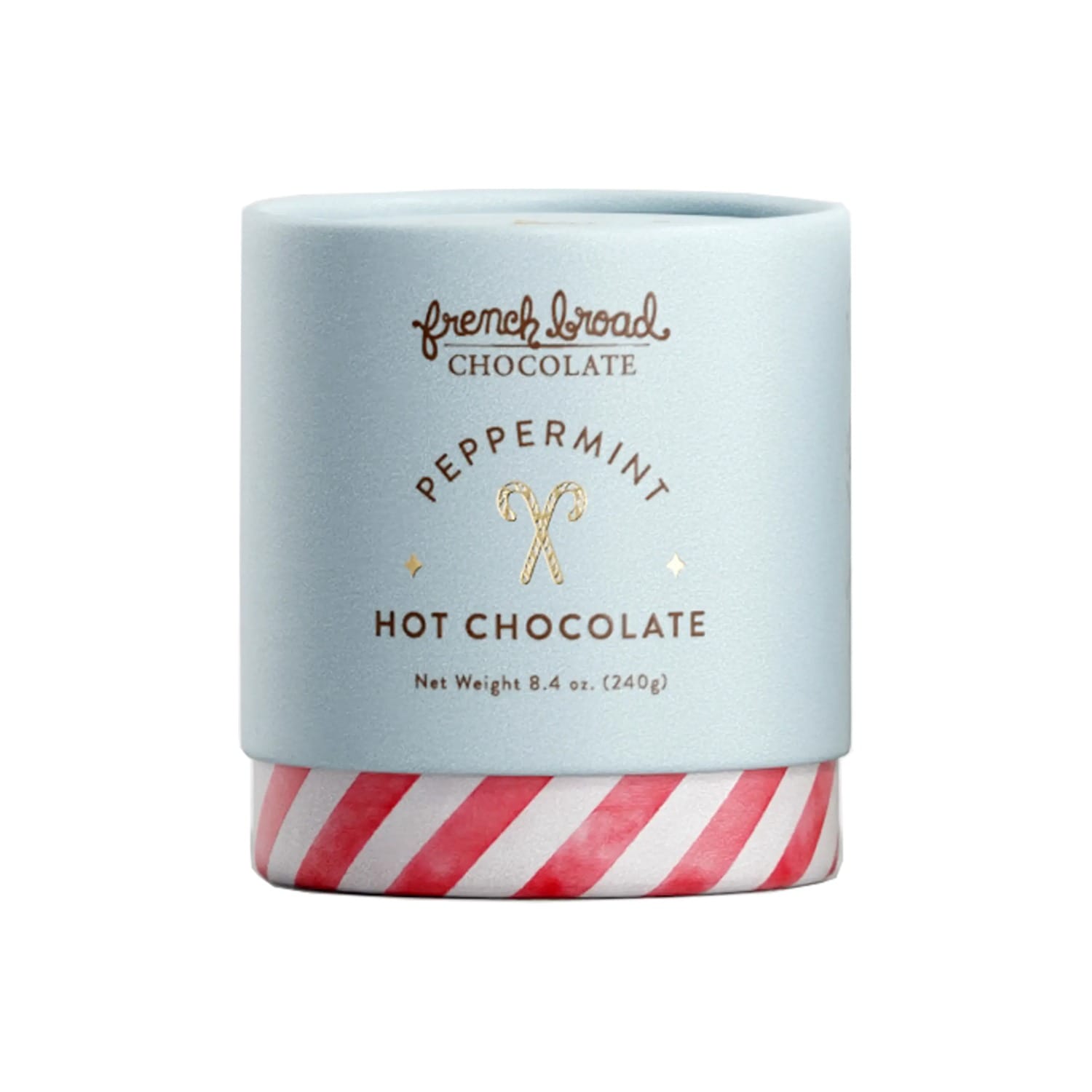
A coordinated range could pair the tube with Chocolate Paper Tube Packaging for Premium Confectionery Gifts for a more refined product family or Custom Printed Chocolate Packaging Boxes for Boutique Candy Brands when a rectangular gift format is preferred. The round tube can serve as the distinctive hero pack within that collection.
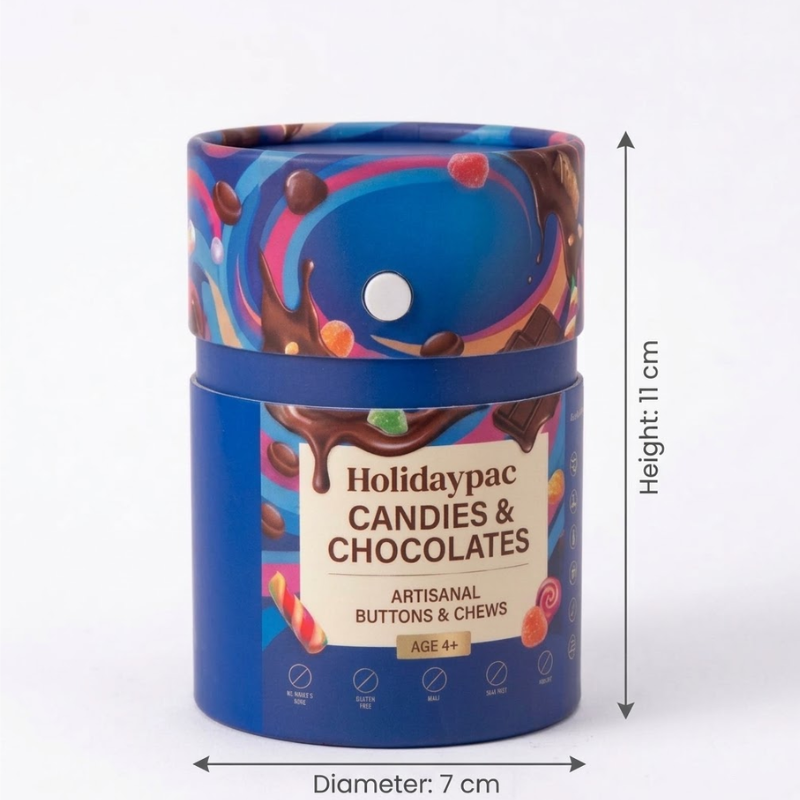
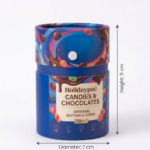
The supplied dimension image shows a reference height of approximately 11 cm and a diameter of approximately 7 cm. This compact round footprint is large enough to create a noticeable package while remaining easy to hold, display, pack into a mailer or group into a larger gift set. The reference measurements should be treated as the starting point for this design; final dimensions should follow the actual sweets and order plan.
The diameter influences more than piece count. It affects how easily a hand can reach into the opening, how the lid seats, how many units fit across an outer carton and how much front artwork is visible from a normal shelf distance. The height determines how the printed graphics read vertically and whether the container feels like a sample pack, a gift tube or a larger family-size assortment.
If the brand plans several flavors or portion sizes, the same visual system can be extended to multiple diameters and heights. A smaller tube may suit trial packs or impulse purchases, while a taller or wider version may hold a premium assortment. Consistent artwork placement and lid treatment can make the family easy to recognize across different sizes.
Before production, buyers should share the filled product dimensions, expected piece count, target weight, opening preference, display method and outer shipping requirements. A filled sample can confirm whether the reference footprint needs to be widened, shortened or adjusted for more efficient packing.
For a candy or chocolate tube, material planning should consider the product’s wrapping, moisture sensitivity, oil content, storage period and filling method. Wrapped confectionery may need a different inner approach from loose dry candy or chocolate pieces. The paper tube body provides the structure and branding surface, while the inner solution should be selected around the product and applicable requirements.
A food-grade paperboard specification can be reviewed with the required printing and finishing. The board should support a clean cylindrical shape, stable seams and a lid that fits consistently. If the tube is intended for repeated opening, the rim and closure should be checked for wear during sample handling.
The outer finish can influence both appearance and practical use. Matte lamination can reduce glare and give the blue body a softer premium feel. Gloss can make the colors look brighter and more playful. A paper texture or selective finish can add tactility, but it should not make the container difficult to grip or obscure important product information.
Buyers should confirm whether the sweets remain in individual wrappers, whether an inner bag is required, how the unit is filled and whether the package will be stored in a warm or humid environment. Those details help the packaging team propose a suitable board, inner layer, closure and carton arrangement.
This paper tube can support a wide range of candy and chocolate programs. A confectionery brand may use it for mixed sweets, buttons, chews, gum, wrapped chocolate, seasonal treats or limited-edition flavors. A retailer may use it as a compact gift item, checkout product or curated snack assortment. A corporate buyer may use the tube for branded event giveaways, holiday campaigns or customer thank-you packs.
The format is also useful for collections that need a clear flavor system. Each tube can carry a different color, pattern or lid accent while retaining the same dimensions. A customer can then recognize the product family quickly and compare flavors without the shelf looking visually disorganized.
For online sales, the tube photographs well in several states: standing closed, opened with the lid beside it, filled with wrapped sweets and grouped with multiple flavors. That gives the product team enough material to communicate both the capacity and the unboxing action without relying on a flat package diagram alone.
For a more gift-box-led confectionery presentation, buyers can compare Food Grade Chocolate and Candy Box with 16 Slots Insert or Custom Burgundy Magnetic Chocolate Gift Box with Tray Inserts. The tube remains the better fit when portability, round shape and a continuous printed body are central to the concept.
A rigid-feeling paper tube can have a second life after the original candy or chocolate has been consumed. Customers may reuse it for small accessories, craft items, desk supplies, keepsakes or additional wrapped snacks. That possibility gives the package a longer visible presence in the home and can make the purchase feel more valuable than a single-use flat carton.
The sustainability story should remain accurate and specific to the final specification. Recyclable paperboard, responsible board sourcing, a removable inner component and limited mixed materials can all be considered during development. The final claims should match the approved material and finishing combination rather than relying on a broad promise that the production details do not support.
The round shape can also help a brand reduce visual clutter. A compact tube stands neatly on a shelf and can be grouped by flavor or campaign. If the lid and body are designed for repeated use, the customer can keep the package visible instead of immediately discarding it.
Buyers should review the full construction, printing, barrier layer, adhesives and closure together when evaluating end-of-life handling. Holidaypacfactory can help compare options around the desired appearance, product protection and production quantity.
Start with the confectionery assortment. List the wrapped or unwrapped product types, average piece size, largest piece, target weight, desired fill level and whether the sweets need an inner bag or liner. These details establish the useful internal diameter and height before the artwork is finalized.
Next confirm the customer experience. Decide whether the tube should feel playful, premium, seasonal, natural, giftable or promotional. That direction helps determine the color system, lid treatment, print coverage, label hierarchy and finishing details. A clear positioning brief makes it easier to create a consistent range across flavors or campaigns.
Production planning should include the quantity, destination, sample requirement, filling method, storage period, outer carton, delivery schedule and any related pieces such as labels, sleeves, gift bags or display trays. The tube may be sold alone or as part of a larger confectionery gift set, and both routes should be considered in the sample stage.
Holidaypacfactory can then refine the diameter, height, board specification, closure fit and artwork area around the actual order. The strongest result usually comes from a focused product brief with one clear use case, rather than a tube asked to serve incompatible product sizes without a defined internal plan.
Fill the sample with the actual candy or chocolate assortment and check the usable capacity. Confirm that the product reaches the intended level, that the lid seats without pressure and that the contents do not move excessively during handling. If the package will carry a stated piece count or weight, verify the filling process with the real production method.
Open and close the lid repeatedly to assess the rim, fit and printed surface. Check whether the lid remains secure when the tube is carried, placed on a shelf or packed in an outer carton. Review the seam and the bottom structure as well, especially if the filled tube will be moved through a fulfillment center or shipped directly to a customer.
Inspect the artwork around the curved body. Check color consistency, seam alignment, the position of the main label, readability of small text and the relationship between the lid print and side-wall pattern. Photograph the sample under the lighting used for retail or e-commerce so the final colors are judged in a realistic setting.
Finally, test the tube inside the planned mailer, carton, gift set or display. Confirm that it stands stable, does not rub against neighboring units and can be removed without catching the lid. Once these checks pass, keep the approved dimensions, material, artwork version, filling instructions and carton plan together for efficient repeat ordering.
| Product type | Custom recyclable food-grade candy and chocolate paper tube packaging |
|---|---|
| Reference size | Approximately 7 cm diameter x 11 cm height shown; final dimensions customized |
| Structure | Round cylindrical paper tube body with removable fitted lid |
| Best uses | Candy, chocolate, gum, chews, wrapped sweets, snack assortments and gift programs |
| Material options | Food-grade paperboard, rigid paper tube board, inner liner and suitable protective components |
| Print direction | Full-wrap custom artwork, flavor graphics, logos, claims, seasonal patterns and labels |
| Finish options | Matte lamination, gloss lamination, varnish, paper texture, foil detail and custom color matching |
| Closure | Removable round lid with fit and rim adjusted around board thickness and filling method |
| Interior planning | Diameter, usable height, liner, inner bag, fill level and product protection can be reviewed |
| Buyer types | Candy brands, chocolate makers, retailers, gift companies, agencies and event programs |
| Order planning | Share product dimensions, target fill, quantity, artwork, material preference and destination |
Yes. The diameter and height can be adjusted around the candy or chocolate assortment, target fill and display plan.
The supplied dimension image shows approximately 7 cm diameter and 11 cm height. Final dimensions should be confirmed with the filled product.
Yes. It can be planned for wrapped chocolate, candy, gum, chews and other suitable dry confectionery products.
Yes. The cylindrical body, lid and label areas can carry custom colors, logos, flavor artwork, seasonal graphics and messages.
An inner liner, bag or other protective component can be reviewed according to the product, storage conditions and applicable requirements.
Yes. The round format is suitable for retail gifts, seasonal collections, branded giveaways, event packs and discovery assortments.
Share the product dimensions, target weight or piece count, desired fill level, quantity, artwork direction, destination and sample needs.

 Cassie LamFounder, HolidayPac · Online now
Packaging specialists for custom boxes, displays, bags and seasonal programs.
Leave your request anytime. Our sales team will reply with pricing, samples and production details.
Leave your request anytime. Our sales team will reply with pricing, samples and production details.
Tell us what you're packaging and we'll ship a physical sample plus a free 3D mockup within 24 hours — no cost, no obligation.
We've received your inquiry and our team will get back to you within 24 hours.