

By Cassie Lan, Founder of Holidaypac | Published: May 2026 | Reading time: 12 minutes
TL;DR — Sushi push pop tubes are everywhere on social media, but most factory options cut corners on materials, structural design, and food-safety certification. This guide compares Holidaypac sushi tubes against generic alternatives across five critical components, so you can buy with confidence in 2026.
Introduction: The Sushi Tube Boom and Why Quality Matters More Than Ever
If you’ve spent any time on TikTok, Instagram Reels, or YouTube Shorts in the last two years, you’ve almost certainly seen them — those colorful, cylindrical sushi push pop tubes that let you push a perfectly stacked column of sushi rice, salmon, avocado, and tobiko straight up into your mouth. What started as a viral food trend has rapidly evolved into a real product category, with restaurants, catering companies, meal-prep brands, food trucks, and home-party hosts all looking for reliable wholesale suppliers.
As the founder of Holidaypac, I’ve watched this category grow from a curiosity into a genuine packaging segment in less than 24 months. And in that time, I’ve also watched something else happen — a flood of cheap, poorly-made sushi tubes hit the market, sold by factories that cut corners on materials, food-safety compliance, and structural design. For buyers who don’t know what to look for, the result can be disastrous: leaking sauce, collapsed tubes, paper fragments stuck to the rice, broken caps in transit, and unhappy customers leaving one-star reviews.
This blog is the guide I wish every wholesale buyer, restaurant owner, brand founder, and procurement manager had access to before placing their first order. I’ll walk you through a side-by-side comparison of every component of a sushi push pop tube — the paper tube, the PP sauce tube, the white PP inner tray, the ABS bottom cap, and food-safety certification — and show you exactly what separates a premium Holidaypac tube from the generic alternatives flooding Alibaba and other marketplaces.
If you’re sourcing sushi tubes for the first time, or if you’ve been burned by a previous supplier and you’re looking to upgrade, this is for you.
Why This Comparison Matters: The Hidden Costs of “Cheap”
Before we dive into the components, let me share something I’ve learned from talking with hundreds of buyers over the past two years. The cheapest tube on a quote sheet is almost never the cheapest tube once it reaches your customers.
Here’s why. A poorly made sushi tube creates downstream costs that don’t show up on the invoice:
- A leaking sauce tube ruins the presentation and may even contaminate the cardboard, which means the entire unit has to be thrown out.
- A cap that breaks during shipping means returns, refunds, and replacement costs.
- Recycled or non-food-grade paper raises real food safety concerns that can expose your business to liability — especially in markets like the EU, the US, the UK, Australia, and Japan, where food contact regulations are strictly enforced.
- A tube that won’t stand upright on a shelf can’t be merchandised properly.
- A glossy, fingerprint-covered cap looks cheap on Instagram, which kills the very social-media virality that’s driving demand for this product in the first place.
In other words, the sushi push pop is a product where every detail matters. Customers buy with their eyes first, then with their hands, and finally with their mouth. If any of those three experiences disappoint, the product fails — no matter how attractive the unit price was.
With that context, let’s walk through the five key comparisons.
1. Paper Tube Comparison: Food-Grade White Cardboard vs. Recycled Paper
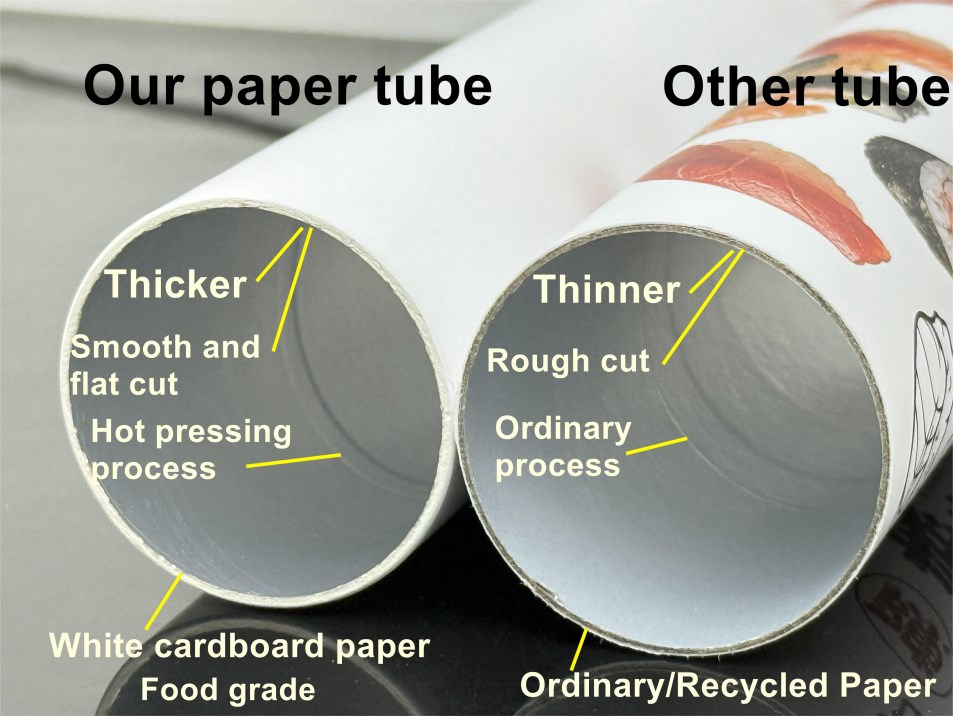
The outer paper tube is the most visible part of the product, and it’s also the part that comes into the most direct contact with the rice. Getting this wrong is not just a cosmetic problem — it’s a food-safety problem.
What Holidaypac Does
Our paper tubes are made from food-grade white cardboard with a noticeably thicker wall than what you’ll find in most generic alternatives. This thicker wall is not just about durability; it’s about preventing the deformation and collapse that happens when a thinner tube absorbs even a small amount of moisture from the rice or the surrounding refrigeration environment.
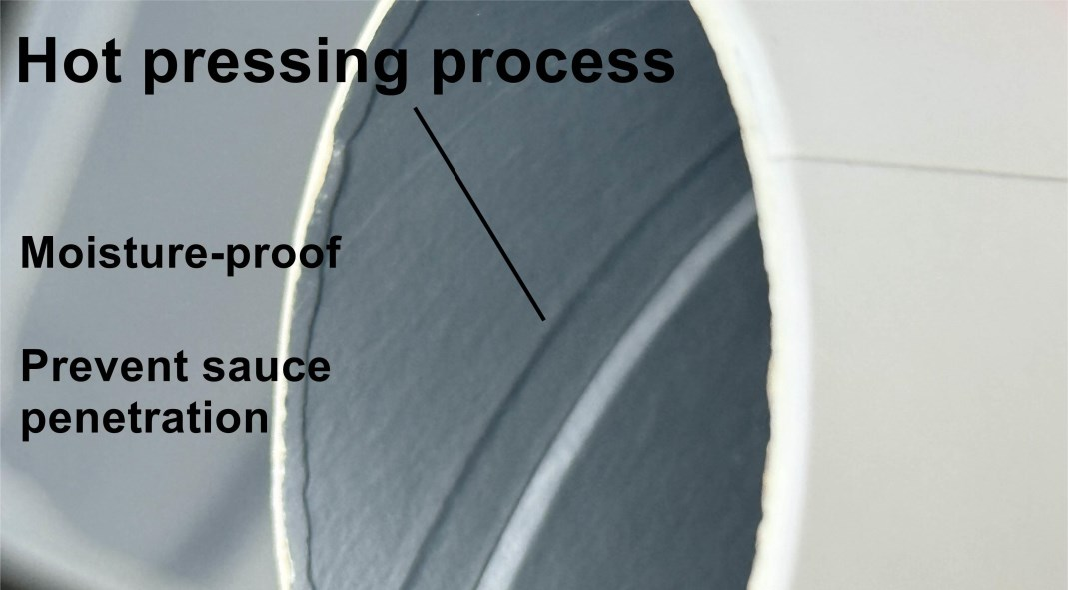
Inside the tube, we apply a food-grade aluminum foil lining using a hot-pressing process. The hot-pressing step is the part most factories skip, because it requires more expensive equipment and adds time to production. But it’s critical: hot-pressing tightly bonds the aluminum foil to the inner cardboard wall, eliminating air gaps where moisture can collect and creating a true barrier against sauce penetration. Without hot-pressing, the foil is essentially just sitting loosely against the cardboard, and any moisture or oil from the sushi will eventually find its way through.
Finally, our cut edges are smooth and flat, with no burrs and no paper scraps. This sounds like a small thing, but it matters enormously in practice. When a tube has rough cuts, tiny paper fibers and scraps end up sticking to the rice. Customers notice. They don’t always know what they’re looking at, but they know something is wrong, and that “something is wrong” feeling is the death of repeat business.
What Other Factories Do
The generic alternatives use ordinary or recycled paper, which carries real food-safety risks because recycled paper can contain inks, adhesives, and contaminants from its previous life. The walls are thinner, so the tubes deform or collapse — especially in humid environments or refrigerated display cases. The aluminum foil, when present at all, is lower quality and is applied without hot-pressing, which means poor sealing and inadequate moisture resistance. The cuts are rough, leaving paper scraps that end up on the food.
Why It Matters for Your Business
If you’re selling to consumers, the paper tube is the first thing they touch, see, and feel. A premium tube communicates a premium product. A flimsy, off-white, slightly buckled tube communicates the opposite — and no amount of marketing can fix that first impression.
2. PP Sauce Tube Comparison: 10.5g Thickened Design vs. 5.9g Thin Plastic
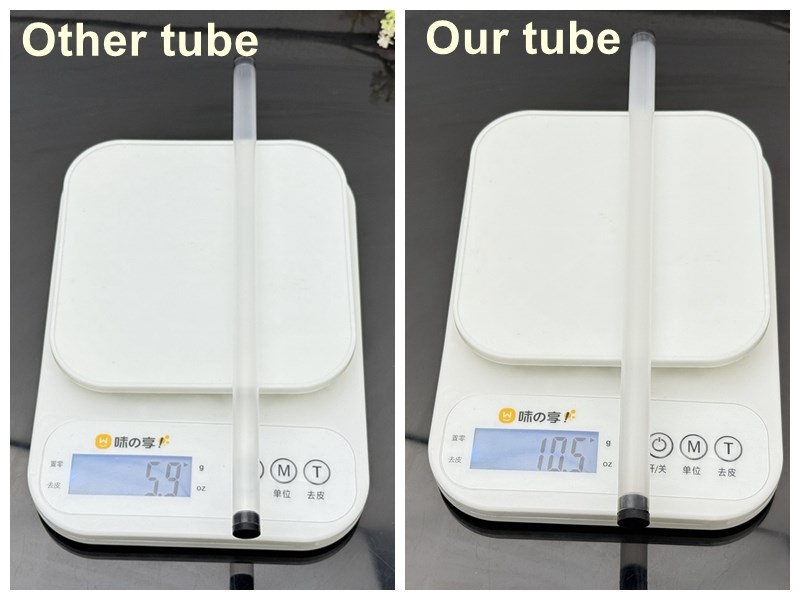
The PP sauce tube is the inner column that holds the soy sauce or specialty sauce, and it’s also the structural backbone that the sushi sits on top of. When a customer pushes the sushi up, the force travels through this tube. If it flexes, cracks, or breaks, the whole product fails.
What Holidaypac Does
Our PP sauce tube weighs 10.5 grams, almost double the weight of generic alternatives. This isn’t excess material for the sake of it — it’s a deliberately thickened design that provides the hardness and pressure resistance needed to push out heavy, sauce-laden sushi smoothly and without flex. Under load, our tube stays rigid. It doesn’t soften, doesn’t deform, and doesn’t crack.
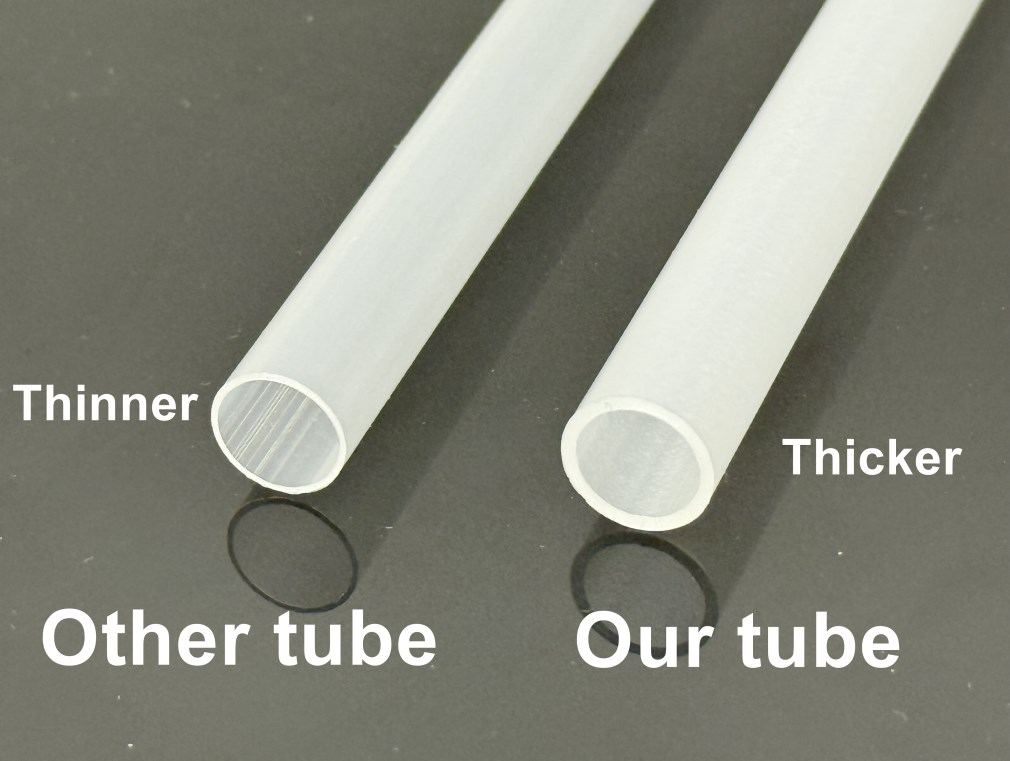
The diameter is also larger, giving the tube an internal capacity of approximately 20 ml. We arrived at this number through multiple rounds of testing — it’s the optimal capacity to perfectly match the sushi tube height, providing enough sauce for the entire serving without leaving wasted empty space at the top.
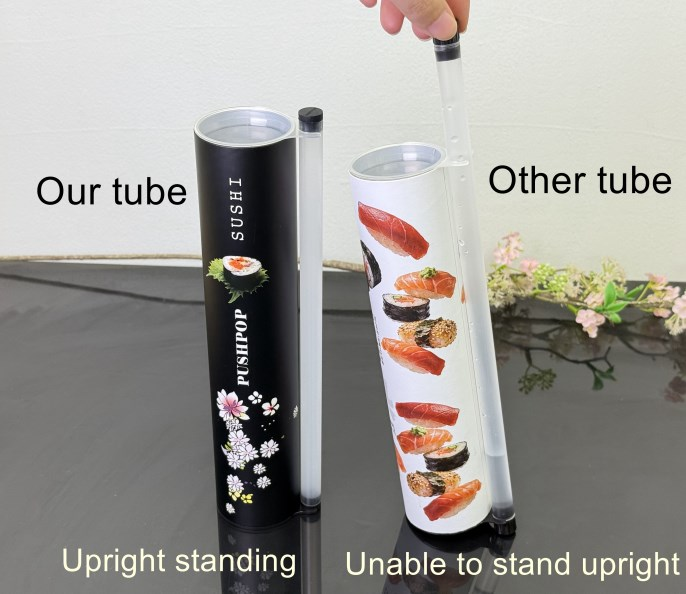
The lid is made from food-grade silicone and sits flush with the paper tube, which means the entire unit can stand upright on a shelf, in a display case, in a refrigerator, or on a dining table. This stand-upright capability is genuinely important for retail merchandising — it lets you display the product vertically, which dramatically increases shelf appeal and makes the product more photogenic for social media sharing.
What Other Factories Do
The generic sauce tube weighs only 5.9 grams — almost half. That weight difference translates directly into structural weakness. Under the pressure of pushing sushi, these thinner tubes flex, soften, and sometimes crack outright, leading to sauce leakage that ruins the entire eating experience. The capacity isn’t optimized for the tube height, so you end up with mismatched proportions. And the lid sits unevenly, meaning the unit cannot stand upright — a small detail with big merchandising consequences.
Why It Matters for Your Business
The sauce tube is where most cheap sushi push pops fail in the customer’s hand. The customer pushes, the tube flexes, sauce leaks out, and the moment is ruined. If your business depends on customers sharing their experience on social media — and in this category, almost every business does — a sauce tube failure is catastrophic. It turns a viral moment into a complaint post.
3. White PP Inner Tray Comparison: Funnel Structure vs. Flat Cup
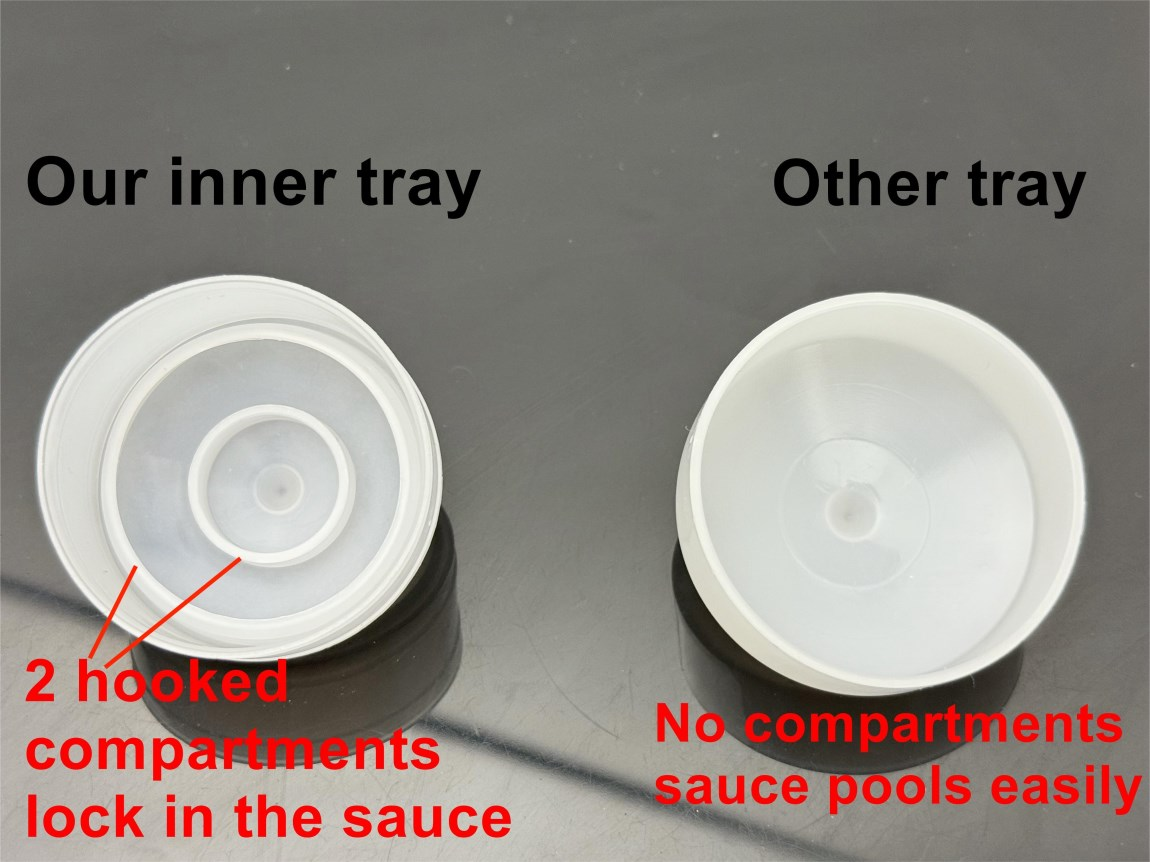
The white PP inner tray is the small cup that sits inside the tube and creates the actual platform for the rice. It’s also the component responsible for managing excess soy sauce — the sauce that drips off the sushi as it’s being eaten.
What Holidaypac Does
Our inner tray is engineered with a funnel-shaped structure plus two built-in compartments and a hooked edge. This design does three things simultaneously:
- The funnel shape directs excess sauce inward instead of letting it pool around the edges where it would leak out.
- The two compartments capture and lock in the sauce so it doesn’t slosh around as the customer holds the tube.
- The hooked edge creates a physical barrier that further prevents leakage at the rim.
The capacity is 10 ml, which sounds small until you realize it’s enough additional space to accommodate one more sushi roll than the generic alternative. Over the course of a 10,000-unit order, that’s a meaningful difference in product value.
The bottom of the tray is frosted, which provides anti-slip grip. When the customer holds the tube and tilts it, the rice column doesn’t slip downward — it stays where it should. This sounds like a tiny detail, but it’s the difference between a tube that feels engineered and a tube that feels cheap.
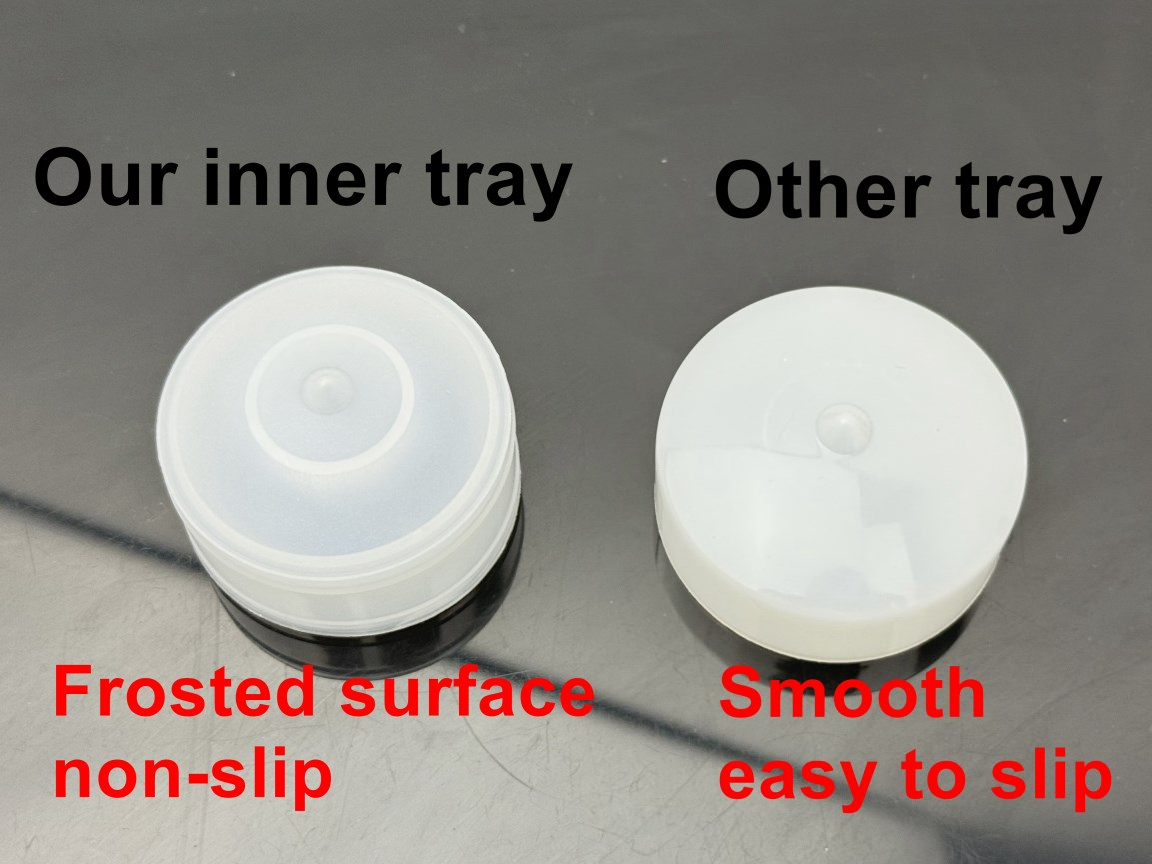
What Other Factories Do
The generic tray has no anti-leak structure, no compartments, and a smooth bottom. Sauce pools at the edges, leaks out, and the rice column slips around inside the tube. Space utilization is poor, and the overall experience is sloppy.
Why It Matters for Your Business
This component is invisible to most buyers when they’re evaluating samples — but it’s the component that customers actually interact with when they eat. The tray’s job is to make the eating experience clean, neat, and satisfying. When it fails, it fails in the customer’s lap. Literally.
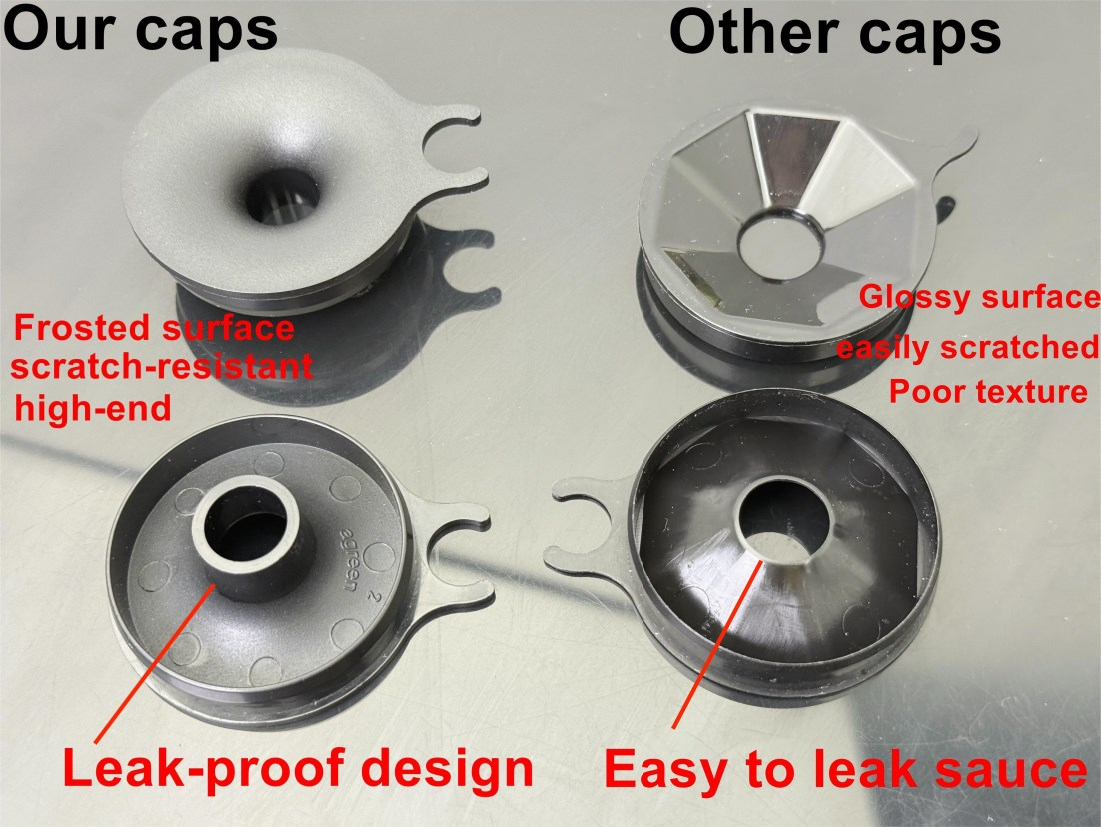
4. ABS Black Bottom Cap Comparison: 7.8g Frosted with Raised Seal vs. 3.9g Glossy Flat
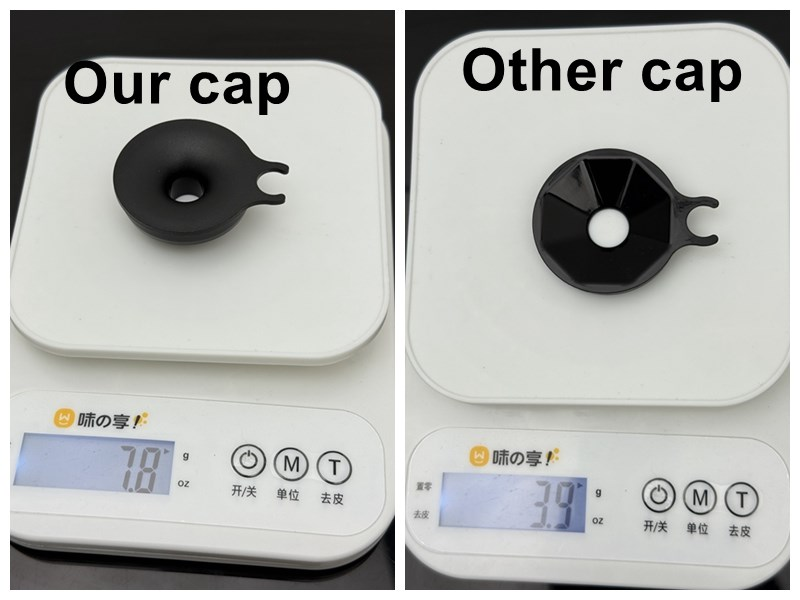
The ABS bottom cap is the part that closes off the bottom of the tube and holds the sauce tube in place. It also takes the most abuse during shipping, which makes it one of the most common failure points in poorly-made sushi tubes.
What Holidaypac Does
Our cap weighs 7.8 grams — twice the weight of the generic alternative — and the extra material goes specifically into reinforcing the hole that holds the sauce tube and the rim that seats against the paper tube. These are exactly the points that fail during shipping when a cap is too thin. With our thicker construction, the cap arrives intact even after long international shipping with multiple handling stages.
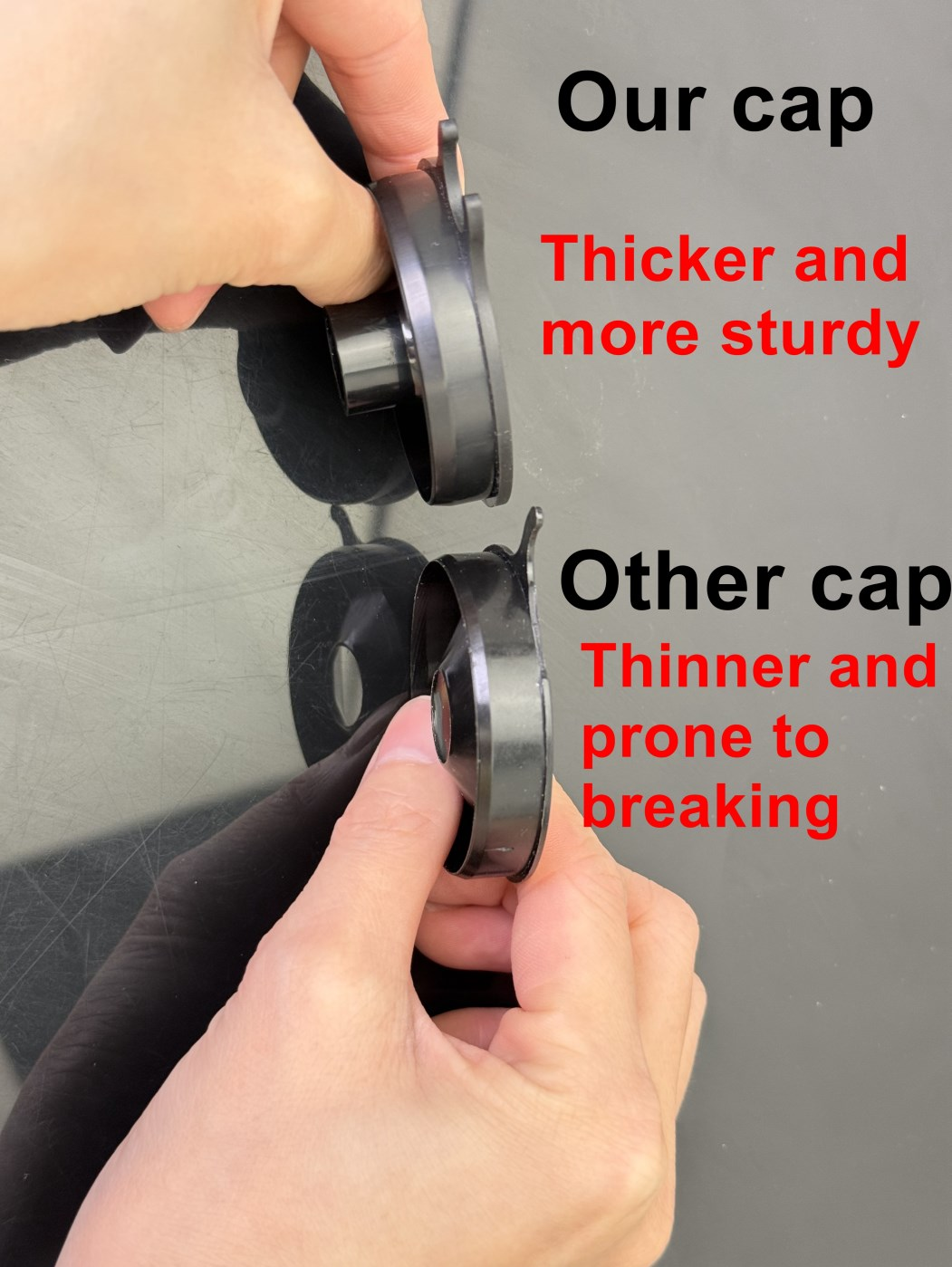
The exterior is frosted, not glossy. This is a deliberate design choice that solves three problems at once:
- Fingerprint-resistant — keeps the product looking clean throughout retail handling.
- Premium hand feel — soft-touch quality conveys premium positioning.
- Scratch-resistant — the cap still looks new after weeks on a shelf.
Inside the cap, we’ve engineered a raised structure that creates a positive seal against the sauce tube, effectively preventing soy sauce leakage even if the unit is laid on its side or jostled in transit.
What Other Factories Do
The generic cap weighs 3.9 grams. The hole around the sauce tube is the first thing to break in transit — sometimes you’ll receive entire pallets where 10 to 20 percent of the caps have hairline fractures. The exterior is glossy, which means it picks up fingerprints immediately and shows scratches after minimal handling. There’s no raised internal structure, so the seal between cap and sauce tube is poor, and sauce leakage is common.
Why It Matters for Your Business
The bottom cap is where shipping damage hides. You don’t see it until your warehouse opens the cartons and starts processing the units. By that point, the supplier is gone, the money is spent, and you’re explaining damage rates to your boss. A heavier, properly-engineered cap is a small unit-cost difference that saves you significant money on damaged inventory, returns, and customer complaints.
5. (EC) No 1935/2004 Food Safety Certification: Storage Standard vs. Single-Use Only
This is the comparison that most buyers don’t even think to ask about — and it’s arguably the most important.
What Holidaypac Does
Our products comply with the (EC) No 1935/2004 food storage testing standard, with a tested duration of 10 days of food contact. This means our tubes are certified not just for single-use serving, but for actual food storage. After a customer eats the sushi, the empty tube can be cleaned and reused as a food storage container — for snacks, dry goods, leftovers, or whatever else fits. There are no food safety risks, and the product is fully compliant with EU food contact regulations, which are among the strictest in the world.
What Other Factories Do
Most generic alternatives are tested only for single-use service, not for storage. They’re not suitable for any kind of repeated food contact, and they cannot be reused. There are documented food safety risks, especially with non-food-grade paper and lower-quality plastics that may leach chemicals over time.
Why It Matters for Your Business
If you’re selling into the EU, you legally must comply with (EC) No 1935/2004. Buyers who order from non-compliant factories often don’t realize this until customs flags a shipment or until a regulator comes knocking. Beyond the legal risk, the storage certification is also a powerful marketing point — being able to tell your customers that the tube is reusable for food storage adds genuine value to the product and supports sustainability messaging.
Summary Table: Holidaypac vs. Generic Factory Sushi Tubes
| Component | Holidaypac | Generic Factories |
|---|---|---|
| Paper Tube | Food-grade white cardboard, thick wall, hot-pressed aluminum foil lining, smooth cut | Recycled paper, thin wall, no hot-pressing, rough cut with paper scraps |
| PP Sauce Tube | 10.5g thickened, 20ml capacity, food-grade silicone lid, stands upright | 5.9g thin, unmatched capacity, uneven lid, cannot stand upright |
| PP Inner Tray | Funnel structure, 2 compartments, hooked edge, 10ml, frosted anti-slip | No anti-leak structure, no compartments, smooth slip-prone bottom |
| ABS Bottom Cap | 7.8g thick, frosted scratch-resistant, raised internal seal | 3.9g thin, glossy fingerprint-prone, no internal seal |
| Food Safety Cert | (EC) No 1935/2004, 10-day food storage tested, reusable | Single-use only, no storage certification, food safety risks |
How to Evaluate a Sushi Tube Supplier: A Practical Checklist
Whether you end up working with Holidaypac or another supplier, here are the questions every wholesale buyer should ask before placing an order:
- Ask for the actual weight of each plastic component. Weights don’t lie — if the supplier won’t provide them, that’s a red flag.
- Ask whether the aluminum foil lining is hot-pressed, and ask for video or photographic evidence of the production line.
- Ask for the specific food contact certification, the testing duration, and the certifying body. (EC) No 1935/2004 with 10-day storage testing is the gold standard.
- Ask for samples and test them yourself — fill the sauce tube, push the sushi, drop the cap, leave the unit in a warm humid environment for 48 hours, and see what happens.
- Ask about minimum order quantities, lead times, and customization options for printing and branding — a serious factory will have clear answers, while a trading company posing as a factory will hedge and delay.
Customization, MOQ, and Wholesale Ordering with Holidaypac
At Holidaypac, we work directly with brand owners, restaurants, food service distributors, and packaging wholesalers around the world. We offer full customization on the outer paper tube — including custom printing, branded artwork, multi-color logos, and matte or gloss finishes — as well as custom colors on the bottom cap and sauce tube components. Our minimum order quantities are reasonable for both established brands and growing businesses, and our lead times are typically faster than larger competitors because we control the entire production process in-house.
If you’re launching a new sushi push pop product line, we can also support you with design consultation, structural prototyping, and small-batch sample runs before you commit to full production.
Final Thoughts: Quality Is the Cheapest Marketing Strategy
I started Holidaypac because I believed that packaging should match the quality of the food it carries. Sushi is a precision food — every piece of nigiri, every roll, every garnish reflects the care of the chef who made it. The packaging that holds it deserves the same level of care.
The sushi push pop is one of the most exciting new packaging categories I’ve seen in my career. It bridges restaurant culture, social media culture, and home dining in a way that almost no other product does. But the category will only grow if buyers, brands, and consumers can trust that the products they’re buying are safe, durable, and well-made.
That’s what we build at Holidaypac. Not the cheapest tube on the market, but the tube that makes your product look, feel, and perform like the premium experience your customers are paying for.
If you’d like to request samples, get a custom quote, or talk through your project, you can reach our team directly at www.sushipushpop.net. I personally read every inquiry that comes through, and I’d be glad to help you find the right configuration for your business.
Thank you for reading, and I look forward to seeing what you build.
— Cassie Lan
Founder, Holidaypac
Frequently Asked Questions (FAQ)
Q: Can I order sushi tubes with my own brand printing?
Yes. We offer full custom printing on the outer paper tube, including multi-color artwork, logos, and finish options. Contact our team for printing specifications and minimum order quantities.
Q: Are Holidaypac sushi tubes safe for the EU market?
Yes. Our products are tested to (EC) No 1935/2004 standards with a 10-day food storage testing duration, which is the food contact standard required across the EU.
Q: Can the sushi tube be reused after the sushi is eaten?
Yes. Because our tubes are certified for food storage — not just single-use service — customers can clean and reuse them as small food storage containers.
Q: What’s the difference between the 10.5g and 5.9g sauce tubes?
The 10.5g sauce tube uses a thickened wall design that resists pressure, doesn’t deform when pushing sushi, and provides a 20ml optimized capacity. The 5.9g version is thinner, more prone to flex and cracking, and has a less optimized capacity for the tube height.
Q: Do you ship internationally?
Yes. We ship to customers in North America, Europe, the UK, Australia, Japan, the Middle East, and most other major markets. Lead times and shipping options vary by region.
Q: What is the minimum order quantity?
MOQ varies by customization level. Stock items have lower MOQs than fully custom-printed orders. Please contact us for a specific quote based on your project.
Keywords: sushi push pop tubes, sushi tube wholesale, sushi tube supplier, food-grade sushi packaging, sushi push pop manufacturer, EC 1935/2004 food contact, custom sushi tubes, sushi tube comparison, Holidaypac sushi tubes, sushipushpop.net, sushi packaging factory, viral sushi packaging, sushi tube buyer’s guide 2026