
Holidaypacfactory Buyer Guide PFAS-Free Greaseproof Paper Is Now a Buyer Trust QuestionPFAS-free greaseproof paper food packaging is moving from a nice-to-have claim into a serious sourcing question for bakery groups, takeaway chains, air fryer liner brands, frozen food sellers and foodservice distributors. Buyers are asking a practical question: can paper packaging resist oil and moisture without relying on fluorinated chemistry that may create regulatory, retailer and consumer trust risks? For many years, grease resistance was treated as a simple performance feature. If a wrap held fried food, if a bakery liner released cleanly, if a tray sheet protected the carton, the job seemed done. In 2026, the conversation is different. Buyers want to know what creates that barrier, what documentation supports the claim, how the paper performs in real food use, and whether the packaging story can stand up to stricter sustainability and food-contact expectations. |

This matters because food packaging is usually judged twice. First, the customer judges it emotionally: does the wrap feel clean, natural, safe and brand-worthy? Second, the buyer judges it operationally: does it resist grease, ship efficiently, print well, meet compliance needs and protect the food experience? A PFAS-free greaseproof paper solution has to satisfy both views.
Holidaypacfactory approaches this topic through practical export packaging experience and HolidayPac’s cultural belief: Born from nature and return to nature. Under the guidance of Cassie Lam, Founder of HolidayPac, paper is not only an industrial substrate. It is simple, ancient, useful and close to nature. The goal is not to make empty environmental claims, but to help buyers ask sharper questions, choose suitable structures and create packaging that carries function, culture and responsibility together.
Start With the Food Use, Then Choose the Paper Format
PFAS-free greaseproof paper food packaging works best when the material is selected for a specific food use. These Holidaypacfactory links help buyers compare liners, parchment paper, bakery packaging, food boxes, paper bags and other paper-based formats before confirming the right structure.
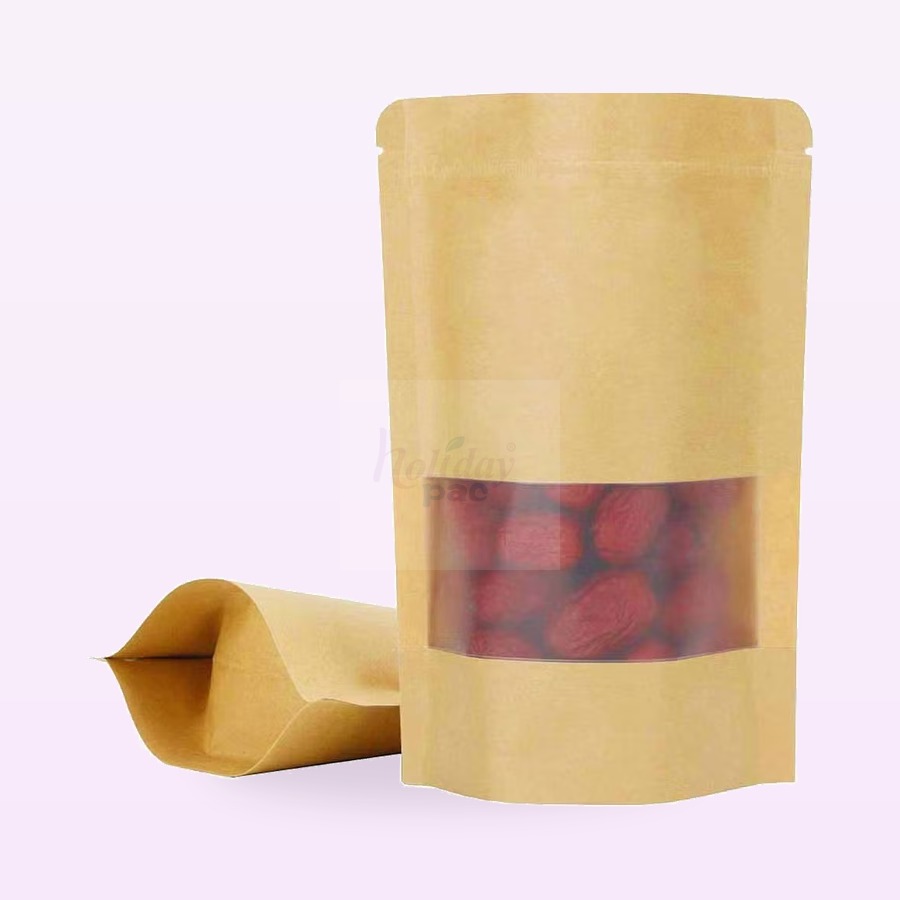
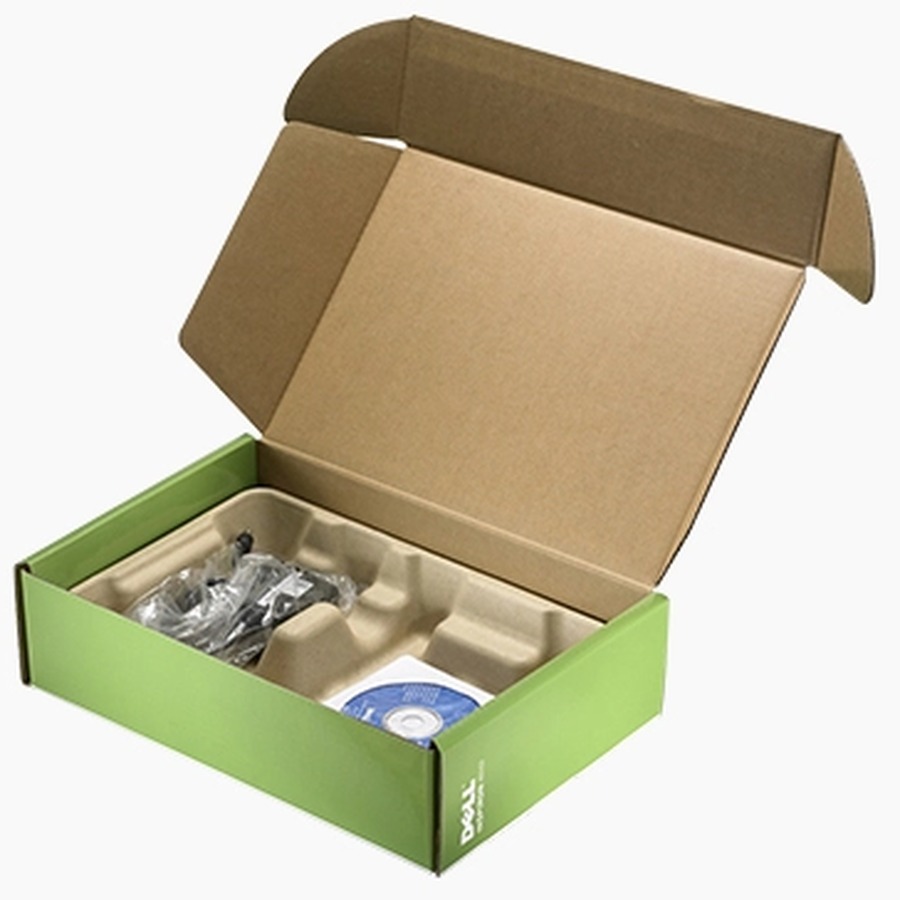
regulation and retail pressure Why PFAS-Free Food Packaging Is a 2026 Sourcing PriorityPFAS-free sourcing is becoming a practical buyer requirement because law, retailer policy and consumer trust are moving in the same direction. The PFAS-free packaging trend is not coming from one single rule. It comes from a convergence of pressure. The EU’s Packaging and Packaging Waste Regulation has placed stronger attention on substances of concern in food-contact packaging, including a restriction signal for PFAS in food-contact packaging above defined thresholds. In the United States, several states have already moved against intentionally added PFAS in food packaging. Retailers and restaurant groups are also tightening their own material policies because they do not want packaging risk to become a brand problem. For buyers, the important point is not to memorize every legal detail. The smarter approach is to build a sourcing system that is ready for stricter questions. If a supermarket buyer, foodservice chain or private-label customer asks whether a liner, wrap, tray sheet or bakery cup is PFAS-free, the supplier should be able to discuss material choice, intended use, grease resistance method, available documents and sample testing logic. |

This is especially important for categories where greaseproof performance is visible to the consumer. A burger wrap that stains too quickly, a bakery liner that sticks, an air fryer liner that curls badly, or a takeaway box insert that fails under oil can damage trust. But a vague PFAS-free claim without performance proof is also weak. Buyers need both: safer material direction and reliable food-use behavior.
Holidaypacfactory does not treat PFAS-free as a slogan. It is a buyer conversation that connects regulation awareness, paper selection, food-contact use, printing needs and export documentation. The best projects begin with the food, not with the claim. Oil level, temperature, contact time, moisture, storage and serving method all influence the right paper packaging choice.
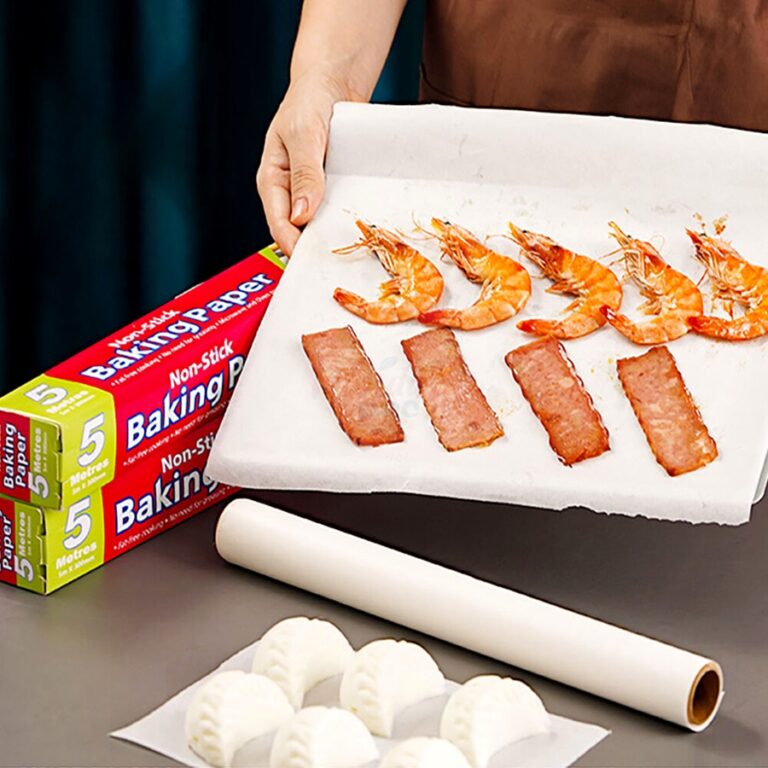
food-use mapping Where PFAS-Free Greaseproof Paper Works BestThe right paper depends on the actual food use: oil level, heat, contact time, folding, printing and serving method. PFAS-free greaseproof paper packaging can appear in many formats: burger wraps, sandwich wraps, basket liners, bakery tray sheets, parchment paper sheets, cupcake liners, air fryer paper liners, food box inserts, takeaway bag liners and branded foodservice paper. Each format has a different pressure point. A wrap needs foldability and print appeal. A tray sheet needs surface holdout and easy handling. An air fryer liner needs heat-use suitability and shape stability. A bakery liner needs release performance and visual cleanliness. This is why buyers should not ask only for `greaseproof paper` in general. They should describe the actual food and use condition. Is the food oily or buttery? Is it hot, chilled or frozen? How long will it sit in the packaging? Will it touch sauce, sugar, steam or cheese? Does the paper need to be printed, die-cut, folded, nested, packed flat or formed into a cup? The more specific the use case, the better the material recommendation. |

Holidaypacfactory often connects these choices with existing product families such as grease-resistant parchment paper for foodservice, single-serve air fryer paper liners, and bakery paper packaging for retail shelves. The same buyer may need several formats with one consistent material story.
A good supplier should help the buyer balance appearance and function. A natural kraft look may fit a clean-food brand, while white greaseproof paper may make bakery products look brighter. Custom printing can carry brand emotion, but printing must be planned with food-contact expectations and real use conditions. The right packaging does not only prevent oil marks; it supports the food’s perceived value.
procurement discipline Sourcing Questions Buyers Should Ask Before OrderingA better question creates a better sample: ask what PFAS-free means, how grease resistance is achieved and how performance will be tested. The first sourcing question is: what does PFAS-free mean in this project? Buyers should avoid accepting a vague statement without context. They can ask whether the paper is made without intentionally added PFAS, what supporting declaration is available, whether any coating or treatment is used, and whether the supplier can support the buyer’s target market requirements. This is not legal advice; it is basic procurement discipline. The second question is performance. PFAS-free paper still has to work. Buyers should ask for samples and test them with the actual food or a close simulation. A paper that works for dry pastries may not be enough for fried chicken. A liner that works at room temperature may behave differently with hot oil and steam. Testing should include grease staining, release behavior, curling, tearing, odor, print rub and handling. |
The third question is format. A flat sheet, a bag, a cup liner and a box insert place stress on paper differently. Folding can crack weak coatings. Nesting can create pressure marks. Die-cut holes can change airflow in air fryer liners. A printed wrap may need different ink planning from an unprinted tray sheet. Buyers should share drawings, food photos, packing methods and store-use details early.
The fourth question is total value. A slightly cheaper sheet that stains too quickly, ships poorly or causes customer complaints is not truly cheaper. A better-specified paper may reduce waste, protect brand image and make retailer approval easier. Holidaypacfactory’s role is to help buyers compare not only unit price, but also food performance, print quality, packing efficiency and buyer confidence.
brand trust and visual emotion Design: Make Safer Paper Packaging Feel Warm, Not ClinicalPFAS-free packaging should communicate cleanliness and responsibility without making the food experience feel technical or cold. PFAS-free greaseproof paper food packaging should not look clinical or fearful. Customers do not want to read a chemistry lecture when they open a pastry or takeaway meal. They want the packaging to feel clean, warm and trustworthy. The design challenge is to communicate safety and natural responsibility without turning the package into a warning label. For bakery brands, soft color, small cultural motifs, clean typography and subtle paper texture can make the product feel handmade and premium. For fast casual restaurants, bolder printing and clear brand marks may matter more. For air fryer liner retail packs, the customer needs quick understanding: size, shape, heat-use guidance, count and convenience. For foodservice distributors, carton labels and SKU clarity can be more important than decorative graphics. |

Cassie Lam often describes packaging as a bridge between visual impact and emotional value. PFAS-free greaseproof paper is a perfect example. The buyer is solving a technical issue, but the customer experiences it emotionally: clean hands, a neat table, food that looks cared for, and a brand that seems responsible. This is where HolidayPac differs from ordinary factories that only print and cut paper.
HolidayPac’s cultural design thinking also gives paper packaging more depth. Chinese traditional culture values harmony, restraint and the relationship between human life and nature. Western foodservice markets often value clarity, efficiency and compliance. A well-designed paper package can respect both: simple material, clear information, brand emotion and practical performance.
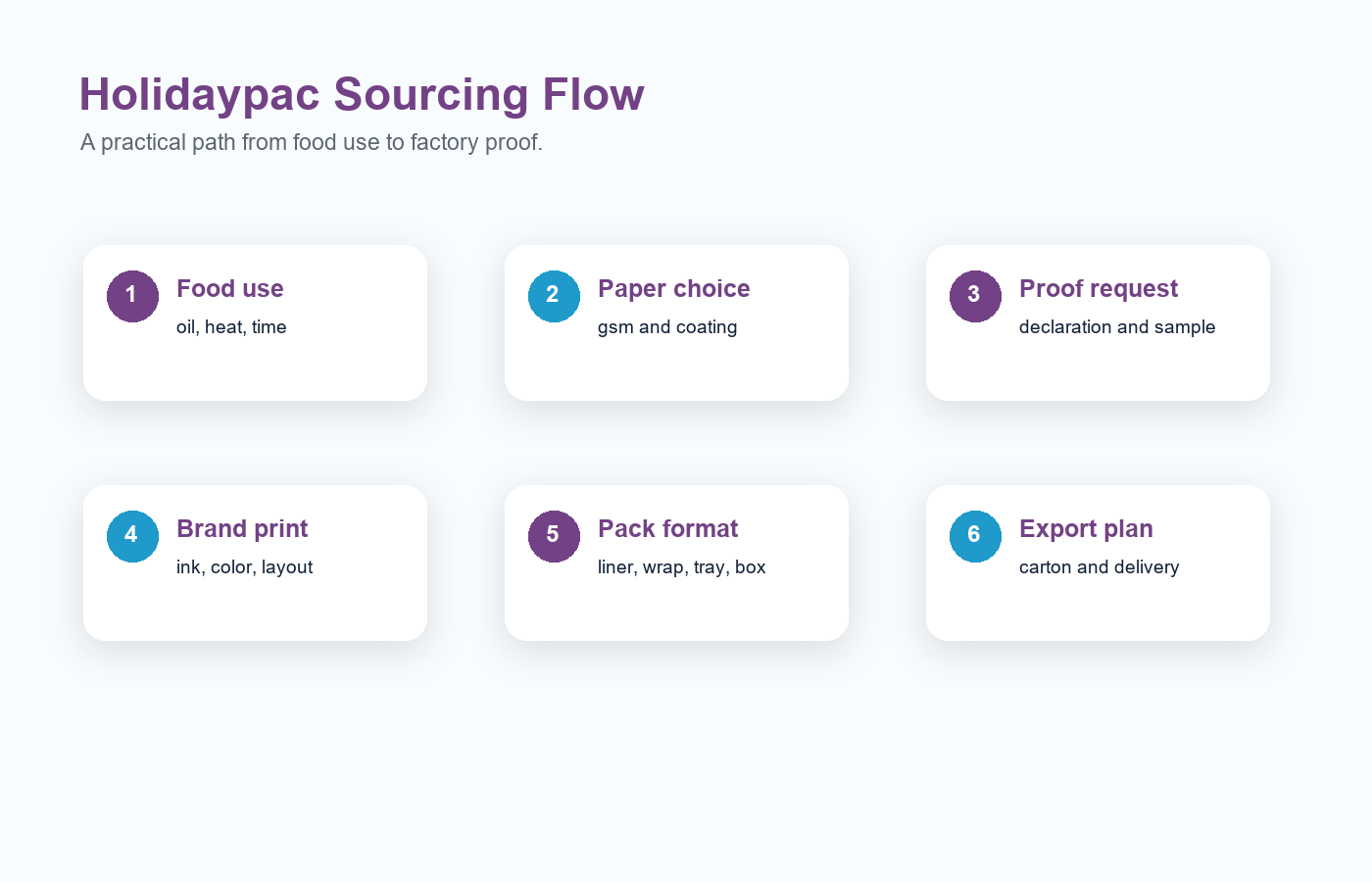
Holidaypac project path Holidaypacfactory Workflow for PFAS-Free Greaseproof Paper ProjectsA reliable project moves from food-use mapping to sample testing, printing, conversion and export packing. A strong PFAS-free greaseproof paper project begins with food-use mapping. The buyer lists the food type, oil level, serving temperature, contact time, storage condition and whether the paper touches food directly. This gives the supplier enough context to recommend paper weight, surface treatment, format and sample direction. Next comes sample testing. Holidaypacfactory can prepare sample sheets, liners, wraps or packaging formats for buyer evaluation. The buyer should test the sample with real food, not only with clean hands in an office. Oil, sauce, sugar, steam and heat reveal whether the paper actually fits the job. If a chain store or retailer has its own requirements, those should be shared before mass production. |
Then the project moves into print and conversion. Artwork should be checked for color, safe margins, folding lines, die-cut details and readability. If the paper will become custom food paper bags for takeaway, paper food box inserts or custom printed paper packaging, each format needs a slightly different production check.
Finally, the export plan should protect the finished paper. Greaseproof sheets and liners are light, but they can be damaged by moisture, crushing or poor carton planning. Packing quantity, carton strength, pallet method and delivery schedule all affect the final buyer experience. A responsible supplier thinks about the product after it leaves the factory, not only while it is on the production line.
Five Mistakes That Weaken PFAS-Free Paper Packaging Projects
The first mistake is treating PFAS-free as a magic word. It is not enough to print the claim in a catalog. Buyers should connect the claim to material declaration, intended use and sample performance. The second mistake is using one paper for every food. A bakery liner, fried food wrap and air fryer liner may need different structures even if all are paper-based.
The third mistake is ignoring printing and branding until the end. Printing can affect cost, lead time, surface behavior and visual quality. If the buyer wants strong brand color, QR codes, bilingual text or cultural illustrations, those should be included early. The fourth mistake is asking for the lowest price before defining the real job. Without food type, temperature and contact time, the quotation is only a guess.
The fifth mistake is separating packaging from brand trust. Food packaging sits very close to the consumer’s body and senses. It touches hands, table, smell, texture and memory. A stained wrap or confusing liner can make the food feel lower quality. A clean, well-designed paper package can make the same food feel more cared for.
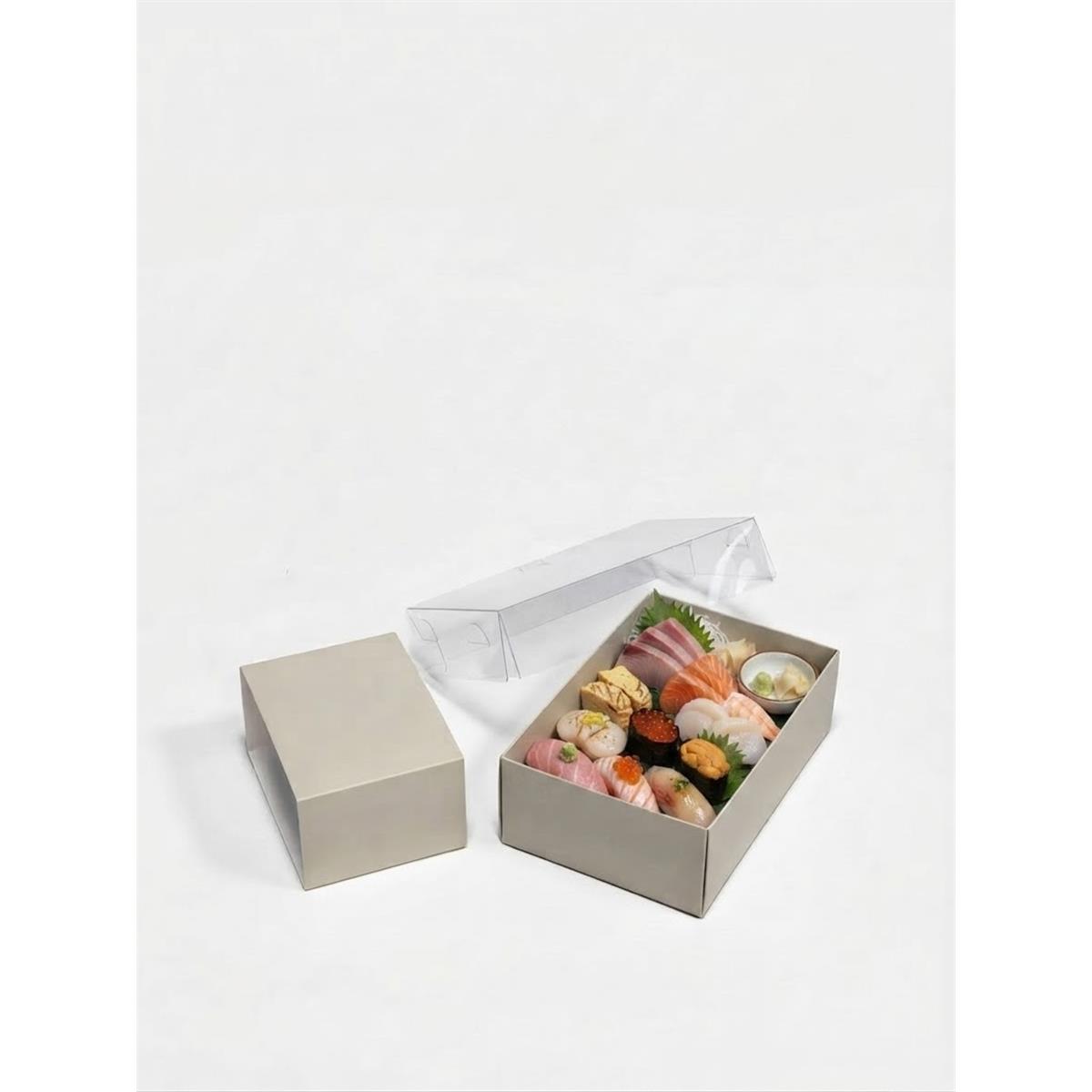
Holidaypacfactory helps buyers avoid these mistakes by linking material choice, design, sampling and export packing. For related projects, buyers can compare sushi bento boxes with paper-based presentation, kraft paper packaging for natural brands and bakery packaging systems before finalizing the right food-contact format.
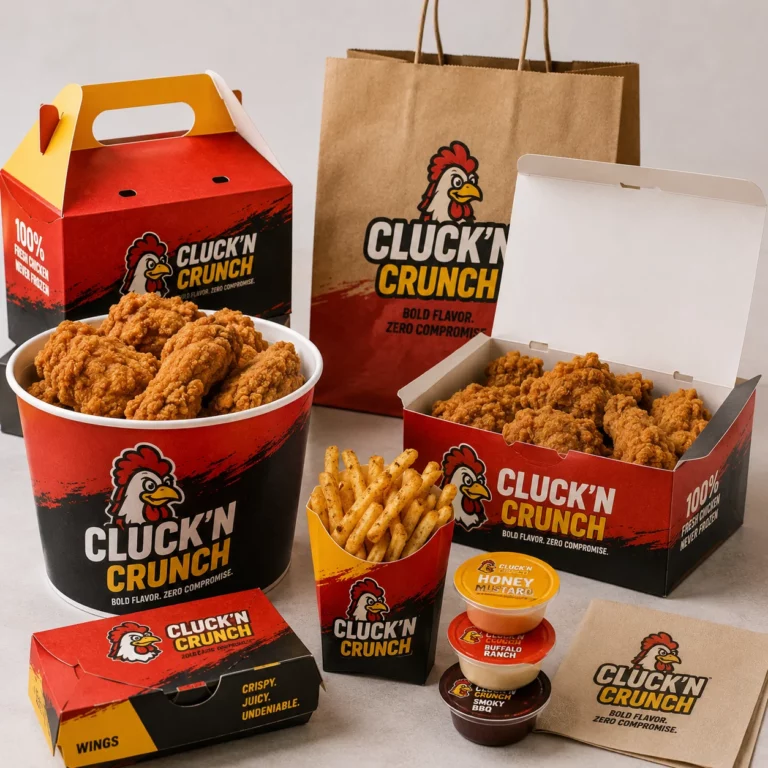
category recommendations Category-Specific Recommendations for BuyersBakery, takeaway, air fryer, foodservice and private-label buyers should test different details even when they all ask for PFAS-free paper. Bakery buyers should focus on release, appearance and shelf presentation. A croissant liner, cookie tray sheet or cake slice pad does not face the same oil pressure as fried food, but it still has to protect the product’s clean look. Butter, chocolate, cream, sugar and fruit moisture can all behave differently. A PFAS-free bakery paper solution should be tested for staining, sticking, aroma, print appearance and how the product looks after sitting in a display case or delivery box. Takeaway and quick-service restaurant buyers should focus on hot oil, sauce, steam and handling. A burger wrap or sandwich paper is folded, squeezed and opened by the customer. A basket liner may sit under fries, fried chicken or snacks. The packaging must protect the hand and table while still making the food look fresh. If the brand uses custom printing, the design should stay clear and not make the paper feel overly industrial. |
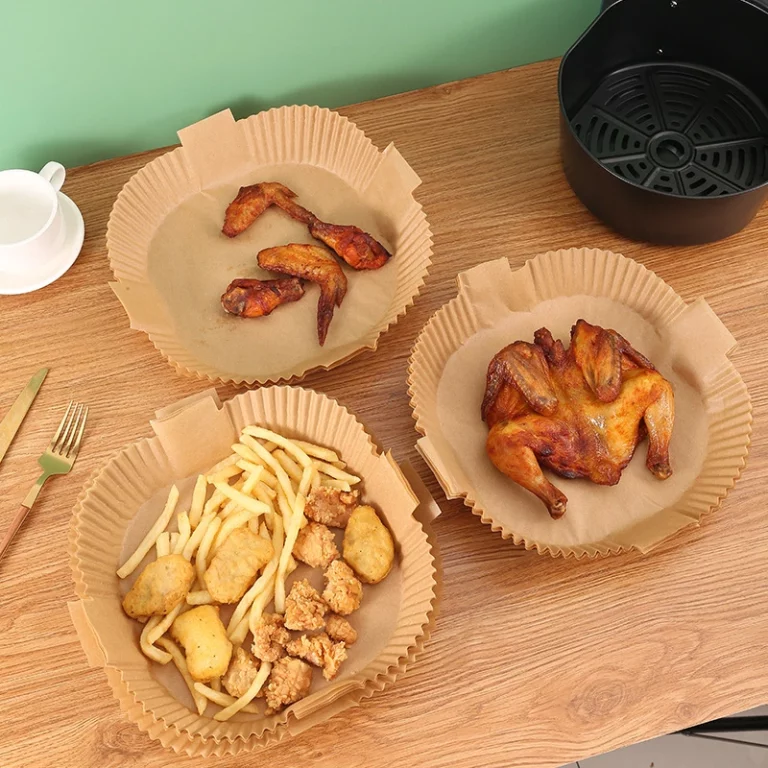
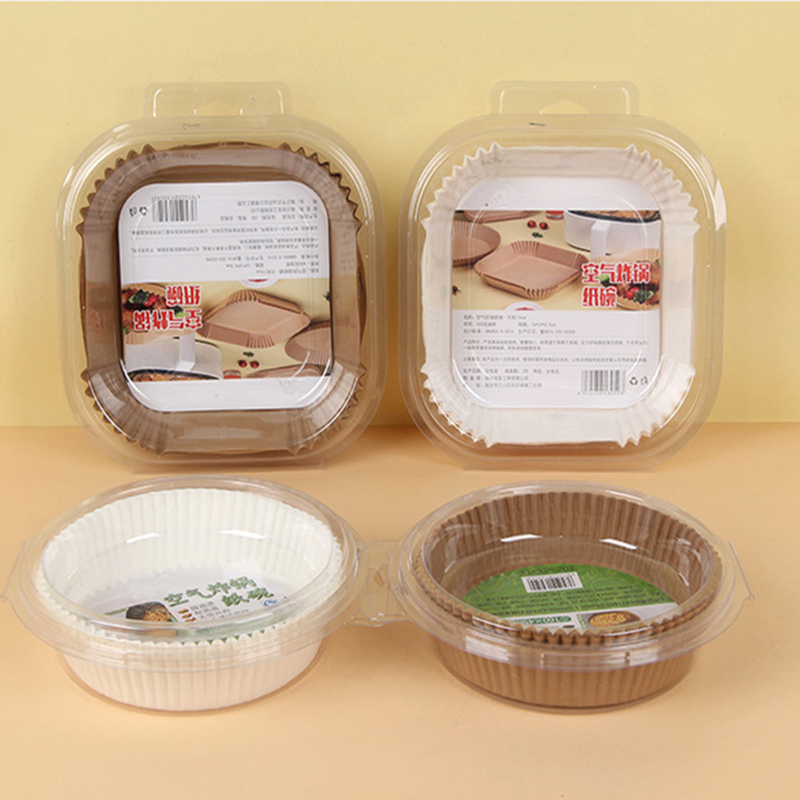
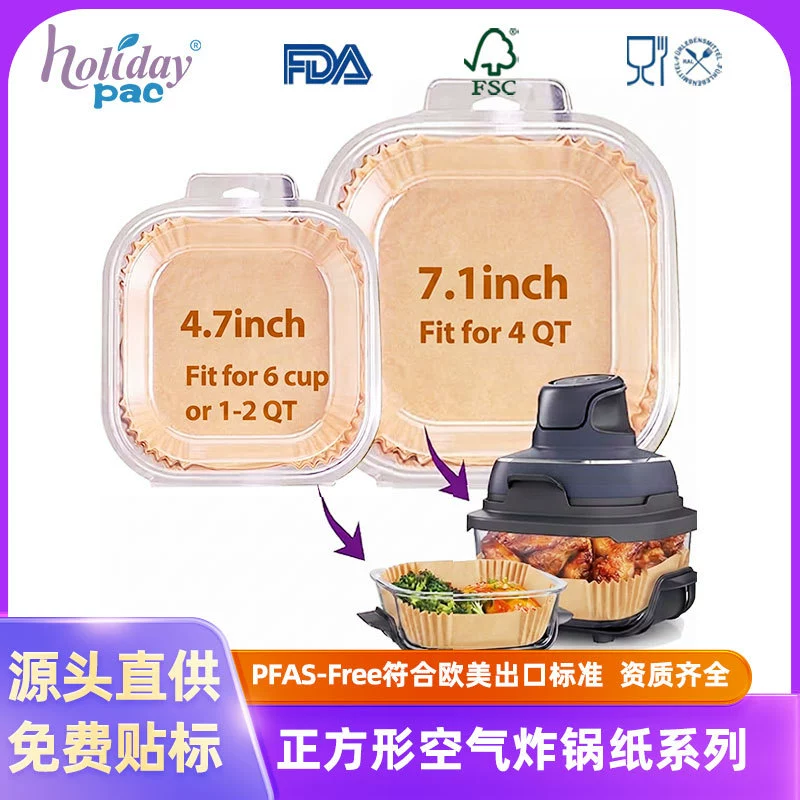
Air fryer liner brands should focus on shape, heat-use guidance, perforation logic and consumer instructions. Many retail customers buy air fryer liners for convenience, so the packaging must explain size, count, shape and use case quickly. The paper itself should be checked for curling, oil contact, food release and whether the liner supports the intended appliance use. A strong retail pack can connect the liner with clean cooking, easier cleanup and responsible paper material.
Foodservice distributors should focus on SKU clarity, carton efficiency and repeatable supply. Their customers may be restaurants, bakeries, hotels, catering companies or supermarkets. The distributor needs packaging that is easy to identify, easy to reorder and reliable across batches. For this channel, Holidaypacfactory can help align inner packs, master cartons, labels, pallet planning and documentation so the product is easy to manage beyond the first order.
Private-label retail buyers should focus on shelf story. PFAS-free greaseproof paper packaging is not only a technical product; it can be a consumer-facing promise. The outer retail pack should make the benefit understandable without exaggeration. Claims should be precise, instructions should be clear, and the visual style should match the product category. HolidayPac’s culture-led design thinking can help a simple paper product feel more thoughtful, natural and brandable.
Across all categories, buyers should remember that PFAS-free does not remove the need for ordinary packaging discipline. Paper weight, coating choice, moisture control, printing, die-cutting, packing and freight still matter. A good project combines safer material direction with real production control. That is how a buyer turns a trend into a stable packaging program.
specification and quotation How to Turn PFAS-Free Greaseproof Paper Into a Clear RFQA clear specification helps the buyer compare samples, documentation, printing and total project value instead of chasing a vague lowest price. A practical RFQ for PFAS-free greaseproof paper food packaging should include more than size and quantity. Buyers should share the food type, grease level, serving temperature, expected contact time, target market, packing method, printing requirement and whether the item will be sold to consumers or used behind the counter. These details help the factory judge whether the project needs a sheet, liner, roll, printed wrap, tray pad, parchment insert or retail packed product. Paper weight is one of the first specification decisions, but it should not be chosen alone. A lighter paper may reduce cost and shipping weight, while a heavier paper may feel more premium and handle oil, folding or heat better in certain formats. The right answer depends on the food and packaging structure. For example, a quick bakery tray sheet, a basket liner for fries and a retail air fryer liner may all be greaseproof paper, but they should not automatically use the same gsm. |
Testing should be simple, realistic and repeated. Buyers can compare samples by placing the real food on the paper for the expected use time, then checking oil marks, paper strength, odor, release, curling, color transfer and customer handling. If the product will be printed, test the printed version, not only the blank paper. If the packaging will be packed in cartons for export, check whether stacking pressure changes the sheet shape or finish.
Documentation should match the buyer’s actual market and claim level. A supplier may be able to provide declarations, material information or third-party testing support, but the buyer should decide what is needed for the target country, retailer or restaurant group. Strong buyers keep the public claim narrow and accurate. Instead of overpromising, they explain the material direction clearly and keep supporting information ready for business customers.
Price comparison also needs context. Two quotes may look similar, but the real value can differ because of paper source, gsm, printing method, packing quantity, carton strength, sample support, inspection control and communication quality. Holidaypacfactory encourages buyers to compare full project value instead of only the cheapest unit line. In food packaging, a small saving can disappear quickly if the liner fails, the artwork looks weak, or the buyer has to restart approval.
For long-term programs, build a specification sheet that can be reused. It should record dimensions, paper type, gsm, color, printing details, packing method, carton information, intended food use, sample approval notes and reorder tolerance. This turns a one-time purchase into a stable packaging system. It also helps purchasing, marketing and quality teams speak the same language when the product needs a seasonal design, new size or updated retail pack.
HolidayPac Soul Why HolidayPac Sees PFAS-Free Paper Packaging DifferentlyCassie Lam, Founder of HolidayPac, brings a rare cultural perspective to this technical topic. With about 20 years in foreign trade and 16 years in packaging, she understands buyer pressure, factory production and global communication. But her deeper strength is cultural integration. She understands Chinese traditional culture, Western culture, the wisdom of Zhuangzi, the I Ching, Buddhist thinking and the broader Chinese five arts. That knowledge shapes HolidayPac’s view of paper packaging. For HolidayPac, paper is not merely a cheap material. It is one of the simplest, oldest and most natural carriers of human commerce. It can hold food, carry a message, protect the hand, create beauty and return to the material cycle with more humility than many complex packaging structures. The company value Born from nature and return to nature is not decorative language; it is a practical design direction. This is why PFAS-free greaseproof paper packaging fits HolidayPac’s soul. It asks the factory to respect performance, food safety, regulation, culture and nature together. A buyer still needs cost, lead time and reliable supply. But the best packaging also gives customers emotional comfort. It tells them the brand has thought about what touches their food, their hands and their daily life. |
FAQ: PFAS-Free Greaseproof Paper Food Packaging
What is PFAS-free greaseproof paper food packaging?
It is paper-based food packaging designed for oil and grease resistance while avoiding intentionally added PFAS. Buyers should confirm the exact material declaration, food-contact use and performance testing for their target market.
Why are buyers asking about PFAS-free food packaging in 2026?
Regulation pressure, retailer policies and consumer trust concerns are pushing brands to review food-contact packaging materials, especially grease-resistant wraps, liners, bakery sheets and takeaway packaging.
Can PFAS-free paper still resist grease?
Yes, but performance depends on paper grade, treatment, food type, temperature, contact time and format. Buyers should test samples with the real food use case before mass production.
Which products can use PFAS-free greaseproof paper?
Common applications include burger wraps, sandwich paper, bakery liners, parchment sheets, air fryer liners, tray sheets, food box inserts and takeaway paper bags.
What should buyers ask suppliers before ordering?
Ask about intended use, paper weight, grease resistance, available declarations, sample testing, printing compatibility, packing method and whether the product fits the buyer’s target market requirements.
Why choose Holidaypacfactory for this type of packaging?
Holidaypacfactory combines paper packaging design, sampling, printing, conversion and export packing with HolidayPac’s culture-led belief in practical, responsible and emotionally meaningful paper packaging.