Door to Door service
Welcome to Holidaypac Packaging Solutions Factory!

tiger@holidaypac.com

+86 136 5233 6188
Welcome to Holidaypac Packaging Solutions Factory!


tiger@holidaypac.com
+86 136 5233 6188
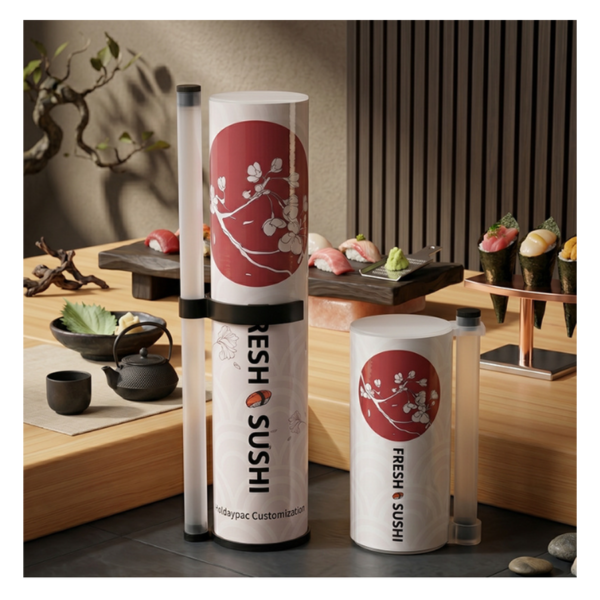
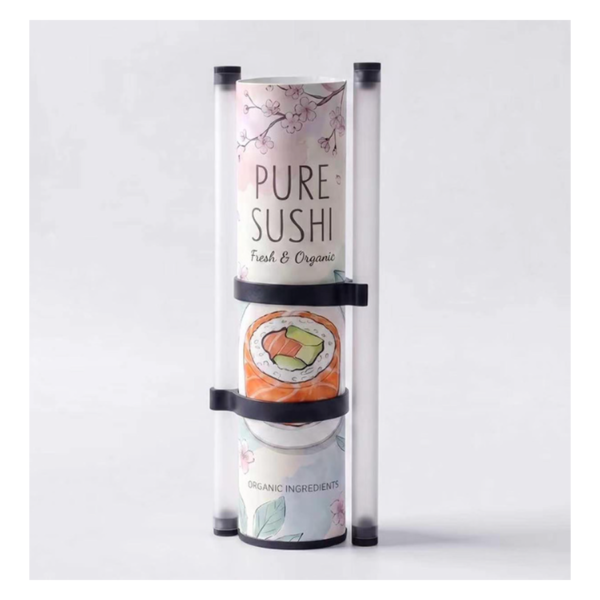
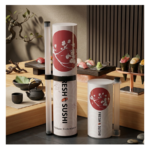
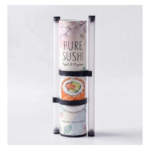
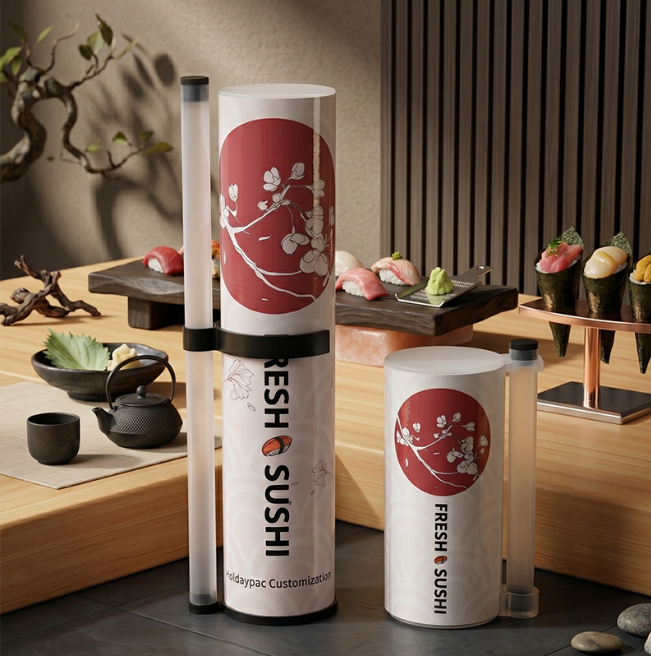
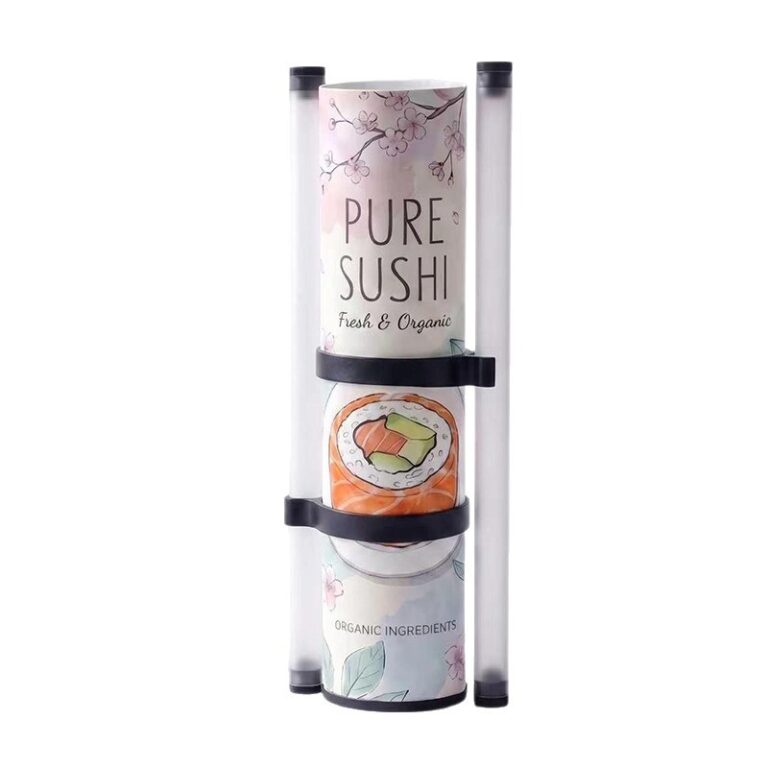
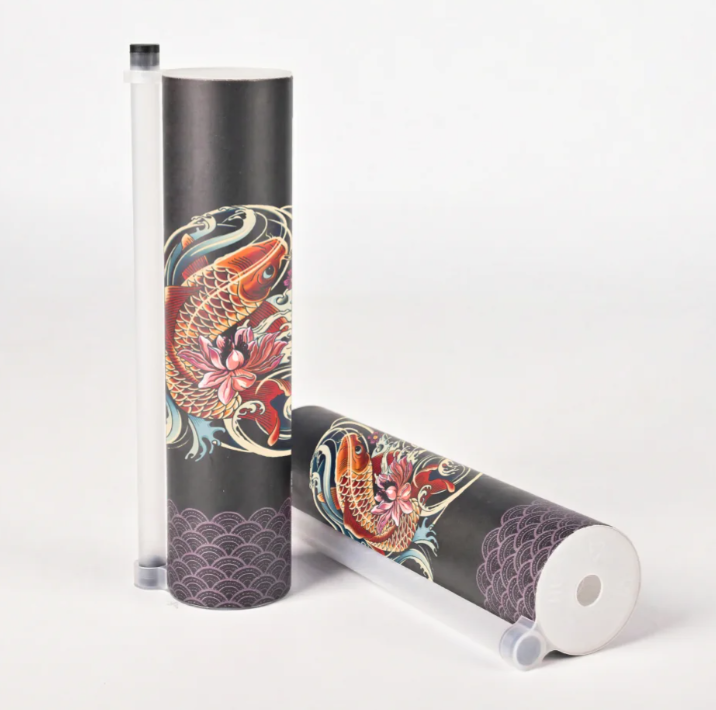
Hot-selling sushi packaging Custom Sushi Push Pop Tube Packaging with Private Mold and Plunger StructureThis custom sushi push pop tube packaging is designed for sushi brands, Japanese restaurants, takeaway operators and event food sellers that want a more interactive way to present sushi rolls. The tube uses a push-up structure, so the customer can lift the product gradually instead of removing the whole roll at once. It gives the meal a clean handling experience and a strong visual identity. Holidaypacfactory has its own mold for this sushi tube structure, which makes the product more practical for repeat orders and customized brand programs. Buyers can work from an existing structure rather than starting a new tooling project. That helps reduce uncertainty when preparing samples, artwork and production planning. The product can sit beside a light custom picnic sushi box or custom luxury sushi box packaging when a sushi brand wants both tray-style packaging and an interactive push tube format. It is especially useful for signature rolls, tasting menus, festival food service, retail sampling and social-media-friendly menu launches. Private moldPush plungerCustom wrap48 mm diameterTall/short formatsSushi launch | Buyer Positioning: A branded sushi tube with private mold, push-up eating experience and custom restaurant artwork potential. |
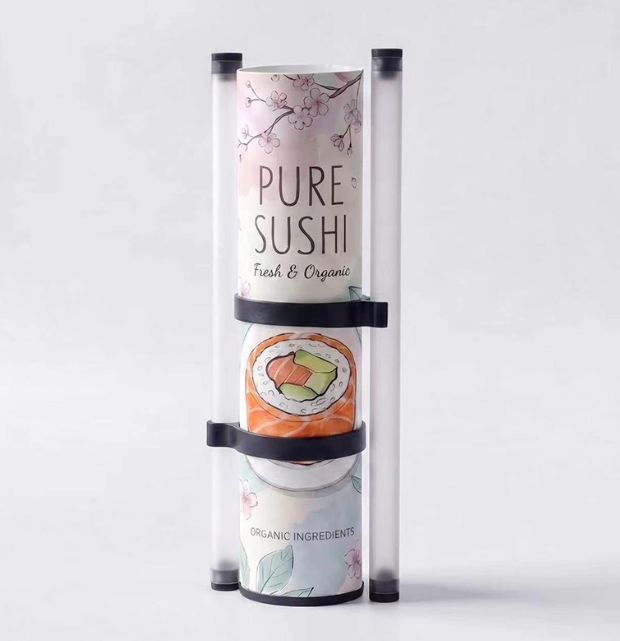
Own Mold Sushi Tube for Stable Repeat Production shown with real sushi push tube detail. Private moldRepeat ordersStable structureCustom branding | Private mold structure Own Mold Sushi Tube for Stable Repeat ProductionThe most important commercial detail is the private mold. A buyer does not need to create a new tube system from zero; the structure is already available for sampling, artwork planning and repeat production. That makes the product useful for brands that need a reliable shape across multiple restaurant locations or seasonal campaigns. The tube format gives sushi packaging a different customer experience from ordinary trays. It can turn a roll into a handheld product with stronger presentation value. For operators who want a distinctive item, the tube becomes part of the product story rather than only a container. Private mold control also helps with consistency. The buyer can approve the tube, plunger, cap and clip components once, then focus on artwork, quantity and food fit for future orders. This is valuable for distributors and restaurant groups that need stable repeat supply. |
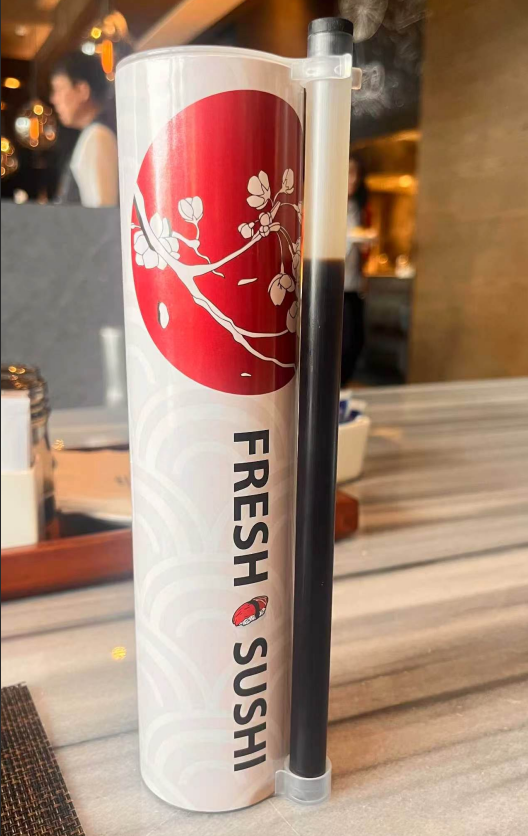
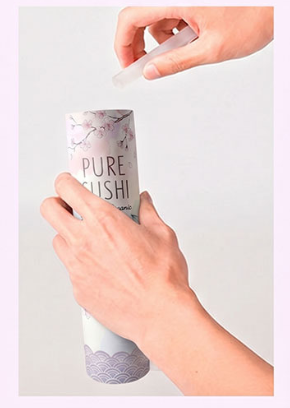
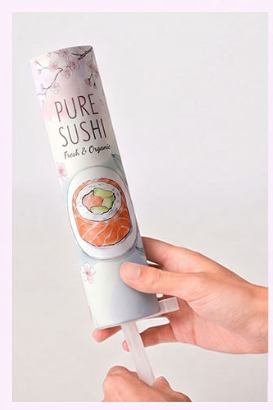
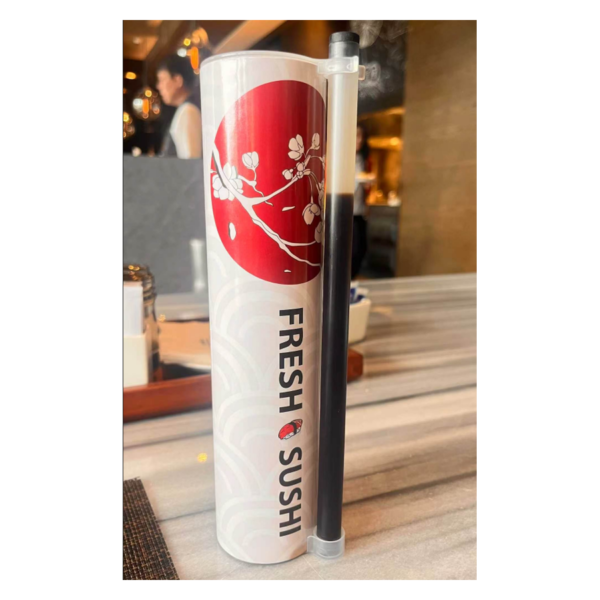
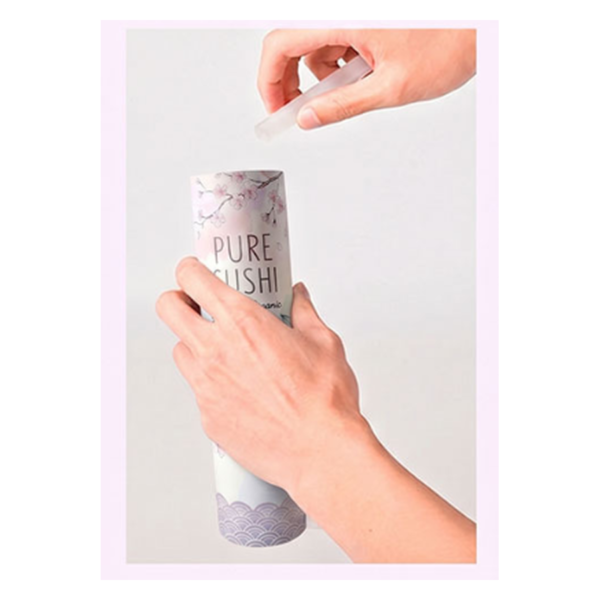
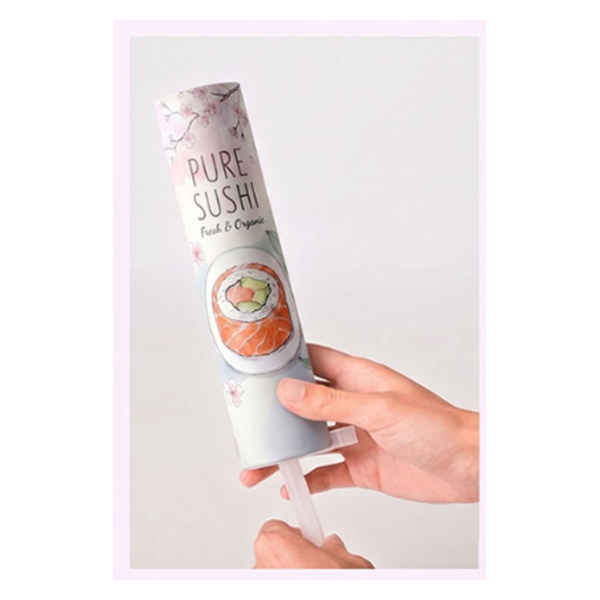
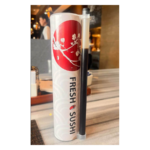
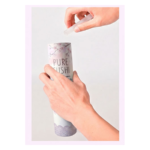
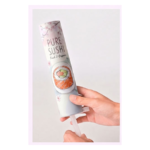
Push-up operation Push Plunger Design for Cleaner Eating and Product RevealThe push-up plunger is the feature that makes this product feel different. The customer can remove the cap, hold the tube and push the sushi upward gradually. This can help reduce hand contact with the food and gives the customer a controlled eating experience. The structure is useful for sushi rolls, hand-roll style products and tasting portions where presentation matters. It can also support event service because the format is easy to carry and visually recognizable. Customers can understand the product quickly after seeing the push action. For menu launches, the push tube can create a social media moment. The branded wrap, vertical format and push-up action make the product more memorable than a standard takeaway tray. That can support premium pricing, limited-time menus and brand differentiation. | Push Plunger Design for Cleaner Eating and Product Reveal shown with real sushi push tube detail. Push plungerCap openingCleaner handlingMenu launch |
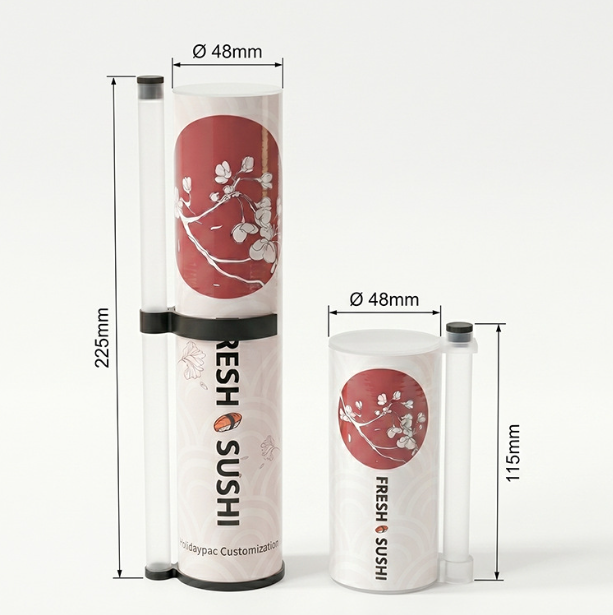
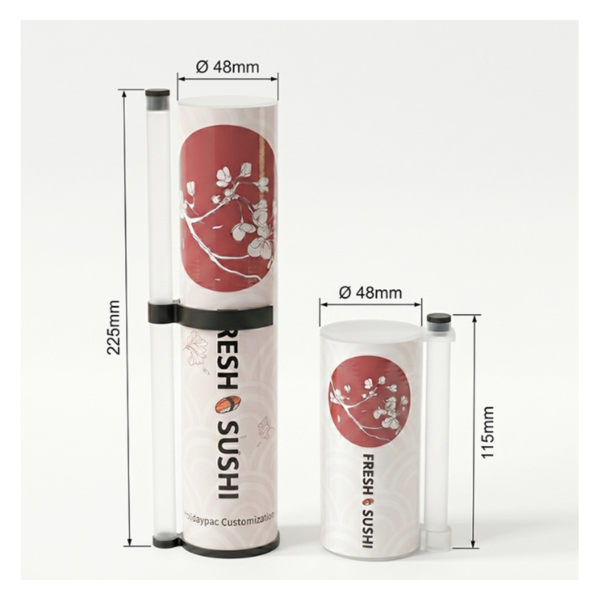
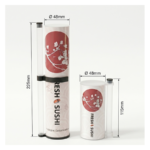
48 mm Diameter with Tall and Short Format References shown with real sushi push tube detail. 48 mm diameter225 mm tall115 mm shortFood fit test | Size planning 48 mm Diameter with Tall and Short Format ReferencesThe product size image shows a 48 mm diameter and two height references: a taller format around 225 mm and a shorter format around 115 mm. These references are useful for buyers who need to compare sushi roll length, portion size and display planning before requesting a sample. The tall format can support longer rolls, premium presentation or multi-bite items. The shorter format can support sampling, smaller menu items, children’s portions or compact takeaway sets. The right option depends on the actual food size and desired customer experience. Before bulk order, buyers should test the real sushi roll diameter, wrapper thickness, filling height and push movement. The best result comes when the food fits the tube smoothly and can be pushed upward without sticking or losing its shape. |
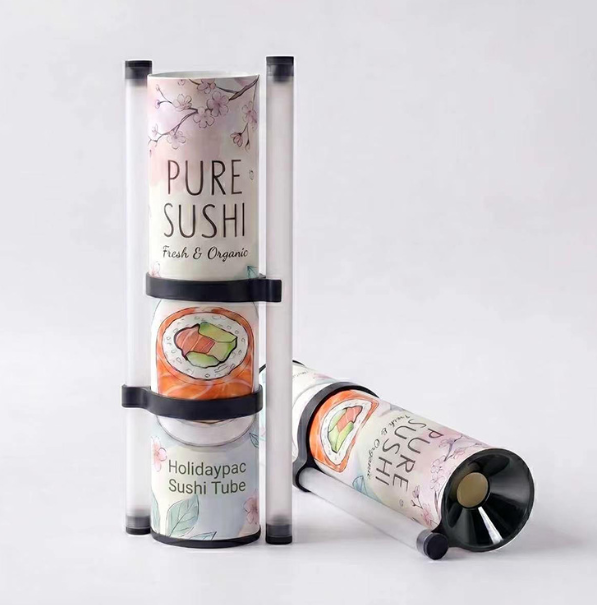
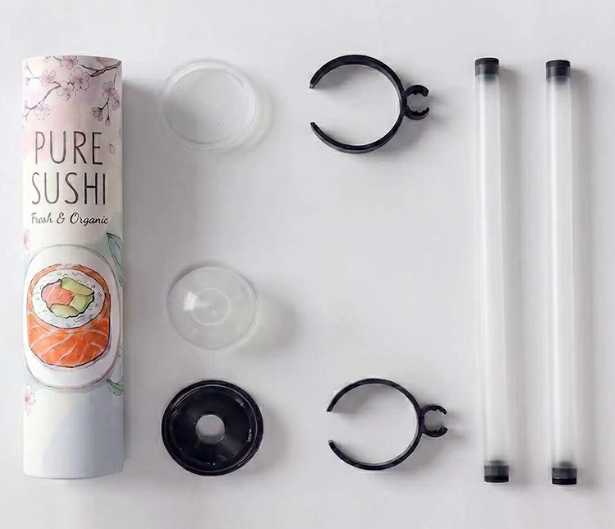
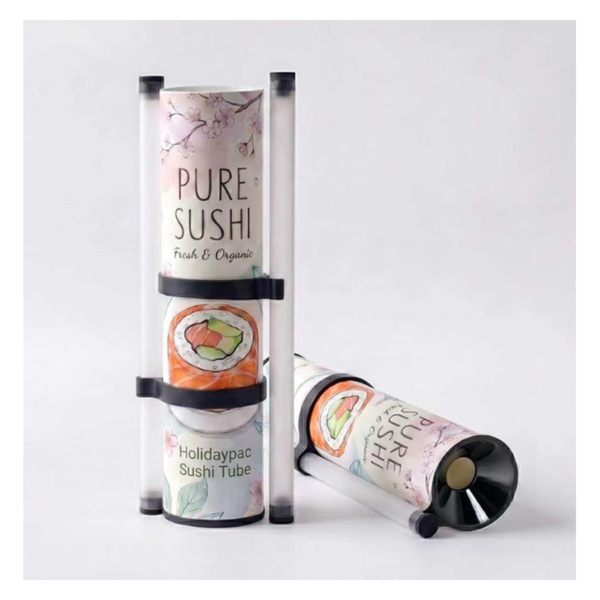
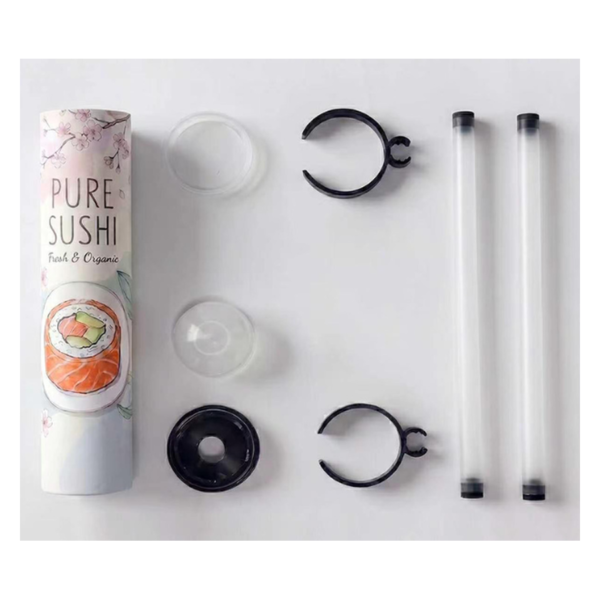
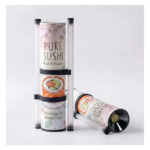
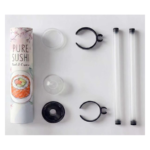
Component breakdown Tube Body, Cap, Push Rod and Clip ComponentsThe component detail image shows the product as a system rather than a single shell. The tube body carries the printed artwork, while the cap protects the top, the push rod supports the push-up motion and the side components help hold the structure together. This kind of breakdown is helpful for buyers because it explains what needs to be reviewed during sampling. A good sample check should include cap fit, push smoothness, tube clarity, printed wrap alignment, component strength and overall handling. For custom projects, the component set also helps the buyer decide what should remain standard and what should be branded. Most buyers customize the printed wrap, logo, color direction and menu graphics while keeping the mold structure stable. | Tube Body, Cap, Push Rod and Clip Components shown with real sushi push tube detail. CapPush rodTube bodyComponent set |
This product should be reviewed as a custom sushi push pop tube with a private mold and push plunger structure. The buyer should confirm real food fit, artwork layout and component expectations before bulk order.
The size image shows useful references for both tall and short formats. Because sushi roll size can vary, sample testing is important before finalizing a restaurant or distributor program.
| Product type | Custom sushi push pop tube packaging / push-up sushi cylinder |
|---|---|
| Tooling | Private mold available from Holidaypacfactory for stable repeat orders |
| Reference diameter | About 48 mm diameter shown in product size image |
| Reference height options | About 225 mm tall format and about 115 mm short format shown in size image |
| Structure | Cylindrical body, cap, push plunger, side guide tube and support clips/components |
| Branding | Custom printed wrap artwork, logo, restaurant name and seasonal or menu graphics |
| Applications | Sushi rolls, hand rolls, tasting sets, restaurant launches, takeaway promotions and novelty food service packaging |
The cylindrical wrap gives the buyer a strong branding surface. A sushi restaurant can print logo, menu name, flavor information, seasonal artwork, Japanese illustration style, color bands or QR code direction. The wrap should look good both upright and in the customer’s hand.
Artwork should be planned around the curve of the tube. Important text should remain readable, and the design should not rely only on a single front angle. A clean vertical brand mark, a strong color block and a clear product name usually work better than a crowded design.
Holidaypacfactory can help buyers prepare artwork based on the existing tube structure. This is useful when a customer has a logo and style direction but needs help adapting the design to a cylindrical surface.
Sushi brands can use this tube for signature rolls, hand-roll inspired products, sampling programs, festival menu items and premium takeaway promotions. The product gives a roll a new form, which can help the menu feel more innovative.
Event food sellers can use the tube for easier carrying and visual recognition. Restaurants can use it for limited-time products, chef specials or set-menu upgrades. Food distributors can present it as a novelty packaging option for Japanese restaurants and Asian fusion brands.
The tube can also be adapted for other rolled foods if the size and food behavior are suitable. The key is to test product fit, push motion, food safety direction and customer handling before bulk order.
Before confirming production, buyers should test the tube with real food. The sushi roll should fit inside without excessive pressure, and the push rod should move the food upward smoothly. The cap should protect the top without damaging the product.
The printed wrap should be checked for alignment, color and durability during handling. Since the tube may be held directly by customers, the surface should feel clean and brand-appropriate. Any custom artwork should be reviewed on a physical sample, not only on a flat design file.
Component testing should include the side guide tube, clips, cap, bottom plunger and main cylinder. These parts work together, so the final user experience depends on the whole system.
For wholesale orders, buyers should confirm size format, quantity, artwork route, food contact requirement, carton packing and delivery schedule. If the project is for a restaurant chain, the buyer should also confirm whether the same tube will be used across multiple stores or for a single seasonal campaign.
Because the mold already exists, the order discussion can move faster than a fully new custom structure. The buyer still needs to confirm branding, fit and packing, but the core tube system gives the project a clear starting point.
Repeat orders should use the approved sample as the control reference. Record component color, artwork version, cap style, tube size and carton packing details so future orders remain consistent.
This sushi push pop tube is visually different from ordinary sushi packaging. It has a strong novelty factor, a clear interactive feature and a useful private mold advantage. That combination makes it a good candidate for a hot-selling product range.
The product is also practical for custom branding. Restaurants and distributors can use the same structure with different wraps, menu themes and seasonal campaigns. This gives the product long-term potential beyond one design.
For Holidaypacfactory, the sushi tube shows capability beyond paper trays and boxes. It demonstrates structural packaging, mold development, component planning and foodservice branding support in one product.
The main product gallery uses unified square images so the WooCommerce top area stays clean and consistent. The detail section keeps the original image information visible, including size reference, cap opening, push operation and component breakdown.
The best hero image is the restaurant scene because it shows the product as a premium branded item. The size image and component breakdown then support technical buyer confidence. This combination helps the page sell both emotion and practical structure.
For future homepage promotion, this product can be shown as a hot-selling sushi push tube with private mold. The headline should be short, while the product page carries the deeper structure and order planning details.
For a restaurant launch, this sushi push pop tube can be positioned as a signature item instead of a normal takeaway container. The tube gives the customer a product that can be held, photographed and opened step by step. That helps the packaging become part of the menu experience, which is especially valuable when a restaurant is introducing a new roll, a chef special or a limited seasonal flavor.
A practical launch plan can include one main branded wrap, a small flavor label area and a simple customer instruction line. The instruction does not need to be long; the structure is easy to understand once the cap and plunger are visible. Clear artwork helps the customer see the direction of use while still keeping the package attractive on a counter or in a display case.
Restaurants can also use color to divide menu lines. A red wrap can be used for spicy rolls, a blue wrap for seafood or freshness positioning, a black wrap for premium items and a bright seasonal wrap for festival campaigns. Because the tube body is narrow and vertical, strong color blocking usually performs better than small complicated patterns.
For packaging distributors, the value of this product is that it gives sales teams a memorable sample. Many sushi buyers already know trays, paper boxes and clamshells, so another flat container may not create a strong conversation. A push-up sushi tube feels different immediately and gives the salesperson a simple demonstration moment during a customer visit.
The private mold also gives distributors a clearer commercial story. Instead of asking the buyer to fund an uncertain custom structure, the distributor can present a developed packaging system that can be customized with print and order details. That lowers the starting barrier and makes the product easier to test with restaurant chains or regional foodservice customers.
Distributors can sell this format as a menu upgrade, a promotional product or a private-label packaging option. The same mold can support different customers through different artwork, which means one packaging concept can become several customer programs without changing the full physical structure each time.
Food fit is the most important test before a bulk order. Sushi rolls can vary in diameter because of rice thickness, filling volume, wrapper tension and cutting style. A roll that is too loose may move inside the tube, while a roll that is too tight may not push smoothly. The buyer should test the actual menu item inside the tube before confirming the order.
The push movement should feel controlled, not forced. During sample testing, the buyer should check whether the plunger moves the product evenly and whether the top of the roll stays neat as it rises. If the roll has a soft filling or heavy sauce, the restaurant may need to adjust wrapping method or portion structure for the best customer experience.
Handling should also be checked from the customer’s point of view. The tube should be comfortable to hold, the cap should be easy to remove and the printed surface should stay clean during normal service. These details decide whether the package feels premium after the customer actually uses it.
Designing for a tube is different from designing for a flat box. The artwork wraps around a curved body, so the front view, side view and hand-held view all matter. A strong logo zone, simple color banding and a clear product name usually create the cleanest result. Tiny text and crowded illustrations can become difficult to read once the artwork curves around the cylinder.
A buyer should decide where the main visual should sit when the tube is displayed upright. If the product will be sold from a counter, the front logo should face the customer. If it will be packed in a bag, the side information may matter more. The artwork plan should match the real selling situation instead of only looking good on a flat design file.
Holidaypacfactory can help translate the buyer’s logo, menu name and color direction into a workable wrap layout. The goal is not only to make the tube pretty, but also to keep brand recognition clear when the product is photographed, carried and opened.
Because this structure can be used for repeat programs, buyers should keep a clear record of each approved version. The record should include tube format, artwork file, component color, cap direction, packing method and carton marking. A stable record helps future orders match the approved sample and reduces unnecessary back-and-forth.
For restaurant chains, inventory planning should consider both store launch quantity and replenishment rhythm. A limited-time campaign may need one larger order before the promotion starts, while a permanent menu item may need smaller repeat orders. The private mold structure makes this kind of planning easier because the physical packaging system is already defined.
If a buyer plans several flavors, it is often better to keep the same tube size and change only the wrap artwork. This keeps food fit and packing more consistent while still giving the customer different menu visuals. It also helps purchasing teams control stock across multiple product lines.
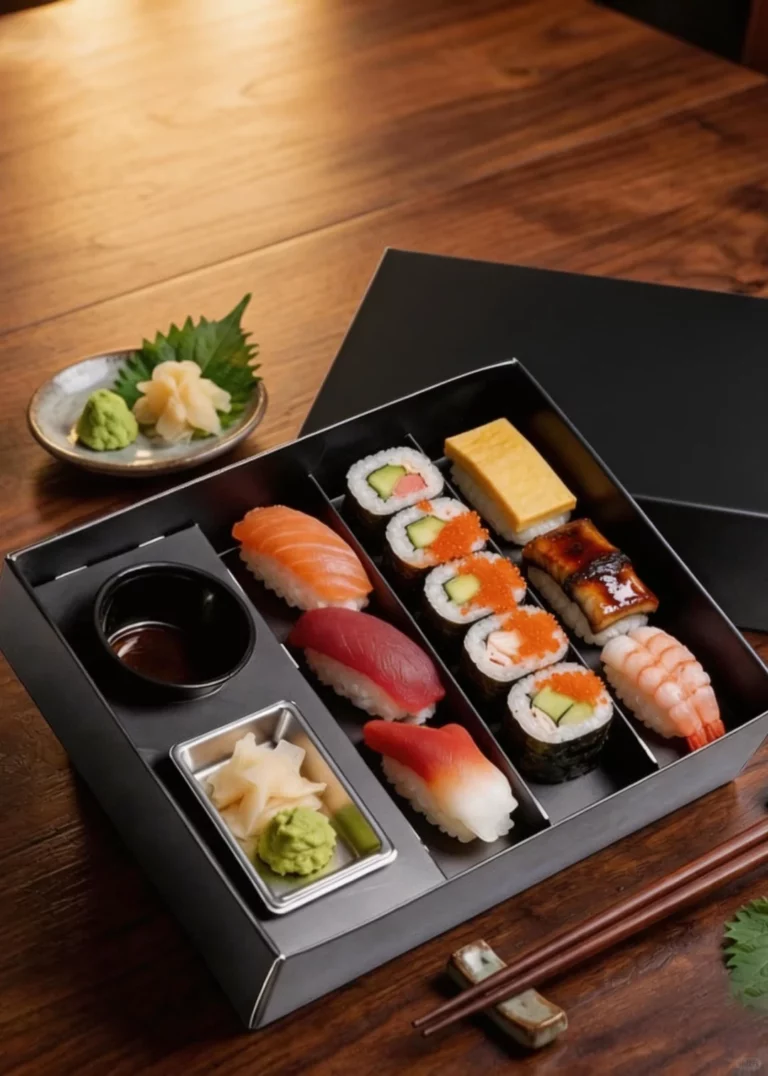
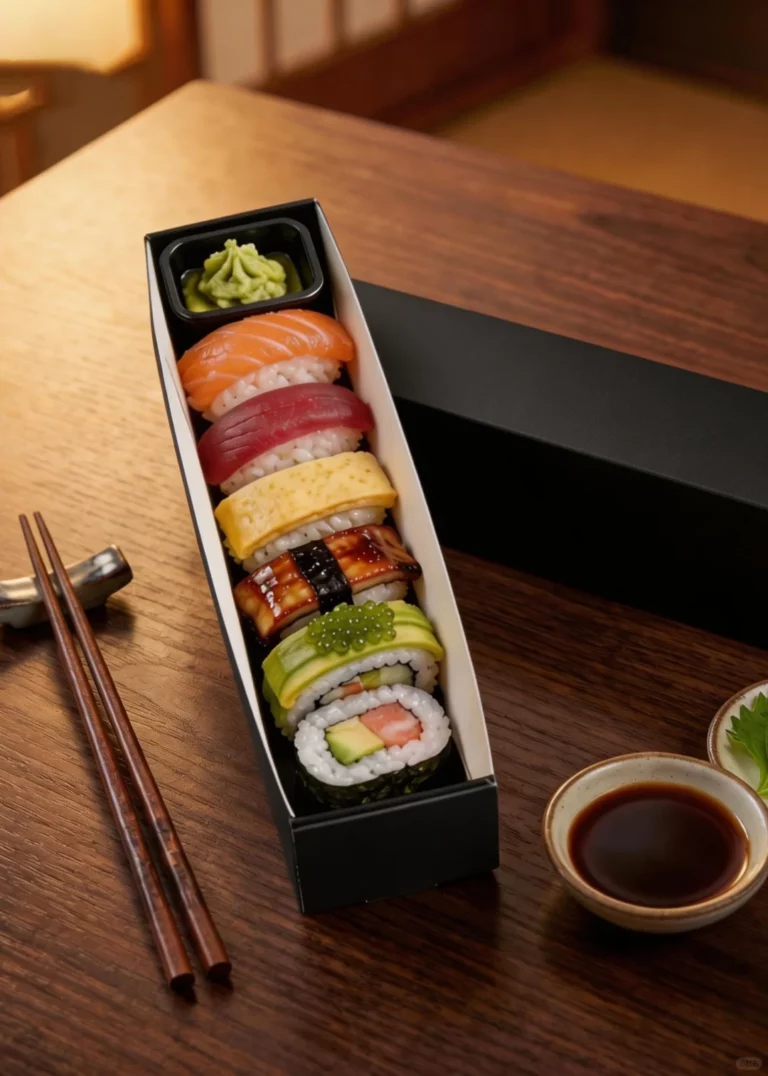
This tube does not replace every sushi package. It works best as a specialty item, while trays and boxes remain useful for assorted sets, party platters and multi-piece meals. A sushi brand can build a stronger packaging system by using both formats: tray-style packaging for standard orders and push tubes for signature rolls or promotional items.
When paired with a light custom picnic sushi box, the tube can create a complete takeaway story. The box can hold side dishes, sauces or assorted pieces, while the tube presents one hero roll. This helps a restaurant create a set that looks more intentional and more valuable than a simple group of separate containers.
For premium gifting or limited releases, the tube can also sit beside rigid or magnetic sushi packaging. In that case, the tube becomes a visual highlight inside a larger brand experience. Buyers can decide whether the tube should be the main item or a special component inside a complete menu package.
For future product promotion, this item should be photographed in use, not only as an empty component. A clean sushi roll inside the tube, the cap removed and the plunger partly pushed upward will explain the product quickly. Buyers understand the value faster when they can see the eating action rather than only a closed tube.
Merchandising images should also show the tube upright on a counter, held in one hand and placed beside a takeaway set. These three angles help restaurant buyers imagine how the product will appear in-store, in delivery photos and in customer social posts. The visual story should make the tube feel practical and exciting at the same time.
The current detail gallery already includes important technical views such as size reference, component breakdown and push action. Those images are valuable because they support real buying decisions. A buyer can see both the attractive product presentation and the structural details needed for wholesale planning.
Yes. Holidaypacfactory has its own mold for this sushi push pop tube structure, which helps support repeat production and customization.
The reference image shows about 48 mm diameter, with tall and short height references around 225 mm and 115 mm.
Yes. Logo, artwork, restaurant name, flavor graphics, color direction and branding layout can be customized around the tube body.
The customer removes the cap and uses the plunger to push the sushi upward gradually, creating a cleaner and more interactive eating experience.
It is designed for sushi rolls and similar rolled food concepts, subject to real food fit testing before production.
Yes. The stable mold structure and custom wrap make it suitable for restaurant groups, distributors, menu launches and repeat campaigns.

 Cassie LanFounder, HolidayPac · Leave a message
Food packaging, paper bags and food service paper for your next project.
Leave your request anytime. Our sales team will reply with pricing, samples and production details.
Tell us what you're packaging and we'll ship a physical sample plus a free 3D mockup within 24 hours — no cost, no obligation.
We've received your inquiry and our team will get back to you within 24 hours.