
Food packaging buyer guide | 2026
Custom Food Packaging: A 2026 Buyer Guide to Boxes, Bags and Wraps With Your Logo
Short answer: custom food packaging is food-contact packaging — boxes, bags, wraps and liners — made to your size, material and printed design. To order it well, start with the food (heat, grease, moisture and shelf life), choose a paper and barrier that suit it, confirm food-contact documents for your market, then approve a physical sample before bulk production.
Stock takeaway boxes and plain bags are easy to buy, but they rarely fit the portion, rarely match the brand and often use coatings that are now being restricted. Custom packaging solves all three — if the brief is right.
This guide is written from the factory side. Holidaypac has produced paper food packaging since 2010 for restaurants, bakeries, chocolatiers, sushi brands and food distributors, and the questions below are the ones we ask on every new project.
01 | Start with the food, not the box
Five questions that decide your food packaging
Most packaging problems — soggy bases, oil stains, crushed pastries, failed compliance checks — come from choosing the box before understanding the food. Answer these five questions first:
- Is it hot, cold, oily or wet? Fried food and burgers need grease resistance; soups and salads need moisture resistance; hot meals may need venting.
- How long does it stay in the pack? Minutes for delivery, days for bakery, months for chocolate, coffee or snacks. Longer shelf life usually means a stronger barrier or an inner bag.
- How does it travel? Hand-carried, delivery app, courier, or palletised to a supermarket. Each needs a different level of protection and stacking strength.
- Where is it sold? On a counter, on a retail shelf, online, or as a gift. Shelf and gift formats need more print and presentation.
- Which market does it ship to? The US, EU and UK have different food-contact and PFAS rules, and some retailers add their own requirements.
With these answers, a supplier can recommend a structure, a paper grade and a barrier instead of guessing — and your quotation becomes comparable across factories.
02 | Formats by food category
The main custom food packaging formats — and when to use them
Food and beverage packaging falls into a handful of families. Here is how each one is usually specified, with product examples you can open for details.
Takeaway and fast food
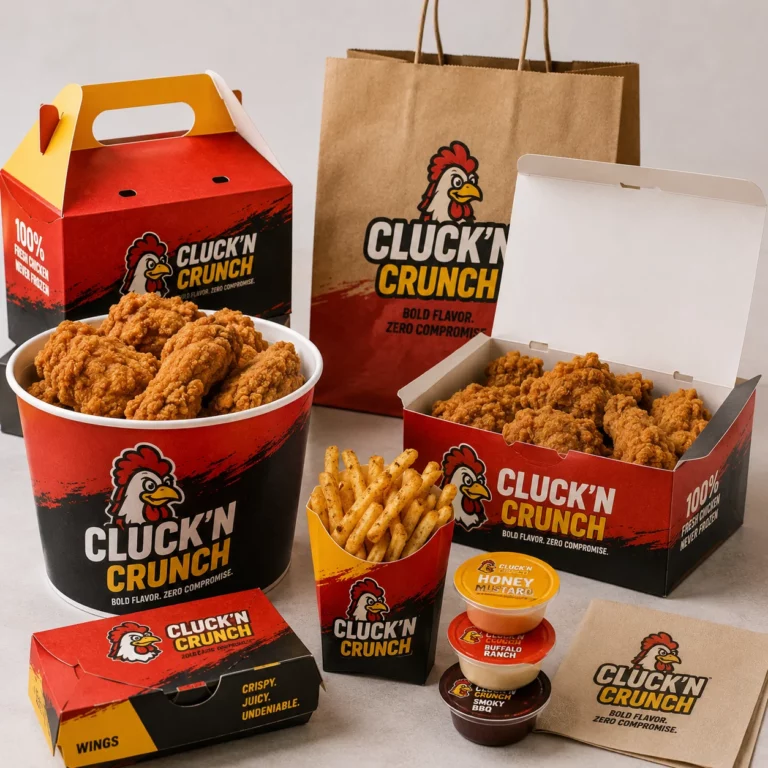
Burger, fries and meal boxes
Food-grade kraft or white board with grease-resistant or PE-free coating. Specify portion size, venting and whether boxes nest for storage.

Bakery and dessert
Cake, cookie and pastry boxes
Window boxes and handle boxes in food-safe card. Check window film, insert trays and whether the box must carry weight like a whole cake.
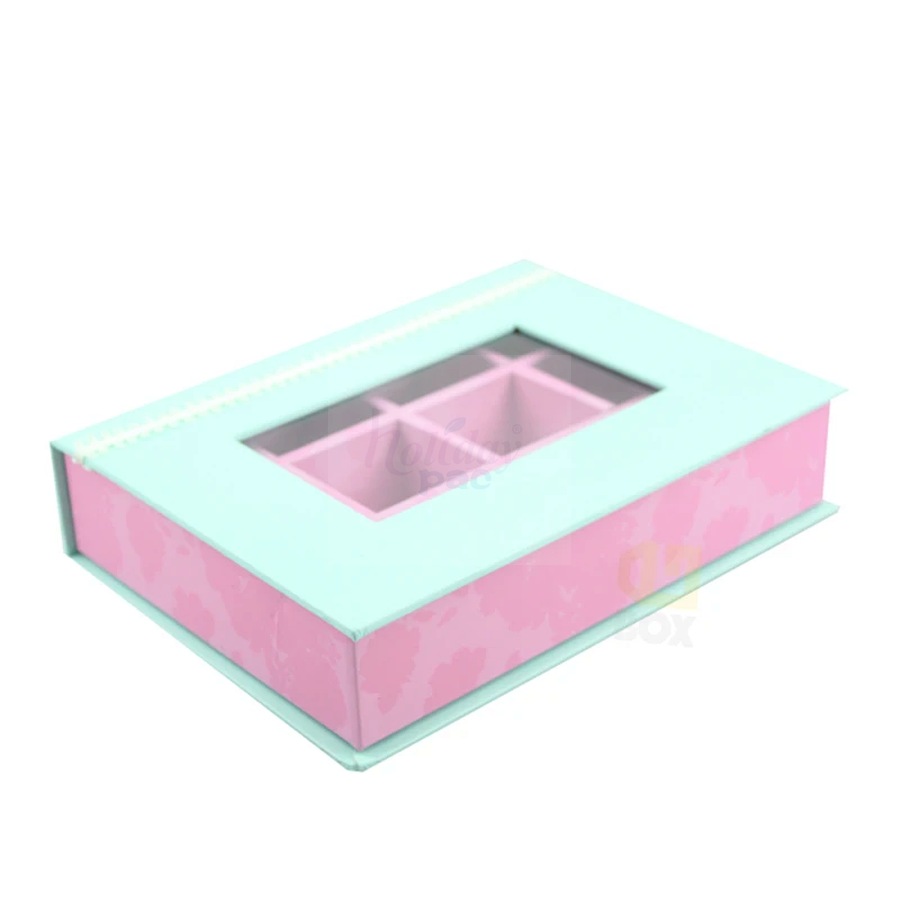
Chocolate and confectionery
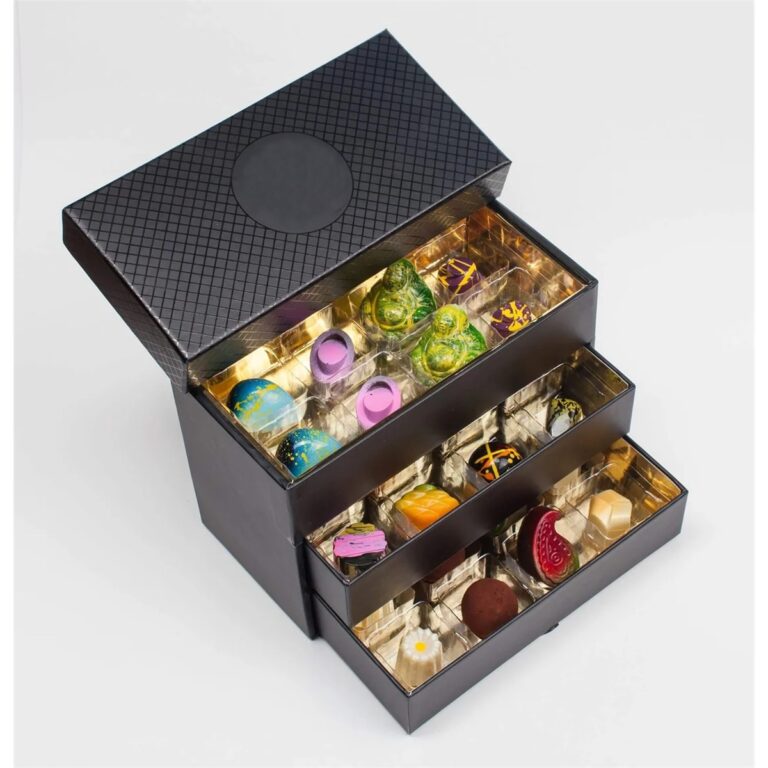
Printed and rigid gift boxes
Rigid or folding boxes with a food-safe inner tray or liner. Presentation matters: foil, emboss, ribbon and windows are common.
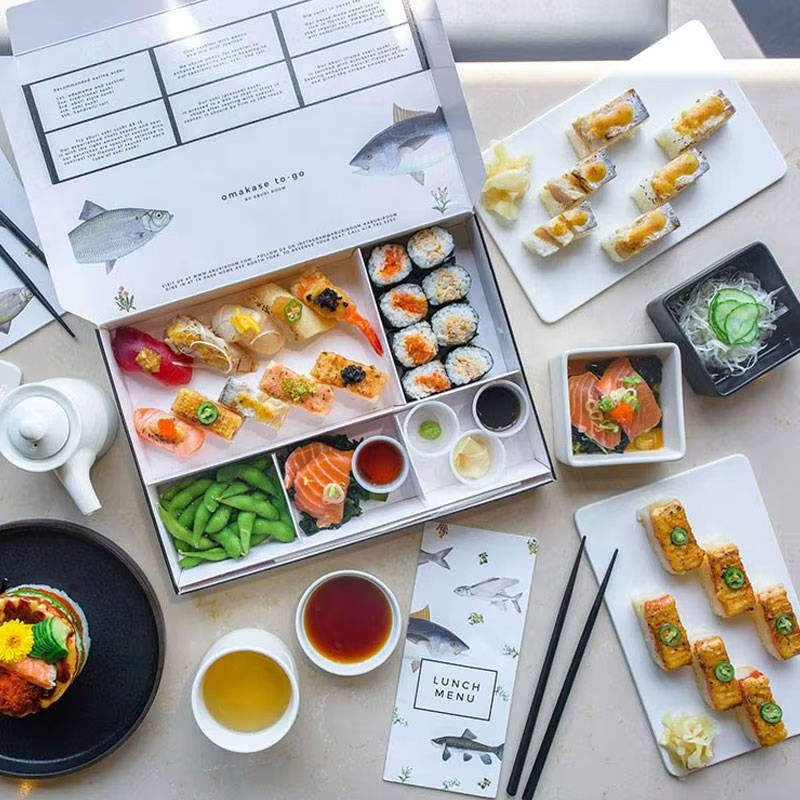
Sushi and bento
Sushi trays and bento boxes
Compartments, sauce holders and lids that hold chilled food. Moisture resistance and a tight fit in delivery bags matter most.
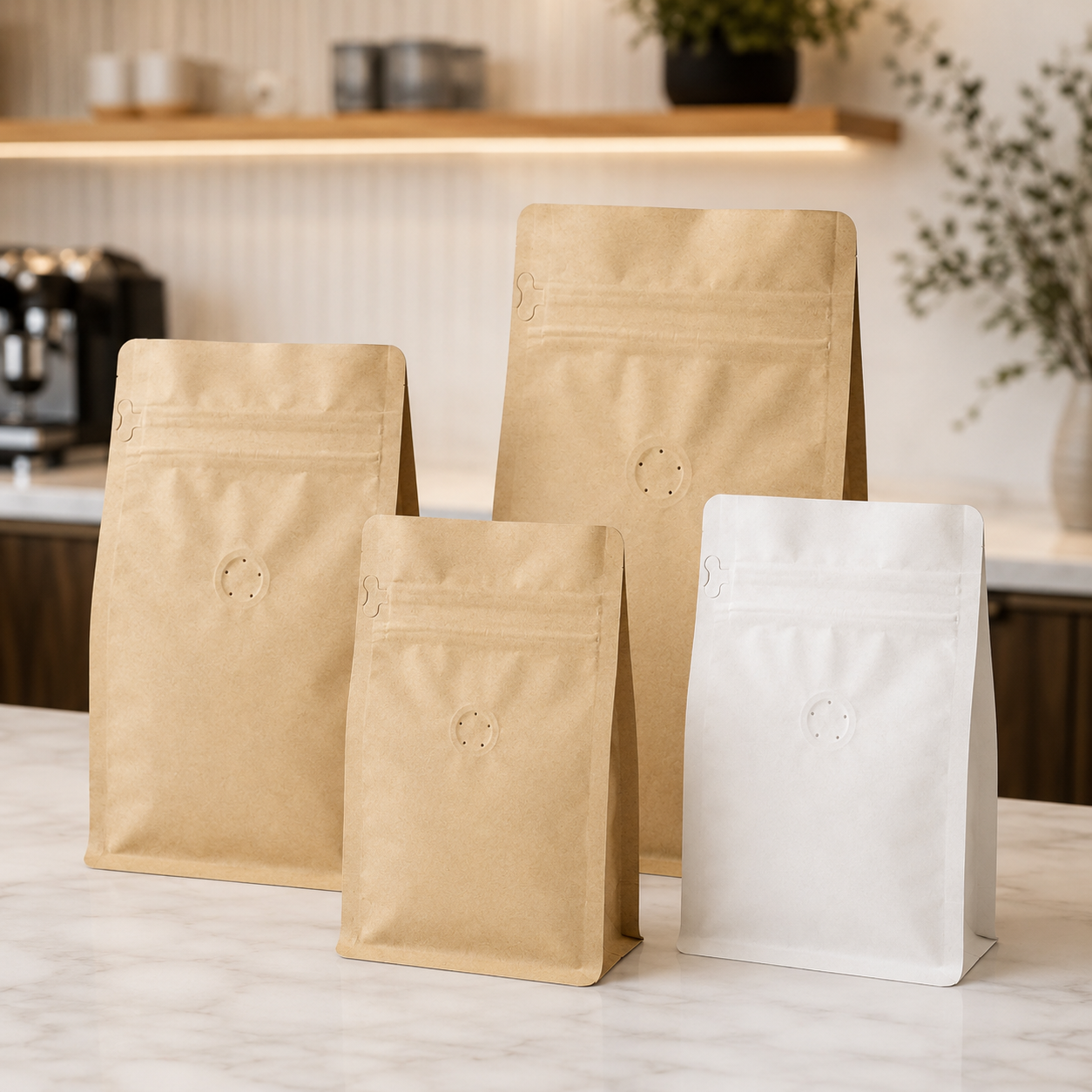
Bags and pouches
Paper bags and stand-up pouches
Bakery bags, takeaway bags and pouches for coffee, tea and snacks. Pouches may need a barrier layer, zipper or degassing valve.
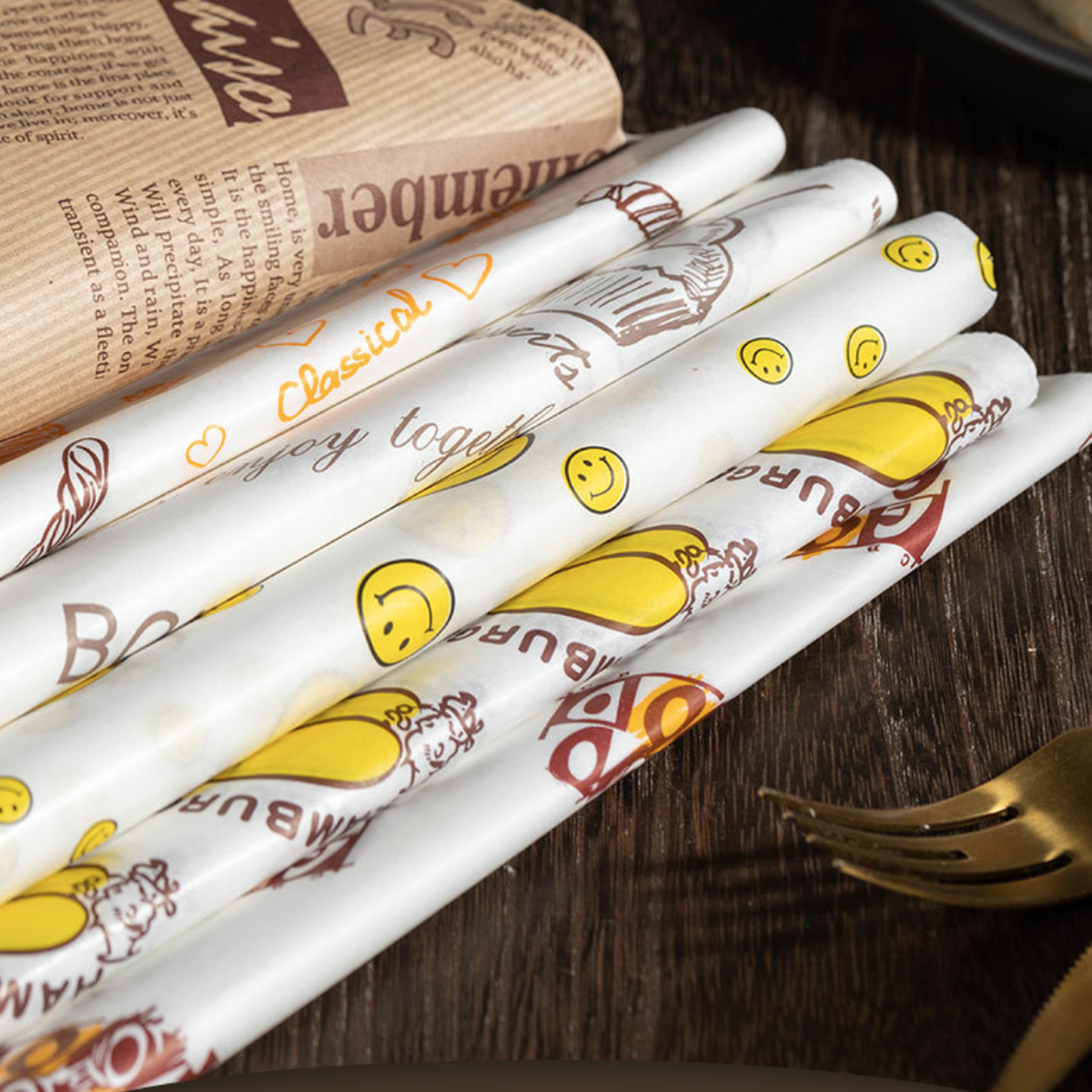
Wraps and liners
Greaseproof wraps and parchment
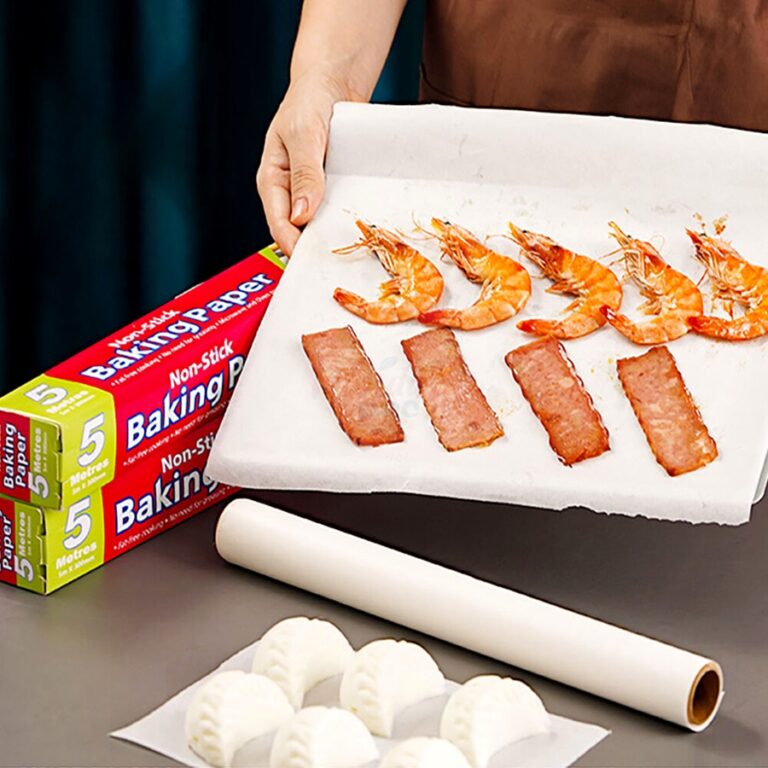
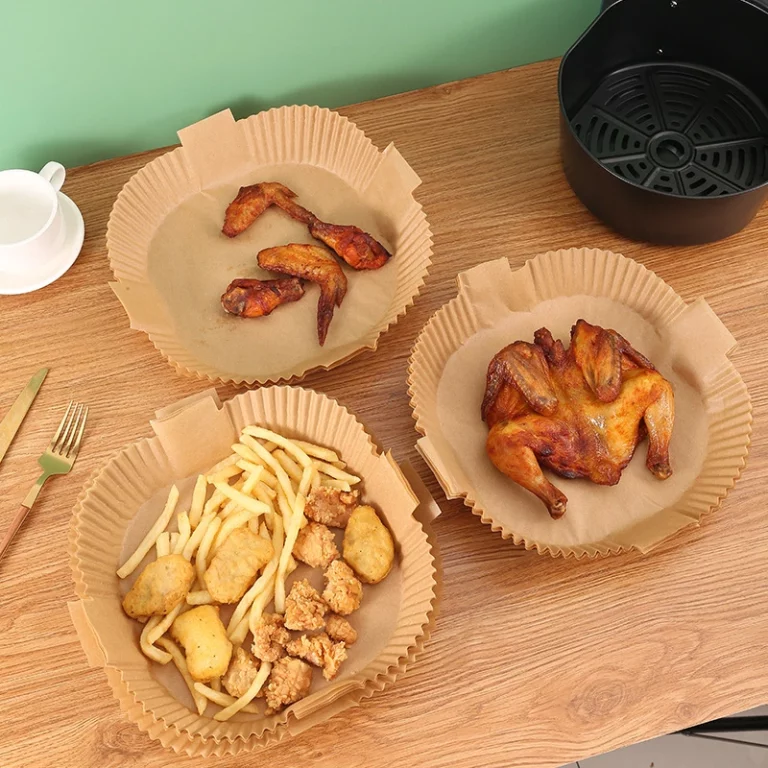
Printed burger and sandwich wraps, basket liners, baking paper and air fryer liners. Ask for PFAS-free greaseproof grades.
03 | Materials and barriers
Which paper and barrier suits your food?
The paper gives the structure; the barrier keeps grease and moisture where they belong. This is the part of the brief that most often changes the price — and the compliance paperwork.
| Material | Look | Grease / moisture | Typical uses | Notes |
|---|---|---|---|---|
| Food-grade kraft board | Natural, brown | Low without coating | Takeaway boxes, bakery boxes, bags | Popular for eco-friendly food packaging; add a barrier for oily food |
| White food-grade card | Clean, bright print | Low without coating | Cake boxes, retail food boxes, sleeves | Best colour reproduction for logos |
| Coated or PE-free barrier board | As base board | Medium to high | Burger boxes, salad and noodle boxes | Water-based barriers can improve recyclability versus PE lamination |
| Greaseproof paper | Thin, flexible | High grease resistance | Wraps, liners, bakery sheets | Ask for PFAS-free grades and test reports |
| Silicone-coated parchment | Smooth, non-stick | High, heat-resistant | Baking paper, air fryer liners | Check the rated temperature for ovens and air fryers |
| Rigid greyboard with printed wrap | Premium | Needs inner tray or liner | Chocolate and gift boxes | The food should sit in a food-safe tray, not touch the wrap paper |
04 | Printing your logo
How to get custom printed food packaging right
Custom food packaging boxes with a logo are the most common request we receive — and the easiest to get wrong at the artwork stage. A few rules help:
- Work on the dieline. Ask the factory for the dieline of your exact structure and place artwork on it, including glue flaps and folds.
- Give colour references. Pantone numbers keep brand colours consistent across boxes, bags and wraps, especially on kraft.
- Use food-safe inks for any surface that may touch food, and keep heavy ink coverage off direct-contact areas where possible.
- Match the finish to the format. Foil, emboss and spot UV suit gift and chocolate boxes; simple 1–2 colour print suits wraps, bags and takeaway boxes.
Ordering several formats — for example a box, a bag and a printed sandwich wrap — from one supplier makes colour matching much easier.
05 | Food-contact and PFAS compliance
What to check before food packaging ships to your market
Food packaging is regulated as a food-contact material. Your supplier should be able to share test reports for the exact paper, coating and inks used — not just a general certificate. The main frameworks buyers ask about are:
- United States: FDA food-contact regulations (21 CFR), plus a growing number of state laws restricting intentionally added PFAS in food packaging.
- European Union: the framework regulation for food-contact materials (EC 1935/2004) and good manufacturing practice (EC 2023/2006). The EU Packaging and Packaging Waste Regulation (PPWR) applies from August 2026 and includes PFAS limits for food-contact packaging, along with recyclability and labelling requirements being phased in.
- Germany and other markets: LFGB testing is often requested by EU retailers.
- Forest and fibre sourcing: FSC paper and, for EU importers, EUDR traceability documents are increasingly requested.
Rules change, and retailers often add their own requirements, so confirm the current list with your buyer or compliance team at the brief stage. For a deeper look, see our PPWR compliance guide for food packaging suppliers and our PFAS-free greaseproof paper guide.
06 | Cost and MOQ
What drives the price of custom food packaging
Two quotes for the “same” box can differ a lot. These are the factors that usually explain the gap.
Structure
A simple tuck or auto-lock box costs less than a rigid box with inserts, handles or windows.
Board and barrier
Heavier board, special barriers and PFAS-free greaseproof grades add cost but prevent failures.
Print and finish
Number of colours, print coverage, foil, embossing and lamination all change the price.
Quantity
Set-up costs are spread over the run, so unit price falls as volume rises. Ask for two or three quantity breaks.
Tooling
New sizes need a cutting die; custom moulds (for example sushi push tubes) cost more up front.
Packing and freight
Flat-pack structures and carton-optimised packing lower freight, especially for export.
Documents
Food-contact test reports for new materials may add time and cost the first time.
Lead time
Rush orders limit material choices. Planning seasonal packaging early keeps options open.
07 | From brief to delivery
How a custom food packaging project runs
A well-run project follows the same six steps, whatever the format:
- Brief: food, portion size, format, quantity, market and delivery date.
- Structure: board, barrier, closure and insert are chosen and a dieline is prepared.
- Artwork proof: your design is placed on the dieline and approved.
- Sample: a physical sample is tested with your real food — heat, grease, fit and carry.
- Production: bulk runs to the approved sample.
- Inspection and delivery: quality checks, export packing and shipment to your warehouse or distributor.
Testing the sample with real food is the step buyers most often skip — and the one that catches most problems.
FAQ
Custom food packaging questions buyers often ask
What is custom food packaging?
Custom food packaging is food-contact packaging — boxes, bags, wraps and liners — made to your size, material and printed design instead of generic stock packaging.
Can I get custom food packaging boxes with my logo in small quantities?
Often, yes. MOQ depends on the structure, material and print method. Simple printed boxes, bags and wraps usually allow smaller trial runs than rigid gift boxes or custom moulded formats.
What is the most eco-friendly food packaging material?
For many foods, recyclable paperboard or kraft with a water-based or PE-free barrier is a strong choice. Choose FSC paper and PFAS-free greaseproof grades, and check how the packaging is recycled or composted in your market.
Is printed food packaging safe for direct food contact?
It can be, when the paper, coating and inks are food-contact compliant for your market. Ask your supplier for test reports (for example FDA or EU food-contact tests) for the exact materials used.
What does PFAS-free food packaging mean?
It means no intentionally added PFAS chemicals are used to make the paper grease-resistant. Several US states and the EU now restrict PFAS in food packaging, so PFAS-free greaseproof papers and barriers are becoming the default.
How long does a custom food packaging order take?
Timelines depend on the format and quantity. Plan time for structure design, artwork proofing and sampling before bulk production, and allow extra time for export shipping.
Start your food packaging project
Get custom food packaging made for your menu
Browse our custom food and beverage packaging range — takeaway boxes, bakery and chocolate boxes, sushi packaging, paper bags and greaseproof wraps — or send us your brief. We reply with a structure, material and quotation direction within 24 hours.