

HOLIDAYPAC FACTORY · PAPER BAG BUYING GUIDE
For bakery, takeaway and retail packaging buyers, the right paper weight starts with the packed product and the bag structure.
Quick answer: Paper bag GSM means grams per square metre: the mass of the paper per unit area. It does not directly measure thickness or the carrying capacity of a finished bag. Choose a paper grade and bag construction together, then approve the complete bag with your actual contents.
A heavier paper bag can feel more substantial, but buying on GSM alone leaves important questions unanswered. Will the handle attachment hold? Does the base fit a meal box? Will warm pastries soften the paper during the intended journey? Those checks matter alongside the number on the paper specification.
At Holidaypac Factory, a useful enquiry begins with bag dimensions, contents, packed weight, handling conditions and the desired presentation. This guide explains how to turn those details into a clearer sampling brief.
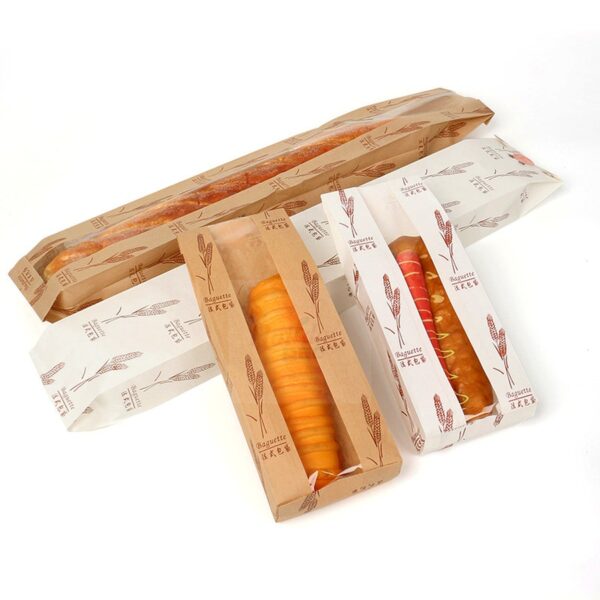
What does GSM mean for paper bags?
GSM is a measure of grammage. A 100 GSM paper has a mass of 100 grams per square metre of sheet. It does not mean that the finished bag weighs 100 grams: bag dimensions, gussets, overlaps, handles and reinforcement change the amount of material used.
Keep three properties separate when comparing quotations:
- Grammage: paper mass per unit area, expressed in g/m² or GSM.
- Thickness: the physical thickness of the sheet, usually specified separately.
- Finished-bag performance: how the converted bag, seams and handles behave with the intended contents.
For example, a hypothetical 0.20 m² blank made from 100 GSM paper contains about 20 grams of that paper. This is a material-mass calculation, not a statement that the bag can carry any particular load.
Paper bag GSM by format: starting points for a sample brief
The ranges below are illustrative discussion ranges drawn from Holidaypac’s paper-bag planning guide. They are not universal standards, confirmed stock specifications or load guarantees. Available paper grades and the final construction must be confirmed for the order.
| Bag format | Illustrative paper-weight range | What to check beyond GSM |
|---|---|---|
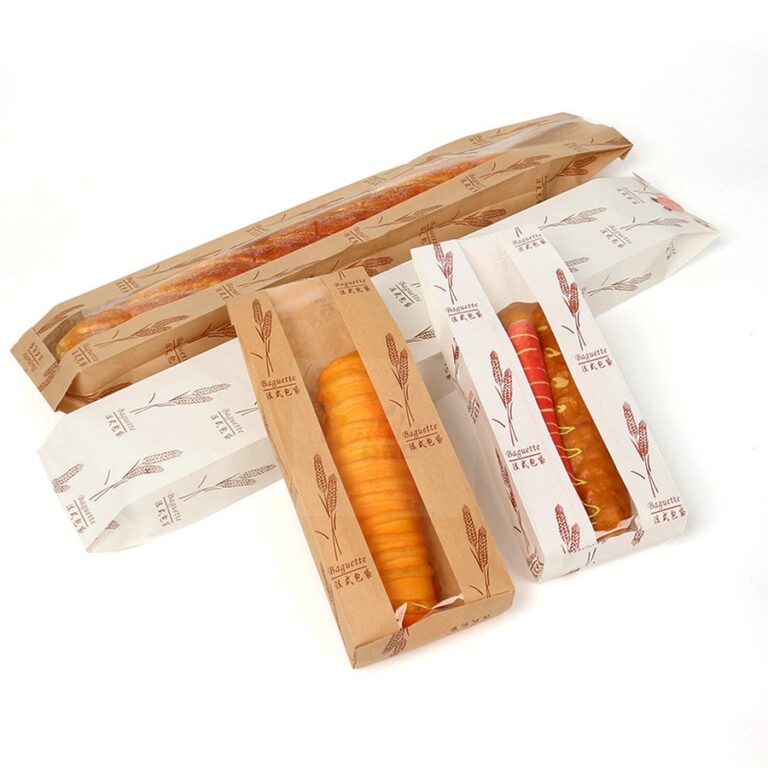
| Flat or pinch-bottom bakery bag | 40–80 GSM | Product fit, grease handling, seam condition and any window attachment |
| SOS / block-bottom kraft bag | 50–120 GSM | Usable base dimensions, bottom construction, stability and packed handling |
| Twisted-handle kraft carrier | 80–150 GSM | Handle patches, attachment, base seams and the complete packed load |
| Die-cut handle bag | 120–200 GSM | Stress around the cutout, top reinforcement and product weight distribution |
| Luxury Euro tote | 180–300 GSM | Top and base reinforcement, fold quality, handle fixing and print finish |
Use this table to choose samples to compare, not to skip testing. A higher number does not automatically make one bag suitable for everything a lower-GSM bag cannot carry.
Why kraft paper GSM does not tell the whole strength story
Paper grade and construction affect the result. A quotation should identify the proposed grade, bag size, seams, handle type and reinforcement rather than giving only a GSM number.
As an industry example, paper producer Mondi describes selecting different kraft-paper grades for transport and handling applications and reports a customer project that reduced paper weight while maintaining required strength and print quality. This illustrates why material selection matters; it is not evidence that Holidaypac uses that specific grade or achieves the same result. See Mondi’s transport and handling kraft-paper overview.
For a large carrier, examine how the contents load the bottom and handles. For a bakery bag, assess whether the selected paper handles the actual food and holding conditions. Neither question can be answered reliably by converting GSM into a generic kilogram rating.
Choose the paper around the foodservice job
Bakery bags: distinguish direct contact from the outer carrier
A bag holding an unwrapped pastry has a different role from a carrier holding closed pastry boxes. Confirm where direct food contact occurs, what grease protection is needed and whether the food is packed warm. Review the selected material’s supporting documents for that use; a report for another paper product does not establish suitability for this bag.
For format examples, browse Holidaypac Factory bakery paper bags. Match the bag opening and usable internal dimensions to your largest product before agreeing paper weight.
Takeaway carriers: start with the packed meal
Measure the footprint of the actual meal containers and include accessories in the packed-weight trial. Check that the containers sit as intended and that staff can lift, carry and hand over the complete order. Consider grease or condensation reaching the bag during the expected journey.
Compare suitable structures in the kraft paper bags with handles range. Confirm the chosen construction with a sample rather than relying on the category name.
A practical sample-comparison checklist
- Keep the comparison fair. Record bag size, paper grade, GSM, handle construction and reinforcement for each sample. Changing several variables makes the result harder to interpret.
- Use the intended contents. Pack the normal order, including boxes and accessories. Observe bottom sag, seam opening, handle movement and tipping.
- Include the holding period. Review performance after the planned time and conditions. A dry empty bag does not represent a warm takeaway order.
- Review appearance after use. Check grease marks, window attachment, print rubbing and folds. Carrying strength is only one part of the customer experience.
- Record acceptance requirements. Agree any formal test method, load, duration and acceptance criteria with the supplier. This practical checklist is not a substitute for a validated load test.
What to send for a custom paper-bag quotation
Send Holidaypac Factory a concise brief with:
- Bag width, gusset depth and height, with the measurement convention stated.
- Contents, normal packed weight and any direct food-contact requirements.
- Paper colour and grade preference, proposed GSM and handle or reinforcement needs.
- Logo, print colours, window requirement and artwork placement.
- Quantity, inner packing, carton requirements, destination and requested delivery date.
If you have not chosen a GSM, describe the job and request sample options. After approval, keep the drawing, paper specification, artwork version and packed sample as the reference for repeat purchasing.
Frequently asked questions
Is 120 GSM always stronger than 100 GSM?
No. GSM alone does not establish finished-bag strength. Compare paper grade, dimensions, seams, handles and reinforcement, then test the complete bags under the same intended conditions.
Can I convert paper bag GSM into a kilogram capacity?
No universal conversion is reliable. Request a load rating supported for the specific finished-bag construction and agreed test conditions.
What GSM should I choose for bakery paper bags?
Start with whether the bag directly contacts food or carries closed packs. Product size, grease, warmth, window construction and handling requirements determine which samples to compare. The illustrative ranges above are starting points, not a final specification.
Does higher GSM make a bag greaseproof?
No. Grammage alone does not establish grease resistance. Specify the required material or barrier construction and check it with the actual food and intended contact conditions.
Should I use the same paper for every bag size?
Review each size and use case. A small pastry bag and a large handled takeaway carrier place different demands on the paper and converted structure.
Build the specification around your product
Holidaypac Factory can discuss the bag format, material, printing and sample requirements for your packaging project. Send your paper-bag brief so the quotation starts with the product you need to pack and the way your customer will carry it.