

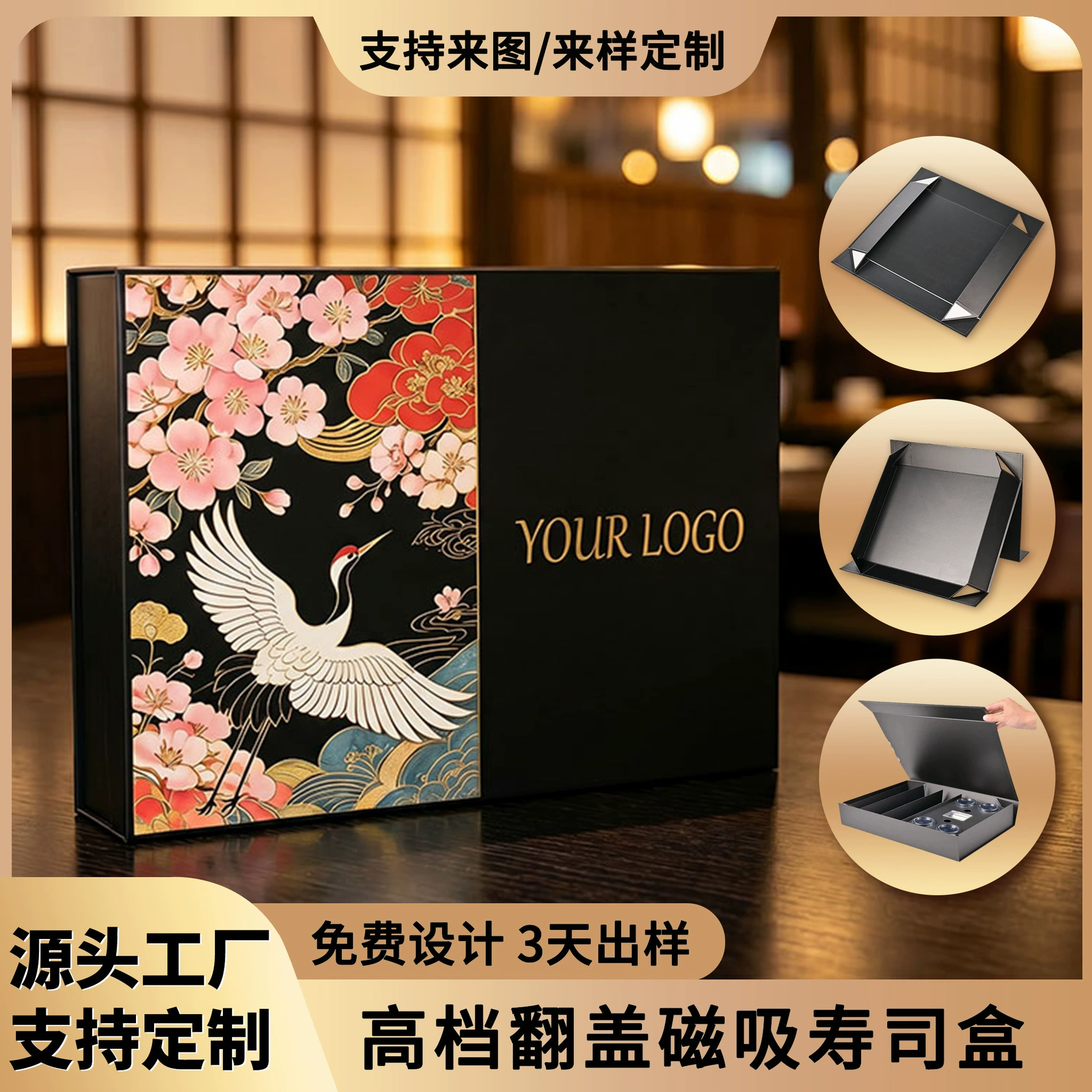
A practical Holidaypacfactory buyer guide to custom one-piece foldable magnetic sushi gift boxes for restaurants, omakase brands, premium takeaway kitchens, supermarket chilled counters and food gifting brands that want a luxury unboxing without paying full rigid-box freight.
8 Product Recommendations for Sushi Gift Box Buyers
These links are placed first because they match what sushi, omakase and food gifting buyers actually source alongside the one-piece foldable magnetic box: sushi packaging, magnetic boxes, rigid and gift boxes, drawer boxes, takeaway boxes, window boxes and the full restaurant packaging range.
Why the One-Piece Foldable Magnetic Sushi Gift Box Fits 2026 Buying
Sushi is no longer only dine-in. Delivery, click-and-collect, chilled retail and festival gifting have turned the sushi box into a brand touchpoint. In 2026, buyers want a box that looks rigid on the table but ships flat, assembles in seconds and controls landed cost. The one-piece foldable magnetic box gives the shelf presence of a luxury gift box with the freight savings of a flat-pack.
What “One-Piece Fold” Actually Means for the Buyer
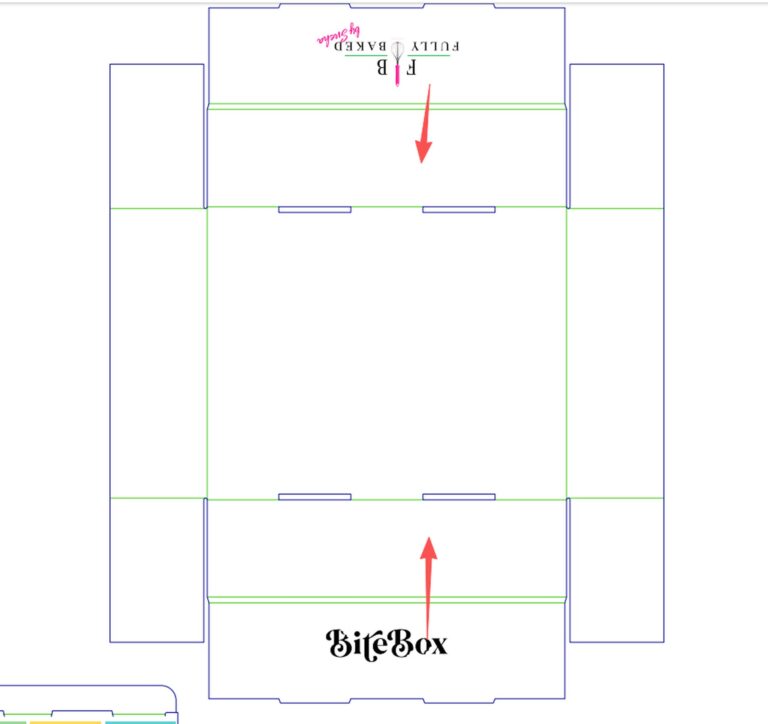
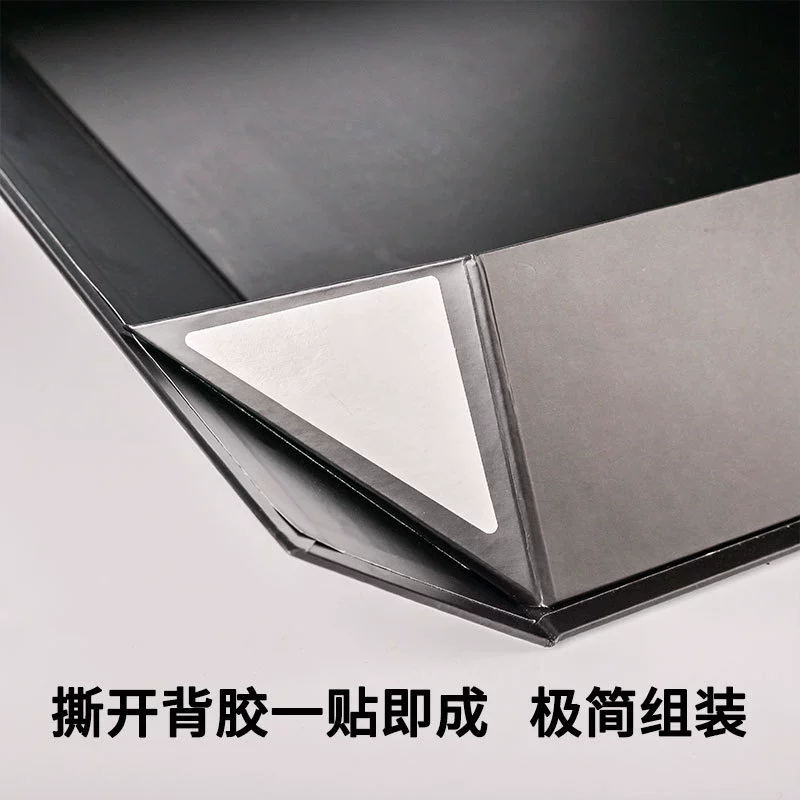
Traditional rigid sushi boxes cannot collapse, so you ship air and store bulky cartons. A one-piece foldable box is scored to fold from a single flat blank, and the corners carry a peel-and-stick adhesive triangle. Staff simply remove the film, press the corner, and the wall locks upright — no tape, no tools. Freight is charged closer to board weight, pallets hold far more units flat, and kitchens build only what a shift needs.
How the Magnetic Flip Lid Changes the Unboxing
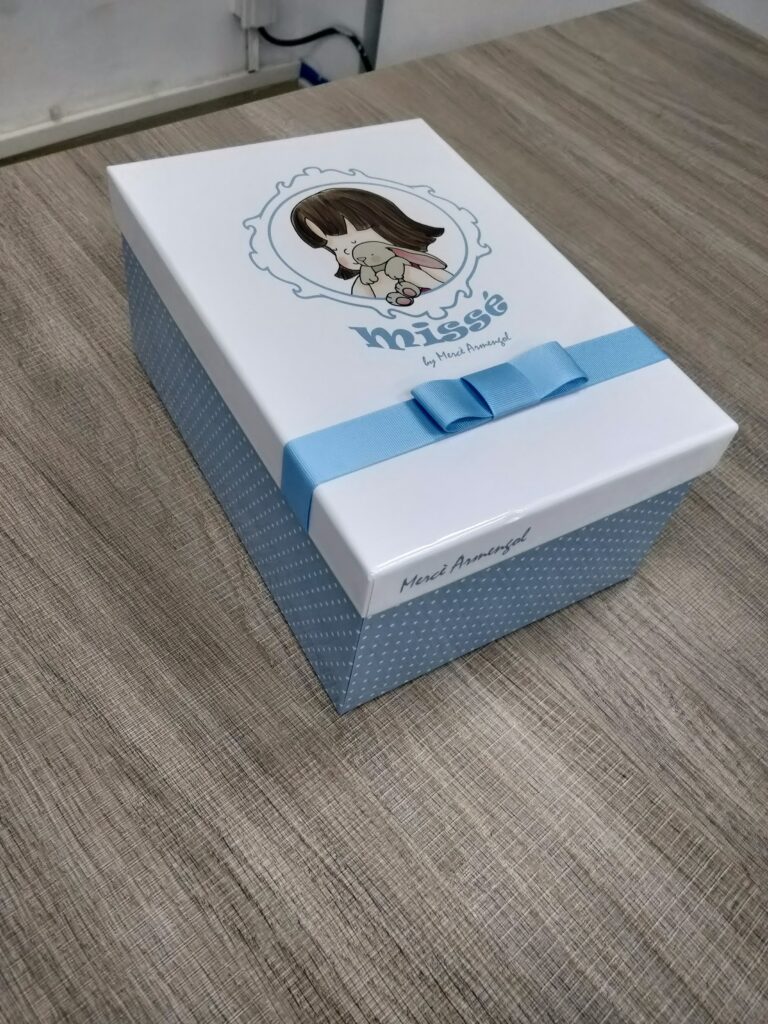
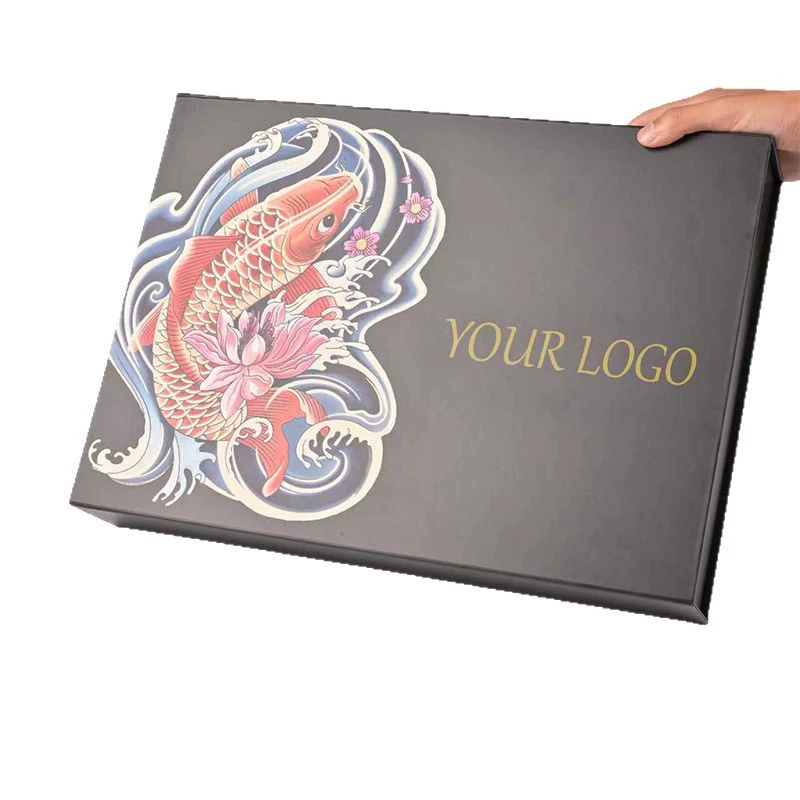
The magnetic closure is the detail customers feel first. Hidden magnets pull the flip lid shut with a soft, confident click, the premium cue that separates a takeaway container from a gift, and they keep the lid closed so nigiri and rolls stay in place during delivery. Match magnet strength to the real filled weight: a 6-piece box and a 24-piece platter need different magnet counts.
Insert Trays, Compartments and Sauce Control
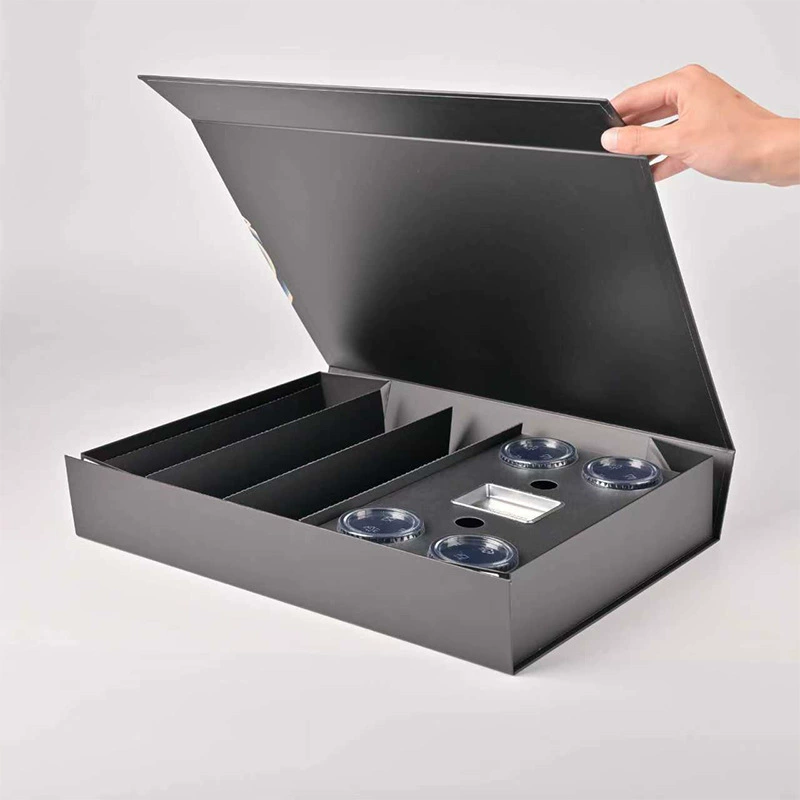
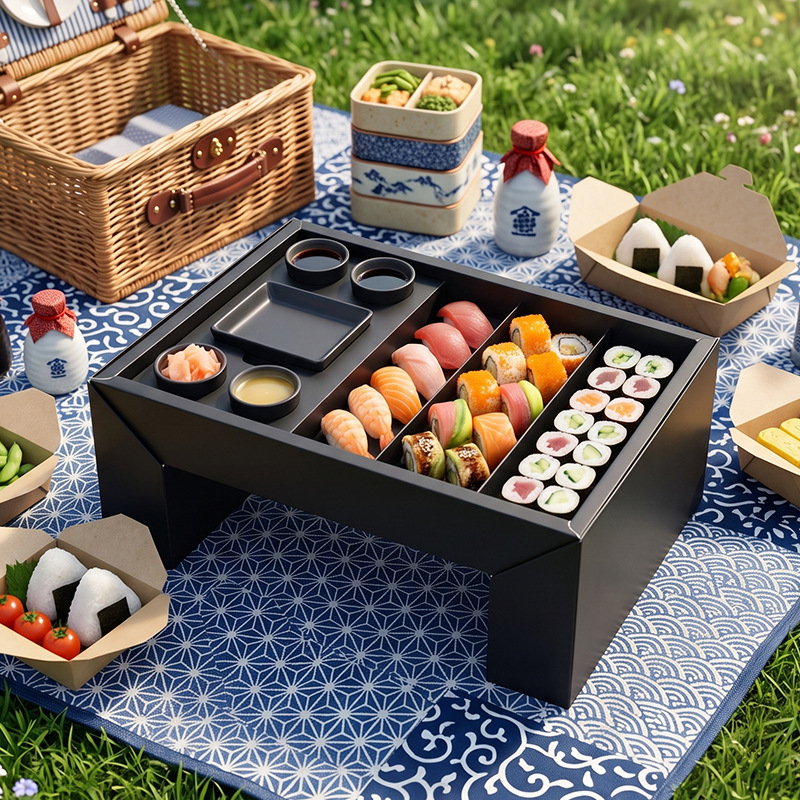
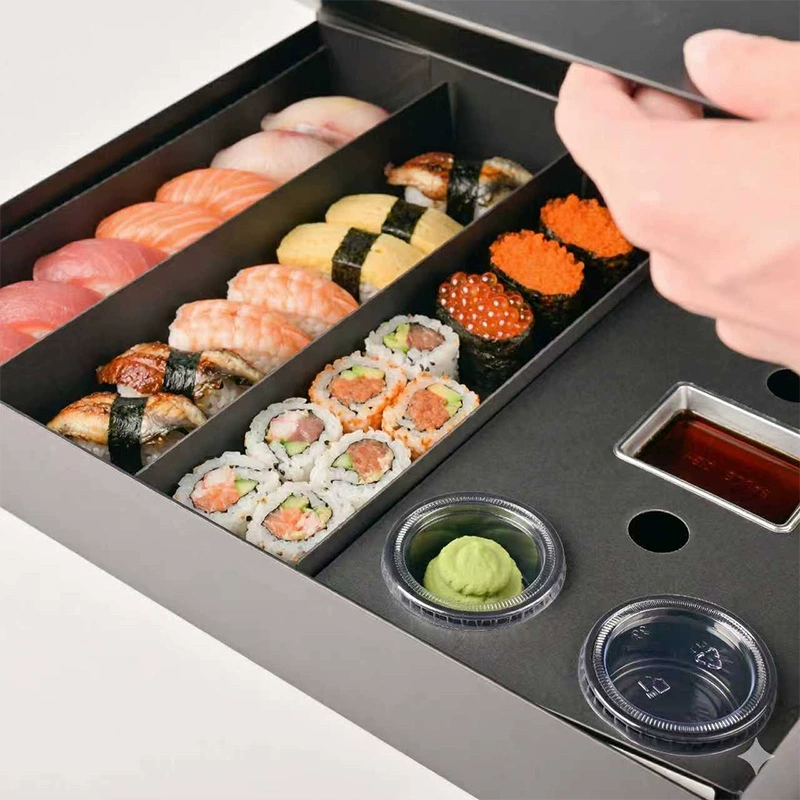
The inside earns repeat orders. A good structure separates rolls from sashimi, holds sauce cups so soy does not spill, and gives wasabi and ginger their own space, while stopping pieces from sliding in transport. Options buyers compare: fixed divider walls, thermoformed trays for exact piece counts, die-cut holes sized to standard sauce cups, and removable trays so one outer box serves several menus.
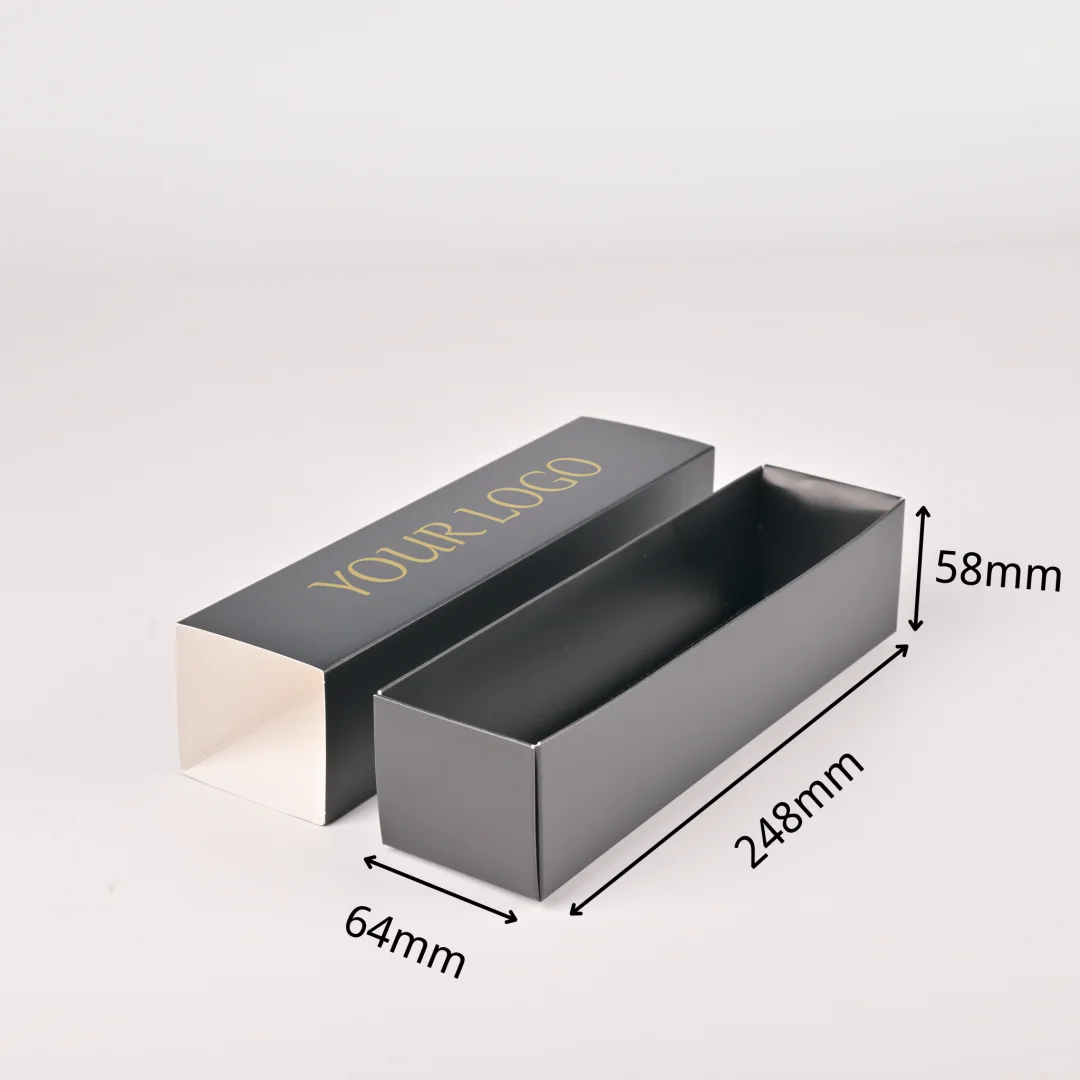
How the Magnetic Box Compares to Other Sushi Formats
Before committing, buyers weigh the magnetic gift box against the rest of the family so the box matches the price point and channel: rigid two-piece boxes for the highest end, drawer boxes with printed sleeves for retail branding, kraft or black bento boxes for everyday volume, molded fiber trays with film lids for chilled counters, push-pop tubes for novelty, and window boxes for deli shelves.
How Buyers Can Build a Complete Sushi Packaging System
The magnetic gift box works best as the hero of a family, not a lone SKU. Pair the premium box for gifting and omakase with a mid-tier drawer or bento box for daily menus, matching sauce cups, chopstick sleeves and a branded delivery bag. A shared print style keeps a restaurant consistent from the flagship gift set down to the everyday roll.
Test the Box With a Real Sushi Set Before Scaling
Before a repeat order, fill the box with the actual set weight, close it, and carry it in a delivery bag over a normal route. Confirm the magnet holds, the insert keeps pieces in place, no sauce migrates, and the print survives handling and chilled-food condensation. Assemble a few flat blanks yourself to check the peel-and-stick corners are intuitive for your team.

Custom Sushi Gift Box FAQ
Is a foldable magnetic box as strong as a rigid box?
For most sushi sets, yes. The folded walls and magnetic lid give a rigid feel while shipping flat; for very heavy platters, confirm board thickness and magnet count.
Can I print my own logo and Japanese-style artwork?
Yes. The box supports full custom print, gold foil logos and artwork such as koi, crane or sakura designs, plus your own brand colors.
Is the box food-safe for direct contact?
Sushi usually sits on a tray or food-grade insert. Confirm the food-contact grade and certification for your market before ordering.
How is it assembled?
Peel the film from the adhesive corners, press the walls upright, and the box locks into shape in seconds — no tape or tools.
What is the minimum order quantity?
MOQ depends on size and finish; send your spec and target volume for a tiered quote.