
Holidaypacfactory Buyer Guide Right-Sized Packaging Turns Less Space into More ValueRight-sized paper e-commerce packaging for retail brands is becoming a serious sourcing topic in 2026 because buyers are being asked to solve three problems at the same time: reduce unnecessary empty space, control freight cost and keep the unboxing experience worthy of the brand. For many direct-to-consumer teams, supermarket private labels, subscription brands and food gift sellers, the old habit of choosing a safe oversized carton and filling it with paper or air pillows is no longer good enough. The pressure is practical, not only environmental. Dimensional weight charges, warehouse space, customer complaints about waste, retailer sustainability scorecards and the European Packaging and Packaging Waste Regulation are all pushing packaging teams toward better size logic. The EU direction is especially important for exporters because grouped, transport and e-commerce packaging face a maximum empty-space ratio requirement by 2030. Buyers do not need panic; they need a smarter packaging brief. |
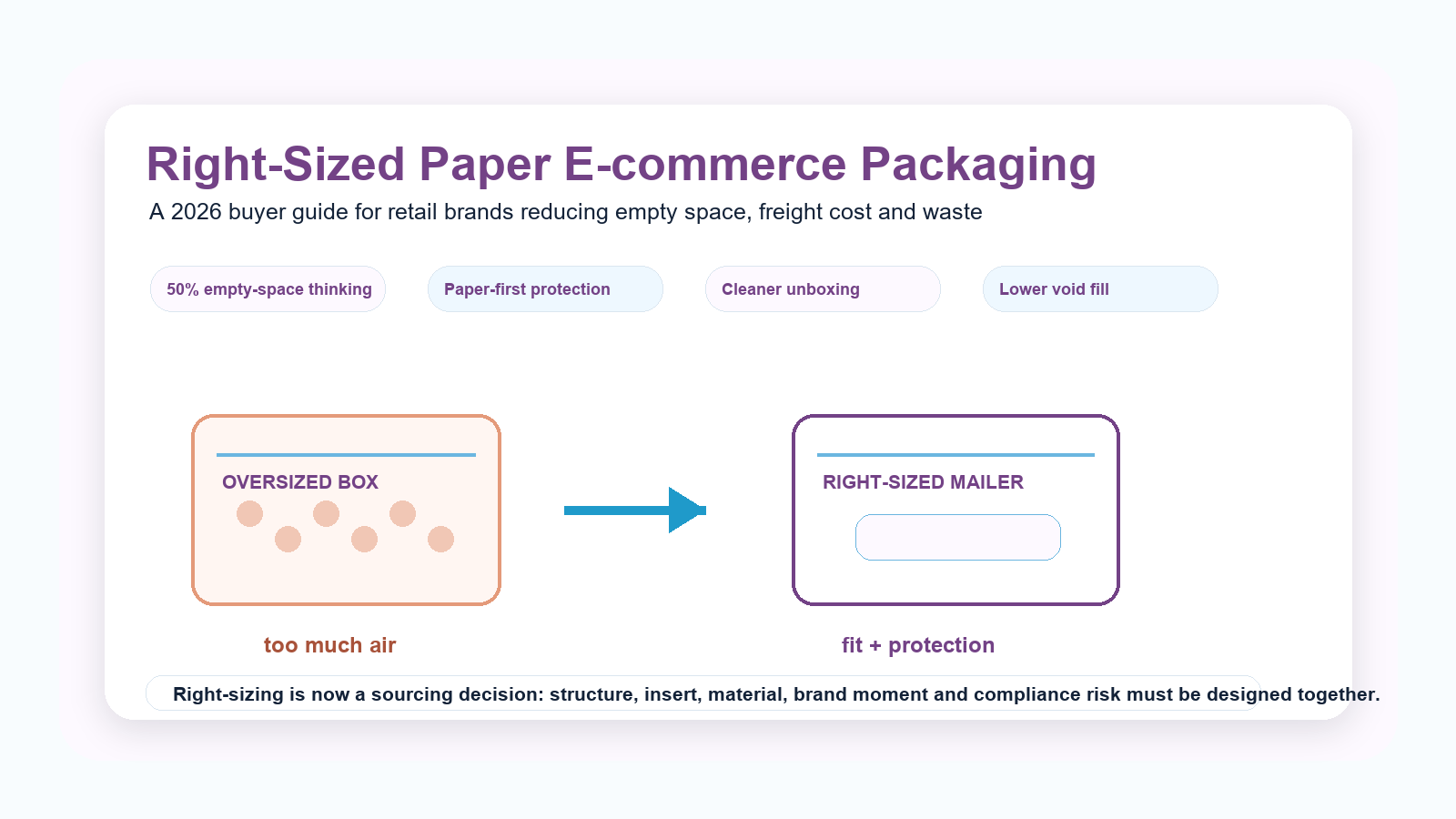
Holidaypacfactory sees right-sizing as a design discipline rather than a box-size exercise. A smaller box is not automatically better. A paper mailer can fail if it crushes a premium product. A rigid gift box can feel wasteful if it ships inside another large carton. A food packaging set can look responsible but still create damage claims if the insert does not hold the product. The right answer comes from matching product shape, protection need, customer emotion and shipping route.
This guide explains how retail brands can build a paper-first e-commerce packaging system that reduces void fill while keeping product value visible. It connects sourcing questions, structure choices, inner paper protection, QR disposal information, unboxing flow, export carton logic and HolidayPac’s culture-led view of packaging. Paper is simple, ancient, natural and close to the human hand; when it is designed with respect, less material can create more trust.
Build a Right-Sized Paper E-commerce Packaging System
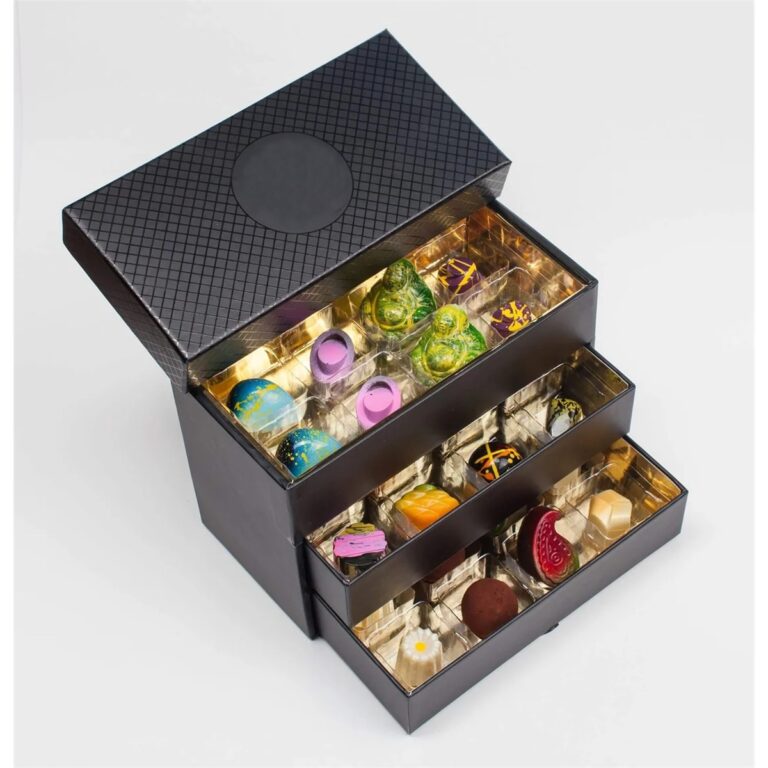
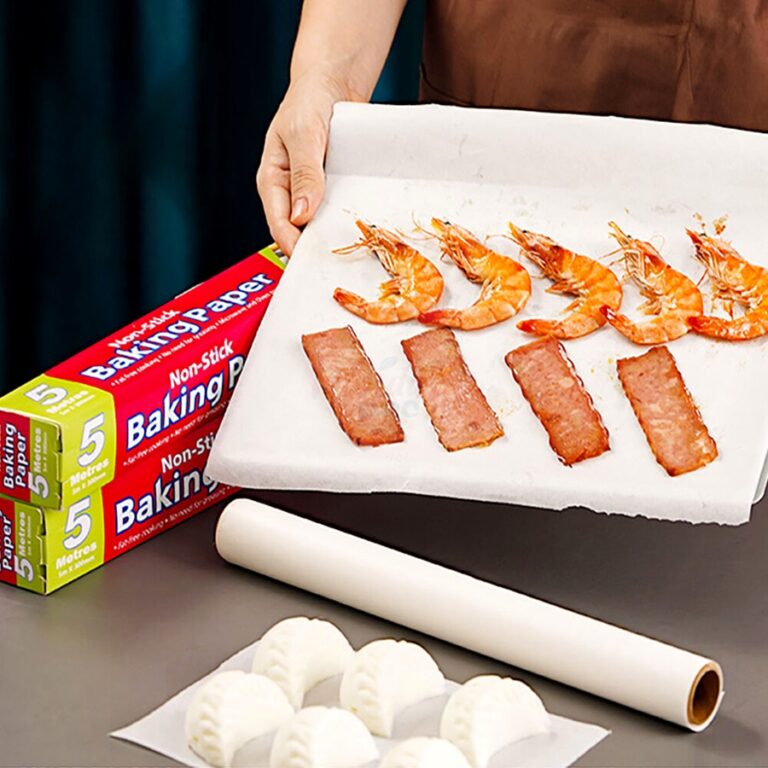
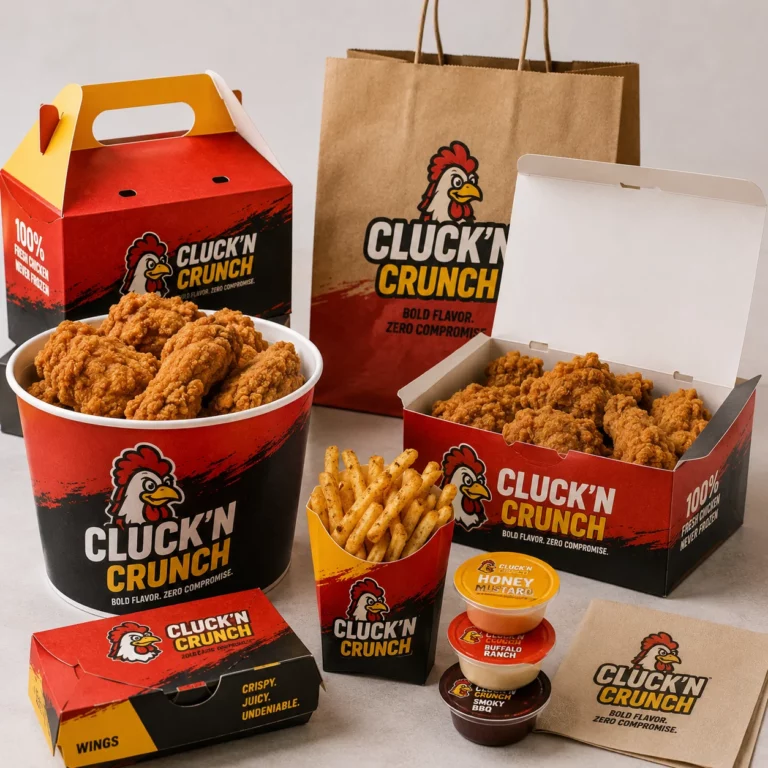
Right-sized paper e-commerce packaging for retail brands works best when the outer shipper, inner presentation package and paper protection are designed together. These Holidaypacfactory product paths help buyers compare paper packaging structures before approving a retail or DTC shipment program.





2026 market pressure Why Right-Sized E-commerce Packaging Matters in 2026Right-sizing matters because the shipping box has become a cost center, a compliance signal and a customer experience touchpoint at the same time. E-commerce packaging is still growing, but the way it grows is changing. Research from Smithers points to global e-commerce packaging passing the hundred-billion-dollar level by 2031, while right-sizing reduces overall shipment volume and weakens the automatic dominance of oversized corrugated cartons. That means buyers will still buy boxes, mailers and protective paper systems, but they will ask suppliers for smarter dimensions and better structure. At the same time, regulation is making empty space visible. The European Commission’s PPWR framework is intended to reduce packaging waste and create more harmonized rules across Europe. It includes direction that grouped, transport and e-commerce packaging should not exceed a 50% empty-space ratio by 2030. For brands selling into Europe, that target changes the way teams should think about a packaging brief today. |
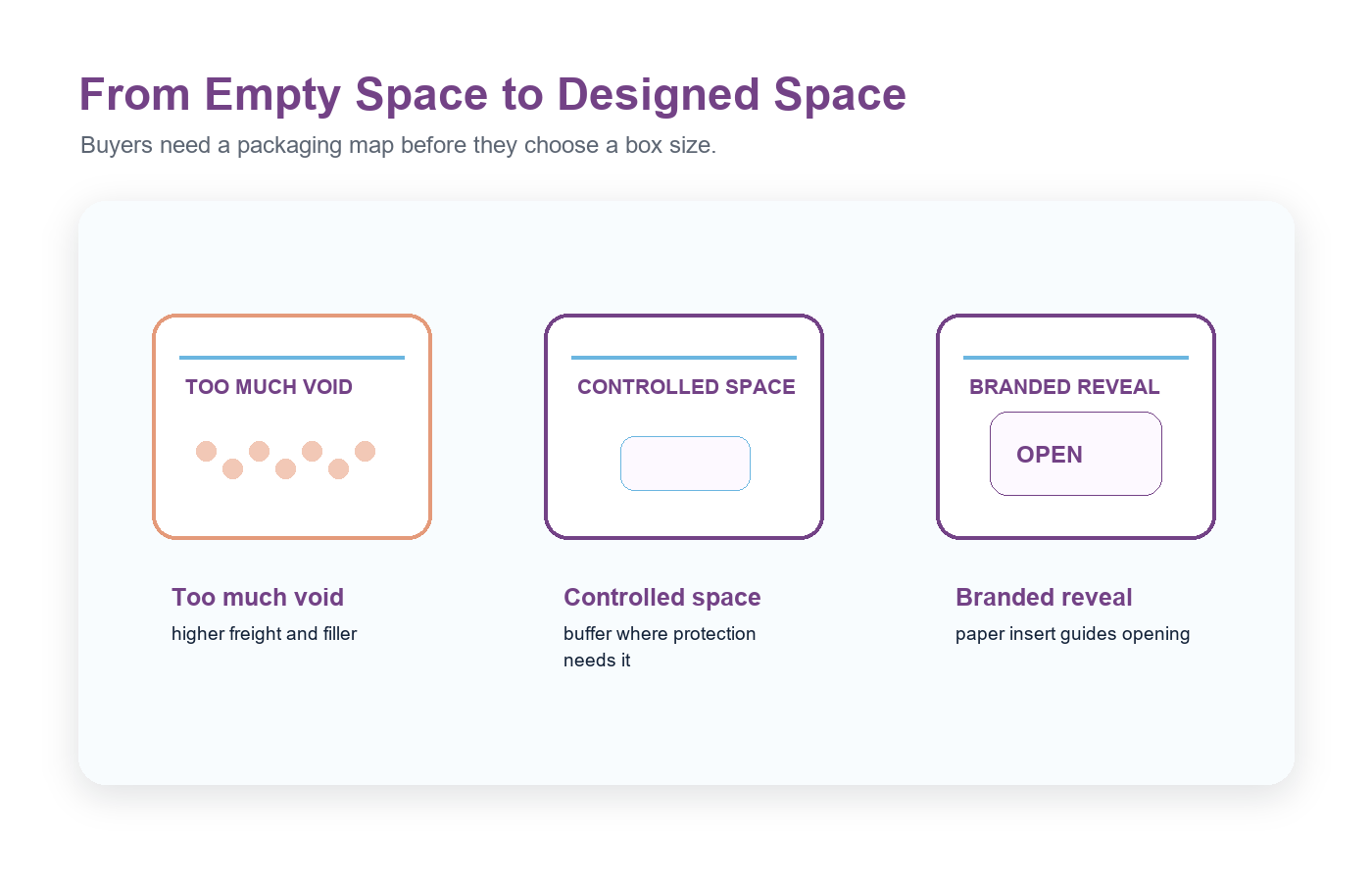
The buyer risk is not only legal. A customer who opens a large box and finds a small item surrounded by filler may immediately judge the brand as careless. A procurement manager may see the same issue as wasted cube, higher warehouse cost and unnecessary material. A retailer may see it as a sustainability-score problem. Right-sized paper e-commerce packaging helps these teams move from defensive explanations to visible improvement.
For Holidaypacfactory customers, the useful question is not, ‘What is the smallest box?’ The useful question is, ‘What is the smallest responsible paper-based packaging system that protects the item, communicates the brand and can be repeated at scale?’ That question creates better sourcing decisions.
structure choice Choose Packaging by Product Role, Not by HabitThe structure should follow the product’s role: protection, presentation, shipment density and repeat order efficiency. Many brands begin with a standard carton size because it is familiar. That is fast, but it often creates hidden waste. A cosmetic gift set, a chocolate box, a paper food tray bundle and an apparel accessory do not need the same e-commerce structure. Some products need a rigid presentation box inside a protective shipper. Some need a slim mailer. Some need a paperboard carton with a custom insert that prevents movement without filling the whole cavity. A stronger approach is to map SKUs by size range, weight, fragility and perceived value. Low-profile products may work with custom mailer boxes or paper mailers. Premium gift items may need custom magnetic boxes with a right-sized shipping carton. Food and beverage products may need food and beverage paper boxes designed for both display and dispatch. |
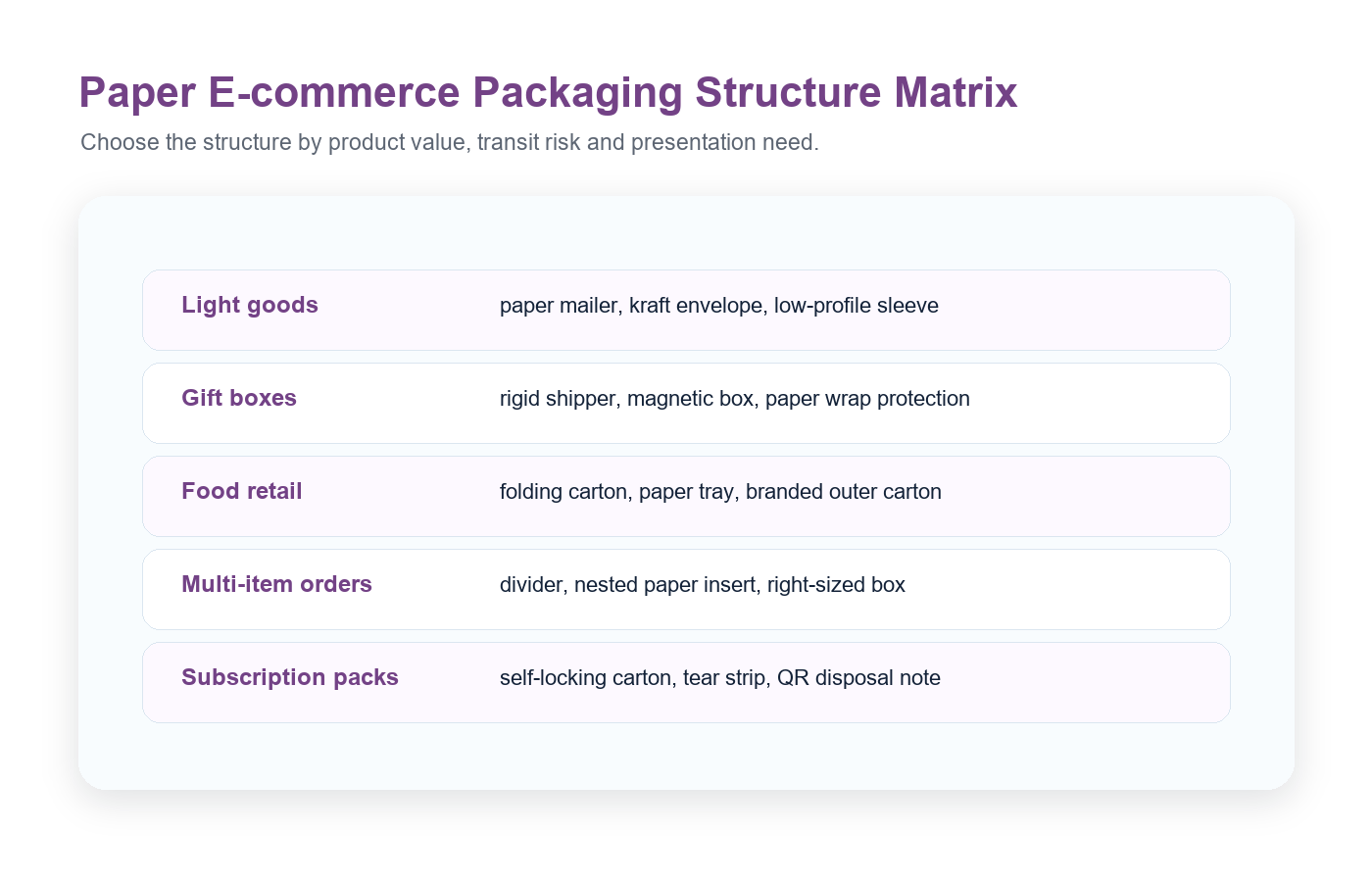
The best retail packaging programs usually include a small family of sizes rather than one universal box. A three-size or five-size system can reduce empty space while keeping purchasing manageable. The supplier should help the buyer test common order combinations, not only single-product samples. Multi-item orders are where right-sizing often wins or fails.
Holidaypacfactory recommends confirming three numbers before finalizing a structure: product outer dimensions, safe movement allowance and master carton packing plan. If the product needs an inner presentation package, include it in the test. If the product is seasonal, include the ribbon, sleeve, instruction card or promotional insert. Real dimensions prevent elegant drawings from becoming expensive shipping problems.
sourcing workflow A Practical Workflow for Right-Sized Paper PackagingThe workflow should start with SKU data and end with sample testing, not start with a catalog box. A right-sized packaging project should begin with a SKU map. Buyers should list the top-selling products, slow-moving products, fragile items, bundled order combinations and seasonal campaign items. This data tells the supplier where the packaging system must perform. Without the map, teams may optimize a sample that does not represent real order behavior. The next step is to define shipping routes. Parcel shipping, palletized export cartons, retail store replenishment and marketplace fulfillment all create different stress. A box that looks perfect for a brand’s website order may not survive a long export chain if the master carton, pallet pattern or humidity resistance is ignored. Right-sizing must be connected to logistics. |
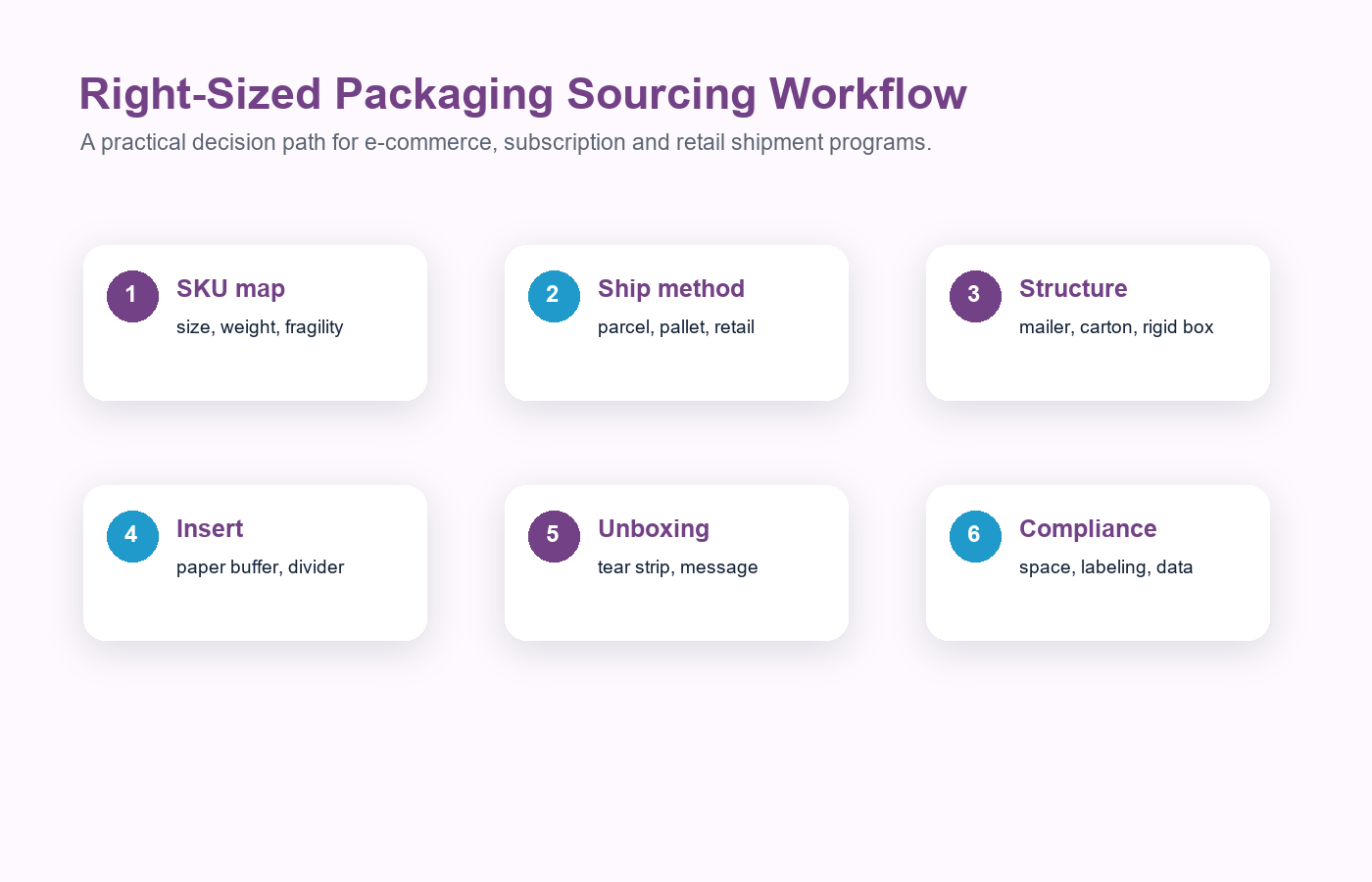
Once the route is clear, the supplier can propose structure options: paper mailer, self-locking carton, folding paperboard box, rigid gift box, drawer box, sleeve and carton combination, or paper insert system. For many brands, the best answer is not one format. It is a small architecture of related packaging sizes that share the same brand language.
Finally, the sample should be tested for packing speed, opening feel, product movement, print appearance and carton efficiency. A packaging buyer should ask the warehouse team to pack it, not only ask the marketing team to approve the look. Good e-commerce packaging is operational and emotional at the same time.
paper protection Replace Random Void Fill with Designed Paper ProtectionThe goal is not to remove protection; it is to replace random filler with engineered paper protection. Some brands hear ‘right-sizing’ and worry about damage. That concern is valid. If the product is fragile, a tighter package can increase risk unless the internal structure is designed well. The solution is not simply less filler. The solution is better paper protection: dividers, folded cushions, paper trays, sleeves, corner buffers and nested inserts that hold the product where impact is likely. Paper inserts are useful because they can combine protection and presentation. A divider can stop glass jars from hitting each other. A folded paper tray can lift a product into view. A sleeve can guide the opening sequence. A printed insert can explain recycling or product use. This is why custom printed paper boxes and paper inserts should be designed together, not purchased from separate logic. |
For foodservice and retail food brands, inserts should also consider hygiene expectations and product stability. Paper trays, sleeves and cartons can help organize sauce packs, bakery items, confectionery products or sample kits, but material selection and contact-suitability must be discussed clearly. Holidaypacfactory does not treat the insert as decoration; it is part of the performance system.
A good test is simple: shake the packed sample gently, open it, and ask whether the product is still positioned the way the brand intended. If the answer is no, the packaging has not yet earned the word right-sized.
customer experience Use Right-Sizing to Improve the Unboxing MomentA smaller, smarter paper package can make the customer feel that the brand is intentional, careful and premium. Unboxing is not only a social media performance. It is the first physical conversation between a remote brand and a customer. If the box is too large, messy or difficult to open, the customer feels the brand did not care about the details. If the box is compact, clean, easy to open and visually organized, the customer feels a quiet sense of respect. Right-sized paper e-commerce packaging supports this feeling because the material and the space work together. A tear strip can remove the need for knives. A folded paper insert can reveal the product in order. A small printed message can explain how to recycle the paper components. A brand can use light color, cultural pattern, seasonal illustration or natural texture without adding unnecessary plastic. |
HolidayPac’s perspective is that packaging carries emotional value. Cassie Lam, Founder of HolidayPac, often connects packaging with culture because the package is a ritual object before it becomes waste. In Chinese thought, especially Zhuangzi’s idea of harmony between humanity and nature, the best design does not fight the natural order. It uses the right amount, in the right place, with the right intention.
That philosophy is practical for buyers. A right-sized package should not feel cheap or squeezed. It should feel composed. Paper is a humble material, but it can carry premium emotion through proportion, texture, print, opening rhythm and the discipline of not wasting space.
PPWR and buyer risk How PPWR Direction Changes Packaging BriefsPPWR should be read as a signal to document packaging necessity, not as a reason to make rushed claims. The EU Packaging and Packaging Waste Regulation entered into force in 2025 and will generally apply from 12 August 2026. Its long-term direction is clear: reduce unnecessary packaging, improve recyclability and make packaging rules more consistent. For e-commerce and transport packaging, the 50% empty-space ratio target by 2030 is one of the most practical signals for buyers. This article is not legal advice, and every importer should confirm obligations with qualified compliance support. But from a sourcing perspective, PPWR points toward better packaging documentation. Buyers should be able to explain why a package has its dimensions, why the empty space is necessary, what material is used, how components are separated and how the packaging can be recycled in the target market. |
This documentation can be built into the development process. Ask the supplier to record sample dimensions, product dimensions, insert logic, material specification and master carton packing. Keep photos of packed samples and drop-test observations. If the packaging uses a premium gift structure, explain the presentation and protection role rather than treating it as decorative excess.
Holidaypacfactory helps buyers think through this early so the final package is easier to defend. Good compliance work is not separate from good design. Both ask the same question: what is necessary, what is useful and what can be removed without harming the product or the customer experience?
cost control Where Right-Sizing Saves Money and Where It Does NotRight-sizing can reduce freight, filler and warehouse pressure, but buyers should calculate total system cost. The obvious savings come from smaller shipment volume and less filler. If a package takes less cube, more units can fit into a carton, pallet, container or delivery vehicle. If it uses a designed insert, the buyer may reduce paper stuffing, air pillows or manual packing time. These savings can be more important than a small difference in the unit price of the box. However, right-sizing is not always cheaper at the unit level. A custom die-cut insert, stronger paperboard, tear strip or multi-size box family can increase packaging cost. The buyer should compare total landed cost: packaging unit price, labor time, damage rate, freight charge, warehouse space, return risk and customer perception. A package that costs slightly more but reduces damage and cube can still be a better business decision. |
Retail brands should also consider reorder efficiency. If the first order uses too many unique sizes, purchasing becomes complicated. If it uses too few, empty space returns. The middle path is usually a controlled system: several core sizes, shared material standards, shared brand design rules and seasonal sleeves or inserts for campaign flexibility.
This is where a packaging factory with export experience matters. Holidaypacfactory can help connect the creative package to carton packing, pallet logic and practical production. The goal is not a beautiful sample that fails at scale. The goal is a beautiful system that can be repeated.
RFQ checklist What Buyers Should Send Before Asking for a QuoteA strong RFQ gives the supplier product data, route data, brand goals and compliance expectations. Before asking for a quote, prepare product dimensions, product weight, fragility notes, order quantity, expected order combinations, shipping route, required certifications, target market and current packaging pain points. If there are customer complaints about waste or damage, include them. If the brand wants to replace plastic, explain which plastic component is the priority. Photos and samples are extremely useful. A supplier can design a better right-sized structure when it sees the real product, current box, insert, filler and shipping label position. If the product is sold in a retail package and then shipped in an e-commerce carton, send both. The outer shipper and inner retail pack should be designed as a system. |
For branding, provide logo files, color direction, tone, target customer and price position. A discount product, a premium gift set and a subscription wellness box all need different packaging emotion. Holidaypacfactory’s brand color work often uses soft purple, clean blue, natural paper tone and light visual space because these colors can signal both creativity and calm reliability.
The RFQ should also ask the supplier to propose alternatives. A buyer may request one box and receive a better answer: a folding carton plus insert, a rigid box plus sleeve, a kraft mailer plus protective wrap, or a two-size system that lowers average empty space. The best packaging conversations leave room for design intelligence.
Author Authority Cassie Lam, Founder of HolidayPacCassie Lam, Founder of HolidayPac, has 20 years of international trade experience and 16 years of packaging experience. Her work connects packaging, culture, buyer psychology and practical factory execution. She understands Chinese traditional culture, Western market expectations, the wisdom of the I Ching, Buddhist thinking and Zhuangzi’s idea that human beings and nature should live in harmony. HolidayPac’s core value, Born from nature and return to nature, is not a slogan added after design. It is a way of asking whether a package uses material with respect, whether it gives the customer emotional value, and whether it can return closer to nature after its purpose is complete. Paper is simple, old, useful and close to nature; for Holidaypacfactory, that makes it one of the most meaningful materials for modern retail packaging. |
FAQ: Right-Sized Paper E-commerce Packaging
What is right-sized paper e-commerce packaging?
Right-sized paper e-commerce packaging is a paper-based shipping or retail packaging system designed around the product’s real dimensions, protection needs and shipping route so it reduces unnecessary empty space without increasing damage risk.
Why are retail brands focusing on empty space in 2026?
Retail brands are focusing on empty space because freight cost, warehouse cube, customer waste complaints, retailer sustainability scorecards and PPWR direction are all making oversized packaging harder to justify.
Does right-sized packaging mean the smallest possible box?
No. The smallest box is not always the best box. The right package allows enough space for protection, inserts, opening experience and safe shipment while removing unnecessary air and random filler.
Can paper packaging replace plastic void fill?
Often yes, but it must be engineered. Paper dividers, folded inserts, sleeves, trays and protective wraps can replace random void fill when the product, fragility and shipping route are tested.
How should buyers start a right-sized packaging project?
Buyers should start with SKU dimensions, weight, fragility, order combinations, shipping route, brand goals, target market and current packaging problems. Then the supplier can propose structures and samples.
How does Holidaypacfactory support right-sized e-commerce packaging?
Holidaypacfactory supports buyers with paper box structures, mailer boxes, gift boxes, paper inserts, print design, export packing thinking and culture-led packaging guidance from Cassie Lam, Founder of HolidayPac.
This article uses current public references including the European Commission and EUR-Lex PPWR pages, Smithers e-commerce packaging market notes, McKinsey sustainable packaging consumer research and 2026 packaging trend reporting. It is buyer guidance, not legal advice.