
Holidaypacfactory buyer guide A Better Display Project Is Managed Before It Is ManufacturedA custom cardboard display project is not only a printed stand. It is a managed process that connects retail goals, structural engineering, sampling, artwork, production control, inspection and export shipping. This guide explains how Holidaypac turns a buyer’s idea into a store-ready display with clearer communication and fewer hidden risks. For importers, distributors, brand owners and supermarket buyers, the most expensive problem is not always the display unit price. It is uncertainty: unclear quotation assumptions, weak sampling, unstable production, late inspection, poor packing or a shipping method that damages the display before it reaches the store. Holidaypac’s process is designed to reduce that uncertainty. Quote clearlySample honestlyProduce steadilyInspect before shipping |

Choose the Right Display Structure Before Quotation
A project process becomes clearer when the display format is clear. These eight internal links help buyers compare floor displays, counter displays, PDQ trays, shelf-ready boxes, pallet displays and hook displays before asking for a final quotation.
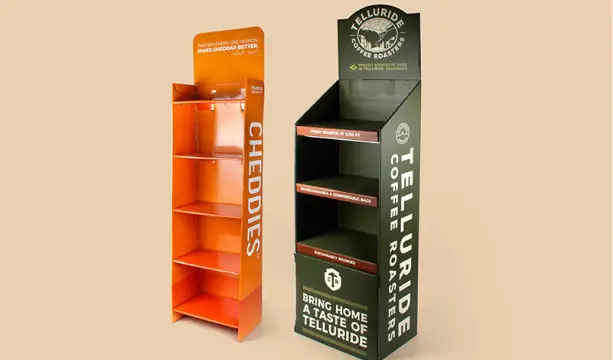


Step 1 Quotation: Make the Price Transparent, Comparable and UsefulA professional quotation for a custom cardboard display should explain the conditions behind the price. A display stand is not only printed paperboard; it is a retail tool that must carry product weight, fit a store footprint, protect brand image and survive transportation. Holidaypac starts by understanding the product, the retail channel and the buyer’s campaign goal, because a cardboard floor display structure for snacks has a different cost logic from a countertop display, a PDQ tray or a hook display. The quotation stage should make material, flute type, printing method, surface finish, accessories, packing style, sample cost and lead time visible. This protects buyers from a common problem: comparing one supplier’s complete project price with another supplier’s incomplete number. If a quotation does not state assumptions clearly, the price may change after artwork, sampling or packing details are confirmed. Holidaypac helps buyers think about total project cost instead of only unit price. A display that is slightly more expensive may reduce damage, store labor and replacement risk. A display that is too cheap may collapse, arrive with crushed corners or fail to match the approved sample. For importers and supermarket buyers, price matters, but price without process control is not value. The quote also gives buyers a chance to compare formats. Sometimes a compact countertop display unit is more effective than a large floor stand. Sometimes a corrugated PDQ display stand is better for fast turnover. The right quotation should help the buyer choose, not only accept a number. Buyer value: a clear quote lets marketing, purchasing, logistics and store teams make the same decision from the same facts. |
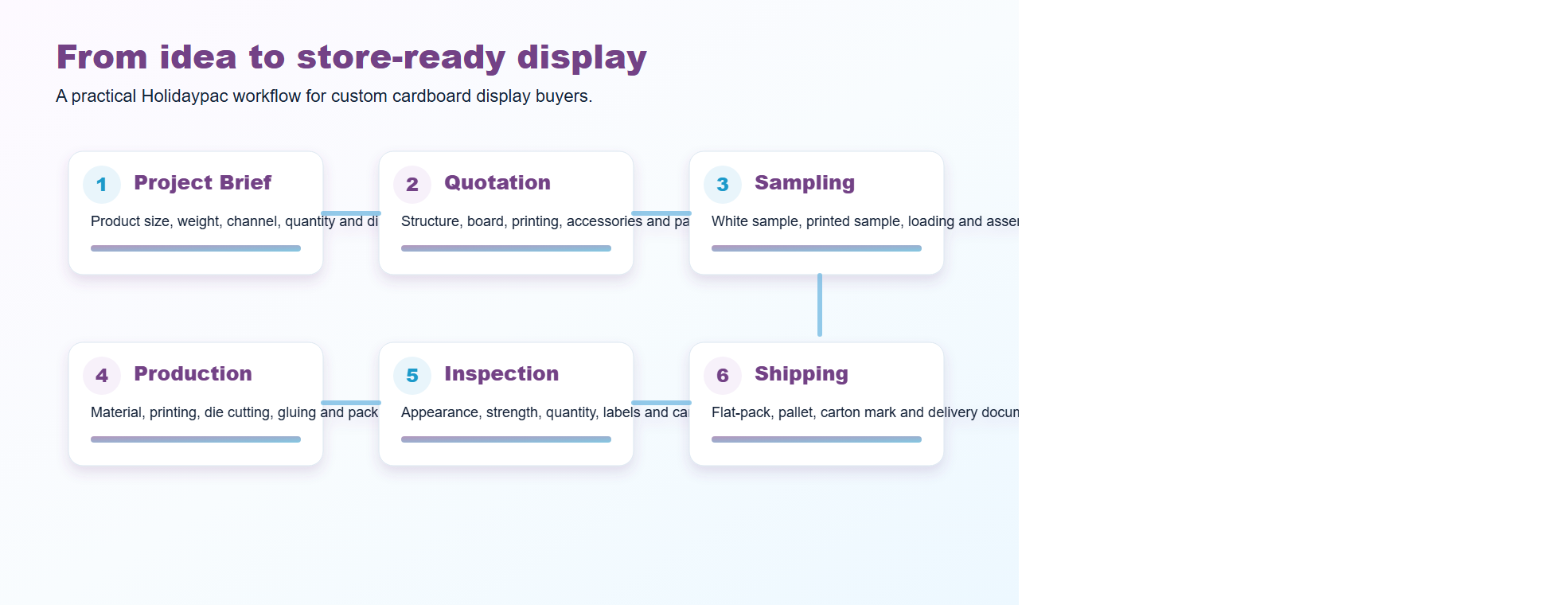
Step 2 Sampling: Test Structure, Visual Impact and Store Execution Before ProductionSampling is the bridge between design imagination and mass production. Holidaypac can prepare a white sample for structure testing, a printed sample for artwork and color evaluation, or a more complete sample for loading and packing review. The sample is where a buyer can see whether the display really supports the product, communicates the brand and feels practical for store teams. A white sample is useful when the structure is new or the product is heavy. It lets the buyer check shelf depth, base stability, product angle, hook position, header size and assembly sequence without waiting for full printing. A printed sample is useful when brand color, campaign artwork and shelf impact are important. For export buyers, both structure and artwork matter because the approved sample becomes the reference for mass production. Holidaypac encourages buyers to test samples with real products whenever possible. If the display is designed for cosmetics, beverages, toys, snacks or notebooks, the real product weight and packaging shape should be loaded into the sample. This is especially important for custom supermarket retail display boxes, where the display must look good and remain stable through shopper handling. Sampling also protects timeline. It is much faster to adjust a dieline, shelf height or locking tab during sampling than after mass production starts. When Holidaypac asks buyers to confirm sample details carefully, the goal is not to slow the project. The goal is to avoid expensive changes later and help the buyer move into production with confidence. Buyer value: sampling is the lowest-cost moment to correct the structure, artwork and assembly method. |
Step 3 Mass Production: Control the Approved Sample, Not Just the PrintingAfter sample and artwork approval, the project enters mass production. This stage usually includes material preparation, printing, surface treatment when required, die cutting, creasing, gluing, accessory preparation, partial assembly if needed, carton packing and carton labeling. Holidaypac follows the approved sample as the production reference because buyers need repeatable output, not a new interpretation of the design. Production control matters because a cardboard display combines visual and structural requirements. If color is unstable, the brand suffers. If die cutting is inaccurate, the display may not assemble correctly. If board strength is weaker than planned, the display may collapse or look tired in store. If packing is ignored, the display may arrive damaged even though the factory produced it correctly. For buyers developing shelf ready packaging and retail ready display boxes, production planning should also consider reorder potential. A good first order can become a repeat program if dimensions, artwork zones, packing method and quality standards are stable. Holidaypac also pays attention to communication during production. Buyers should approve dielines, artwork, barcodes, color references, packing marks and instruction files before the factory locks the order. If there are multiple language versions or regional SKUs, file naming and artwork control need extra care. One small artwork confusion can affect an entire order. Buyer value: stable production documentation turns one campaign into a repeatable merchandising system. |
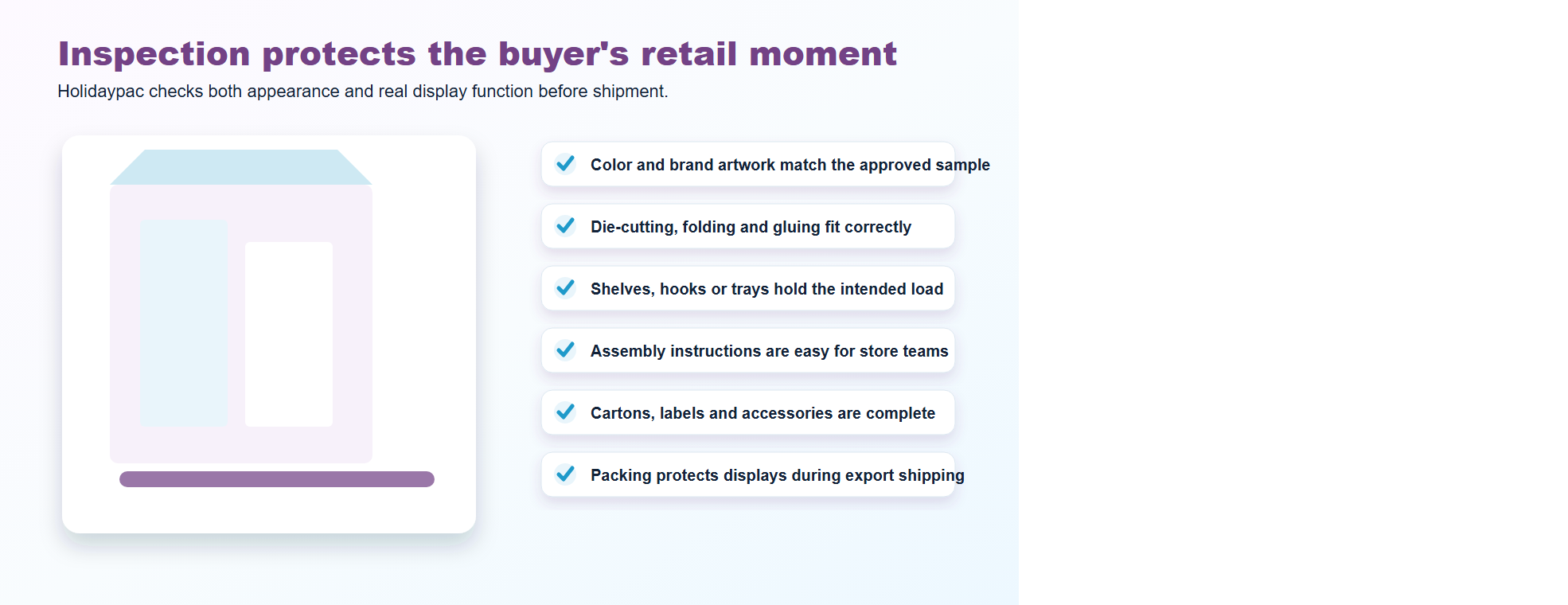
Step 4 Inspection: Check Appearance, Structure, Loading and Packing Before ShipmentInspection is the buyer’s safety line before goods leave the factory. Holidaypac checks quantity, material, board quality, printing color, surface finish, die-cut accuracy, folding, gluing, assembly fit, structural stability, accessories, carton packing, labels and visible defects. For cardboard displays, inspection must include both appearance and function. A display can look good when flat but fail when assembled. It can print well but be hard for store staff to build. It can pass visual checks but still be too weak for the product load. That is why Holidaypac connects inspection with the approved sample and the real retail use scene. If the display is a custom cardboard hook display, hook position and accessory count need checking. If it is a floor stand, base stability and shelf strength matter. If it is a flat-packed display, the carton should protect panels without creating crushed edges. For overseas buyers, inspection communication is also emotional reassurance. Photos, videos and clear inspection records help the buyer explain the order internally to purchasing, marketing and retail teams. It is much easier to solve a problem inside the factory than after goods arrive at a warehouse or retail chain. Buyer value: inspection protects the campaign schedule before the goods enter international logistics. |
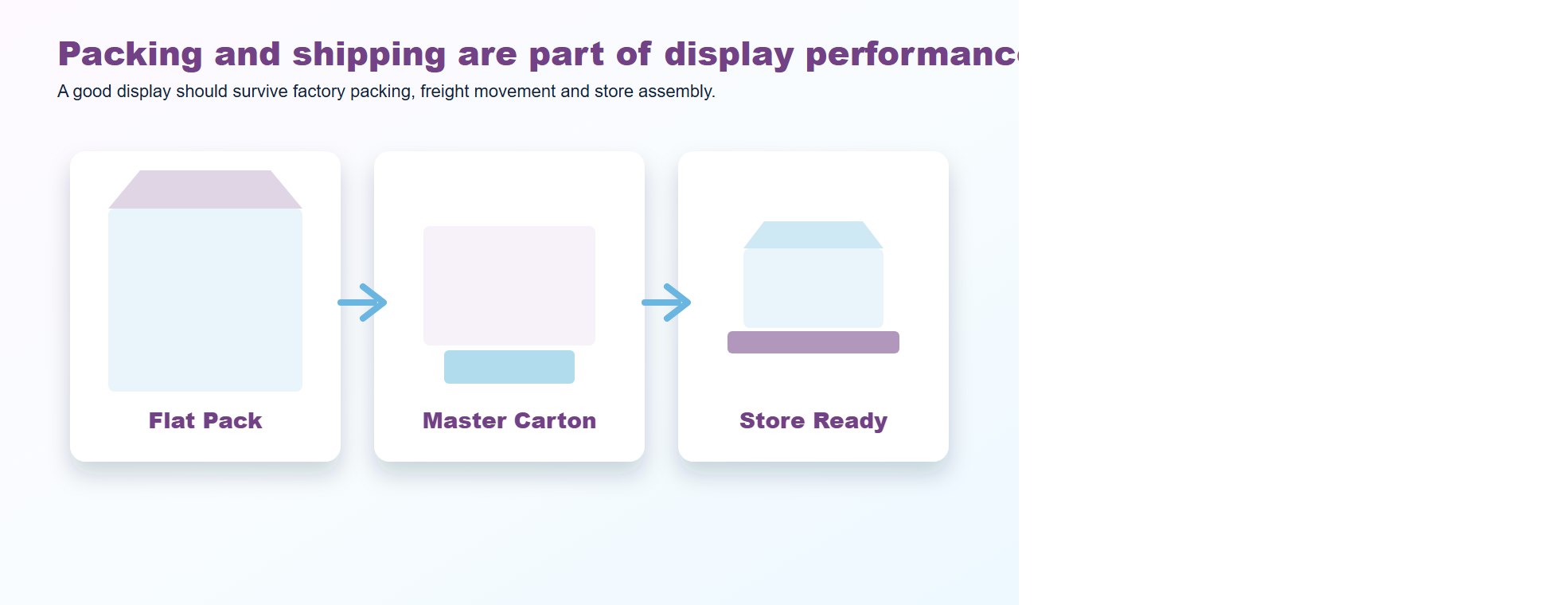
Step 5 Packing and Shipping: Protect the Display Until It Reaches the StoreShipping is not separate from display performance. A display that arrives damaged cannot create retail value. Holidaypac discusses packing early because different display types need different protection. Some displays are shipped flat-packed to reduce freight. Some are semi-assembled to reduce store labor. Some need stronger master cartons, corner protection, accessory bags, assembly instruction sheets or clear carton marks. Freight cost can affect the project decision as much as printing cost. A display that looks impressive but uses too much shipping volume may not be practical for importers or distributors. This is especially important for retail point of purchase pallet display programs, where logistics and store execution are part of the buyer’s cost. The final shipping stage should leave the buyer with clear documents, carton information and assembly understanding. When the display reaches the store, the team should be able to open, assemble and merchandise it without guessing. This is where good engineering becomes good retail execution. Packing decisions should match the receiving environment. If goods go to a warehouse, carton labeling and pallet stability may be most important. If goods go directly to stores, assembly instructions and accessory organization become more important. Holidaypac helps buyers think through these details so the project does not lose value during the last mile. Buyer value: a project is only successful when the display performs after delivery. |
What to Prepare Before Asking Holidaypac for a Display Quote
Before requesting a custom cardboard display quotation, buyers can save several rounds of communication by preparing a simple project checklist. The checklist does not need to be complicated, but it should answer the questions that affect structure, price, sample time and shipping safety. Holidaypac recommends confirming product size, product weight, products per display, preferred retail position, target quantity, artwork status, destination country, delivery deadline and any retailer rules.
If the buyer has a photo of a similar display, it should be shared as a reference, but Holidaypac will still check whether that reference is suitable for the real product load and store environment. The most useful buying decision is not always the largest or most decorative display. A strong display project is the one that matches product value, shopper behavior, logistics cost and store execution.
For lightweight products, a clean counter display or hook display may create better conversion than an oversized floor display. For heavier products, reinforced shelves and base support may matter more than decoration. For fast seasonal campaigns, a flat-pack structure with clear assembly instructions can protect both budget and timeline. This is why Holidaypac treats every project as a balance between beauty, function and responsibility.
| Product dimensions and weight | Target store or sales channel | Artwork and brand requirements | Packing and shipping destination |
How Buyers Can Use This Process to Make Better Procurement Decisions
A custom cardboard display is often ordered by one department but judged by several departments. Marketing wants the display to look attractive and support the campaign story. Purchasing wants a workable price and reliable supplier communication. Logistics wants cartons that can be moved, stacked and shipped without waste. Retail execution teams want a display that is easy to assemble and refill. If the project process does not connect these departments, the buyer may receive a display that satisfies one team but creates problems for another. Holidaypac’s workflow is built to connect these needs before production begins.
The first useful decision is to define the selling environment. A display for a supermarket aisle, a pharmacy counter, an exhibition booth and an eCommerce gift campaign will not need the same structure. A supermarket floor display may need stronger shelves, a visible header and stable base support. A counter display may need compact dimensions and clear product visibility. A shelf-ready tray may need easy tear-off openings and efficient carton packing. A hook display may need accurate hook spacing and accessory control. When Holidaypac understands the environment, the team can recommend a structure that serves the selling moment instead of forcing one standard template onto every product.
The second useful decision is to separate what must be customized from what can be standardized. Full customization is valuable when the display needs a special shape, strong brand storytelling or a unique product arrangement. Standardized structural logic is valuable when the buyer wants faster sampling, lower development risk and easier repeat orders. Holidaypac often helps buyers combine both: a proven structure for reliability, with custom printing, header design, color, product layout and campaign messaging for brand impact. This balance can protect both creativity and budget.
The third useful decision is to treat packing as part of design. Buyers sometimes focus on the display appearance first and discuss packing only at the end. That can create hidden cost. If a display is too large when assembled, freight volume increases. If it is too flat without enough protection, corners may be damaged. If accessories are packed loosely, store teams may lose time during assembly. Holidaypac looks at carton size, flat-pack method, instruction sheets, accessory bags, carton marks and pallet planning early so the retail idea can survive the supply chain.
The fourth useful decision is to document the approved sample carefully. A good sample is not only a nice object for approval; it is a production reference. Buyers should confirm structure, board strength, print color, finish, barcode, carton label, assembly method and packing style. If the first order is successful, this documentation becomes the foundation for repeat orders. That is especially valuable for brands that run seasonal promotions, regional campaigns or chain-store programs where the same display logic may be reused with new artwork.
For Holidaypac, the best project result is not only a display that looks good in photos. It is a display that buyers can quote clearly, approve confidently, produce consistently, inspect practically, ship safely and use in store without confusion. This is the difference between a supplier transaction and a packaging partnership. It is also where Holidaypac’s cultural view becomes practical: respect the material, respect the buyer’s time, respect the shopper’s experience and let paper return value before it returns to nature.
Author Authority Cassie Lan’s Founder View: Paper Is Simple, Natural and ValuableHolidaypac is different because it does not treat paper packaging and cardboard displays as empty industrial objects. Cassie Lan, founder of Holidaypac, has 20 years of international trade experience and 16 years in packaging. Her work connects Chinese and Western cultural understanding, business practice and product development. She believes packaging should carry visual impact, emotional value and responsibility. Holidaypac’s core value, Born from nature and return to nature, is close to the wisdom of harmony between people and nature. Paper is one of the simplest, oldest and most natural materials used in commerce. When paper becomes a display stand, it should still respect the product, the shopper and the environment. Cassie Lan’s cultural understanding helps Holidaypac connect design with feeling. A display is not only a shelf tool. It is a moment of communication between a brand and a shopper. When design, structure, color, material and story work together, packaging can create emotional value instead of becoming disposable noise. For global buyers, this matters because packaging is no longer judged only by material and price. Retailers want displays that are easier to execute. Brands want visual identity. Consumers respond to emotion. Sustainability teams want responsible material choices. Holidaypac’s process connects these needs into one practical method: understand the product, respect the material, design with culture, produce with discipline and deliver with responsibility. Author: Cassie Lan, Founder of Holidaypac. Culture-led packaging, international trade experience and sustainable paper display thinking. |
FAQ for Custom Cardboard Display Buyers
What information does Holidaypac need for a cardboard display quotation?
Holidaypac usually needs product size, product weight, display type, target retail channel, expected quantity, artwork or design reference, destination country and any retailer requirements. More complete information makes the quotation more accurate.
Can Holidaypac make a sample before mass production?
Yes. Sampling can include white structure samples, printed samples, assembly tests, loading checks and packing tests depending on the project requirement.
What does Holidaypac inspect before shipment?
Holidaypac checks quantity, material, printing, die cutting, folding, gluing, assembly fit, loading performance, accessories, carton packing, labels and visible defects according to the approved sample.
Can cardboard displays be shipped flat-packed?
Yes. Many cardboard displays are designed for flat-pack shipping to reduce freight cost. Holidaypac can also discuss semi-assembled packing when buyers want to reduce store labor.
Why choose Holidaypac for custom cardboard display projects?
Holidaypac combines creative design, structural thinking, production experience, inspection discipline and culture-led packaging values. The goal is to help buyers create displays that are attractive, practical and reliable in real retail use.