
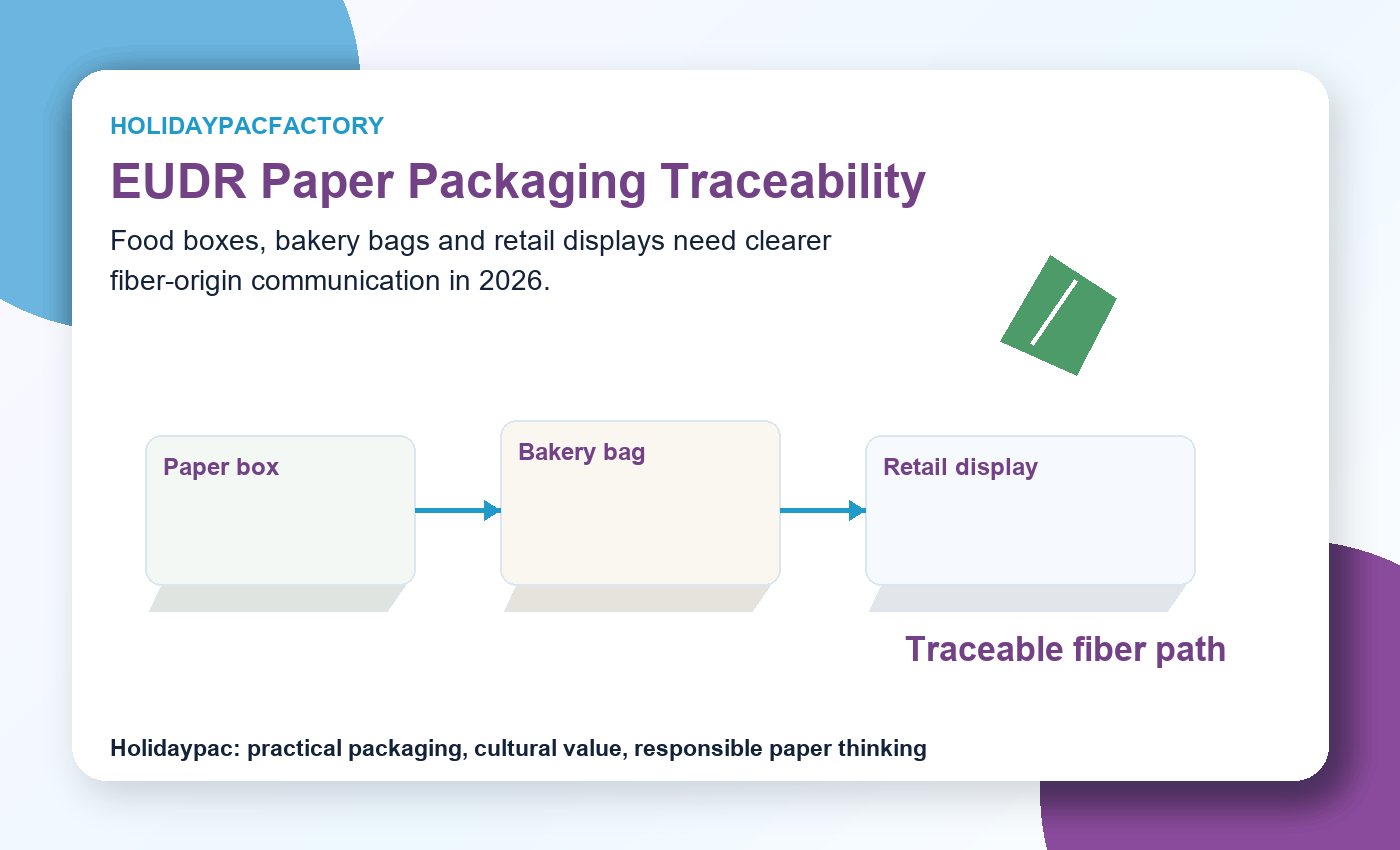
Holidaypacfactory Buyer Guide EUDR Turns Paper Packaging Into a Traceability ConversationIn 2026, paper packaging buyers are not only asking whether a box looks sustainable. They are asking whether the fiber story can be explained, documented and trusted. The EU Deforestation Regulation, usually called EUDR, is part of this change. It focuses on deforestation-free supply chains for commodities including wood and derived products. For food brands using paper boxes, bakery bags, takeaway packaging, sandwich wraps, bento boxes or retail displays, this does not mean every purchasing team must suddenly become a forest-law expert. It does mean paper packaging conversations are moving from simple material claims toward clearer traceability, better supplier documents and more disciplined sourcing questions. The official EU page says the regulation is designed to reduce the EU impact on global deforestation and forest degradation. The timeline was amended, and the European Commission now lists entry into application for large and medium operators on 30 December 2026, with micro and small operators generally following on 30 June 2027. Buyers should treat these dates as a planning signal. A paper packaging project approved in 2026 may still be in production, distribution or reorder planning when customers ask more detailed questions about responsible fiber. This guide explains what EUDR paper packaging traceability can mean in practical buyer language. It is not legal advice. Instead, it helps importers, foodservice chains, retail buyers, private-label brands and packaging procurement teams ask better questions before approving paper food boxes, kraft bags, printed wraps and cardboard displays. Buyer guidance only. Confirm final EUDR obligations, product scope and documentation duties with your EU compliance or legal team. |
Paper Packaging Formats That Need a Clearer Fiber Story
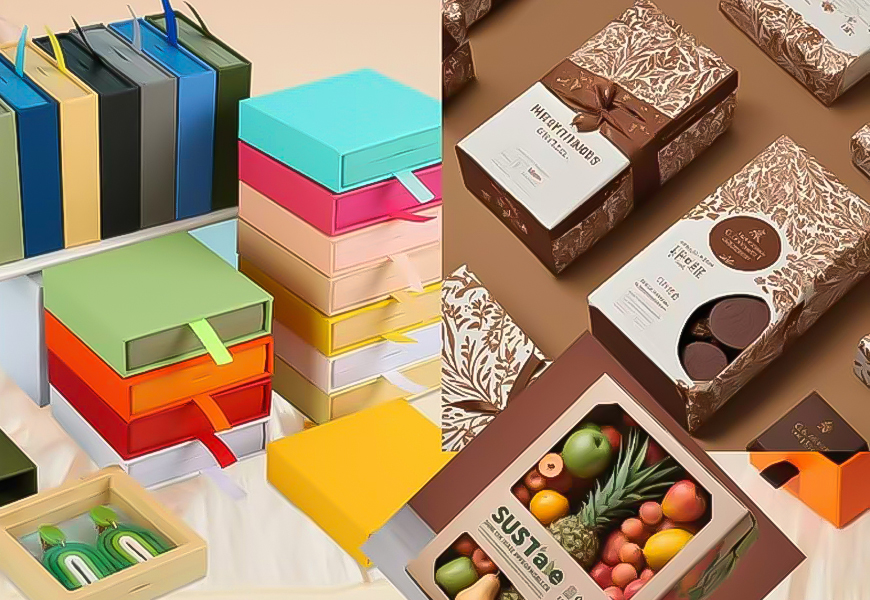
EUDR traceability discussions are most useful when they connect to real packaging formats. The product paths below help buyers review paper boxes, kraft bags, wraps, bento packaging and retail display support before preparing supplier questions and documentation expectations.


Why It Matters Why EUDR Belongs in Paper Packaging PlanningEUDR is often discussed as a forestry or raw-material regulation, but packaging buyers feel its influence through supplier conversations. The official EU summary explains that operators and traders placing covered commodities and derived products on the EU market must be able to prove they are not linked to recent deforestation or forest degradation. Wood is one of the commodities in scope, and paper and paperboard are derived from wood. That makes the topic relevant for many paper packaging value chains even when the finished pack is used for food, retail or delivery. For a bakery chain buying custom bakery paper packaging, the practical question is not only “Is this box recyclable?” It is also “Can the supplier explain the paperboard source, material specification and document trail clearly enough for our market?” For a restaurant group ordering takeaway cartons, the question becomes “Can we avoid vague sustainability claims and build a more trustworthy material story?” For a private-label snack brand, traceability can support retailer confidence when the product moves through multiple markets. This is why 2026 is a useful preparation year. Even where obligations depend on operator role, company size, product scope or exact placing-on-market scenario, buyers can still improve their internal process. They can separate marketing claims from supplier documents. They can request clearer paperboard specifications. They can ask whether relevant upstream partners have a traceability system. They can record which packaging SKUs use which materials. None of this weakens design. Done well, it gives design a more trustworthy foundation. The broader sustainable packaging conversation is also moving in the same direction. Current 2026 trend reporting from sustainability organizations highlights regional definitions, EPR systems, recyclability guidance, data gaps and policy pressure. In other words, packaging is no longer judged only by appearance. It is judged by how well the material, design, recovery path and documentation work together. For Holidaypac, this is close to our own principle: packaging should be born from nature and return to nature, but it should also be clear enough for global trade. |
What Buyers Should Map Before Approving Paper Packaging
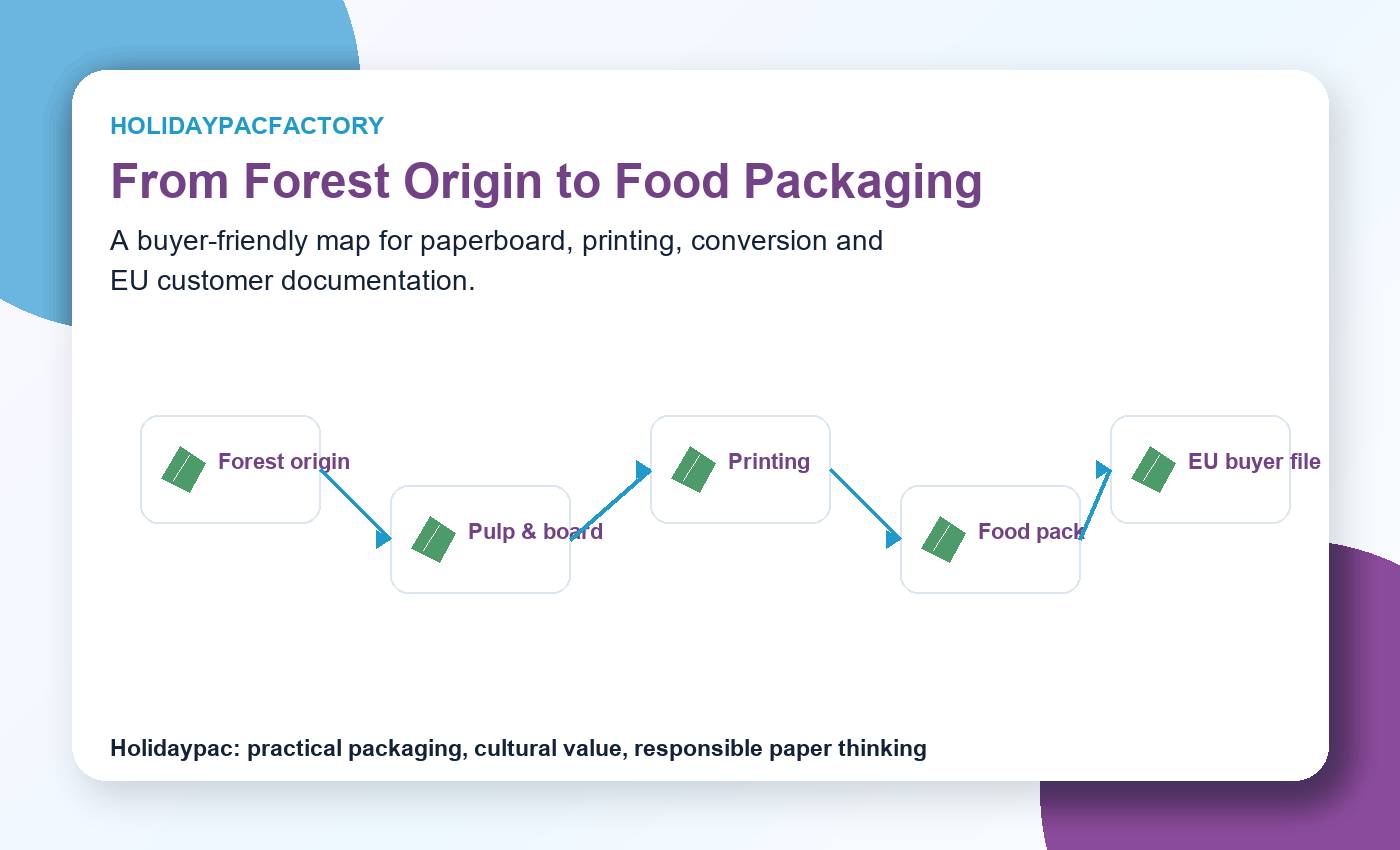
A useful traceability map starts with the material, not the slogan. Ask what paper or paperboard grade will be used, whether it is virgin fiber, recycled content, kraft board, white board, coated paper, grease-resistant paper or a mixed-material construction. Ask whether the grade changes between sample and mass production. A beautiful printed sample is not enough if the final production material is different and the document trail is unclear.
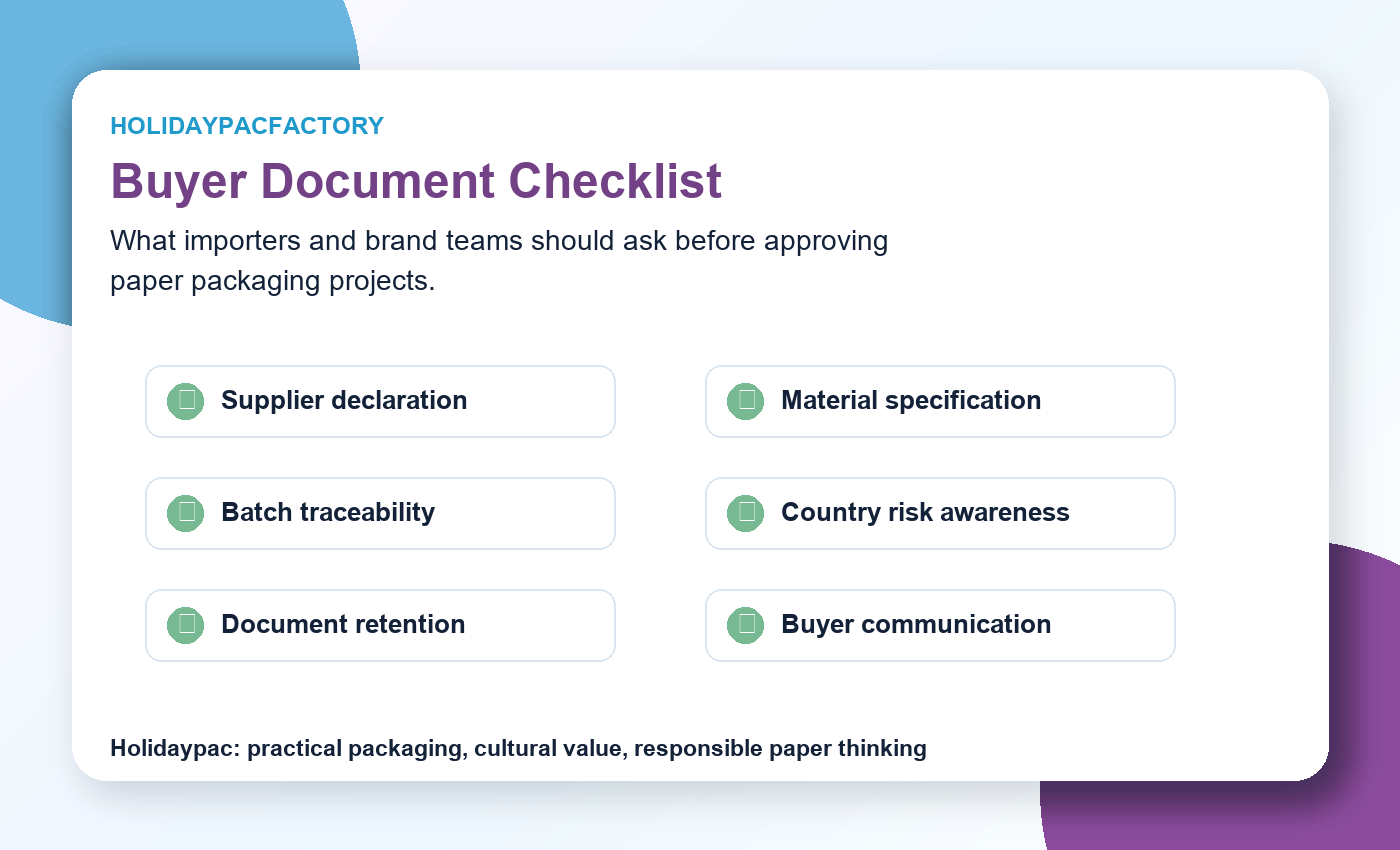
The second layer is supplier responsibility. Packaging converters, printers and exporters may not be the upstream operator that first places wood-derived products on the EU market. However, buyers still need clear communication across the chain. A buyer can ask: who provides the paperboard? What product name or grade is used? What batch or lot reference appears on invoices, packing lists or internal records? Can the supplier provide declarations or supporting documents when requested by the buyer or importer?
The third layer is market role. A brand selling in Europe, an importer, a distributor and a restaurant group may have different responsibilities. Holidaypac should not make legal assumptions for customers. Instead, a good packaging partner helps customers organize the packaging information they may need: product name, material type, supplier details, quantity, production lot, shipment reference and any available paper-source documentation. This supports buyer conversations with compliance teams.
The fourth layer is claim discipline. Phrases like “eco-friendly,” “green,” “forest safe” or “sustainable” can sound attractive but may be too vague for serious buyers. A better approach is to say exactly what is known and to keep evidence available. For example, a buyer may describe a packaging line as paper-based, recyclable where local systems accept it, designed for material reduction, or supported by supplier documentation. The stronger the claim, the stronger the proof should be.
The final layer is internal record keeping. Packaging teams often manage many SKUs: takeout paper packaging, bakery cartons, kraft bags, sandwich wraps, bento trays and display cartons. If each SKU has a different material, supplier or finish, the buyer should keep a simple matrix. That matrix can show SKU name, packaging type, material grade, supplier, production date, destination market and document status. It does not need to be complicated to be useful.
Buyer Checklist Six Questions to Ask Your Paper Packaging SupplierFirst, ask what exact material will be used for production. The answer should be more specific than “paper.” Buyers should know the paperboard grade, surface finish, coating direction if any, and whether the material is intended for direct or indirect food contact. For food packaging, material performance and compliance must be discussed alongside traceability. Second, ask how the supplier manages material changes. If the approved sample uses one board and mass production uses another, the buyer should be informed before production. This matters for printing, folding, grease resistance, carton strength and documentation. A small change in paper grade can change how a box feels in the hand and how it performs in a delivery bag. Third, ask which documents can be provided. Depending on the project, buyers may request material specifications, supplier declarations, food-contact statements, certificates, invoice references, batch information or shipping records. Not every document is an EUDR due diligence statement, and buyers should not confuse them. The goal is to build a clear packaging file that supports the customer’s own compliance process. Fourth, ask how the supplier records batches. Traceability fails when records are informal. A practical supplier should connect purchase, production and shipment records. For example, a batch of kraft paper food packaging should be traceable inside the factory process from material receipt to finished cartons. Fifth, ask how sustainability language is reviewed. If artwork includes environmental claims, the packaging supplier and buyer should make sure the claim is not stronger than the evidence. This is especially important for multilingual packaging, retailer programs and EU-facing products. Simple, accurate language is often more valuable than loud claims. Sixth, ask whether the packaging can be redesigned to reduce risk. Sometimes the best answer is not more paperwork but a better structure: fewer mixed materials, clearer separation of components, less ink coverage where unnecessary, more efficient carton loading, or a design that supports local recyclability definitions. Traceability and design should work together. |
How EUDR Thinking Changes Boxes, Bags, Wraps and Displays
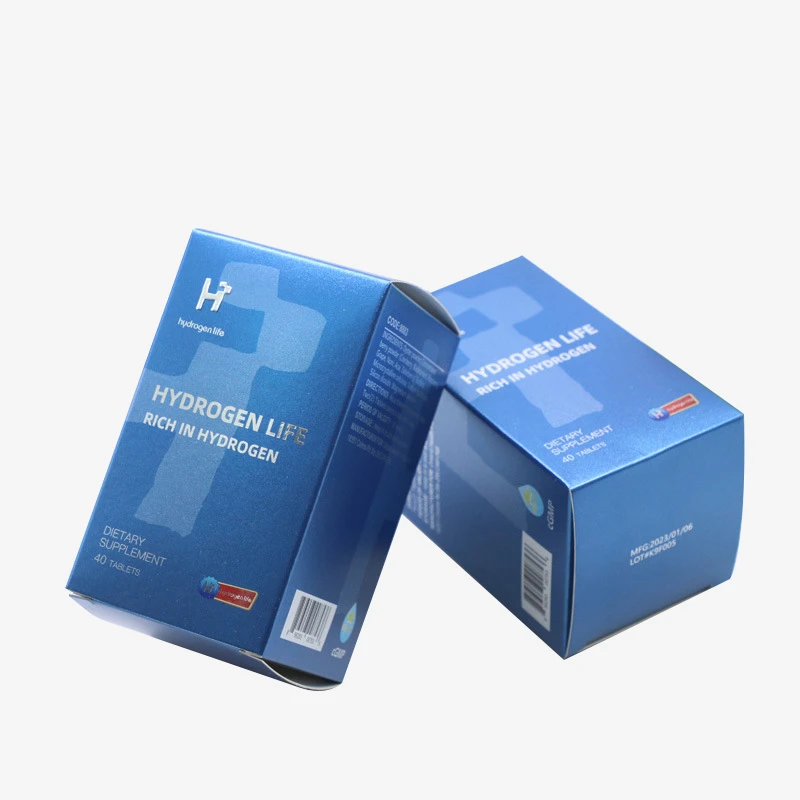
For paper food boxes, traceability thinking starts with board selection. A box used for burgers, pastry, sushi or deli meals may require strength, grease resistance, moisture control and printing quality. Buyers should match these needs with a material that can be documented. If the project uses a window, coating, lining or adhesive, the buyer should understand whether the finished pack remains easy to explain. Complexity is sometimes necessary, but it should be intentional.
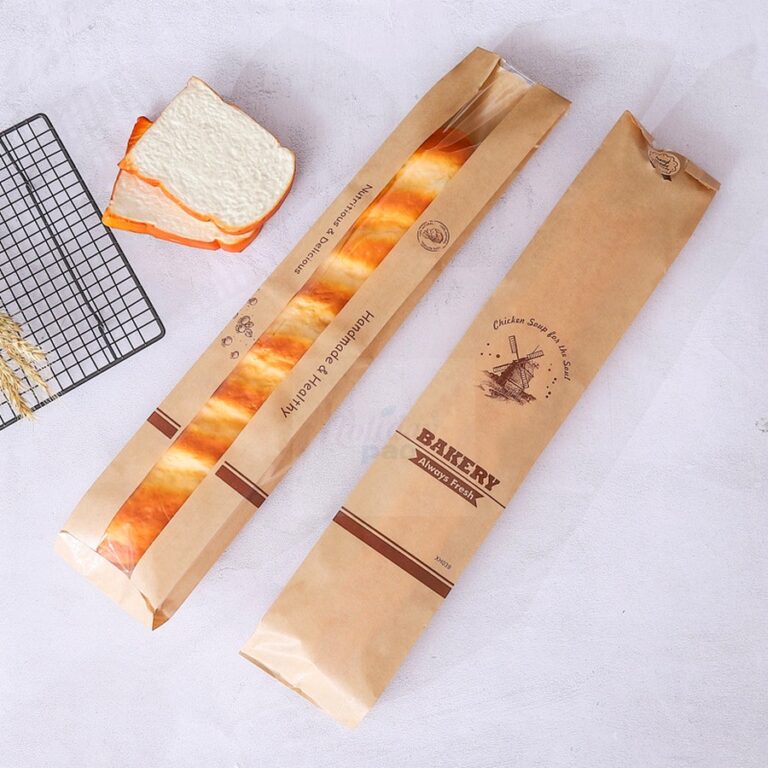
For bakery bags and kraft paper bags, the natural appearance can be powerful. Many customers associate kraft texture with simplicity and responsibility. But a natural look is not the same as a verified supply chain. Buyers should still ask about paper source, food-contact suitability, print ink direction and batch records. A calm kraft bag with honest documentation can be stronger than an overdecorated package with vague claims.
For sandwich wraps and greaseproof papers, performance matters. Foodservice buyers need grease holdout, folding behavior, print readability and safe contact with food. A wrap may look small, but it can be ordered in very high volume. That means material consistency and record keeping become important. Buyers using greaseproof sandwich wrap paper should check both the food-use requirement and the sourcing conversation.
For sushi, bento and deli packaging, structure becomes more complicated because the pack may include trays, sleeves, dividers, windows or labels. Traceability planning should identify which parts are paper-based and which parts are not. If a buyer uses sushi bento paper boxes, the material story should be organized by component so the customer does not confuse the tray, sleeve, label and outer carton.
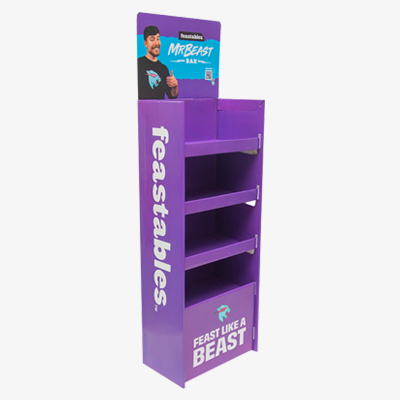
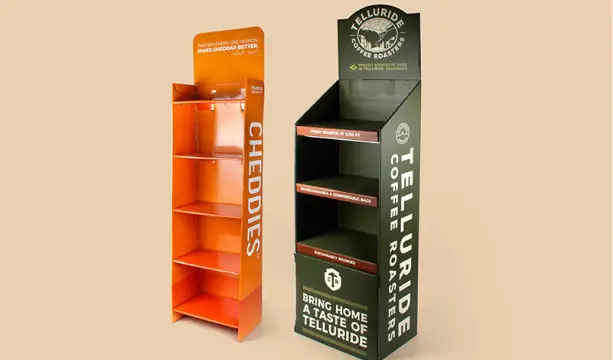
For cardboard retail displays, the packaging may not touch food directly, but it still carries brand value in retail. A display for snacks, bakery products or seasonal food promotions can communicate sustainability through structure, material reduction and responsible sourcing. Because displays are often large and visible, the brand should avoid weak environmental decoration and instead use clear, useful messaging.
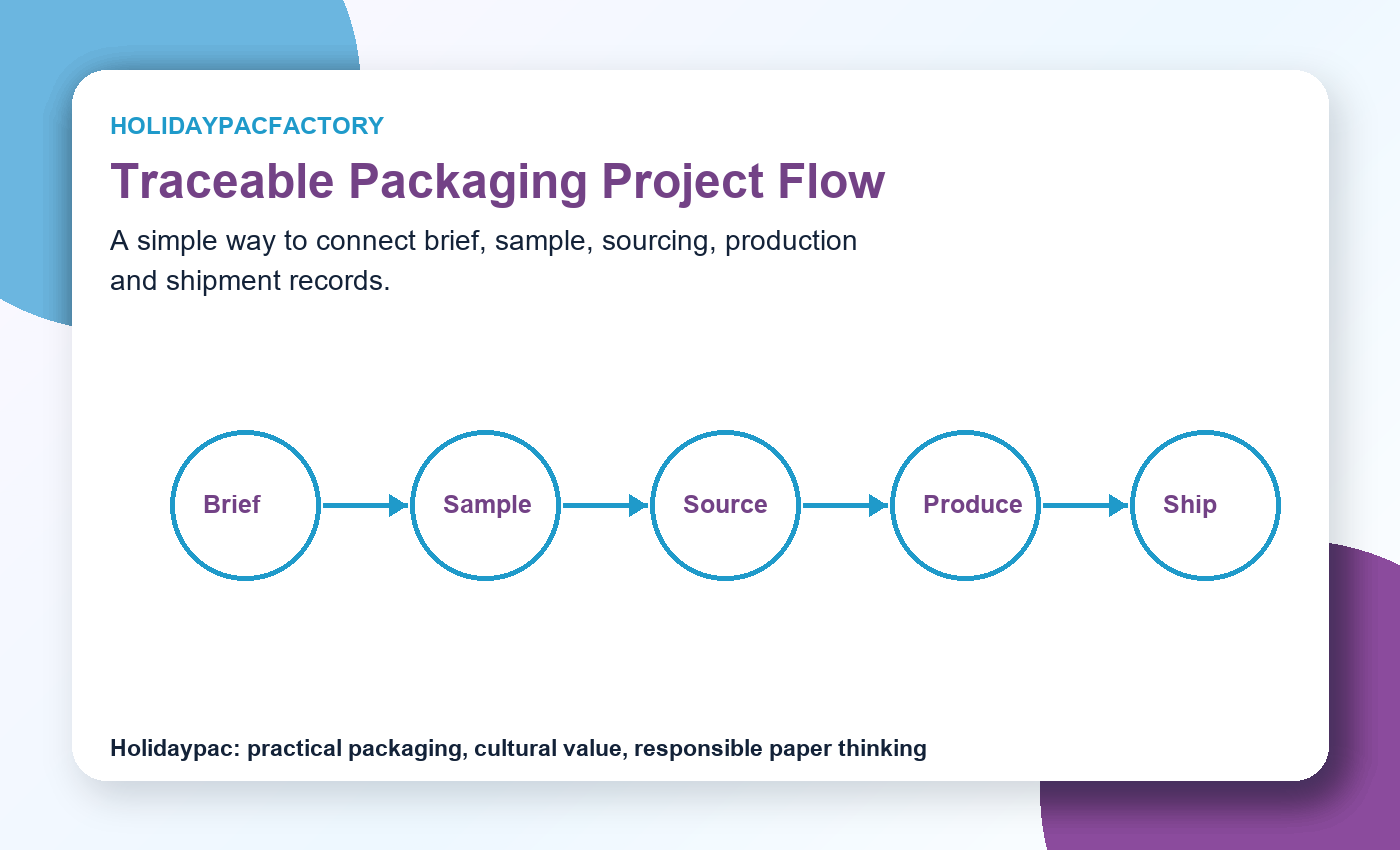
Project Flow A Practical Holidaypac Workflow for Traceable Paper PackagingA traceable packaging project begins with a better brief. The buyer should share the destination market, product type, food-contact situation, expected quantity, artwork direction, packaging format and any retailer documentation requirements. If the target market is Europe, the buyer should mention that the team wants a clearer paper sourcing and document file. This helps the packaging supplier choose a more suitable material path from the beginning. The sample stage should test both appearance and information quality. A sample should confirm size, structure, print, opening, packing speed and material feel. At the same time, the supplier should confirm what material is represented by the sample. If the sample is only a mockup and not the final material, that should be clear. Buyers should not approve a beautiful sample without understanding whether it represents production reality. The sourcing stage should connect the selected structure with available supplier documents. Holidaypac can help buyers organize packaging information in a way that is practical for procurement teams: material description, finished product format, production lot, carton packing, image references and document availability. This does not replace the customer’s legal duty, but it makes communication cleaner. The production stage should protect consistency. When artwork, die line, material, printing and quantity are confirmed, the factory should avoid uncontrolled changes. If a change is necessary, it should be communicated. A paper packaging program becomes more trustworthy when sample, order and shipment records tell the same story. The shipment stage should close the file. Buyers should keep final invoices, packing lists, production photos when useful, material-related documents, batch or lot references and final artwork. This is especially helpful for repeat orders. The next order can build from a known file instead of starting from scattered messages. |
Cassie Lam Founder View Paper Is Simple, Ancient, Natural and ValuableHolidaypac is different because we do not treat paper packaging as an empty industrial object. Cassie Lam, founder of Holidaypac, has 20 years of international trade experience and 16 years in packaging. Her work connects Chinese and Western cultural understanding, product design, export business and the emotional value of packaging. She believes packaging should help customers feel trust, beauty and care, not only receive a container. Cassie Lam understands Chinese traditional culture, the wisdom of the Yi Jing, Buddhist thinking and the wider Chinese five arts of mountain, medicine, destiny, physiognomy and divination as cultural knowledge systems. These ideas are not used as decoration. They shape a way of seeing: everything has relationship, timing, balance and responsibility. A paper box is small, but it sits between nature, food, business and the person who opens it. Holidaypac’s core value, Born from nature and return to nature, is close to Zhuangzi’s wisdom of harmony between people and nature. Paper is one of the simplest, oldest, most natural and most valuable materials in daily commerce. When it becomes a food box, a kraft bag, a retail display or a bakery sleeve, it should not lose that quiet origin. It should still respect the food, the brand, the shopper and the environment. This is why EUDR traceability is not only a compliance topic for Holidaypac. It is also a cultural topic. If a company says packaging comes from nature, it should be willing to think more carefully about the material path. If a brand wants emotional value, it should also build trust. If a buyer wants sustainable packaging, the design should be beautiful, useful and explainable. For global buyers, this cultural depth creates practical value. Holidaypac can help a customer develop a paper packaging family that feels warm and premium, while also asking grounded questions about material, structure, printing, shipment and documentation. We believe good packaging should carry visual impact and emotional value, but it should also be disciplined enough for real trade. |
How to Make Traceability Feel Valuable to Customers
Traceability should not make packaging cold. A food customer does not want to read a compliance file while eating a pastry or opening a bento box. The design should communicate responsibility with restraint. Use a clean material statement, a simple QR code when useful, a clear disposal message and a visual system that feels natural. Do not cover the package with too many icons or legal phrases.
For premium food brands, the strongest message is often quiet confidence. A kraft texture, soft color, balanced typography and one clear sentence can feel more trustworthy than a crowded green badge system. If the brand uses a QR code, the landing page should be useful: material explanation, recycling guidance, brand story, contact information or supplier transparency. The code should not lead to a weak page.
For B2B buyers, design should also support sales teams. A distributor or retail buyer may ask why a paper package was chosen. The sales team should have a simple answer: the pack supports the product, uses a paper-based material direction, was designed to reduce unnecessary complexity, and has a clearer supplier documentation path. When design and sourcing tell the same story, the brand becomes easier to trust.
For Holidaypac, good packaging lives between function and feeling. A paper box must protect the food. A bag must open and close well. A wrap must resist grease. A display must stand in the store. But beyond these functions, the package should create a moment of recognition. The customer should feel that the brand has thought carefully about the material, the food and the world around it.
Four Mistakes to Avoid With EUDR Paper Packaging Communication
The first mistake is making legal claims without evidence. A supplier should not casually promise that every paper package is EUDR-compliant without understanding the product scope, market role and documentation chain. Buyers should avoid publishing strong claims until their compliance team has reviewed the evidence.
The second mistake is treating EUDR as only a supplier problem. Buyers choose materials, structures, artwork, destination markets and claims. If the buyer changes the material, adds a laminated component or uses vague sustainability language, the packaging file may need revision. Traceability is a shared communication task.
The third mistake is ignoring small packaging items. A brand may focus on large cartons while forgetting labels, wraps, sleeves, inserts and displays. Small components can create confusion if they use different materials or suppliers. A simple SKU matrix helps the buyer see the whole packaging family.
The fourth mistake is letting compliance destroy beauty. Responsible packaging does not need to become ugly. Holidaypac believes paper packaging can remain soft, cultural, premium and emotional while still becoming more explainable. The goal is not fear. The goal is disciplined beauty.
FAQ for EUDR Paper Packaging Traceability Buyers
Does EUDR apply to paper packaging?
EUDR covers wood and some derived products, and paper and paperboard are derived from wood. Whether a specific finished packaging product or buyer role has direct obligations depends on scope, market role and current guidance, so buyers should confirm with EU compliance advisers.
What should food brands ask paper packaging suppliers in 2026?
Ask for the exact material grade, supplier declaration, batch or lot record, food-contact information, production consistency process and available documentation that supports the buyer’s own compliance file.
Is a recyclable paper box automatically EUDR-ready?
No. Recyclability and deforestation-free traceability are different topics. A package may be recyclable but still need clearer sourcing and documentation information.
How can packaging design support traceability?
Design can use accurate material statements, QR codes, clear disposal guidance, restrained claims and a structure that avoids unnecessary mixed materials. The message should match the evidence.
How does Holidaypac support EUDR-related paper packaging projects?
Holidaypac can help buyers organize packaging specifications, choose suitable paper formats, prepare samples, keep production records and build culture-led paper packaging that is beautiful, useful and easier to explain.