
Packaging Structures Related to This Chicken Takeaway Case
For buyers who are comparing food packaging structures, these eight links appear first for fast navigation. The full customer case follows below with contract-to-production process photos, Visual Match notes and factory control details.

Custom Chicken Takeaway Packaging Case Study: Black and Red Branded Food Boxes From Sample Review to Production
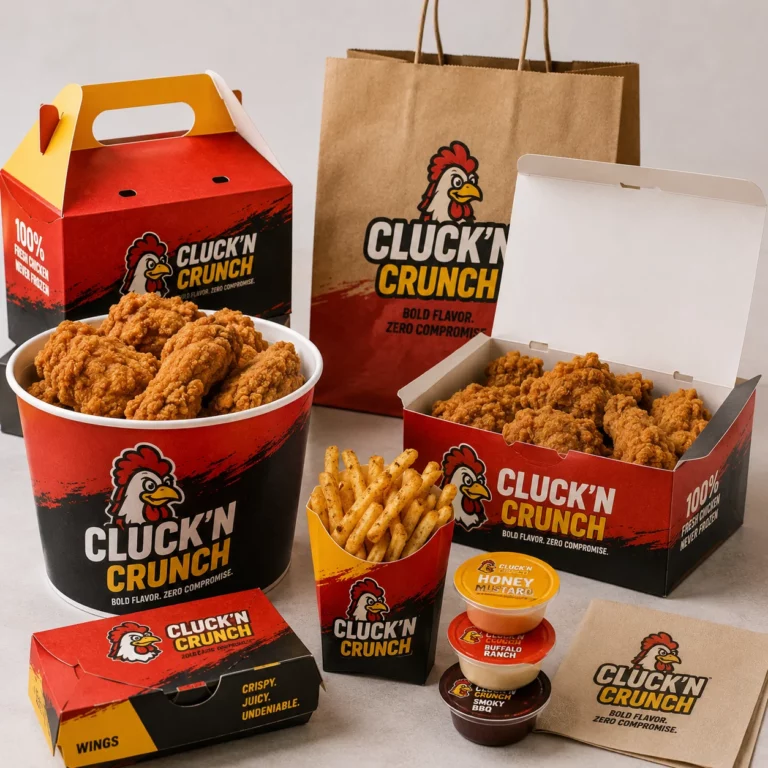
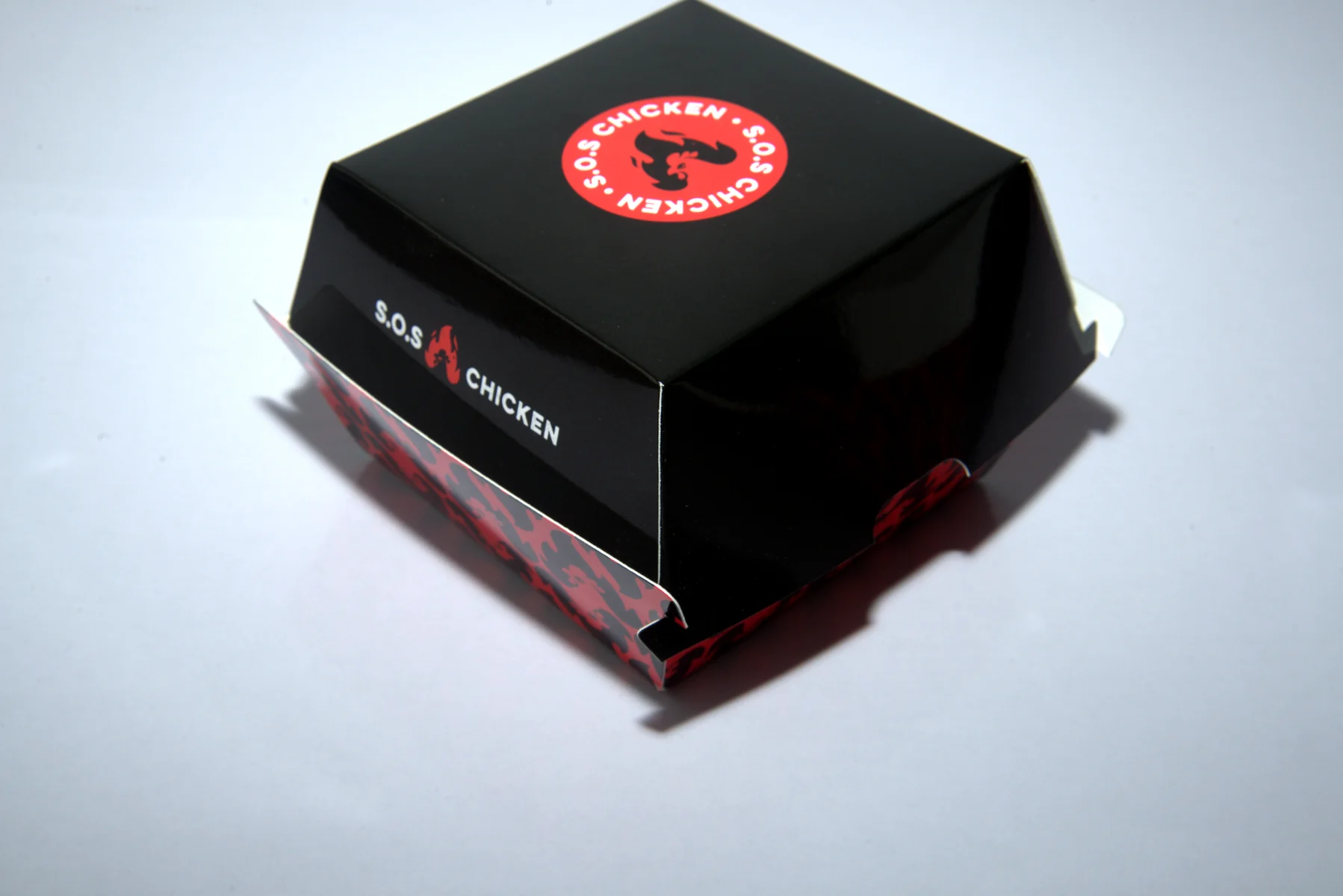
This Holidaypacfactory case study shows how a quick-service chicken brand packaging project moved from real sample photography to a practical production-ready food box system. The packaging uses a black upper lid, a red patterned base, a visible side logo and a clean white food-contact interior. The goal was not only to make the box look bold in photos, but also to make it useful for takeaway meals, restaurant counters, delivery handling and repeat production.
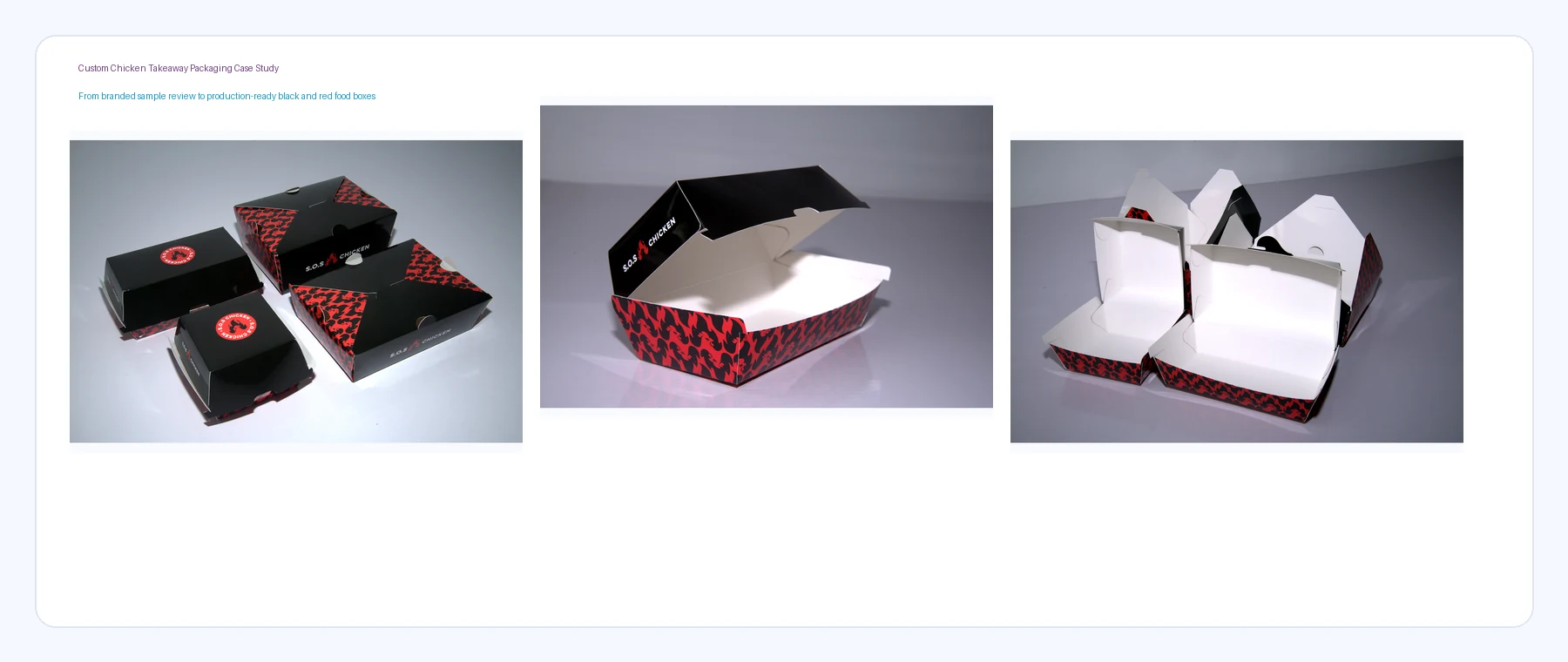
Unlike a simple catalogue listing, this case follows the finished sample from multiple angles. The closed box view shows brand presence. The open box view checks customer experience. The side-detail view checks whether the logo still reads well near folds and locking areas. For restaurant buyers, this kind of visual record is useful because it connects design approval with actual factory production control.
The Customer Needed a Branded Takeaway Box That Looked Strong, Opened Cleanly and Protected the Meal
Chicken takeaway packaging has to do several jobs at the same time. It must carry the restaurant identity, hold a warm meal, resist deformation during pickup or delivery and still look clean when the customer opens it. In this project, the black and red design created a strong brand signal. The black top made the package feel more premium, while the patterned red base helped the box stand out from plain kraft or white food cartons.
The photos show more than a beauty sample. They show how the lid closes, how the side logo appears on the customer-facing panel, how the interior opens, how the base depth supports the food and how the family of boxes can be arranged together. That is why Holidaypacfactory treats sample photography as part of the project record. A buyer can review the same packaging from closed, open, side and set views before production discussion becomes too abstract.
For a takeaway chicken brand, packaging is often handled quickly by staff and customers. It may be stacked behind the counter, placed in a delivery bag, opened at home, or photographed by customers. A box that looks attractive only from one angle is not enough. The structure needs to keep its shape, the closure needs to feel clear, and the printed surface needs to stay consistent.
How the Project Moved From Contract Confirmation to Factory Production
This customer case began after the restaurant brand confirmed the commercial direction for a custom printed takeaway box system. At the contract stage, Holidaypacfactory focused on the practical details that decide whether a strong visual idea can become a stable production order: confirmed dimensions, expected food use, print coverage, material direction, order quantity, packing needs and delivery schedule. For a chicken takeaway brand, these details matter because the package is not only a container. It is handled by kitchen staff, delivery riders, counter teams and customers within a short and busy service cycle.
After the contract was confirmed, the project moved into sample and artwork review. The black upper lid and red patterned base were checked as a real folded box, not only as a flat design file. This is important because food packaging artwork changes once it wraps around edges, locking areas and side panels. A logo that looks centered on a dieline can feel slightly different after folding. A dark lid can look premium under studio lighting but may need extra attention during production because black surfaces show scratches and paper dust more easily.
The photo record became part of the approval language between the buyer and the factory. Instead of saying that the box should look ?more premium? or ?more branded,? both sides could point to specific visual evidence: the black lid in the hero view, the red side pattern in the closed family view, the white interior in the open-box view and the side logo detail near the locking area. This reduces misunderstanding before production and helps the factory repeat the same standard in later orders.
For buyers comparing this project with other custom takeaway food boxes, the lesson is clear: production quality is built before the machines start. The cleaner the contract information and sample approval record, the easier it is to control print, structure and packing at scale.
From Brand Look to Real Box Structure
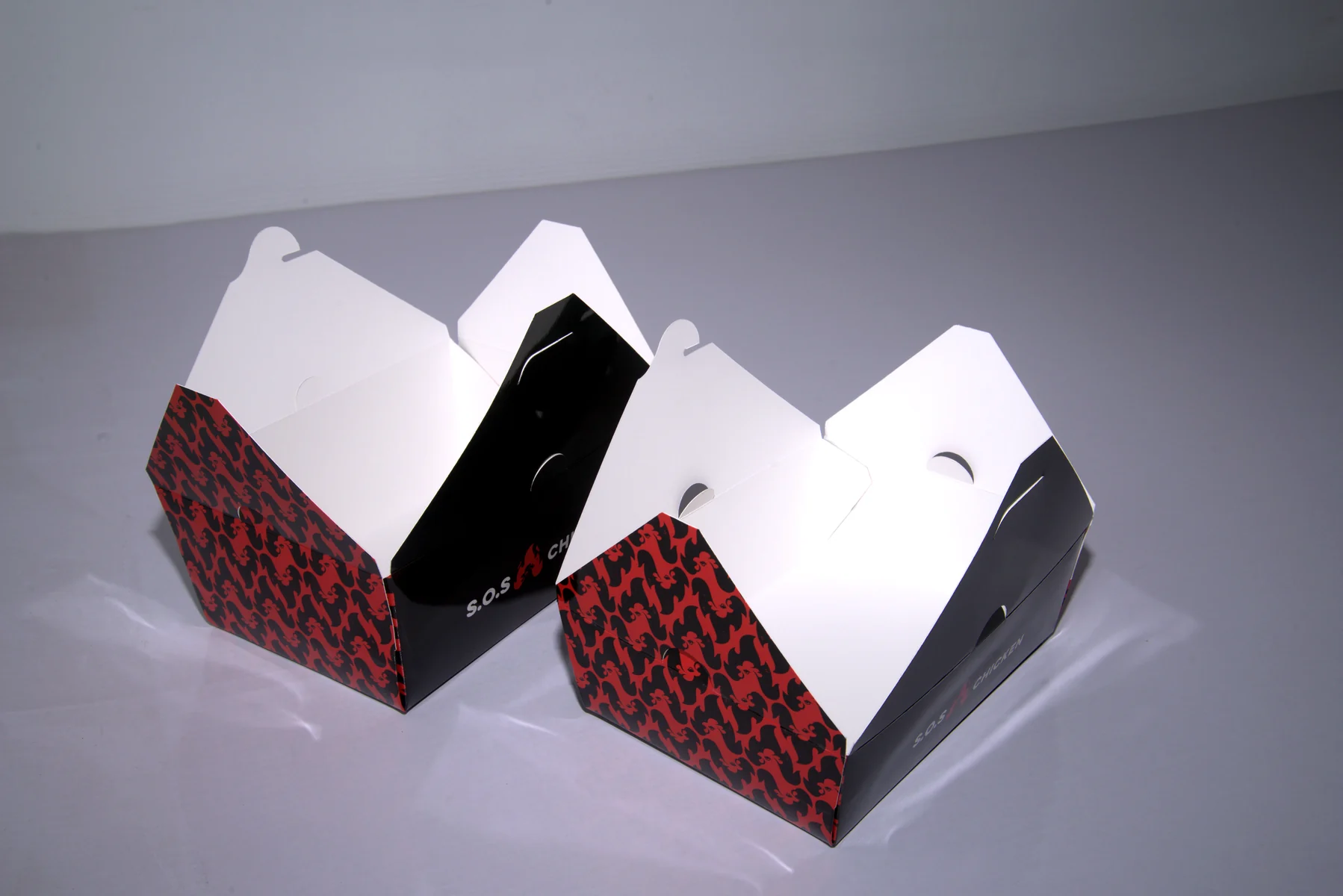
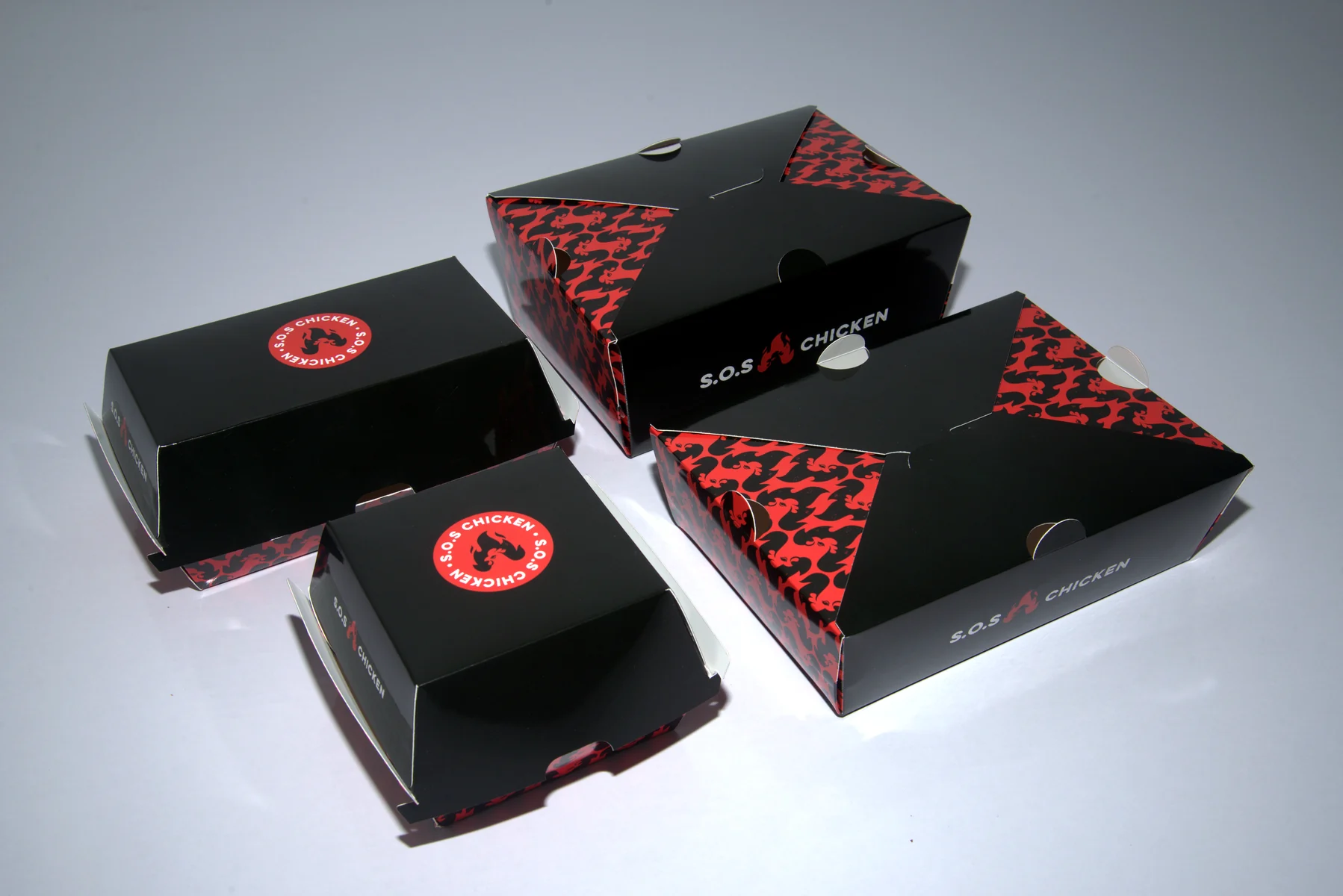 Visual Match: The full set shows how the black-red brand system works across several takeaway box sizes.
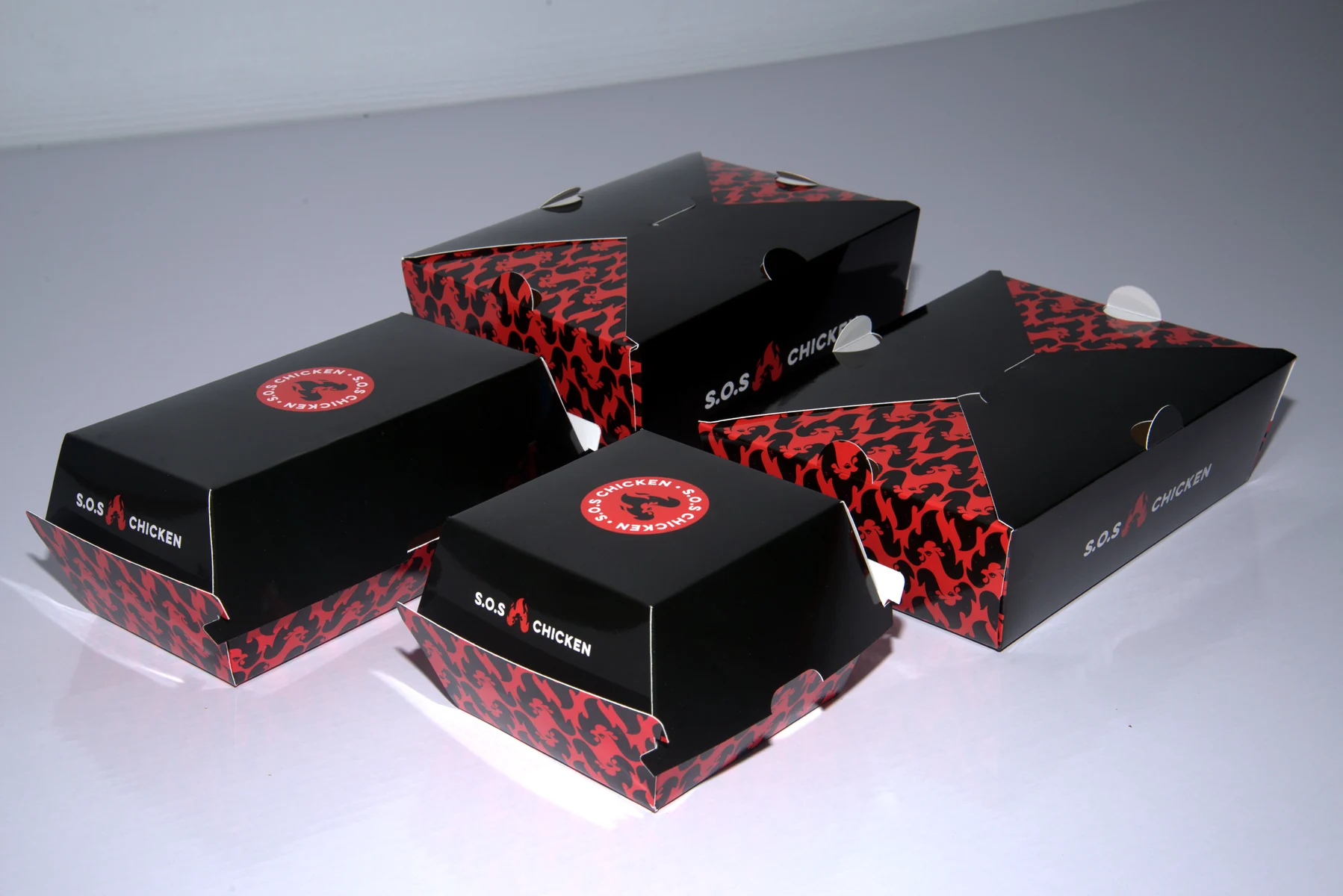 Visual Match: Closed boxes confirm shelf appearance, logo visibility and the shared visual family.
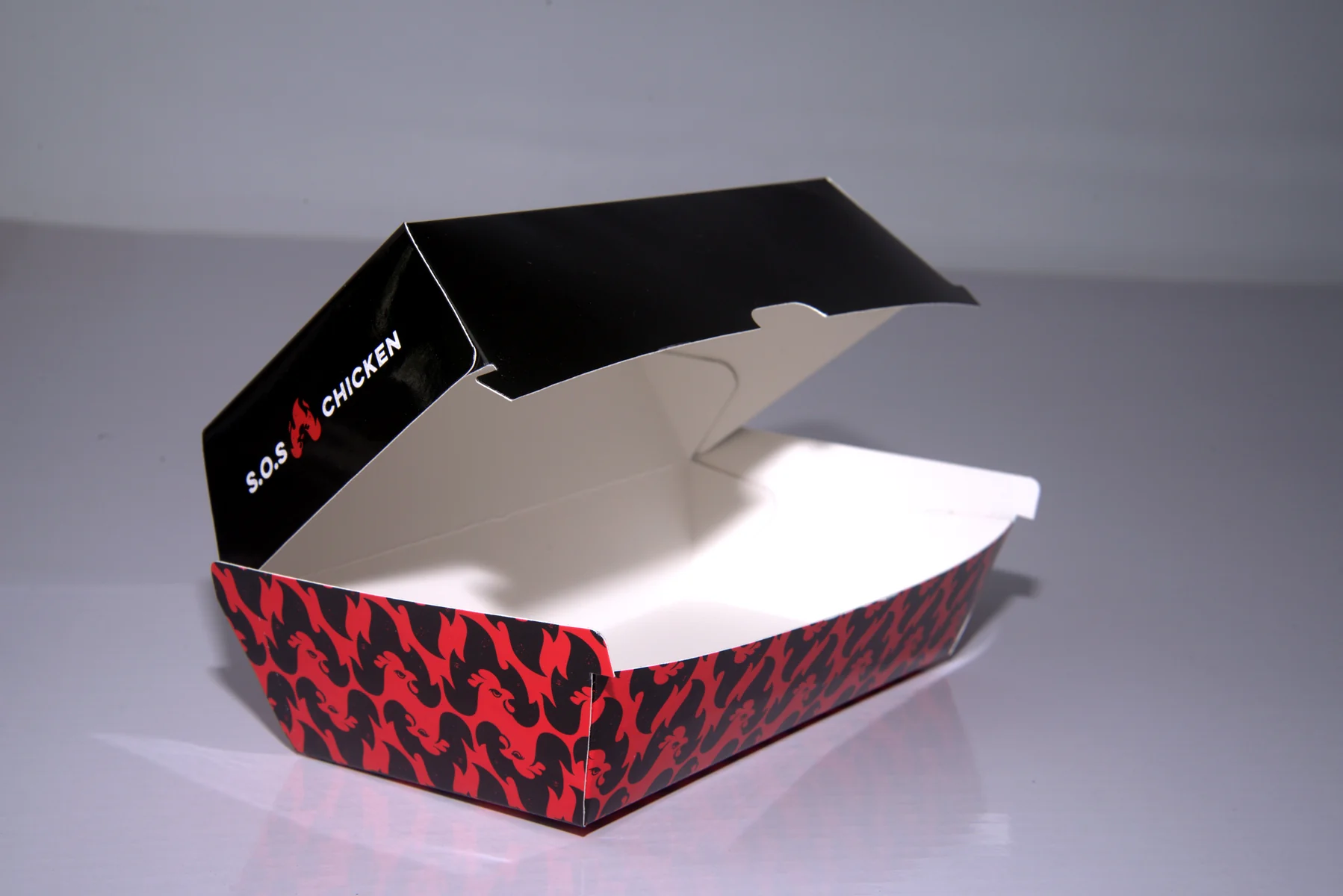 Visual Match: The white interior keeps the food area clean and easy to inspect before packing.
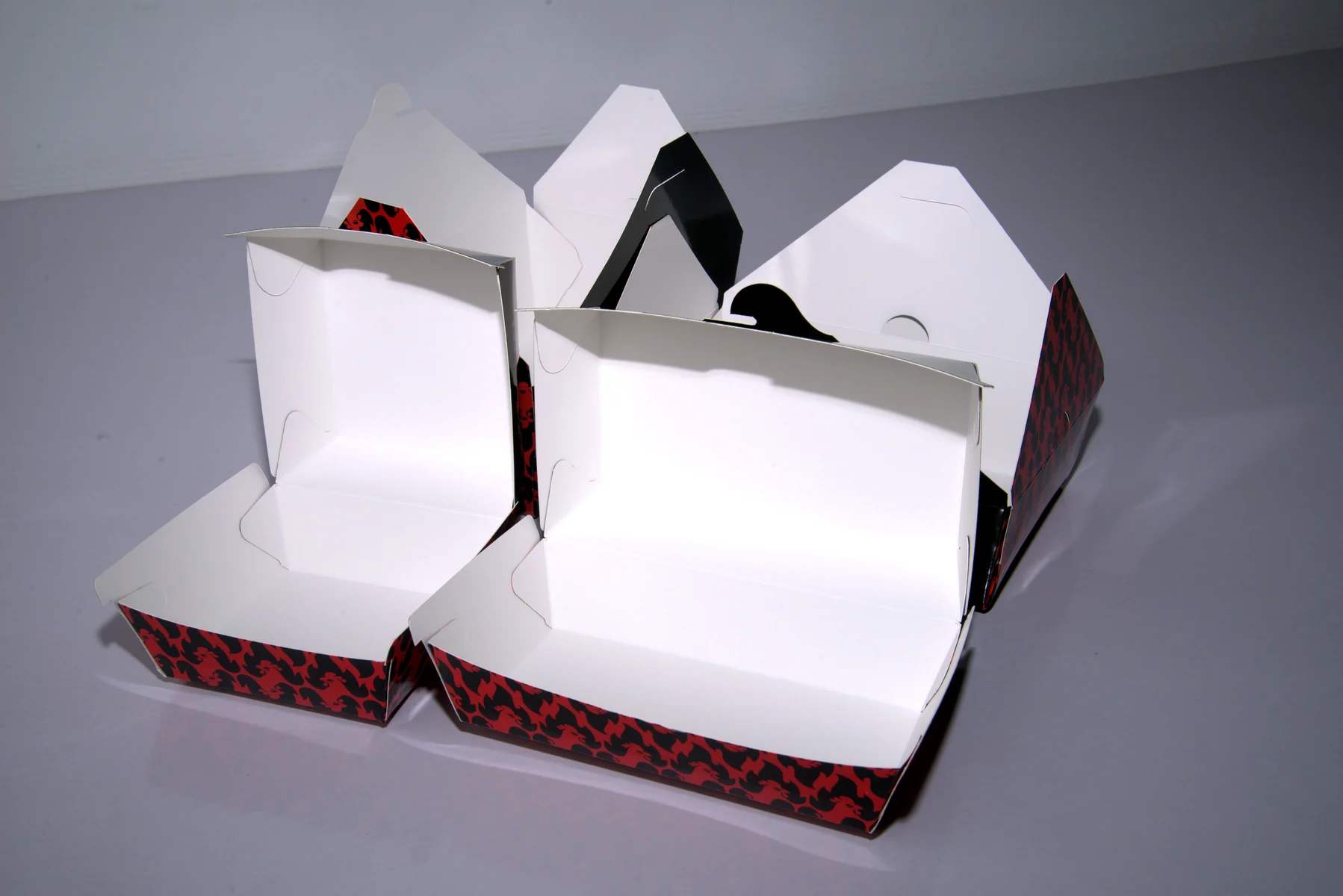 Visual Match: Multiple open boxes show how the structure behaves when the customer opens the meal.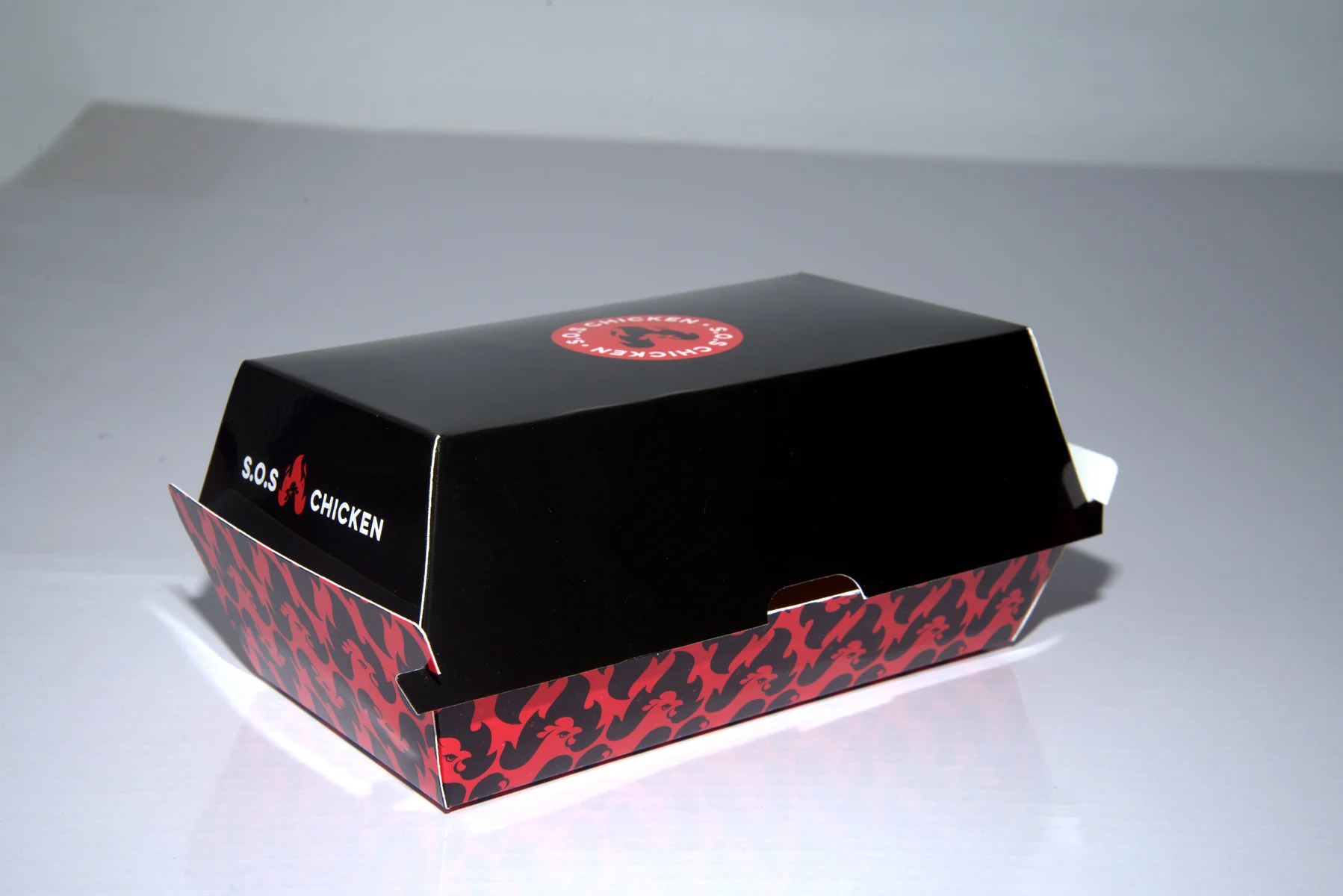
Black, Red and White Were Used for Different Packaging Jobs
In food packaging, color is not only decoration. It tells the customer where to look and how to understand the brand. The black top gives the package a clean, strong and modern feeling. The red side pattern adds energy and helps the box connect with a chicken restaurant brand. The white interior makes the food-contact area feel hygienic and bright when the box is opened.
Holidaypacfactory normally checks this kind of visual system from multiple angles before production. A flat artwork file can look correct, but the finished box may hide important details once it folds. The side panel, lock tab, lid edge and opening flap all affect how the logo and pattern appear in the customer’s hand.
The balance is important. Too much red on the top would reduce the premium feeling. Too little red on the base would make the package look generic. The sample photos confirm that the black lid remains dominant while the patterned side panels create movement.
The Opening Experience Was as Important as the Closed Appearance
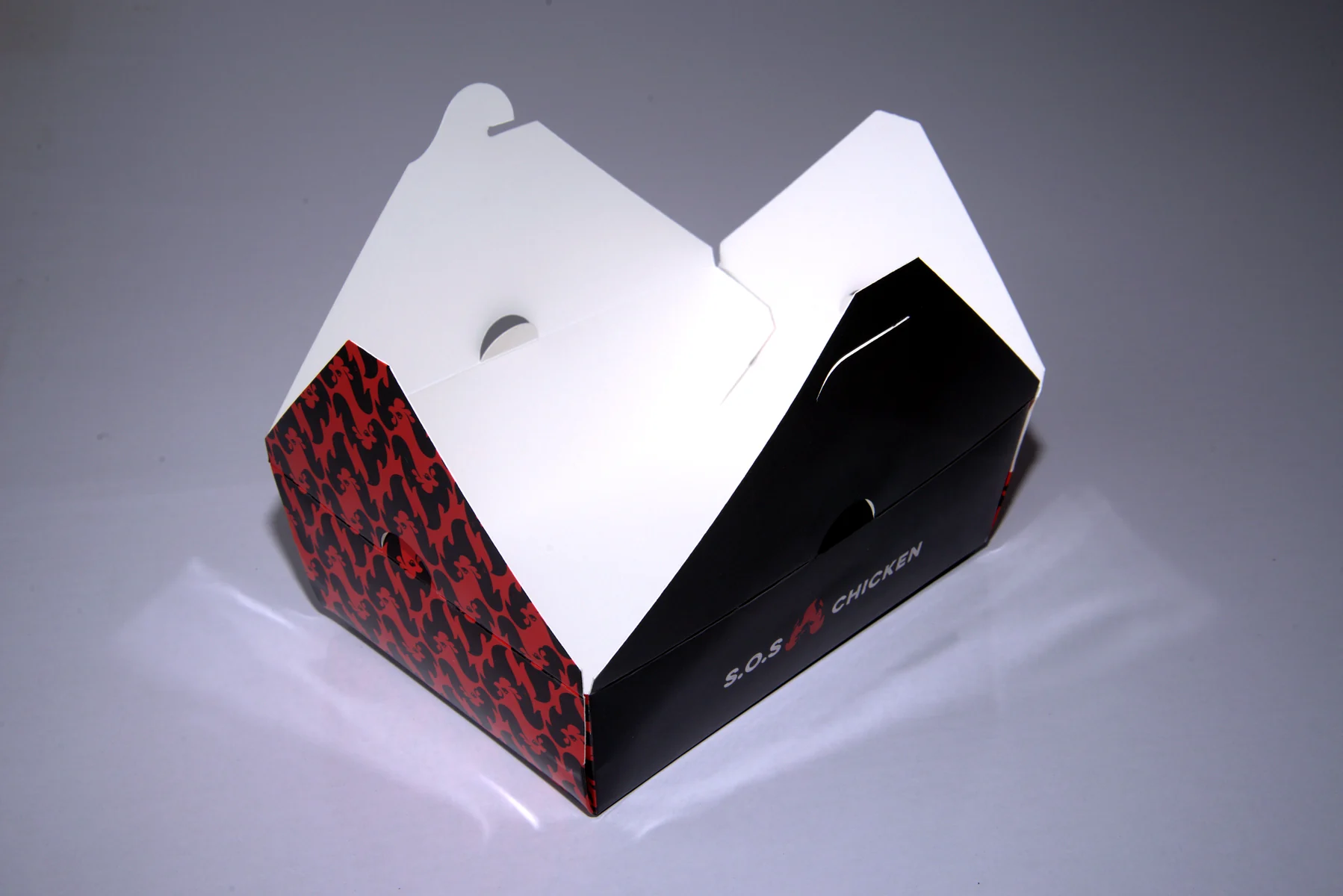
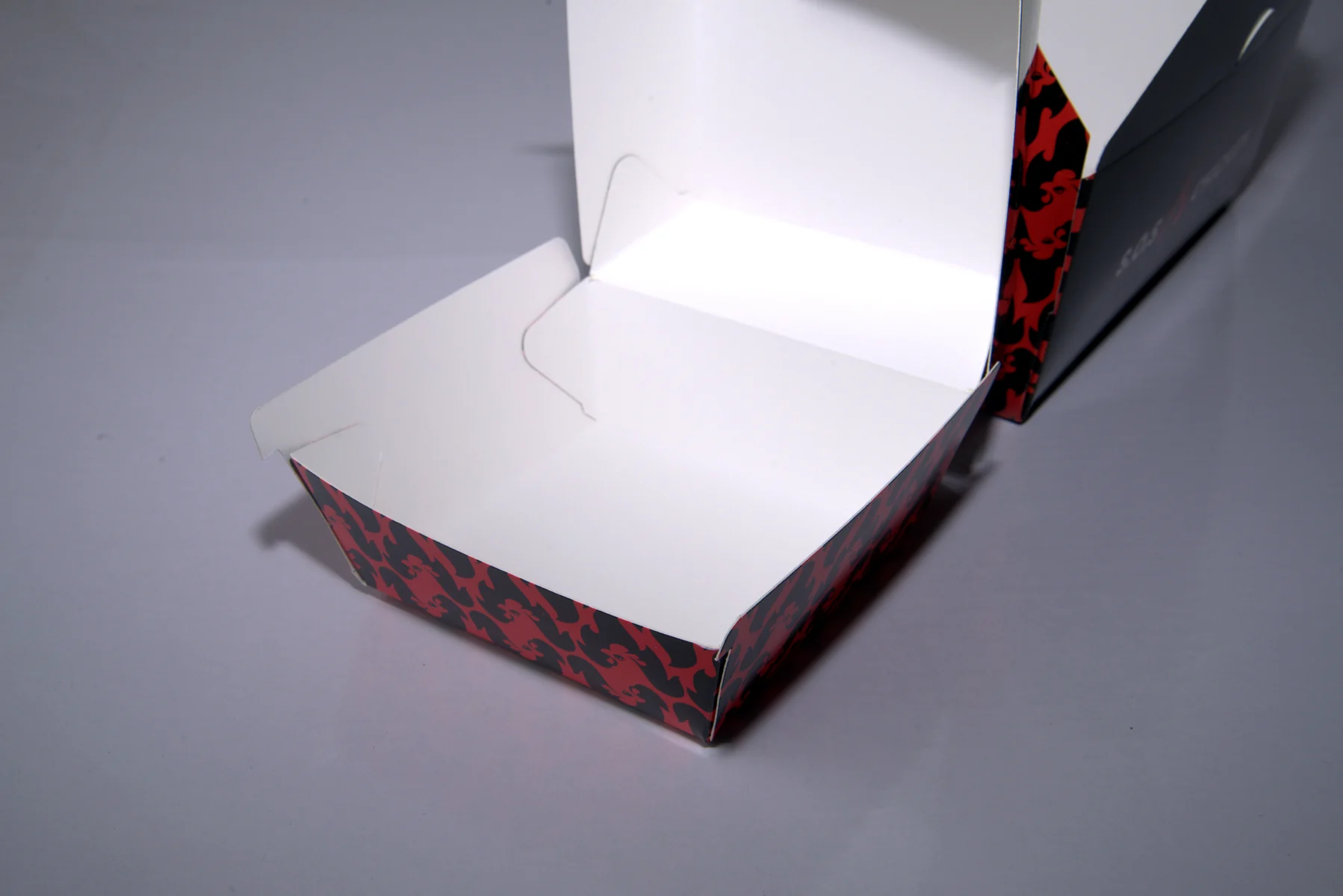
The open-box images show why a packaging case should not be judged only from the hero photo. A takeaway customer interacts with the structure: opening the lid, seeing the food, holding the base and sometimes re-closing the package during transport. If the lid is awkward, the board feels weak, or the interior looks messy, the package can damage the restaurant experience even when the outside print looks good.
Holidaypacfactory checks the interior view because it tells the factory whether the base is deep enough, whether the fold lines are clean and whether the lid opens without fighting the user. The white board inside also makes stains, dust or rough edges easier to see during quality review. That is useful before the project moves into a larger order.
Why These Photos Were Useful Before Mass Production
The buyer did not only need a pretty product photo. The buyer needed proof that the box family would work in daily restaurant service. The closed samples showed how the branded boxes could be stacked and presented at the counter. The open samples showed whether the lid, base and interior made sense when a customer received the food. The side details showed how the logo would survive folding and handling.
Holidaypacfactory uses this type of visual record to protect the factory workflow. When the approved sample is clear, the production team can compare print sheets, die-cut parts and folded boxes against a visible reference. The sales team can also explain the project more accurately when the buyer asks about repeat orders, extra sizes or a related structure such as cardboard boxes for packaging.
For restaurant groups and distributors, this kind of review is especially practical. A package may look good in a design file, but a real food box has to be packed, opened, carried and displayed. These photos make those checkpoints visible before production cost is committed.
Small Edges Decide Whether the Box Feels Professional
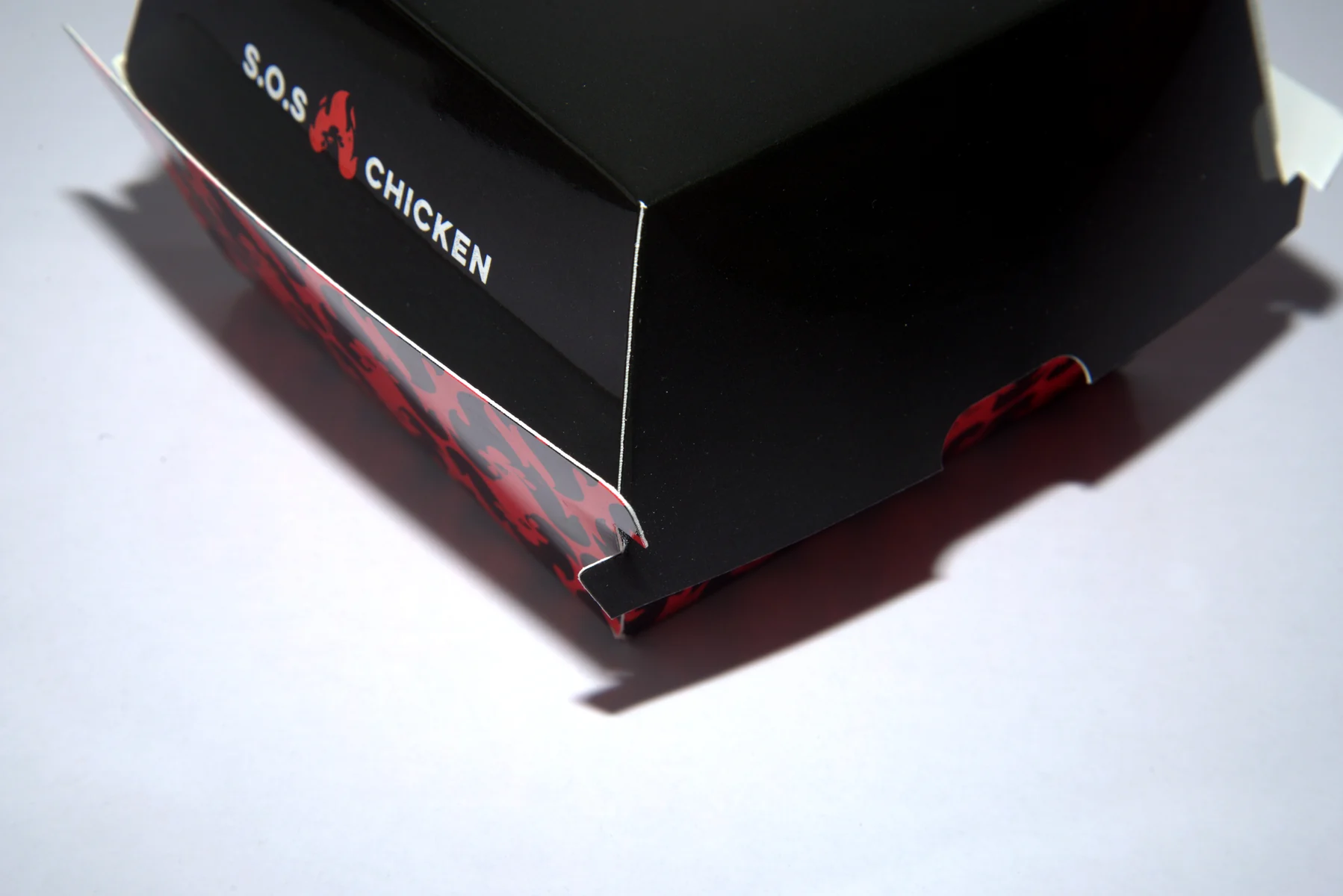
The side-logo close-up is especially useful for production review. It shows how the logo sits near fold lines, how the red printed area meets the black lid, and how the locking detail affects the front edge. In mass production, these details need tolerance control. A small shift can make the logo feel off-center or make the closure look rough.
For food brands, the package is often photographed by customers. The box may appear on social media, delivery platforms and restaurant counters. That is why Holidaypacfactory treats side panels, label position and opening tabs as part of brand quality, not only structural engineering.
What Holidaypacfactory Controls Before Production
Before a project like this moves into bulk production, Holidaypacfactory reviews material, print method, surface finish, food-contact requirements, die-cutting and packing. A black box can show dust, scratches and edge wear more easily than light paper. A red patterned base needs stable color and repeat alignment. The interior must stay clean because it directly affects the customer’s impression of food safety.
The result is a box that looks expressive but remains practical. It can be photographed as a brand item, opened as a meal package and repeated as a production order. That balance is the reason customer case images are valuable: they connect design intention with actual box behavior.
Production Control Points for Black and Red Custom Printed Food Boxes
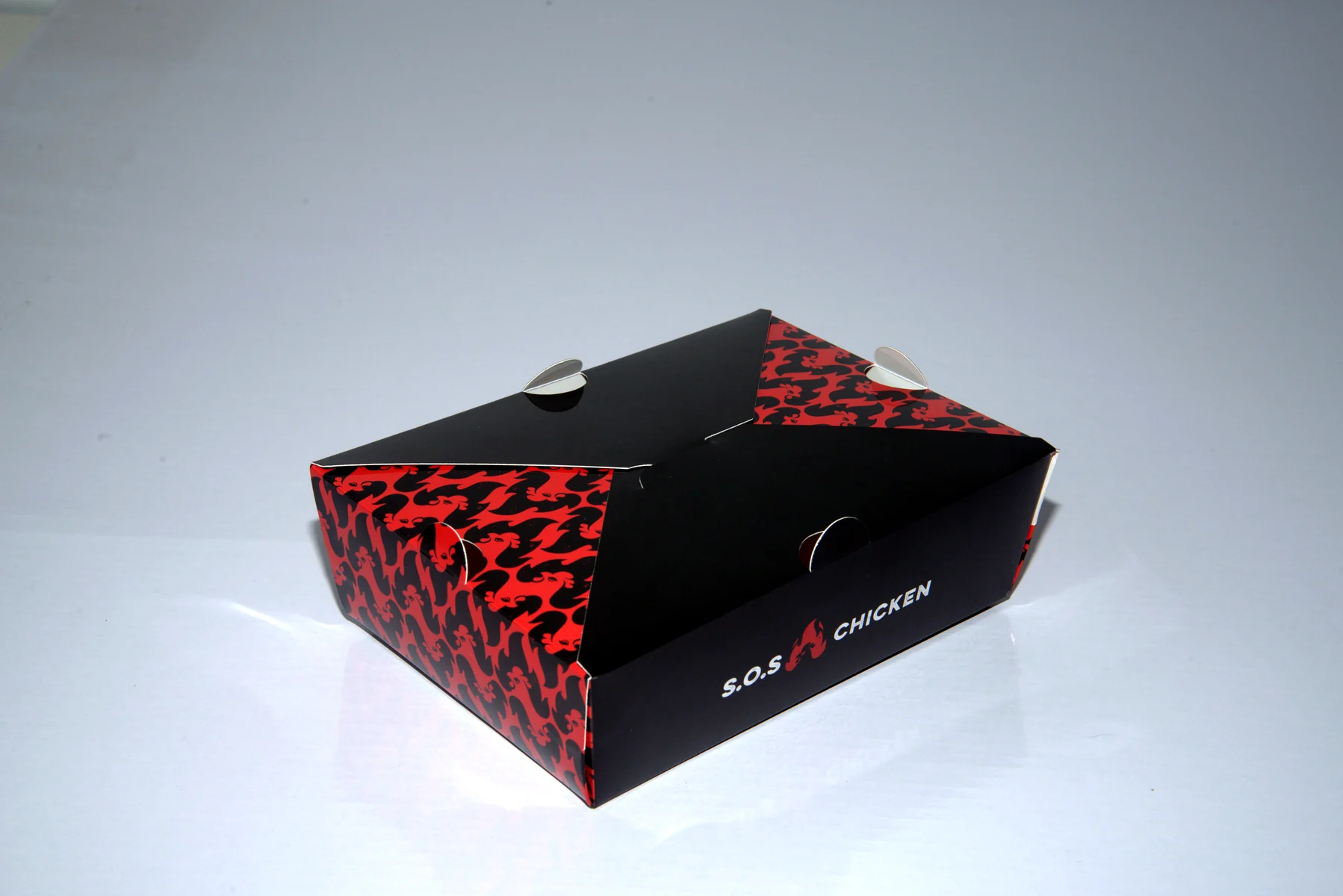
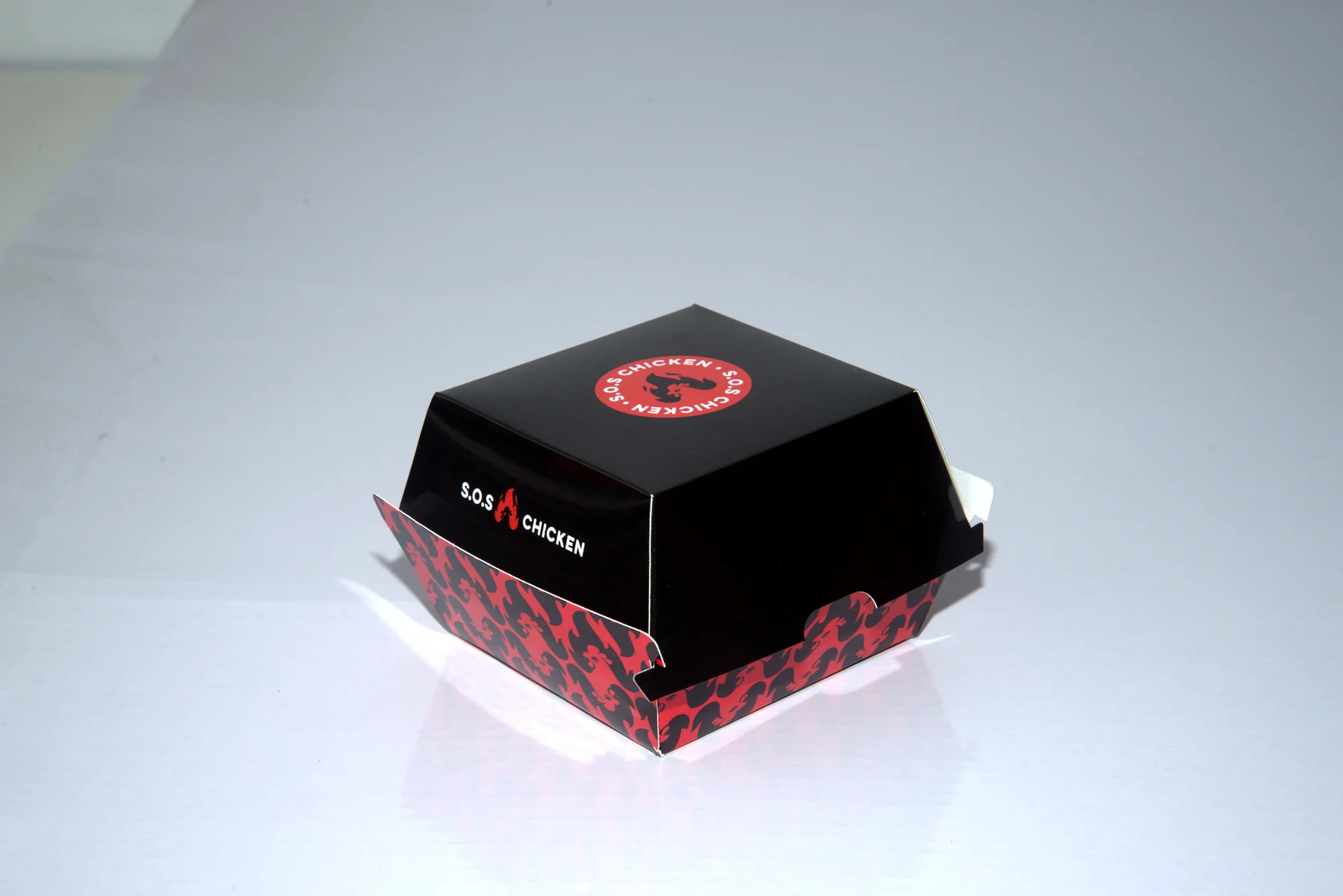
Black and red packaging looks bold, but it asks the factory to control several details carefully. Dark ink coverage must be even. Red pattern density must stay consistent from sheet to sheet. Folding pressure must be controlled so the printed edges do not crack or expose rough paper fibers. For a food box, the interior also has to remain visually clean because the customer sees it at the exact moment the meal is opened.
In this project, Holidaypacfactory treated the approved sample as the reference for bulk production. The production team would normally check board condition before printing, confirm artwork orientation on the sheet, monitor color during printing, check die-cut registration, remove obvious defects during folding and pack the boxes so printed surfaces do not rub heavily in transit. This is especially relevant for export packaging, because the finished cartons may travel through several handling points before arriving at the buyer’s warehouse.
The case also shows why a food packaging project should be discussed as a system. The black lid creates the premium first impression. The red side area supports the restaurant’s energy. The white interior supports hygiene perception. The locking and folding edges support handling. None of these details should be separated from the others. When they work together, the takeaway box feels like a complete brand tool rather than a plain paper container.
From Approved Sample to Carton Packing: How the Case Becomes Repeatable
After sample approval, the production file has to become a clear instruction set for the workshop. Holidaypacfactory normally treats the approved physical sample, the dieline, the artwork file and the buyer’s contract notes as one connected reference. The production team needs to know which surface carries the main brand impact, which panels must stay visually clean, which fold lines need extra attention and which tolerances are acceptable for restaurant service packaging. This is where a customer case becomes more than a photo story. It becomes a working standard for the order.
For this black and red chicken takeaway box, the factory control points are easy to see in the photographs. The hero image confirms the overall family feeling. The side-detail image confirms logo readability close to the fold. The open-interior image confirms the white food area and usable base shape. The smaller closed-lid image confirms whether the same brand language can be repeated on compact sizes. When the factory team has these references, quality checking becomes less subjective. A checker can compare a production sample with a known approved view instead of relying only on verbal description.
Before cartons are sealed, Holidaypacfactory would normally review several practical points: whether the printed surface has obvious rubbing, whether black ink coverage is stable, whether red pattern areas line up correctly, whether folding corners are clean, whether the inner board is tidy and whether the packed boxes are protected against compression during export. These details are especially important for distributors and restaurant groups because they may store packaging in a warehouse before sending it to individual stores. The packaging must arrive ready for service, not just ready for photography.
This is also why the case connects naturally with other Holidaypacfactory food packaging work, including food and beverage packaging, takeaway meal boxes and custom printed paper structures. A buyer may start with one chicken box, then extend the same brand language to sauces, side dishes, combo meals or seasonal promotions. When the first project is documented clearly from contract to production, future development becomes faster and more consistent.
Why a Strong Takeaway Box Helps Both the Restaurant Brand and the Supply Chain
A custom chicken takeaway box is part of the restaurant’s selling environment. It appears in staff hands, delivery bags, customer photos, online reviews and repeat orders. When the box looks intentional, customers feel that the brand has paid attention to the meal experience. When the box is weak, generic or poorly printed, the same meal can feel less valuable before the customer even tastes it. This is why many food brands move from plain packaging to custom printed food boxes once their restaurant identity becomes stable.
For the supply chain, the value is different but equally important. A repeatable box structure helps purchasing teams control inventory. A clear sample approval record helps distributors reorder with less risk. A consistent print standard helps franchise teams keep the same visual identity across stores. A well-planned packing method helps reduce damage during shipping and warehouse handling. In other words, good packaging supports marketing and operations at the same time.
Holidaypacfactory’s role is to connect those two needs. The buyer wants a package that feels attractive and useful. The factory needs a specification that can be produced again and again. This case shows the bridge between those needs: contract information, sample photos, visual matching, material control, production discipline and final presentation. That bridge is what turns one attractive sample into a dependable custom packaging program.
Cassie Lan Author Perspective: Good Packaging Turns Brand Feeling Into Repeatable Factory Decisions
From Cassie Lan’s perspective, a packaging case is not finished when the sample looks attractive. The real value appears when brand feeling becomes a repeatable set of factory decisions. In this chicken takeaway box case, the black top, red pattern, white interior, side logo and opening structure all carry meaning. But each of those choices must also be translated into material, printing, folding and packing instructions.
This is similar to the way Holidaypacfactory works with many overseas food packaging buyers. The buyer may begin with a restaurant identity or a sample idea. The factory must then turn that idea into a box that can be produced, packed, shipped and reordered. A good case record protects both sides because it keeps the visual standard clear after the first approval.
FAQ: Custom Chicken Takeaway Packaging
Can Holidaypacfactory customize a chicken takeaway box with a restaurant logo?
Yes. Holidaypacfactory can customize takeaway food boxes with restaurant logos, brand colors, printed patterns, different lid styles and food packaging structures.
Why is the white interior important for black takeaway packaging?
A white interior helps the food area look clean and bright. It also separates the customer-facing brand design from the food-contact visual experience.
What should buyers prepare before requesting a custom food box quote?
Useful details include box size, food type, order quantity, logo files, artwork direction, material requirement, packing method and destination market.
How does Holidaypacfactory control print consistency on dark food packaging?
Holidaypacfactory reviews ink coverage, color density, registration and folded edge appearance against the approved sample so dark printed areas remain clean and consistent.
Can this chicken takeaway box style be adapted for other meal types?
Yes. The same production thinking can be adapted for fried chicken, burgers, deli meals, snack sets, bakery items and other takeaway programs when size, material and ventilation needs are confirmed.
Why does Holidaypacfactory photograph both closed and open samples?
Closed photos show brand presentation, while open photos show the customer experience, food-contact interior, folding quality and usable meal space. Both views are needed before production approval.