Door to Door service
Welcome to Holidaypac Packaging Solutions Factory!

tiger@holidaypac.com

+86 136 5233 6188
Welcome to Holidaypac Packaging Solutions Factory!

tiger@holidaypac.com
+86 136 5233 6188
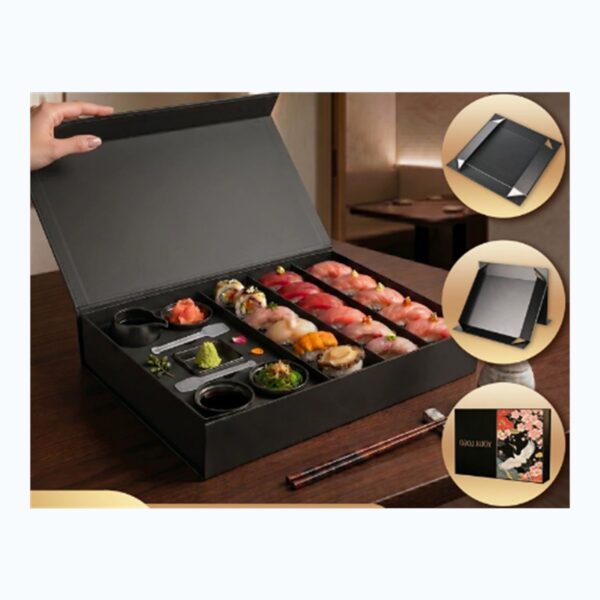
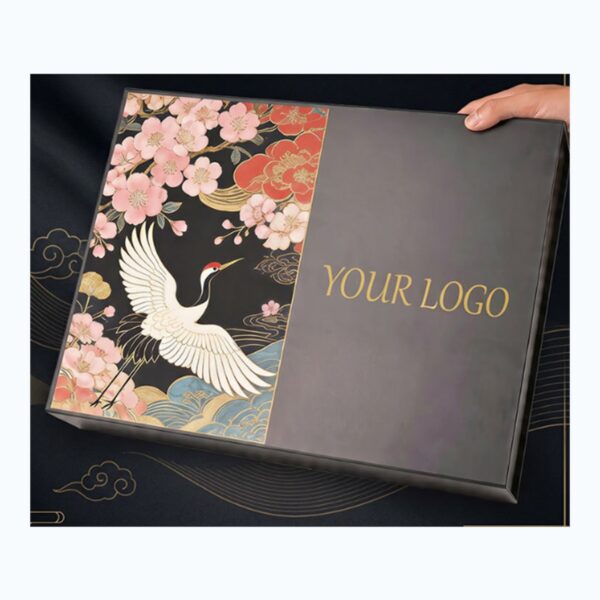
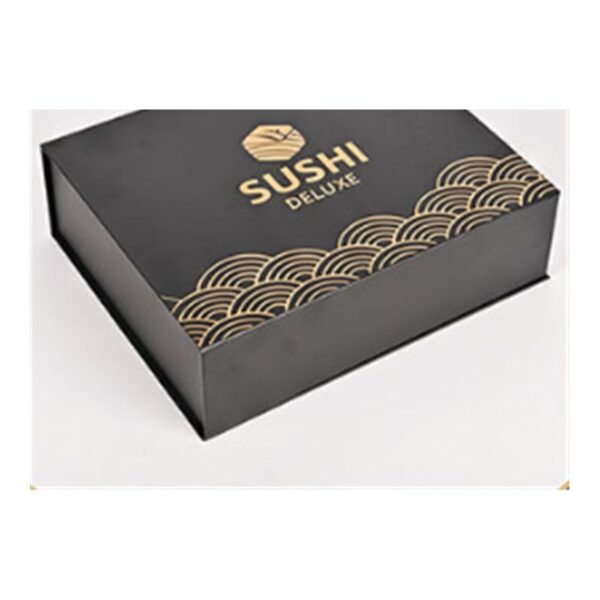
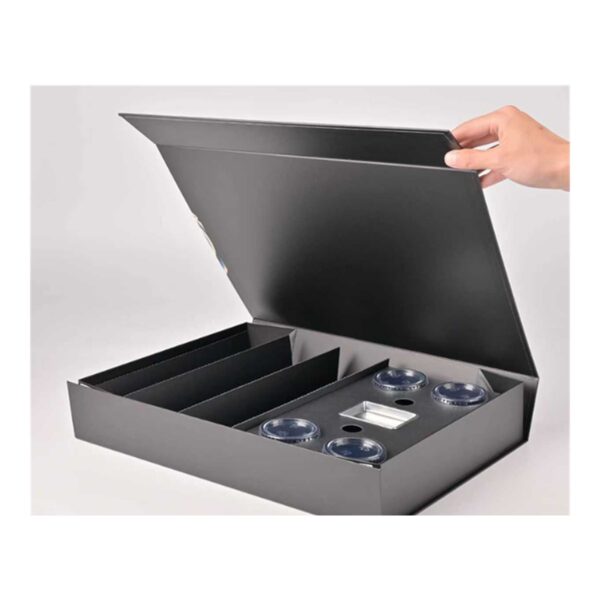
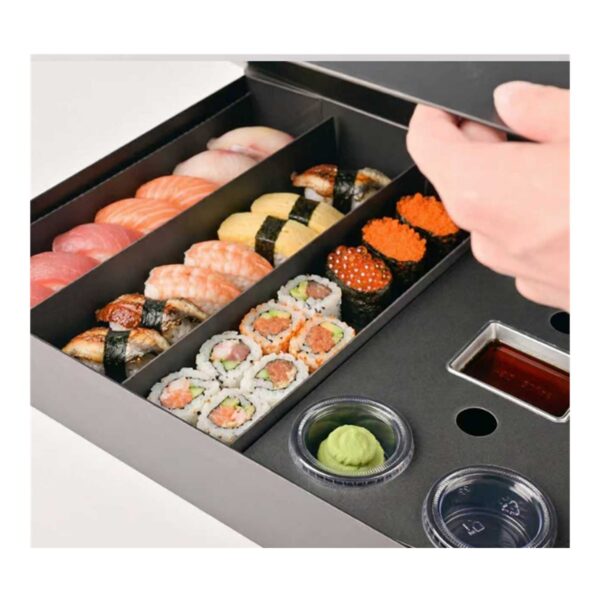
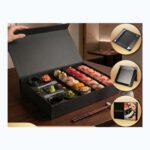
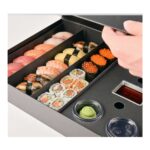
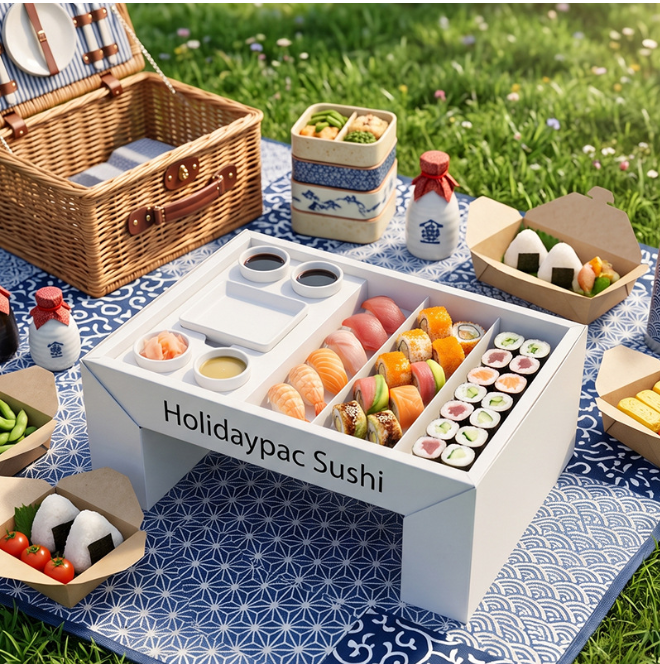
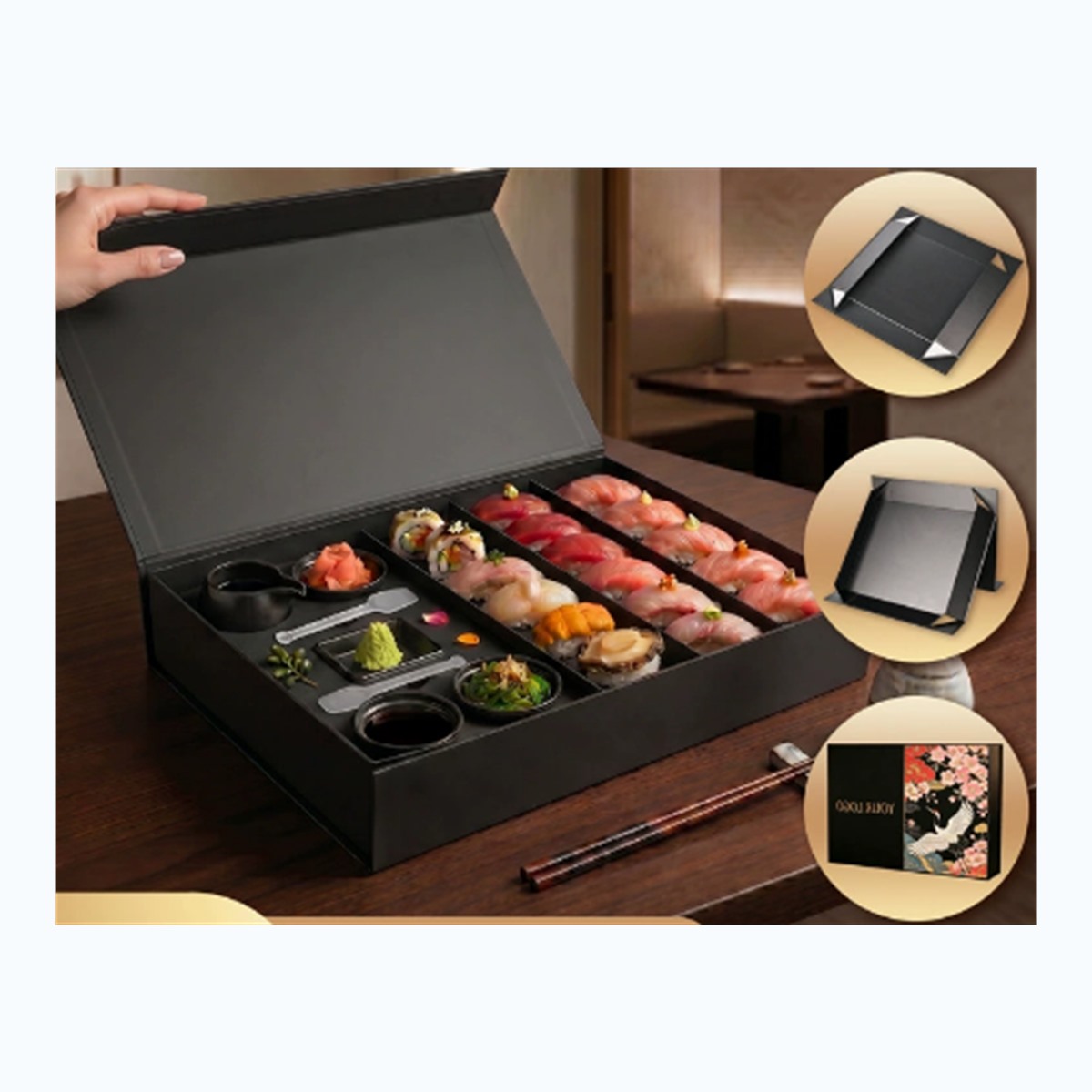
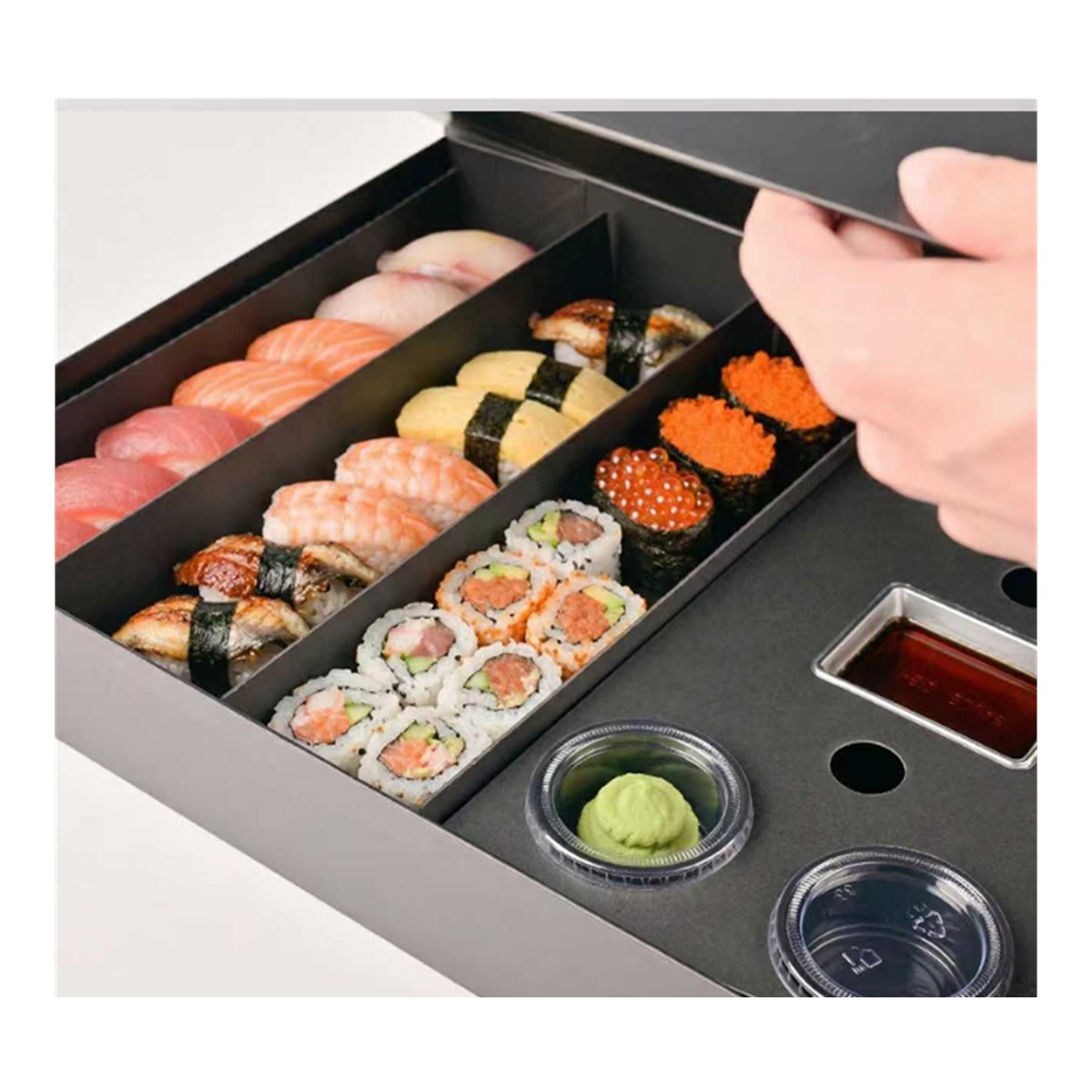
Holidaypacfactory manufactures custom rigid paperboard sushi presentation boxes for restaurants, omakase counters, hotel catering teams, premium takeaway programs, and food brands that want a more memorable serving format than a standard disposable tray. This product combines a magnetic folding box structure, a printed brand lid, separated sushi channels, and a sauce insert area so the meal can travel with a clean premium impression.
| Structure Foldable rigid paperboard magnetic box for sushi and tasting sets | Insert Paperboard divider and sauce cup holes planned around the meal layout | Branding Custom logo, lid artwork, foil stamping, printed sleeve, and private label options |
A custom sushi magnetic folding box with sauce insert for omakase takeaway packaging is designed for restaurants and food brands that need a refined serving box with organized food placement. The rigid magnetic structure gives the meal a premium handoff, while the insert can separate sushi rows, garnish, sauce cups, wasabi, ginger, or tasting items for a cleaner presentation.
Sushi packaging has to do more than hold food. It needs to protect delicate pieces, keep sauces from shifting, present color clearly, and support quick packing during busy service. A rigid magnetic folding format gives the box a strong outer shell, while the insert area can be planned for nigiri, rolls, garnish, sauce cups, wasabi, ginger, or small tasting items.
The folding construction is also useful for operations. Fully assembled rigid boxes can take significant warehouse space. A foldable magnetic format can be stored flatter before use, then assembled when the restaurant or packing team needs it. This is attractive for seasonal menus, limited edition sets, pop-up events, airport food retail, catering programs, and restaurants that need premium presentation without filling the back room with bulky finished packaging.
For a fold flat sushi magnetic gift box with compartment insert, the outside board thickness, magnet strength, hinge crease, wrap paper, and insert tolerance must work together. If the board feels too thin, the presentation loses its premium effect. If the insert is loose, sushi rows can shift. If the sauce holes are too tight, cups are difficult to place during service.
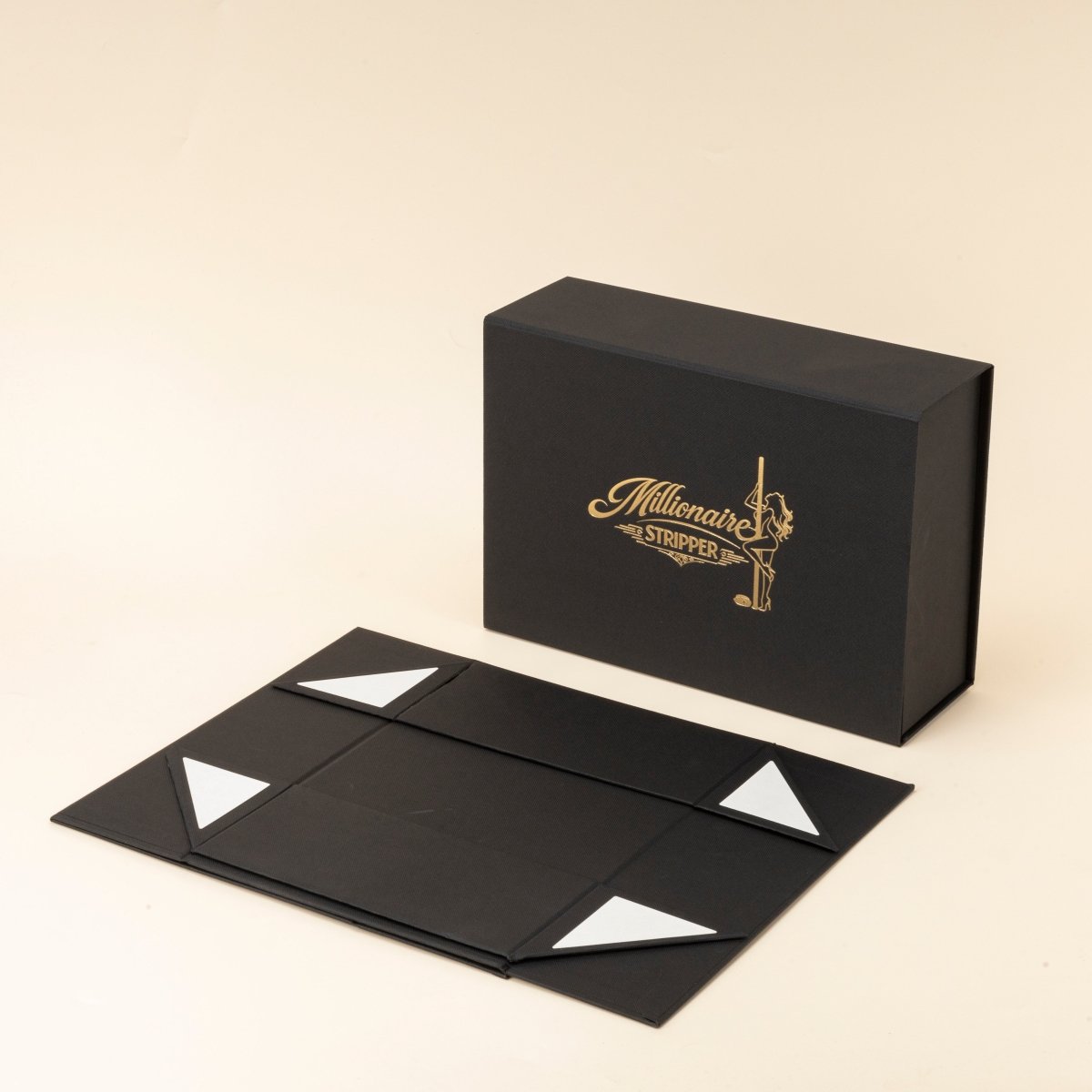
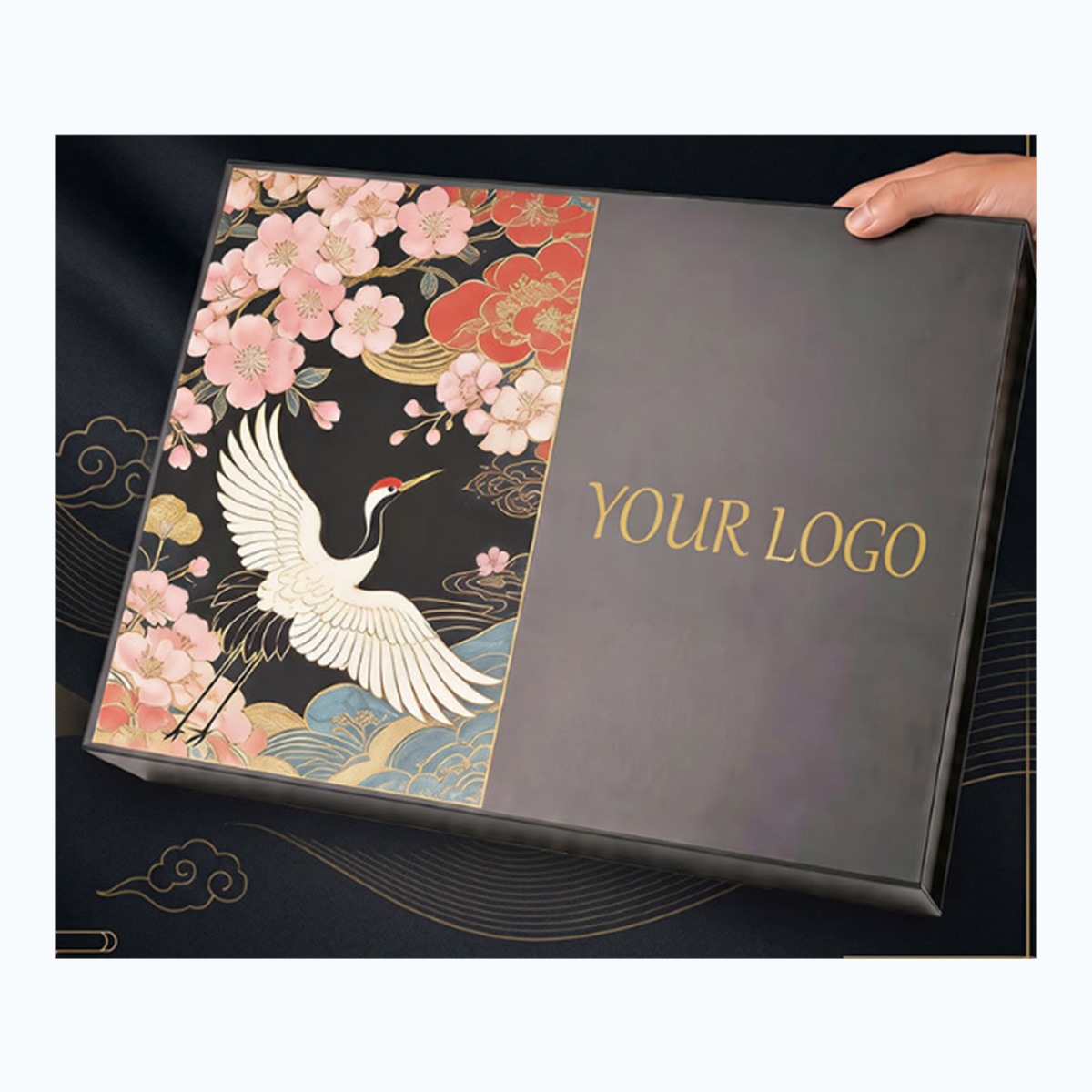
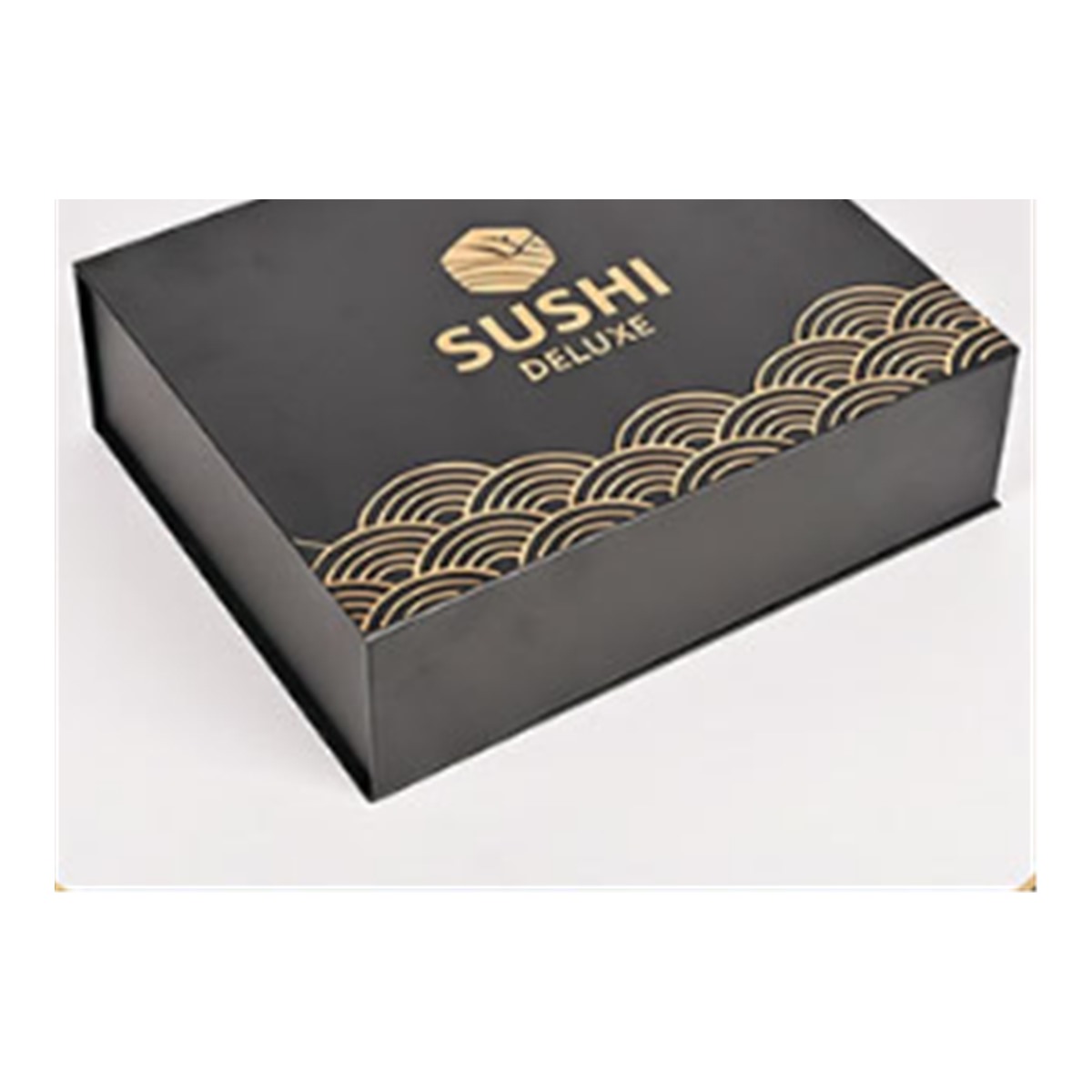
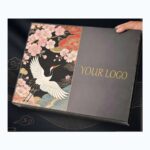
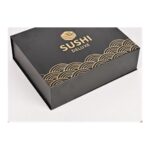
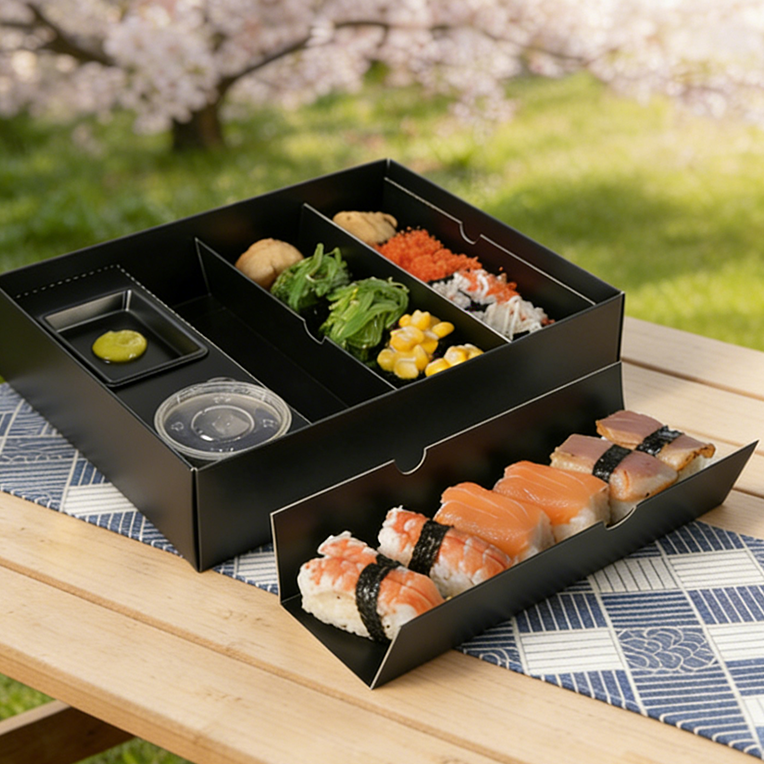
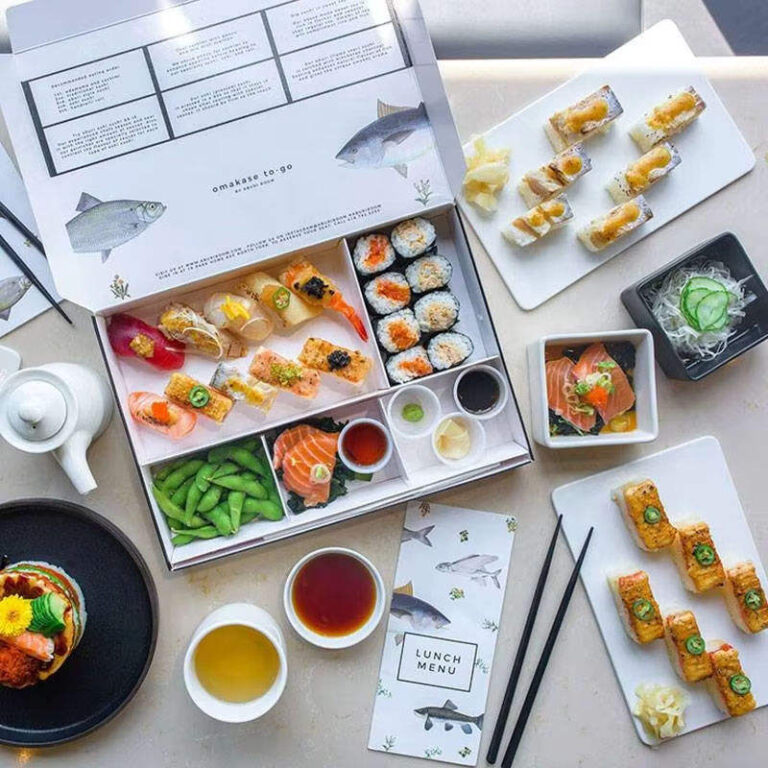
The sample images show a black paperboard structure with a printed lid panel and gold logo direction. This direction is suitable for Japanese restaurants, omakase counters, fusion sushi concepts, hotel food service, premium bento programs, and high-end party catering. The same structure can also be adjusted for wagyu tasting sets, dessert assortments, truffle boxes, chocolate sushi concepts, seafood samplers, corporate food gifts, and festival meal boxes.
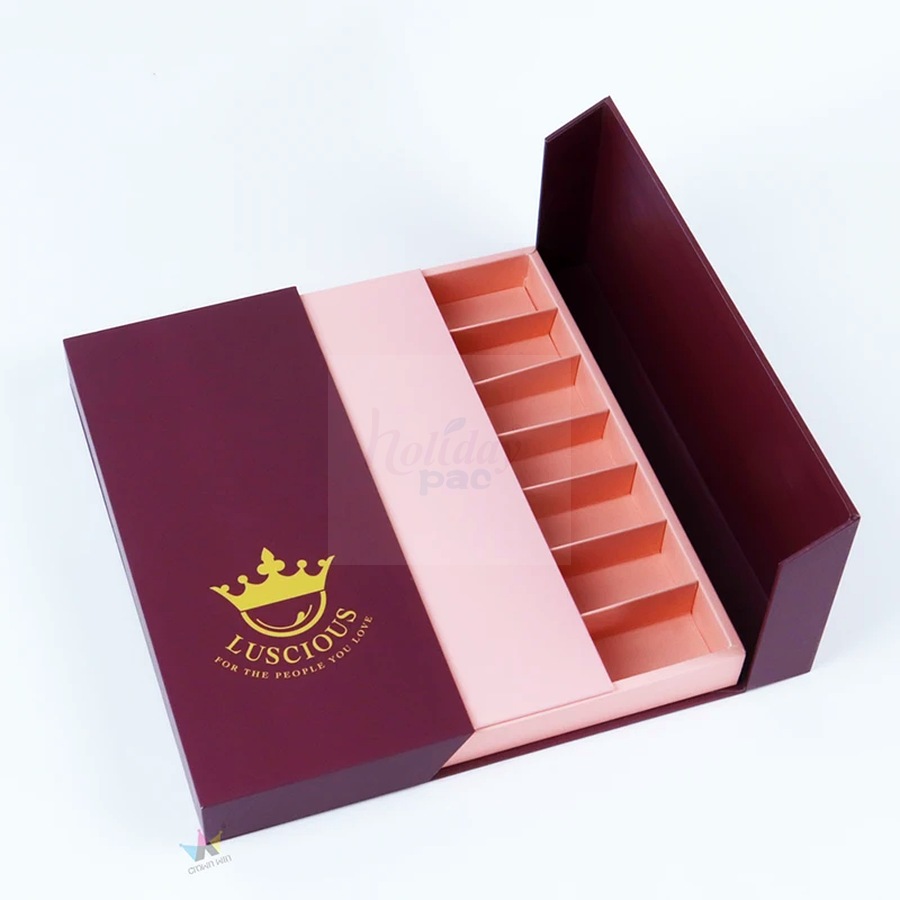
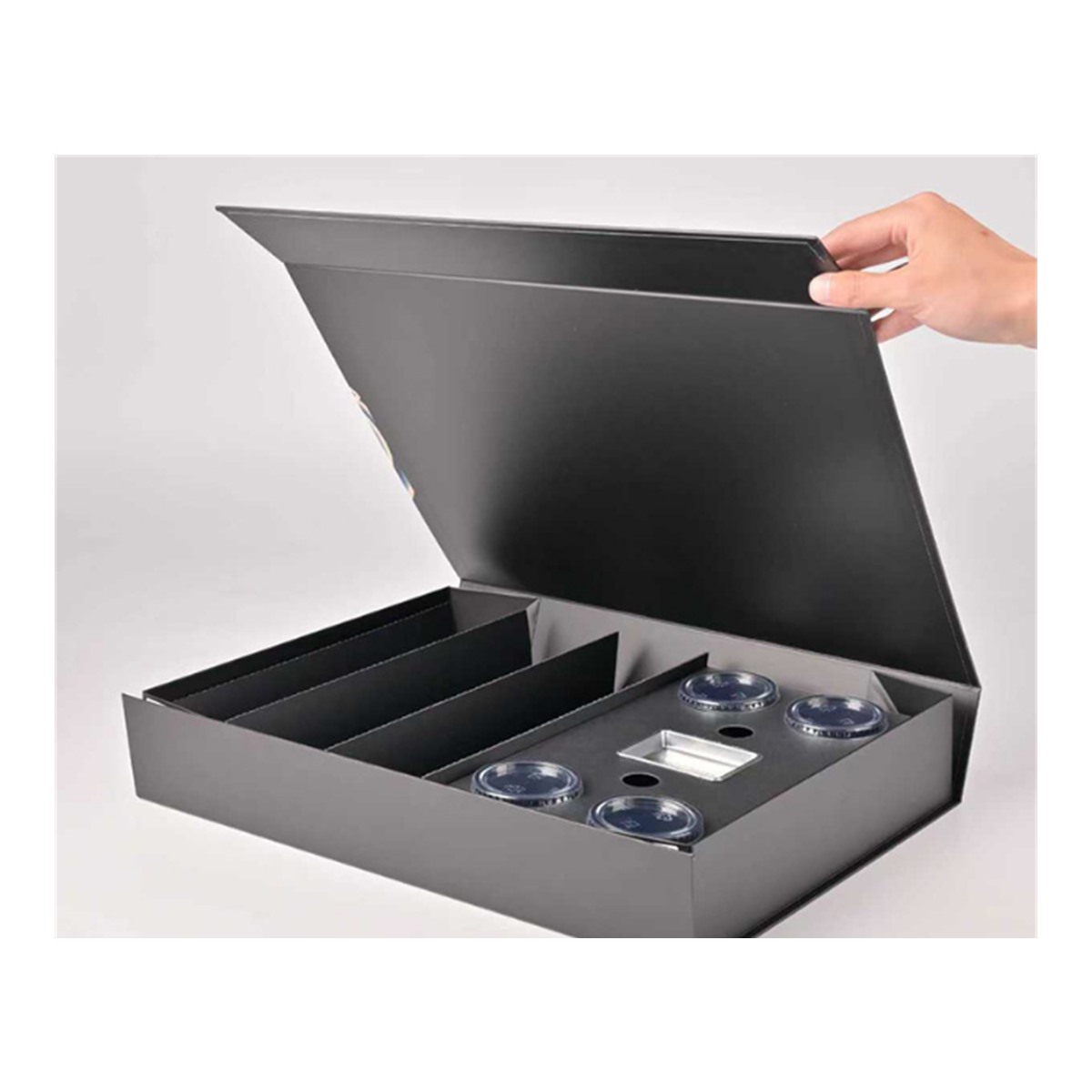
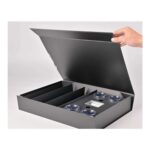
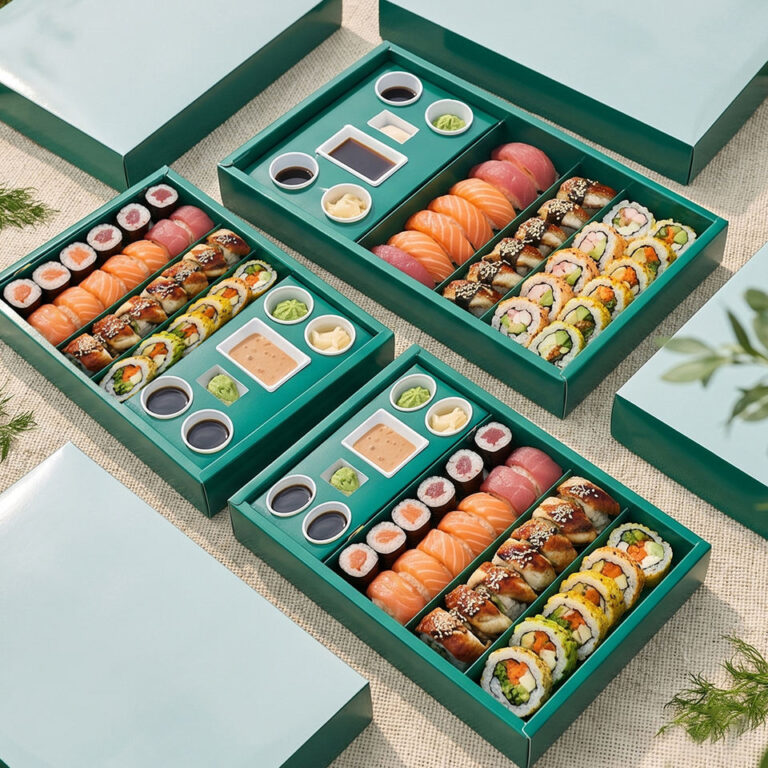
Insert planning is one of the most important parts of this product. A restaurant may need long lanes for nigiri, a separate compartment for rolls, a tray zone for sauce cups, circular holes for small containers, or a rectangular cutout for soy sauce. Some brands want the insert to be removable so the outer box can be reused. Others prefer a fixed insert that keeps packing simple.
For custom branding, the lid can carry a logo, a seasonal artwork panel, a restaurant story, a Japanese pattern, a minimalist black and gold finish, or a full-color illustration. Foil stamping, embossing, debossing, spot UV, matte lamination, soft-touch lamination, and textured paper are common options.
This branded omakase takeaway box with magnetic closure is relevant when the meal has a premium price point and the package needs to support the perceived value. Omakase takeout, chef selection boxes, hotel tasting menus, private dinner sets, airline lounge catering, and corporate hospitality gifts benefit from a package that opens like a gift rather than a commodity tray.
For restaurants, the box can become part of the service ritual. Staff can pre-load insert components, place sauce cups into the holes, add sushi rows, close the lid, and apply a belly band or tamper label. If the customer is picking up the order, the package looks strong enough to carry the brand outside the restaurant.
Food retail buyers can also use the structure for premium chilled displays. A printed lid and clean insert layout can help differentiate sushi, seafood, dessert, or tasting collections inside specialty grocery stores. If a clear window is required, the structure can be modified, but many premium brands prefer a closed gift-style lid because it creates a reveal moment and protects the food.
Event planners and corporate gifting teams may use this structure for curated food gifts. Sushi may be the main use case in the sample images, but the same rigid folding box logic can support macarons, chocolates, premium tea snacks, Asian dessert sets, mini bottle tasting kits, and limited edition hospitality packs.
The outer shell normally uses rigid paperboard wrapped with printed paper, specialty paper, or coated paper. For a black luxury look, brands often choose matte lamination, soft-touch film, black specialty paper, or a printed black surface with gold foil. The inner insert can be made from paperboard or another material depending on whether food touches the insert directly.
A luxury sushi presentation packaging box with custom logo often has several surfaces that need artwork review: the lid outside, the lid inside, the side walls, the base interior, the insert, the sauce panel, the sleeve, and the shipping carton label. Clear artwork mapping prevents mistakes during production.
For food service, durability is judged differently than normal gift packaging. The box may sit in a cold environment, be handled by staff wearing gloves, travel in a delivery bag, or be opened near moisture. The board, wrap, adhesive, and insert should be selected with this environment in mind.
The magnet closure should feel smooth but not too strong. A box that is difficult to open can disturb delicate food placement. A magnet that is too weak can make the lid feel unstable. Sample testing lets the buyer check this balance in real packing conditions.
The insert is where this product becomes truly useful. A buyer may need one long sushi lane, two or three parallel rows, sauce cup holes, square wells, separator walls, chopstick placement, garnish pockets, or a removable tasting tray. The design should start from the food, not from the box.
For an OEM sushi box with paperboard divider and sauce cup holes, the insert drawings need to consider how fast the box can be packed. A complex insert may look impressive but slow down staff during lunch or dinner rush. A simpler divider may be easier to use but provide less visual separation.
When the box is used for more than one menu, the outer size can remain the same while the insert changes. This is useful for restaurants that offer regular sushi sets, premium omakase sets, vegetarian sets, dessert sets, or seasonal festival sets.
For export projects, the insert should be tested after flat packing and assembly. Creases, tabs, adhesive points, and divider walls all need to return to the correct shape after transport. If the project uses removable inserts, the team should also check whether inserts are packed separately or pre-positioned inside the flat box set.
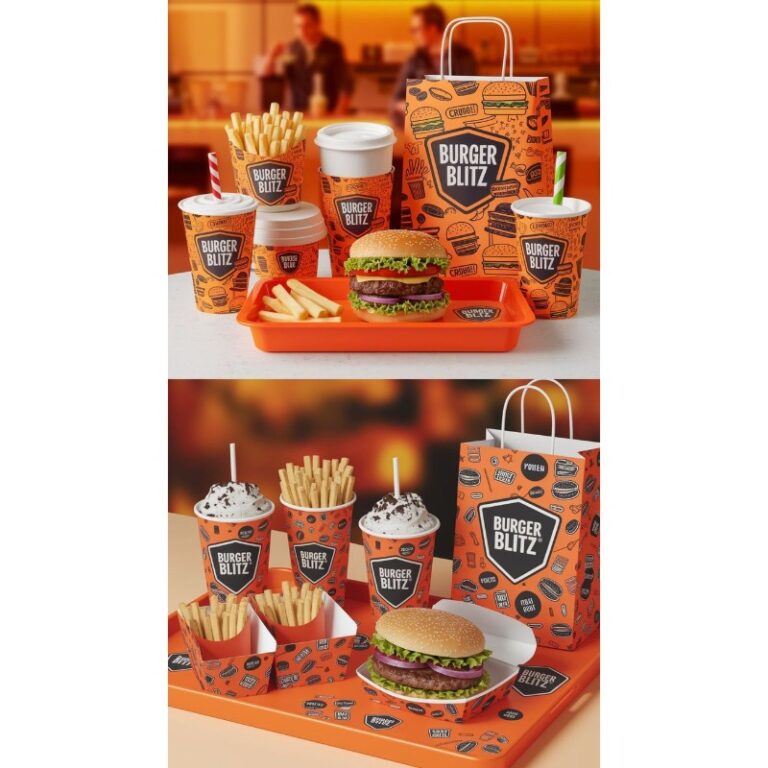
This premium sushi box can be used as the centerpiece of a complete branded food packaging set. A restaurant may pair a custom restaurant sushi gift box for premium delivery with matching paper bags, chopstick sleeves, sauce labels, tamper seals, menu inserts, and delivery cartons so the customer receives one coordinated brand experience.
A fold flat sushi magnetic gift box with compartment insert is helpful when the buyer wants premium presentation without storing large volumes of assembled rigid boxes. The box can stay flatter before service, then fold into a strong presentation format for omakase sets, hotel catering, airport counters, tasting menus, seasonal gift meals, and limited edition Japanese food promotions.
For a branded omakase takeaway box with magnetic closure, the lid artwork and inner insert should work together. The lid can carry the restaurant logo, seasonal art, chef note, QR code, or event message, while the insert controls food placement and sauce cup position. Luxury sushi presentation packaging box with custom logo works best when the visual design and packing workflow are planned at the same time.
An OEM sushi box with paperboard divider and sauce cup holes should be tested with real food dimensions and real sauce cups before bulk production. Hole diameter, lane width, divider height, tray depth, lid clearance, and carry-bag fit can all affect the final customer experience. For a rigid paperboard sushi box for hotel catering service, these details help the package feel polished from kitchen preparation to guest handoff.
To quote this box accurately, Holidaypacfactory needs the outer box size, the inner food layout, the number of sushi pieces, sauce cup diameter, sauce cup height, whether the box needs direct food contact protection, expected order quantity, logo file, artwork direction, desired finish, packing method, destination country, and timeline.
If the buyer already has a current package, sending photos and dimensions of that package can speed up the design discussion. If the buyer is building a new premium takeaway program, Holidaypacfactory can begin from the menu count and presentation goal.
Sampling is recommended before bulk production because premium food packaging is tactile. The buyer should open and close the box, place real food or dummy weight inside, test sauce cup fit, check insert stability, review print color, inspect edge finish, and confirm carton packing.
For large programs, it is useful to plan future menu variations early. The same outer magnetic folding box may later support dessert sets, sashimi sets, seasonal festival boxes, or corporate tasting kits. Planning the structure family early can reduce future redesign work and keep the packaging system visually consistent across the restaurant or food brand.
A foldable magnetic sushi box is most valuable when the restaurant team can assemble it without slowing service. The folding panels should guide the user naturally, the magnets should meet cleanly, and the insert should drop into place without forcing. During sample review, it is useful to time the assembly process with the same staff who will pack the boxes during real service. A design that looks excellent on a desk still needs to work at speed during lunch rush, dinner rush, catering preparation, or hotel banquet packing.
Storage planning is another practical advantage. Rigid boxes that arrive fully assembled can look beautiful, but they consume warehouse space quickly. A fold-flat structure can reduce carton volume, which matters for restaurants with limited back-of-house storage, food halls, hotel kitchens, airports, and pop-up operations. The buyer should compare the number of flat units per carton, assembled units per shelf, and the labor time needed before service. This helps the purchasing team decide whether flat packing or semi-assembled packing is better for the business model.
For delivery and pickup, the package should also be reviewed as part of the full handoff system. The sushi magnetic box may be placed inside a paper carrier bag, a chilled delivery bag, a branded shopping bag, or a catering carton. If the box is too wide for the carrier, the presentation can become awkward. If the box is too tall, sauce containers may touch the lid. Holidaypacfactory can help review the outer carton and carry bag relationship so the finished packaging system feels intentional from kitchen to customer.
Restaurants with multiple branches should standardize the assembly guide. A simple printed instruction sheet, training photo, or short packing checklist can reduce variation between locations. If different teams fold the box differently, the final shape, insert position, and magnetic closure may feel inconsistent. Planning the workflow early keeps the brand experience stable even when the product is packed by different staff members in different cities.
The lid of this box is an important storytelling surface. A premium sushi set may use minimal black and gold branding, a Japanese wave pattern, a crane illustration, a seasonal flower motif, a chef signature, or a quiet matte logo. The best artwork direction depends on the restaurant positioning. A modern omakase counter may prefer sparse typography and subtle foil. A festival gift set may use more color, pattern, and limited edition graphics. A hotel or corporate hospitality box may need a refined design that feels formal without being cold.
Holidaypacfactory recommends preparing artwork as editable vector files whenever foil stamping, embossing, debossing, or sharp logo printing is required. CMYK print files should include bleed, safe margins, panel names, and clear notes for which areas are outside, inside, side wall, insert, and sleeve. If the buyer wants exact color matching, Pantone references or physical samples are more reliable than screen color. Black paper, matte lamination, and soft-touch surfaces can all affect how gold, white, and red artwork appears after production.
Seasonal menus can be handled without rebuilding the whole structure. The outer magnetic folding box can remain consistent while the lid art, sleeve, insert print, or sticker changes for New Year, Valentine menus, sakura season, summer tasting sets, Mid-Autumn gifts, Christmas hospitality, or anniversary events. This approach lets a restaurant refresh the customer experience while preserving production efficiency. It also helps customers recognize the brand because the structural experience remains familiar.
Brand storytelling can also be placed inside the lid. A short chef note, origin story, pairing suggestion, reheating instruction, allergy reminder, or QR code can turn the inside panel into a useful communication surface. For premium takeaway, this is often more elegant than adding loose printed cards. The buyer should decide early whether inner-lid printing is purely decorative or whether it carries service information, because that affects artwork hierarchy and proofing.
Quality control for a sushi magnetic folding box should include both packaging checks and food service checks. Packaging checks include board thickness, wrap adhesion, crease alignment, magnet placement, lid closing feel, edge finish, corner sharpness, print registration, foil position, color consistency, and carton packing. Food service checks include insert fit, sauce cup fit, clearance under the lid, ease of placing sushi rows, resistance to shifting, and how the box feels when carried.
The insert tolerance deserves special attention. If the insert is too loose, it may move during delivery. If it is too tight, staff may damage the box while placing it. If sauce holes are too large, cups can rattle. If they are too small, packing becomes frustrating. A few millimeters can change the packing experience, so physical samples should be tested with the actual sauce cups, garnish cups, or food-safe trays that the restaurant plans to use.
Moisture and temperature should also be reviewed. Sushi and chilled food can create condensation, and delivery environments are not always controlled. The buyer should clarify whether the food touches the insert directly or sits on a separate liner or tray. If direct contact is expected, the material specification should be discussed carefully. If the box is mostly a presentation shell around separate food-safe components, the design can focus more on structure, branding, and unboxing feel.
Before approving bulk production, buyers should inspect a full pre-production sample in real lighting. Matte black, soft-touch black, and coated black can look different under restaurant lights, daylight, and photography. Since premium food packaging is often photographed by customers, the finish should look good both in hand and on camera. This is especially important for omakase, sushi gift boxes, and limited edition menu launches where social sharing may be part of the marketing plan.
A small launch and a large chain rollout may use the same visual concept but different production strategy. For a small launch, the buyer may prioritize simple artwork, practical insert tooling, and a lower-risk sample cycle. For a larger program, the buyer may invest in refined finishes, multiple insert versions, stricter color control, and more detailed carton packing. Holidaypacfactory can help compare these paths so the first order supports the business goal instead of overbuilding or underbuilding the package.
If the restaurant is testing a new premium takeaway menu, it may be wise to begin with one outer size and one insert layout. After customer response is clear, future orders can introduce seasonal artwork, alternative inserts, or companion carrier bags. If the buyer already knows the box will be used across several menus, it is better to plan the structure family at the beginning. That way, the main box, insert options, sleeves, labels, and shipping cartons can be coordinated from the start.
Lead time depends on sample complexity, artwork approval, material choice, finish requirements, quantity, and export packing. Foil stamping, special paper, custom inserts, and exact color matching can add review steps. Buyers with a launch date should share the date early and work backward from photography, menu printing, staff training, shipping, customs, and branch distribution. Packaging is often needed before the menu launch, not on the launch day itself.
For repeat orders, keeping a clear specification file is helpful. The file should include box size, board thickness, paper type, print method, finish, magnet position, insert drawing, approved artwork, carton quantity, and quality notes from previous orders. This makes reordering faster and reduces the chance of drifting away from the approved sample. Holidaypacfactory can use that reference to keep future production aligned with the original brand standard.
Yes. The folding rigid structure can reduce storage volume before restaurant assembly.
Yes. Insert shape, hole diameter, lane width, divider height, and food placement can be adjusted from buyer dimensions and cup samples.
Yes. Logo printing, foil stamping, full-color lid artwork, matte lamination, spot UV, sleeve printing, and inner panel branding can be planned.
No. The structure can also be adapted for dessert sets, chocolate collections, seafood samplers, corporate food gifts, and premium tasting kits.
Send Holidaypacfactory your box size, sushi layout, sauce cup size, quantity, logo, and preferred finish. Our team can help plan a fold-flat magnetic box with an insert system suitable for premium food presentation.

 Cassie LanFounder, HolidayPac · Leave a message
Food packaging, paper bags and food service paper for your next project.
Leave your request anytime. Our sales team will reply with pricing, samples and production details.
Tell us what you're packaging and we'll ship a physical sample plus a free 3D mockup within 24 hours — no cost, no obligation.
We've received your inquiry and our team will get back to you within 24 hours.