
By Cassie Lam, Founder of HolidayPac · Buyer insight · October 2026
What makes food gift packaging premium? A well-designed gift box gives the assortment a clear order, helps the recipient remove each item, and works for the team filling and delivering it. This guide explains how to compare chocolate drawers, tea sets and food advent calendars through structure, commercial scope and sample approval.
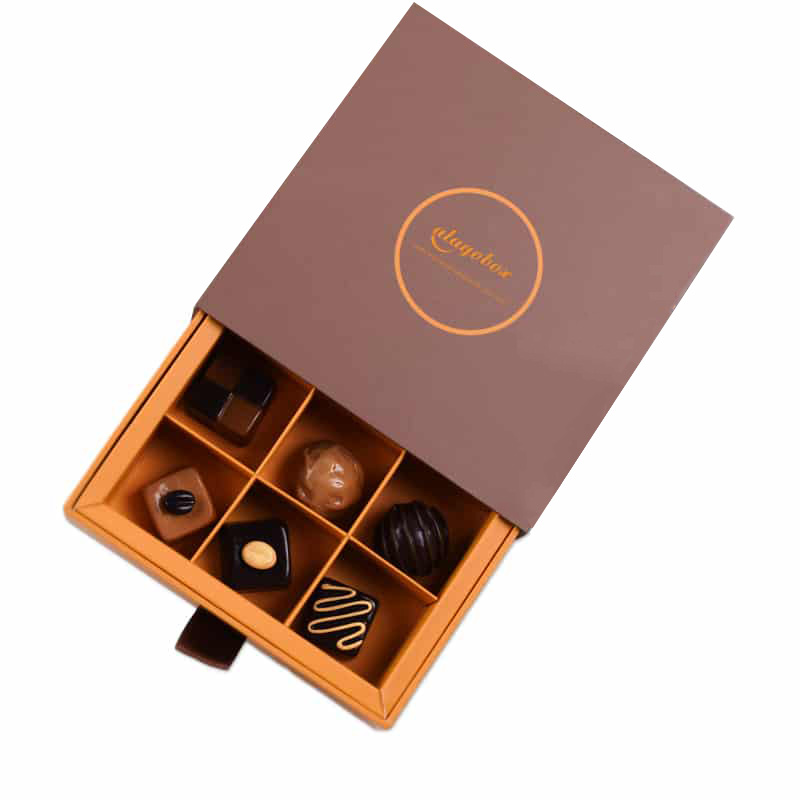
Chocolate and confectionery formats to explore
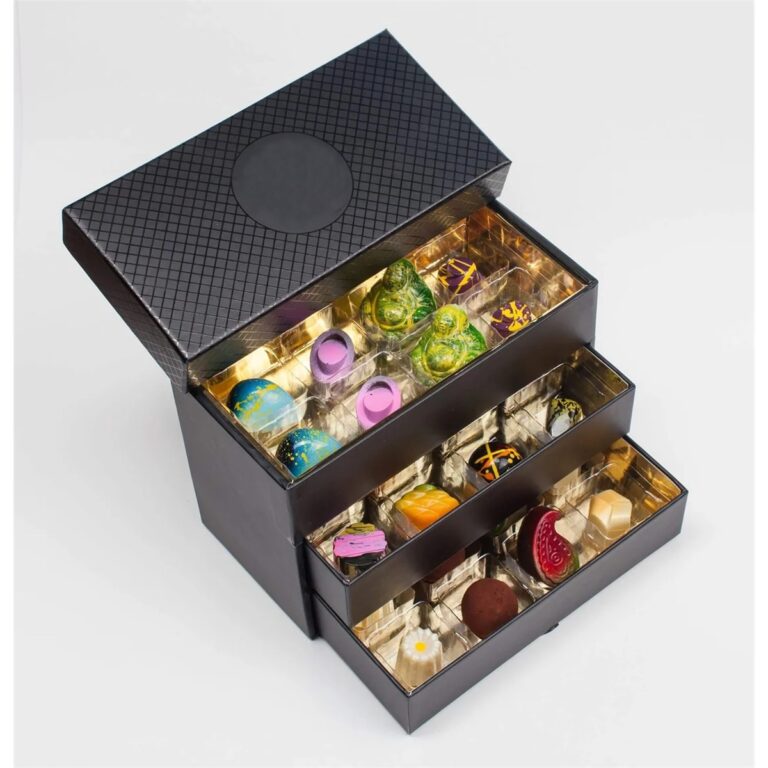
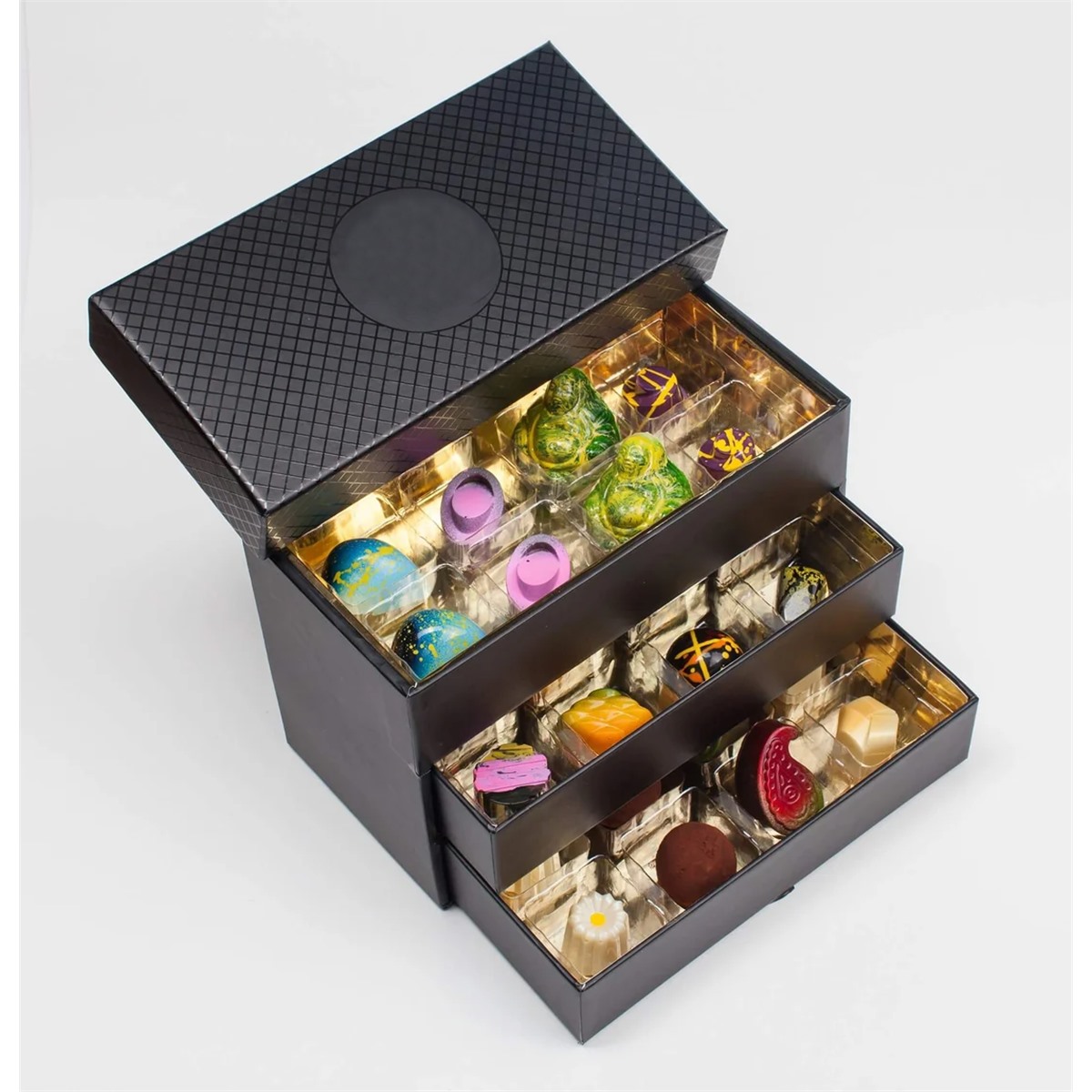
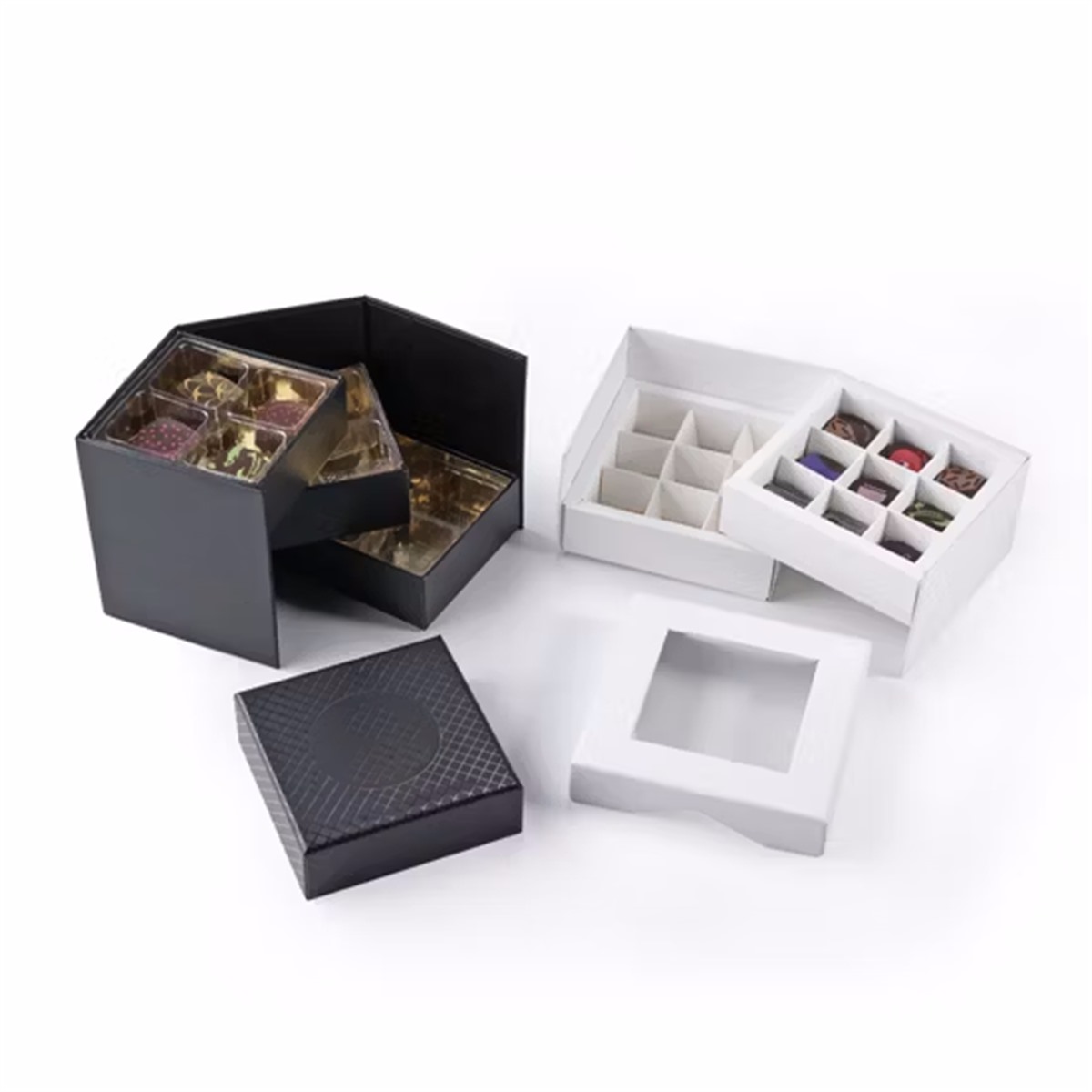
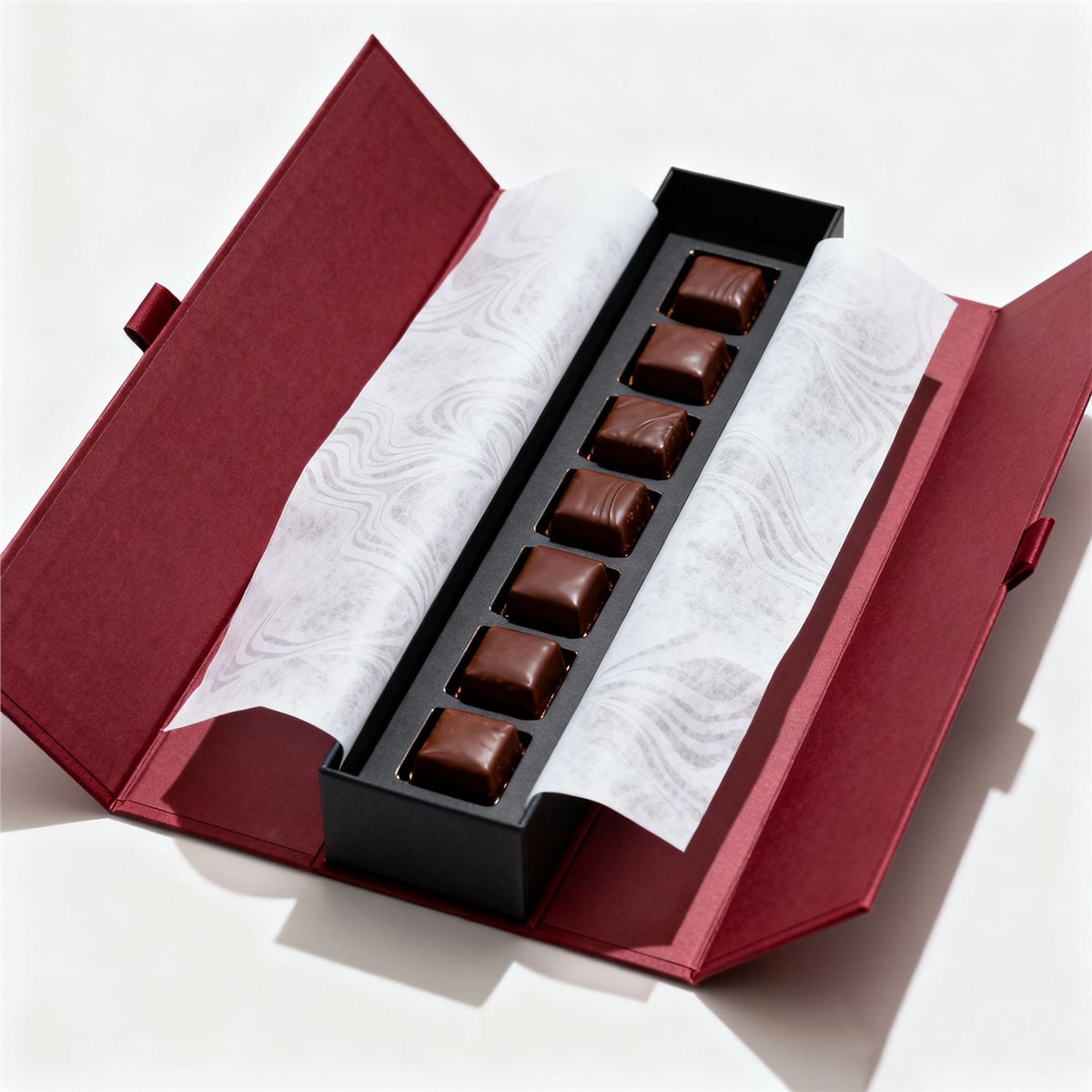
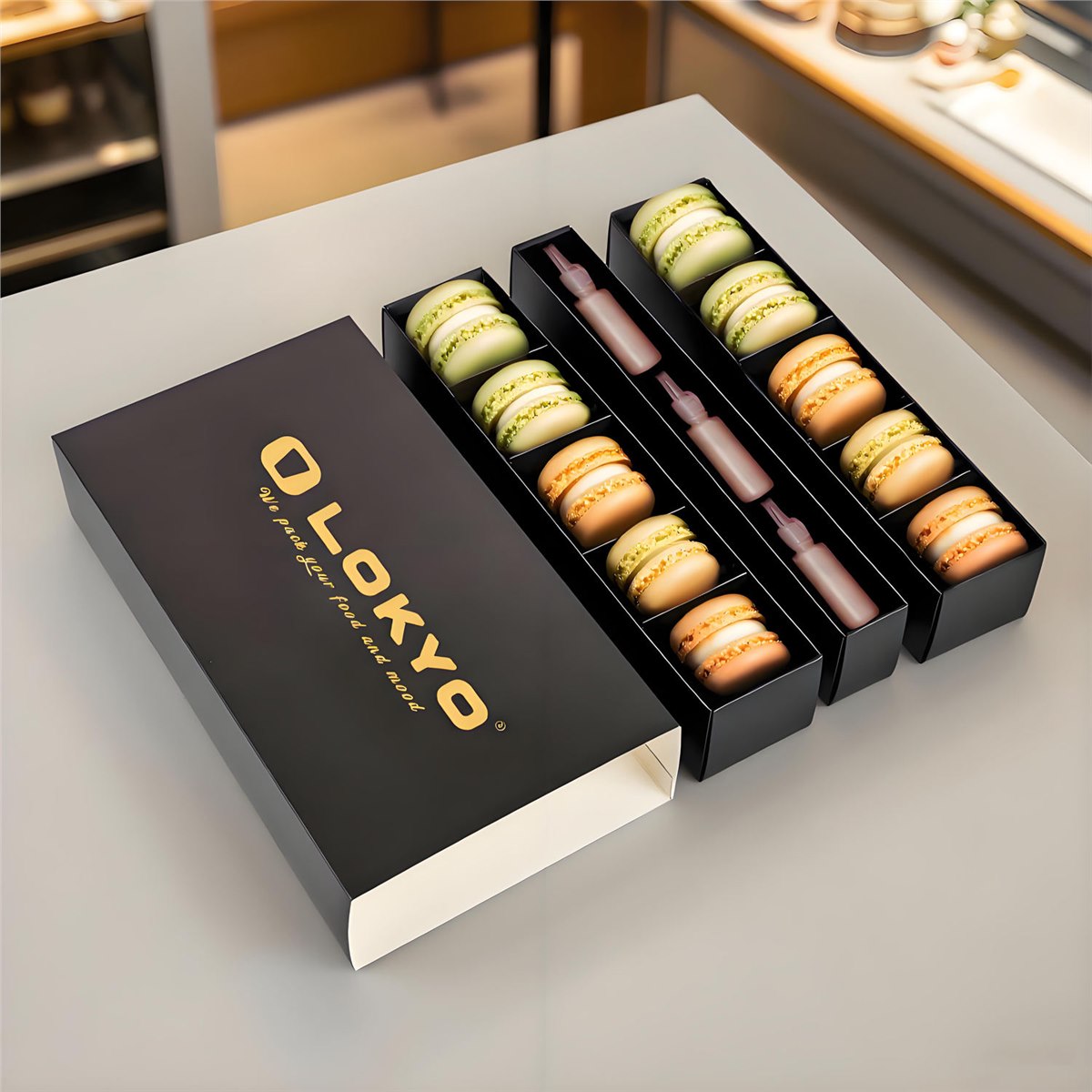
These existing catalog references illustrate different opening and insert arrangements. Specifications and suitability must be agreed for each project.

Executive summary
Five decisions that matter before selecting a premium gift-box format
| Decision | Practical implication |
|---|---|
| Choose the problem first | Define whether the priority is assortment organization, presentation, filling, protection or information. |
| Separate search intent | People choosing finished chocolates are not necessarily buyers of empty packaging. |
| Assess the complete pack | Review the contents, insert, drawer or lid, outer shell and shipping arrangement together. |
| Compare equivalent quotations | Align quantities, components, assembly responsibilities and delivery scope before comparing prices. |
| Approve a specific revision | Connect the accepted sample to its drawings, artwork, component list and outstanding changes. |
How to use this guide
For a new project, circulate the relevant pages among procurement, brand, quality and packing teams. Their priorities will differ. A shared brief makes those differences visible before they become expensive sample revisions.
Scope and evidence
Observation date: 05 October 2026. Global B2B audience; US keyword data used as a limited demand reference.
What the evidence can establish
The search snapshot comes from 16 English-language keywords reviewed in Ahrefs, with two search-result checks used to examine intent. It identifies possible research topics, not the number of qualified buyers. Related terms overlap and should not be added together as independent demand.
| Evidence type | Use in this report | Limit |
|---|---|---|
| Keyword estimates | Identify vocabulary and possible areas of interest. | Search volume is not orders, revenue or market share. |
| Search-result review | Distinguish packaging procurement from finished-food shopping. | Intent can be mixed and may change. |
| Official guidance | Frame component documentation and distribution-test questions. | Does not establish compliance or test results for a specific box. |
| Editorial analysis | Compare structural questions and buying workflows. | Qualitative recommendations, not measured supplier rankings. |
What remains project-specific
Price, minimum order quantity, lead time, materials, contact suitability and performance must be confirmed for the actual proposal. No customer success case or quantified production improvement is claimed in this guide. Before making a purchasing decision, obtain the supporting records for the configuration you intend to order.
Search demand: who is buying?
A limited US keyword snapshot, reviewed 05 October 2026.
Intent matters more than a headline number
The phrase “custom chocolate boxes” had an estimated US volume of 350, but its reviewed results included finished-chocolate brands offering assortment selection. It should not be treated as 350 searches for empty packaging. Results for “chocolate packaging boxes” included packaging suppliers, making the procurement interpretation clearer.
The corresponding global estimates for “custom tea boxes,” “chocolate packaging boxes” and “custom advent calendar boxes” were 250, 350 and 150. Global and US estimates use different geographic scopes; they must not be added together.
A larger estimate does not automatically make a format the better development priority. Buyer fit, real supply capability and the problem solved by a structure are separate considerations. These figures are a single tool snapshot, not a representative survey of food brands.
Application opportunity map
Table 1. Qualitative development comparison, not a market-size or profitability ranking.
| Format | Potential buying context | Development focus |
|---|---|---|
| Chocolate drawer gifts | Confectionery collections and corporate gifting. | Mixed cavities, layer clearance, removal and opening sequence. |
| Tea assortment gifts | Tea brands and curated multi-container gift sets. | Container fit, accessory placement, weight distribution and identification. |
| Food advent calendars | Seasonal collections with individually organized servings. | Number-to-product mapping, loading sequence and deadline planning. |
| Macaron and cookie gifts | Bakery gifting and branded assortment ranges. | Product fit, fragile contents, food-facing components and delivery route. |
| Mooncake and nut gifts | Cultural gifting and corporate assortment programs. | Inner-pack combinations, presentation and regional language needs. |
Ask why the current package needs to change
“More luxurious” is not yet a complete brief. Ask whether the current issue is movement, awkward filling, confusing information, an unsuitable opening action or a mismatch with the gifting occasion. Each answer leads to different design work.
For a range of related products, discuss whether an outer format could be shared with different inserts. This can be a useful development hypothesis, but every proposed combination still needs a fit and handling review. Visual similarity alone does not establish compatibility.
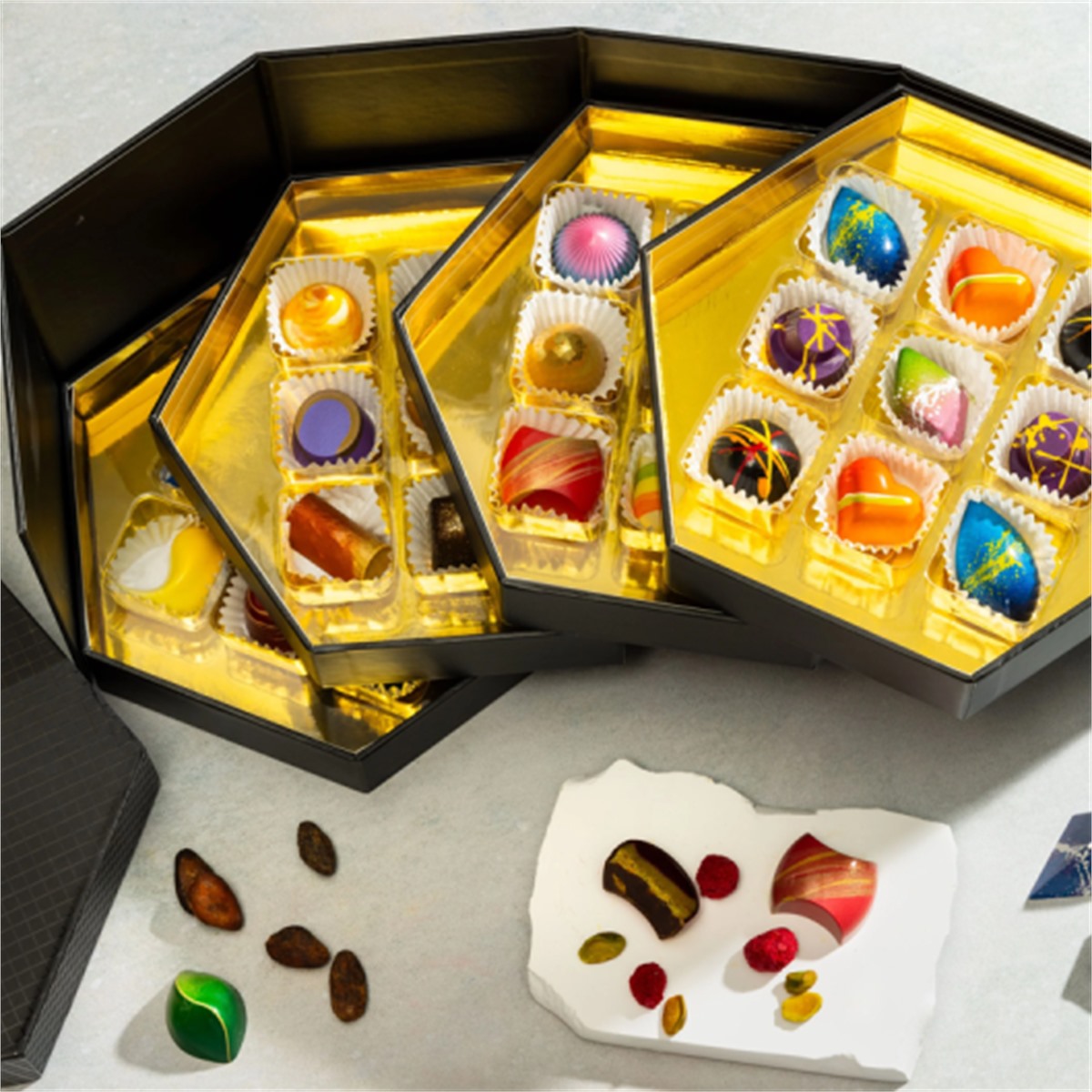
Chocolate drawer gift boxes
The chocolate, the tray and the drawer should be reviewed as one assembly.
Measure the packed product
Include wrappers, cup edges, seams and raised decorations in the dimension record. Specify piece count and orientation by layer. A dome, square piece and wrapped truffle should not automatically be assigned the same cavity. Discuss the expected variation in finished pieces with the team responsible for the assortment.
Use a representative filled sample
Open every drawer with its intended load. Observe resistance, neighboring-layer contact, pull access and the support available when a drawer is partly open. Have someone unfamiliar with the design remove pieces from the corners. Record the sample revision and the condition under which each issue appears.
Make ribbon and information functional
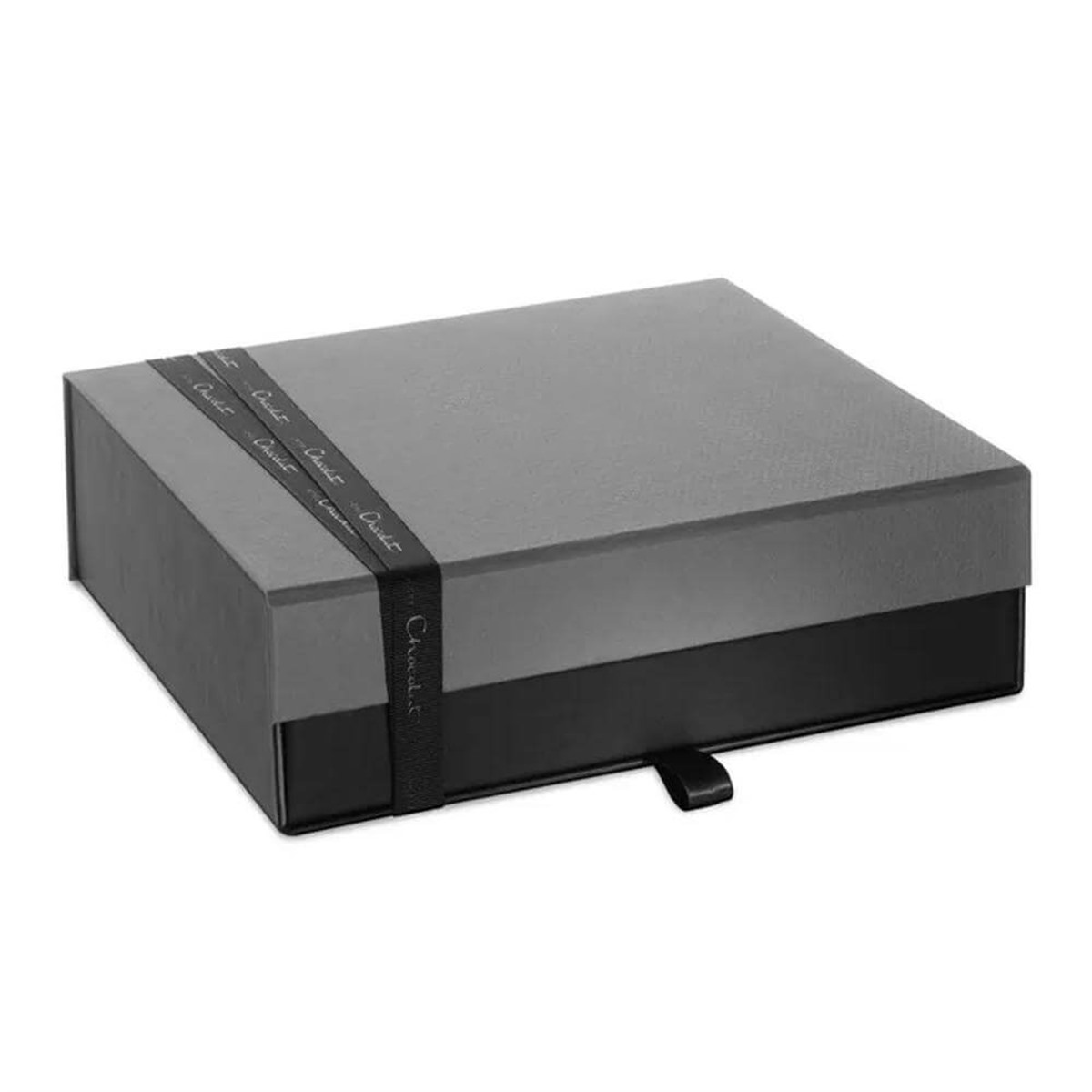
Clarify whether a ribbon is decorative, a closure or a drawer pull. Review the gift closed, partly open and fully open. Flavor information should remain understandable when trays move, and branding should not be unintentionally hidden by the intended ribbon arrangement.
A Holidaypacfactory multi-layer drawer box with ribbon provides a catalog reference for this format. Confirm the actual project specifications separately; a catalog image is not evidence of food-contact suitability, transit testing or production capacity.
Tea assortment gift sets
Begin with the sealed containers and accessories, then work outward to the gift box.
A tea gift may combine tins, pouches, sample packs and accessories. Each component adds a positioning and counting task. Define the component list, external dimensions, weight and intended orientation before choosing the cavity arrangement or outer-box size.
| Design question | Information to request | Sample review |
|---|---|---|
| How are containers held? | Dimension range, lid projections and filled weight. | Check movement, contact and removal for each shape. |
| How is each tea identified? | Names, language versions and label placement. | Check whether the information remains clear after one item is removed. |
| Who assembles the gift? | Supply condition and responsibility for each component. | Walk through loading, adding cards, closing and carton packing. |
| Can a range share one shell? | List of proposed combinations and inserts. | Review each configuration rather than assuming a common fit. |
If tea is already inside sealed primary packaging, the gift box may primarily support presentation and protection. If a component is intended to touch tea directly, that use needs its own assessment. The term “tea gift box” does not establish barrier, freshness or food-contact performance.
For a quotation, provide the container specification rather than only a mood-board image. This helps the packaging supplier discuss a structure that can be developed and reviewed against clear dimensions.
Food advent calendars
Numbering, loading and timing are engineering and operational questions as well as design choices.
Decide which product belongs to each date before finalizing the cavities. Where flavors or sizes vary, create a loading map that uses the same revision as the artwork and insert. Correct numbering on the front cannot prevent an incorrect assortment from being loaded behind it.
| Review area | Question for the project team |
|---|---|
| Access | Can the intended serving be removed without disturbing neighboring compartments? |
| Loading accuracy | Who checks the product-to-date mapping, and what record identifies the accepted version? |
| Supply chain | Are empty calendars delivered to a filling site before the finished gifts enter a different distribution route? |
| Schedule | What are the event date, warehouse arrival date, filling window and allowance for sample changes? |
| Seasonal inventory | Does printed dating or artwork limit use after the intended season? |
Different counts and compartment sizes create different development conditions. A seven-day and a twenty-four-day format should not share an unreviewed acceptance conclusion simply because they use similar artwork. Confirm the actual production schedule rather than assuming a seasonal design can be delivered at short notice.
Component and distribution boundaries
Organize the evidence by component and intended use, not by a broad label such as “paper box.”
FDA guidance addresses the regulatory status of food-contact material components in relation to their use. The purchasing implication is to identify the relevant materials and conditions, then have the responsible quality team review supporting documentation. A decorative exterior cannot establish the status of a food-facing insert.
| Layer | What to establish | Do not assume |
|---|---|---|
| Food-facing | Material identity, intended contact and supporting information. | An outer-shell statement applies to the insert or cup. |
| Structural | Support, separation, loading and opening requirements. | Thickness alone proves complete-pack performance. |
| Decorative | Position and role of finishes, ribbon and other attachments. | Every decorative component suits every configuration. |
| Transport | Distribution route, packed contents and outer-carton arrangement. | A hand-held demonstration equals a transit test. |
ISTA recommends understanding the actual distribution environment when selecting and using testing procedures. Describe the route and configuration before discussing the appropriate assessment with a testing provider. No specific package should be described as passing an ISTA test without the relevant evidence.
Likewise, a decorative box is not a temperature-controlled delivery system. Material composition and local collection conditions also matter when evaluating recycling claims. This guide makes no product-specific food-contact, recyclability or temperature-protection claim.
Compare the complete commercial scope
A useful quotation comparison separates price from the assumptions behind it.
A practical costing framework
Cost per saleable packed gift = agreed packaging, development allocation, filling, protective packing, logistics and other included project costs, divided by the final saleable quantity. Define the scope before calculating; this is a comparison framework, not an accounting standard or quoted price.
Avoid counting the same item twice. Assembly may already be included in one quotation. Losses may already be reflected in purchased quantities or the saleable denominator. Bring the quotations to a common basis before describing one option as a saving.
| Commercial question | Evidence needed |
|---|---|
| Is the unit price comparable? | Same quantity, components, assembly condition and delivery scope. |
| Does complexity add value? | A documented improvement in a relevant purchasing or user problem. |
| Is repeat business plausible? | Actual assortment plans, replenishment patterns and buyer discussions. |
| Can components be shared? | Approved drawings and samples for every proposed combination. |
| What is the margin? | Actual costs and selling assumptions; search volume cannot supply this answer. |
Ask suppliers to identify sampling, tooling, accessories, artwork changes and outer cartons separately where appropriate. Where a specification is unresolved, request the assumption behind the price. A photograph rarely gives enough information for an equivalent comparison.
Sample approval as a controlled decision
The accepted sample should connect to the drawings, artwork and purchase specification.
| Record | Minimum useful information |
|---|---|
| Contents sheet | Packed dimensions, weights, counts, orientation and assortment revision. |
| Structure specification | Opening format, layers, cavities, supports and accessory positions. |
| Artwork record | Approved version, language, flavor information and finish locations. |
| Packing plan | Assembly responsibilities, loading sequence and carton configuration. |
| Approval record | Accepted items, open changes, reviewers, date and scope of approval. |
Keep acceptance specific
A short message saying “looks good” may refer only to the logo. Instead, identify what the team accepted and what remains open. For example: the cavity arrangement is accepted, the pull position requires revision, and a filled-sample check is needed before release.
Retain the agreed reference sample and identify its revision. Before issuing the order, compare the purchase specification with that record. If materials, contents, assembly or shipping configuration change later, decide what needs renewed review rather than treating the earlier approval as unlimited.
Bring procurement, brand, quality and packing staff into the review. Each sees a different risk or opportunity. Assign one owner to maintain the final version so accepted changes do not remain scattered across email threads.
A clearer brief for your next project
Use the white paper to prepare a focused supplier conversation.
Send the information that changes the design
Provide the packed food dimensions and photographs, piece count by layer or compartment, desired opening format, branding direction, quantity, destination and required timing. Add any known filling or receiving constraints. Ask the supplier to identify missing information before treating the quotation as final.
Connect culture with use
A gifting occasion can shape the order of discovery, the way flavors are described and the information the recipient needs. Cultural references are most useful when they support a coherent experience. Test that experience with people who were not involved in the design, particularly where multiple languages are used.
HolidayPac’s value, “Born from nature and return to nature,” can guide conversations about material use and purposeful design. Any environmental or performance statement about a specific proposal still needs appropriate evidence. A brand value is not a product certification.
Start with a format, finish with a specification
Explore the multi-layer chocolate drawer-box reference, then describe your assortment and operating requirements. Materials, dimensions, finishes, quantity and timing should be confirmed for the actual project before an order is approved.
The aim is a packaging decision that the brand, procurement team and packing operation can all explain – with a sample and records that support it.
A practical walkthrough: comparing two gift-box proposals
Consider an illustrative confectionery project with several flavors and a presentation goal. The following example is a decision exercise, not a customer case or a claimed production result. One proposal uses two sliding drawers; another uses a single tray under a hinged lid. Both may look suitable in a photograph. The purchasing decision becomes clearer when the team asks the same questions of each structure.
First, freeze the assortment used for comparison
Prepare one contents sheet showing every packed piece, its orientation and the intended count. If the assortment is still changing, identify which dimensions are provisional. Do not compare a sample made around small unwrapped pieces with a quotation intended for larger wrapped pieces. Even when the outside dimensions match, differences in the contents can change cavity spacing, removal access and the load on each layer.
For a tea project, use the same discipline with tins, sachets and accessories. A tin lid can be wider than its body, and a scoop may need a separate position. Record these details before asking the supplier to reduce the outer dimensions. An attractive compact arrangement is useful only if the filling team can load it and the recipient can remove the contents without struggling.
Second, walk through the actual packing operation
Place the empty sample, components and intended contents in the order they will be used. Ask the person performing the trial to describe each step: unfolding or assembling parts, inserting trays, loading the assortment, adding an information card, closing the gift, and placing it in its protective packing. Note steps that need two hands, repeated orientation checks or repositioning of a decorative element. Record observations rather than guessing a labor saving from appearance.
A drawer format may provide a distinctive discovery sequence, while a single tray may make the entire assortment visible at once. Neither is automatically the better answer. Choose the behavior the brand actually needs. If the brief asks the recipient to discover different flavor groups separately, drawers may support that goal. If immediate comparison of every flavor is essential, a different presentation could be easier to understand.
Third, separate appearance approval from functional approval
Use separate entries for artwork, structural fit and filling observations. The brand team may accept a color direction while the packing team requests a change to a pull position. Those conclusions can coexist. They should not be compressed into an undifferentiated approval message. Attach photographs of the reviewed sample and identify the particular drawing and artwork revision associated with them.
When a later sample arrives, check the requested changes against the earlier record. Do not assume that correcting one issue leaves every other dimension unchanged. Review affected interfaces, such as drawer clearance after a lining change or container access after an insert revision. The purpose is a clear release decision, not an endless sequence of cosmetic refinements without an agreed acceptance basis.
Finally, align the quotation with the accepted configuration
Ask whether the proposal includes the same trays, ribbon, cards, protective materials and supply condition as the sample. Confirm which party fills the gift and which party supplies the food. Record destination and delivery scope alongside the price. If a quote excludes an accessory, show that difference explicitly. A lower number is useful only when the team understands what has been removed from the scope.
Turn a seasonal idea into a repeatable packaging brief
Seasonal artwork and a repeatable structure can be discussed separately. A brand may want different sleeves, messages or assortment cards for several occasions while retaining a familiar opening format. Before committing to that approach, list the proposed contents for each version. Shared outside dimensions do not prove that one insert can support every assortment, and a heavier version can create different handling requirements.
For food advent calendars, lock the relationship between printed dates and the loading map. Decide who maintains that record when a flavor changes. Where packaging moves to a separate filling site, share the assembly and loading instructions with that team before the production release. The people receiving the empty calendars should not have to infer the intended sequence from promotional photography.
For culturally specific gifting, review symbols, language and the sequence of discovery with the intended audience. A familiar motif in one market may need explanation in another. Keep the recipient’s practical questions visible: what is inside, how is it opened, how are the flavors identified, and which components should be retained or separated after use? Purposeful design answers these questions without requiring an elaborate story to compensate for an awkward pack.
Frequently asked questions
What information should I send for a premium food gift box quotation?
Send packed dimensions, weights, assortment count, opening format, quantity, artwork direction, destination and timing. Include assembly responsibilities and the intended delivery route so quotations can be compared on the same basis.
Does a more complex structure always create a better gift?
No. Complexity should support a defined benefit, such as separating an assortment or guiding an opening sequence. Review that benefit against filling, handling and development requirements.
Can the same box be used for chocolates and tea?
A shared outer shell may be worth exploring, but each contents and insert combination needs its own fit, loading and handling review. Similar dimensions alone do not establish suitability.
How should a buyer approve a packaging sample?
Identify the sample revision, drawings, artwork and component list. Record accepted features and open changes separately, and specify whether approval covers appearance, fit, filling or other reviewed requirements.
Do search-volume estimates show how many buyers will place orders?
No. Search estimates describe queries in a named database and period. Intent may include finished-food shopping, and the figures do not establish packaging orders, revenue or profit.
Related reading and source notes
For broader materials and formats, read our custom food packaging buyer guide. For visual starting points, compare chocolate gift-box ideas and advent-calendar packaging formats.
The demand discussion uses a limited Ahrefs observation dated 05 October 2026. It is not a market-size survey. Component documentation principles refer to FDA food-contact component guidance; distribution planning refers to ISTA design and testing guidance. Application comparisons and the walkthrough are editorial analysis, not measured customer results.
Download the companion English buyer whitepaper (PDF) for offline reference.