Door to Door service
Welcome to Holidaypac Packaging Solutions Factory!

tiger@holidaypac.com

+86 136 5233 6188
Welcome to Holidaypac Packaging Solutions Factory!

1-2 Days Free Customization
7-12 Days Production Time
12000m2+ Factory Since 2008
Door to Door service
 Custom Black Folding Sushi Gift Box with Multi-Compartment Tray | Holidaypacfactory
  Custom Black Omakase Sushi Gift Box with Sauce Cup Inserts | Holidaypacfactory
  Custom Red Three Layer Drawer Sushi Box with Compartments | Holidaypacfactory
  Custom Three Layer Drawer Sushi Packaging Box with Sauce Compartments | Holidaypacfactory
  Custom Food Grade Sushi Push-Up Paper Tube Packaging | Holidaypacfactory
 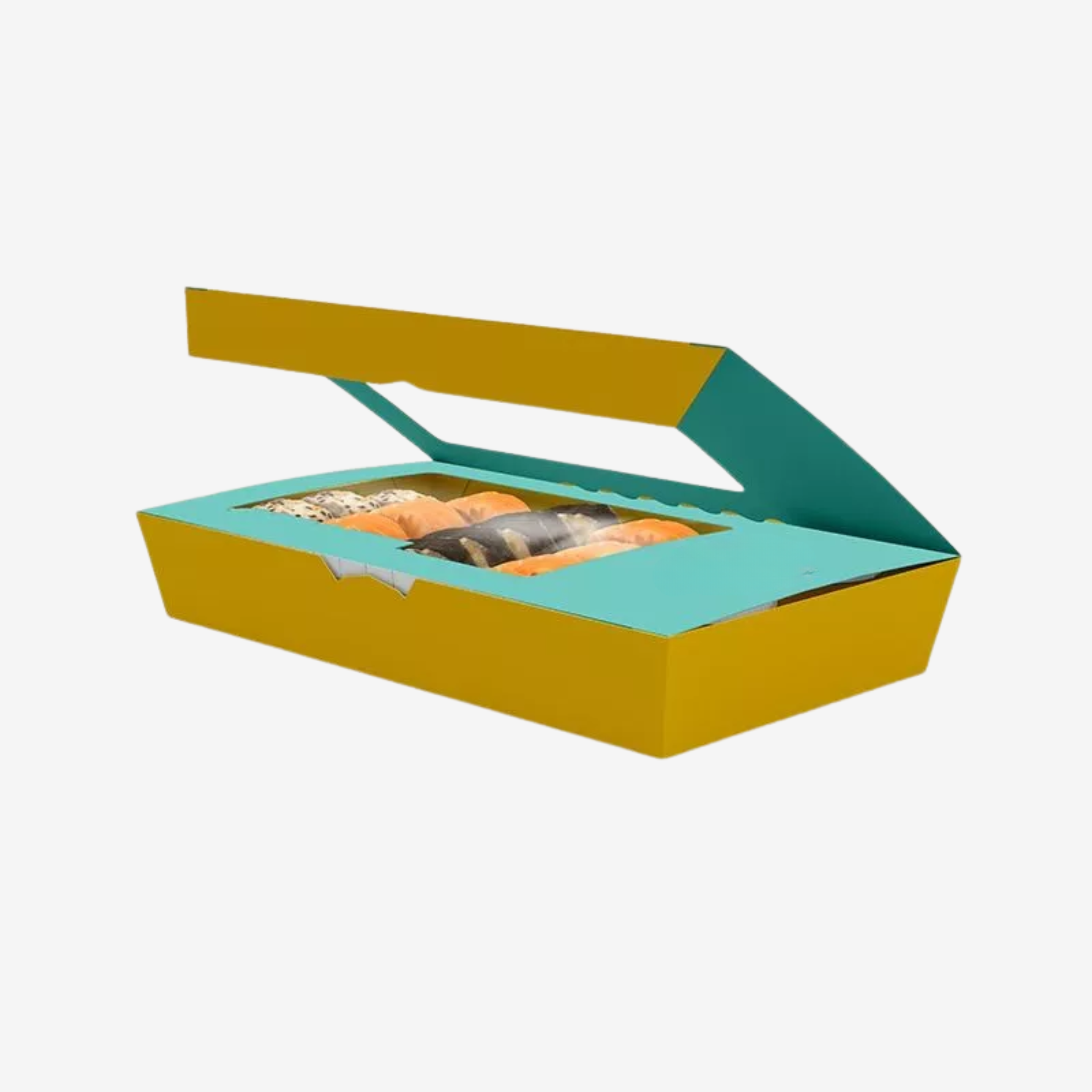 Custom Sushi Boxes with Window and Chopstick Carry Packaging | Holidaypacfactory
 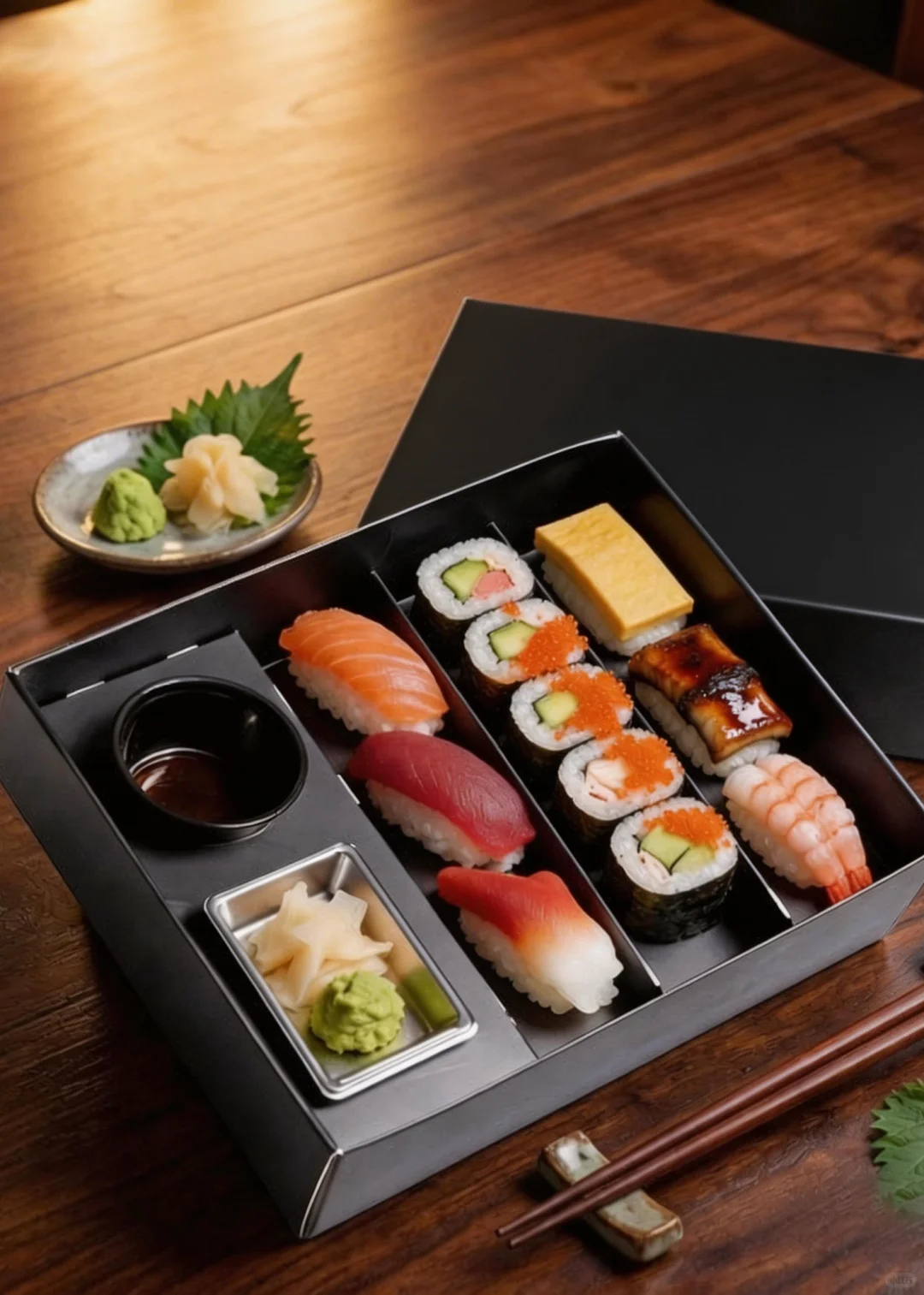 Premium Black Bento Sushi Box with Multi-Compartment Platter Tray | Holidaypacfactory
 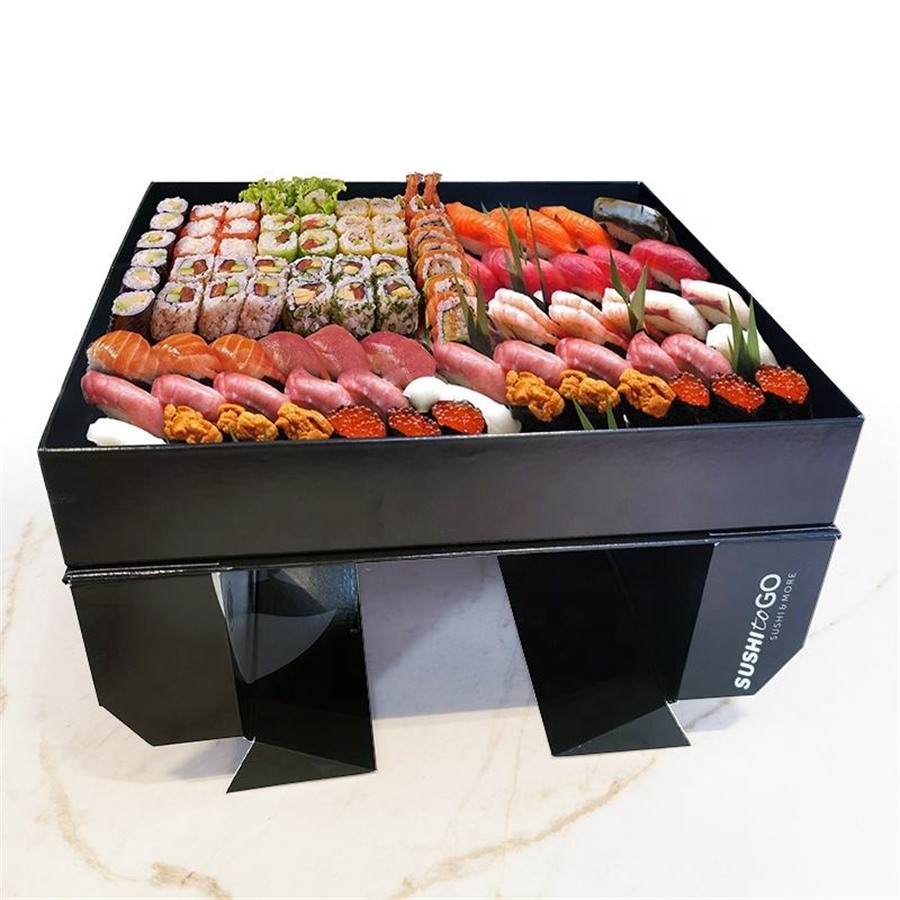 Custom Disposable Takeaway Paper Sushi Gift Box | Holidaypacfactory
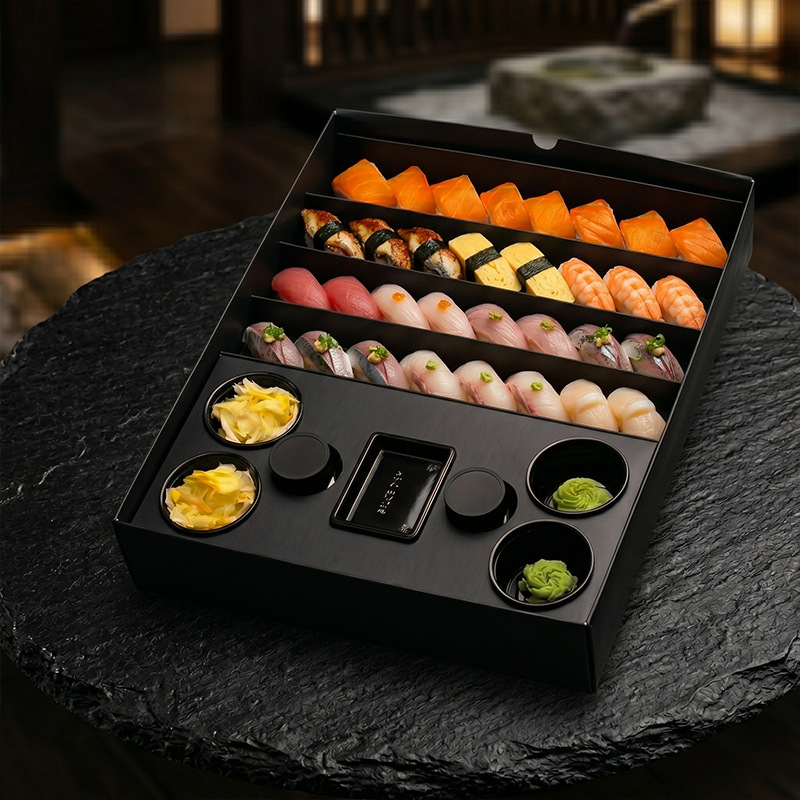
 This custom black multi-compartment sushi takeaway box is built for premium meal presentation, organized packing and reliable handoff. The divided interior gives rolls, nigiri, sashimi, sauces and garnish a planned position so the meal remains easy to read from the first opening.
Holidaypacfactory can adjust the footprint, food lanes, dividers, sauce area, board specification, logo placement and finishing so the box fits the actual menu and service workflow.
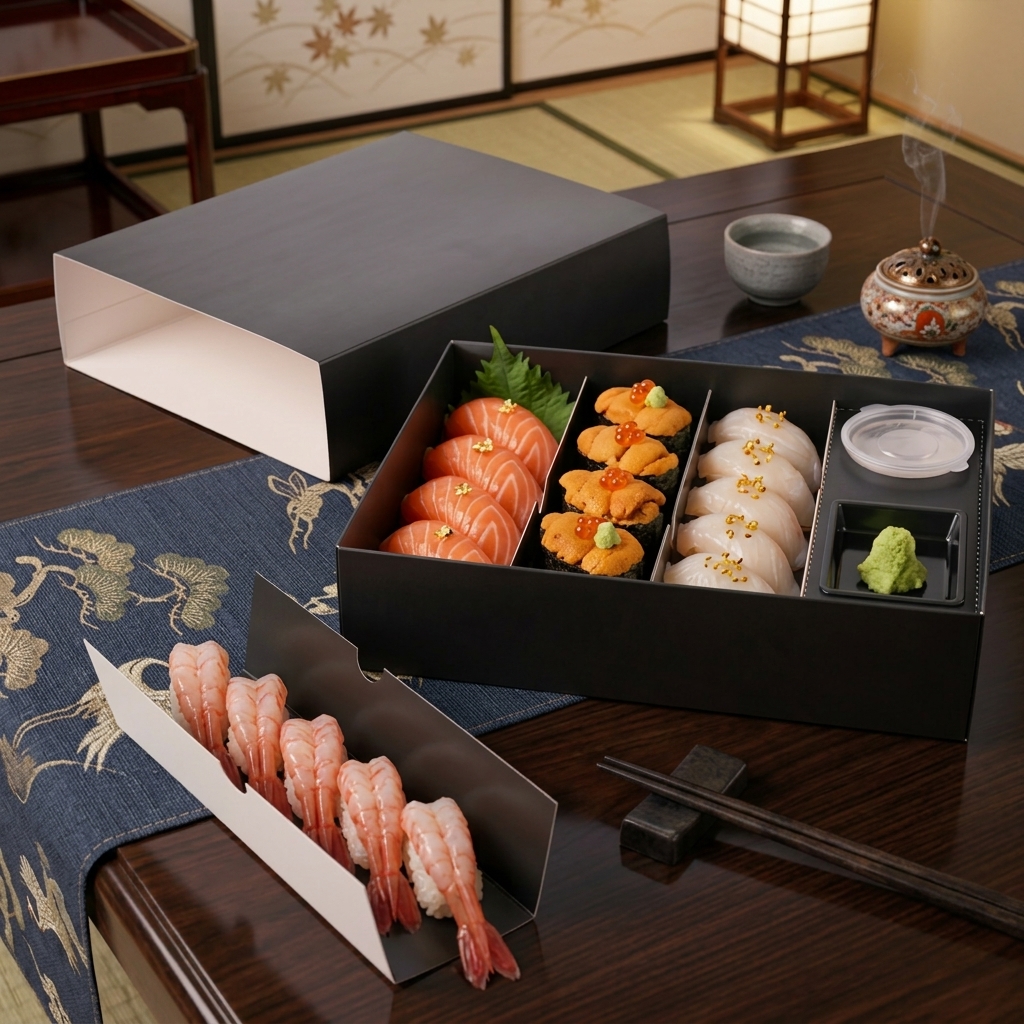
This custom black multi-compartment sushi takeaway box is designed for restaurants, caterers, meal brands and specialty retailers that want the food to arrive organized, protected and visually appealing. The dark outer structure gives the package a clean premium presence, while the divided interior lets each part of the meal keep its own place. It is suitable for sushi rolls, nigiri, sashimi, mixed assortments, sauces and small accompaniments.
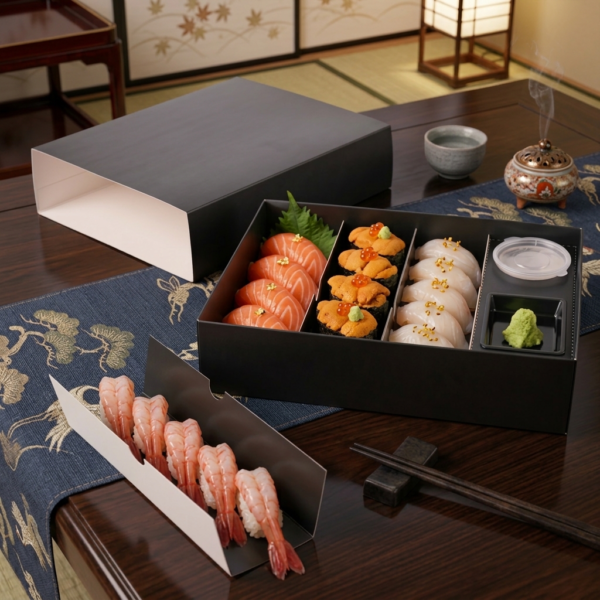
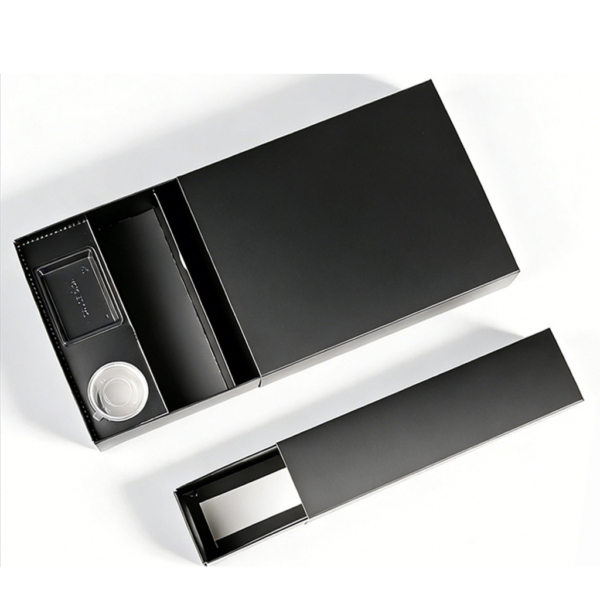
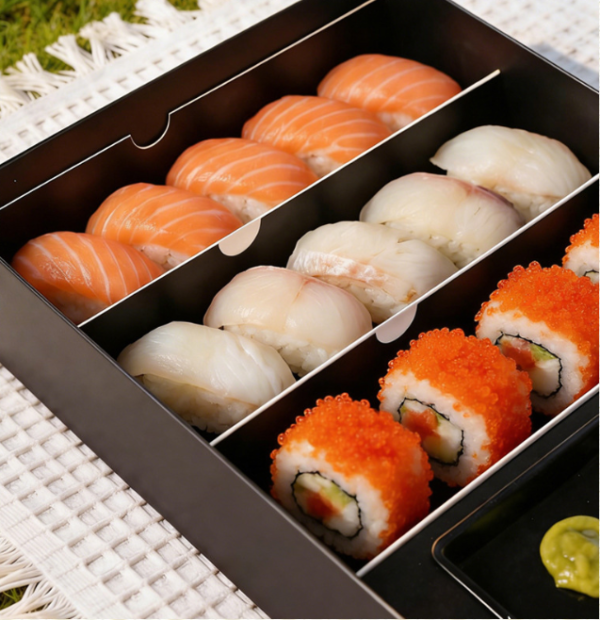
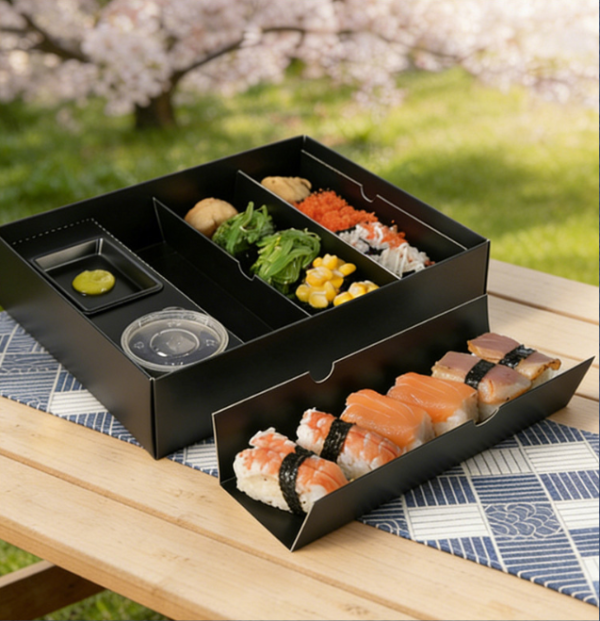
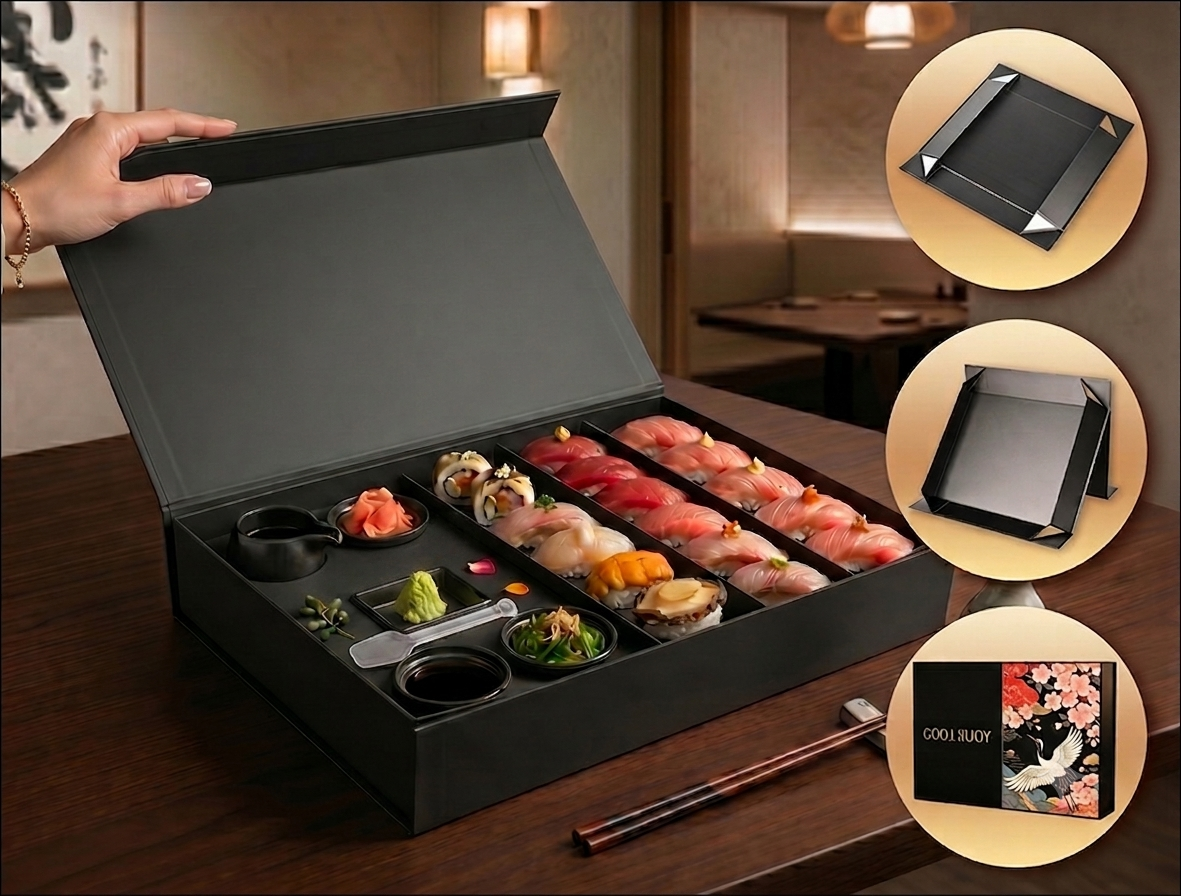
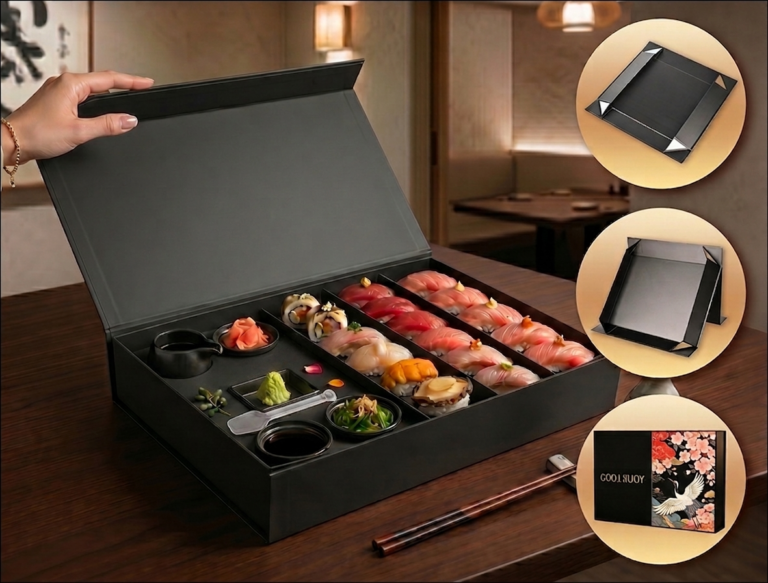
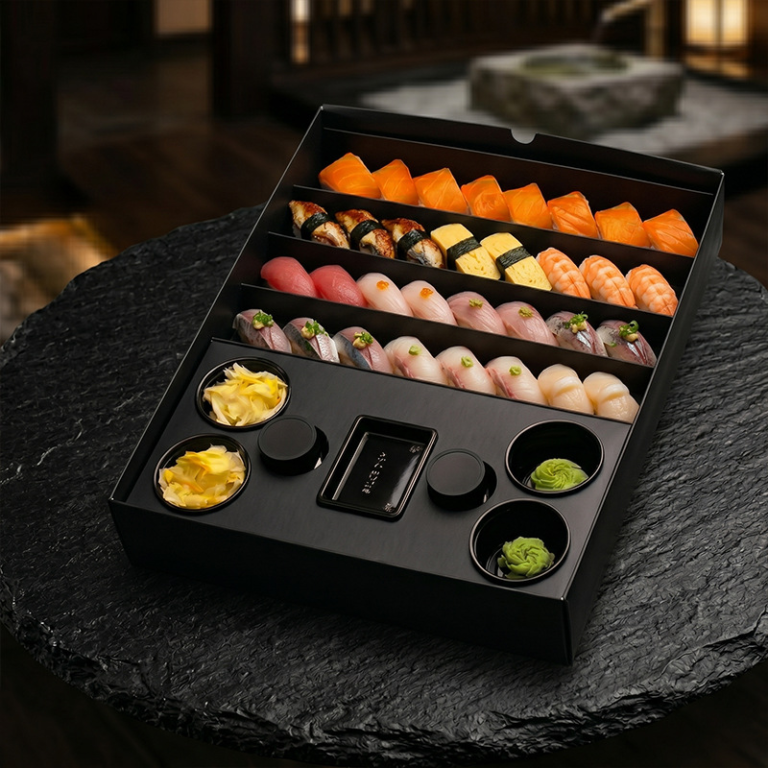
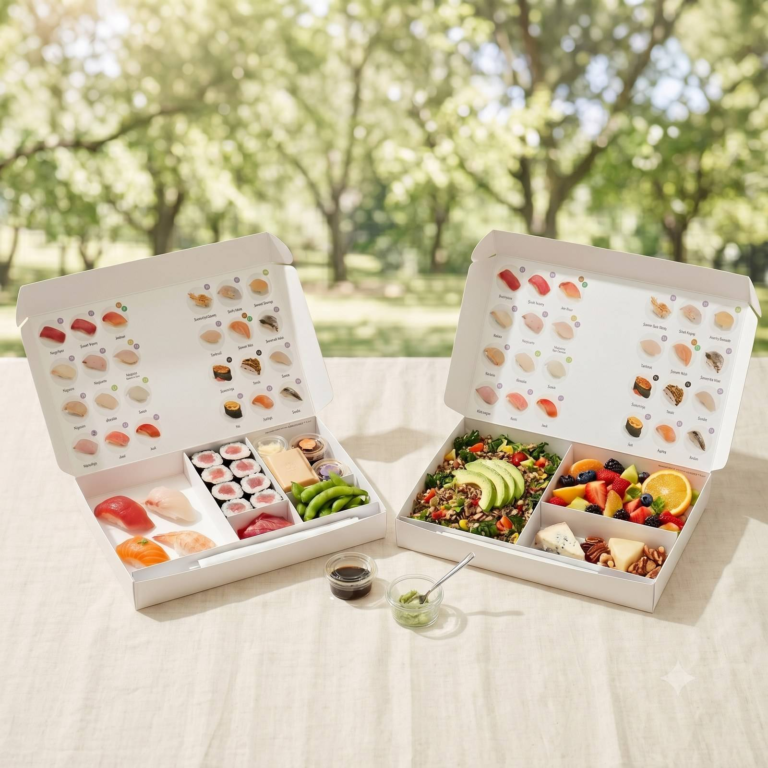
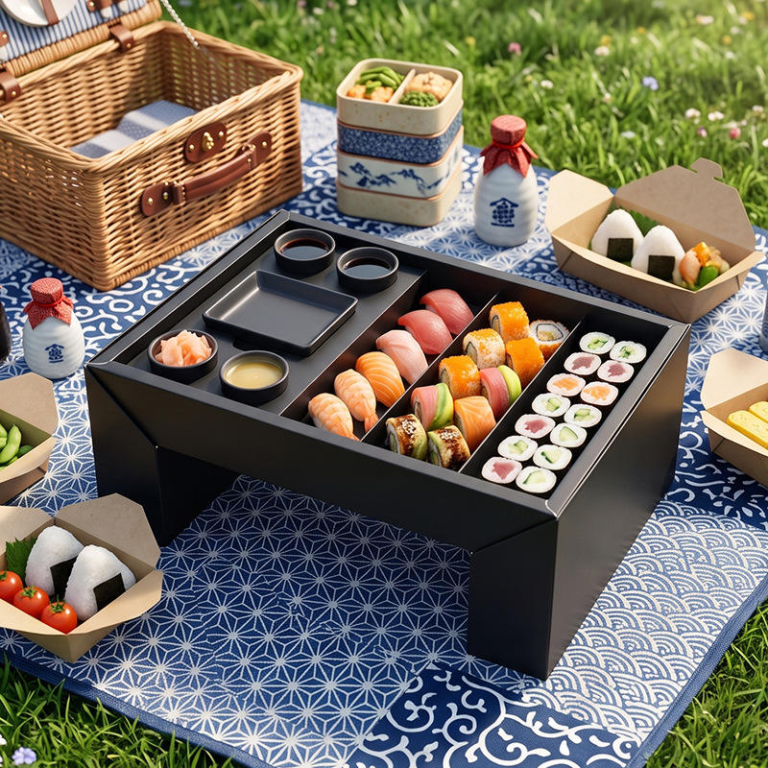
The images show a complete meal presentation with long food lanes, separate dividers and dedicated areas for sauce or garnish. Instead of placing every item in one open space, the package creates a clear map for the customer. That makes the assortment easier to understand and helps staff pack the same menu in a consistent order during busy service.
The black color works well for modern sushi concepts, omakase counters, premium delivery menus, event catering and retail meal programs. It gives colorful ingredients a strong visual background and leaves room for a restrained logo, menu mark or short brand message. The result is more distinctive than a plain white container while remaining practical for regular takeaway work.
For buyers comparing different openings and tray arrangements, Custom Black Folding Sushi Gift Box with Multi-Compartment Tray and Premium Black Bento Sushi Box with Multi-Compartment Platter Tray are useful related formats. This product is a direct choice when the priority is a black presentation box, separated food lanes and a clearly planned sauce area.
The main value of a multi-compartment sushi box is the way the interior controls the presentation. Long lanes can hold salmon rolls, shrimp, nigiri or other repeated pieces, while narrower dividers keep different recipes from mixing. The food can be arranged in a deliberate sequence so a customer can see the variety immediately after opening the package.
A divided interior also makes packing more repeatable. Staff can follow a set position for each menu item instead of deciding how to arrange the food for every order. That helps reduce movement inside the package and keeps the visual standard stable across lunch service, delivery orders, corporate catering and larger party sets.
The dividers should be developed around the actual menu rather than around a generic equal grid. A larger sashimi piece, a tall topping or a sauce cup may need more room than a standard roll. The tray plan can balance food capacity with breathing space so the box looks full and premium without pressing ingredients against the walls.
Holidaypacfactory can adjust the number of lanes, divider height, corner radius, sauce position and usable base area. A sample filled with the real menu is the best way to confirm that every item sits comfortably and that the package closes, stacks and carries as intended.
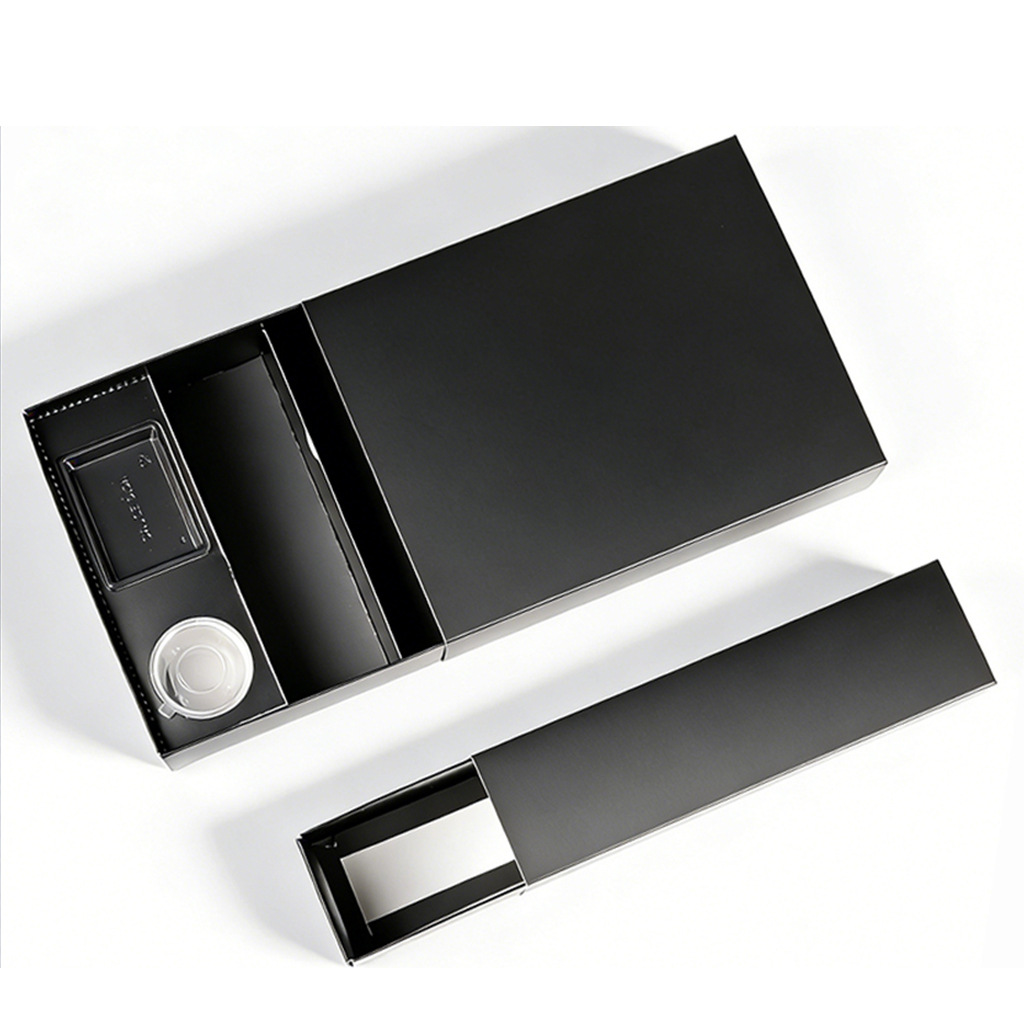
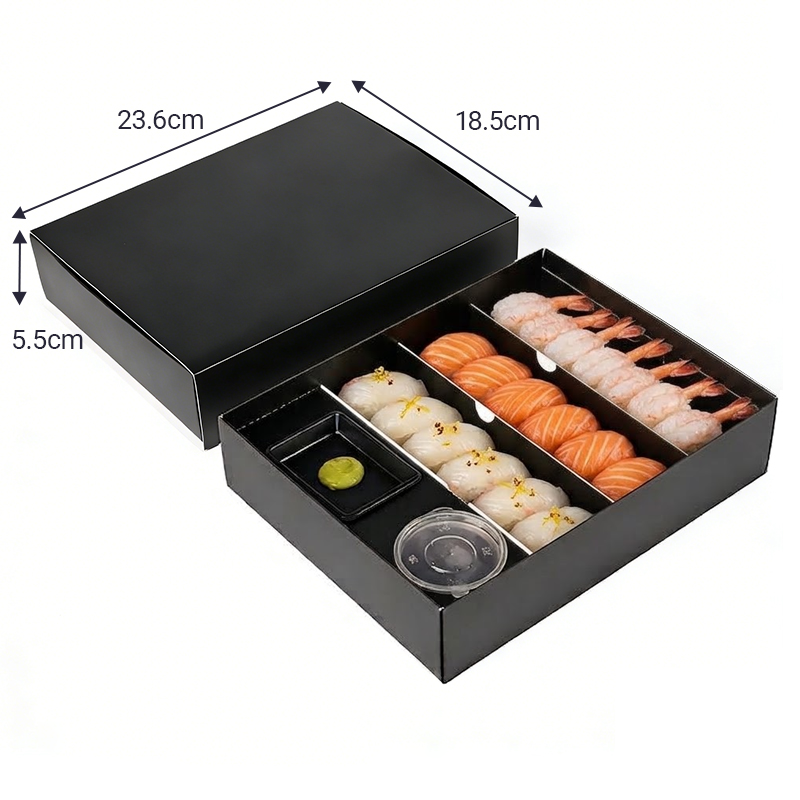
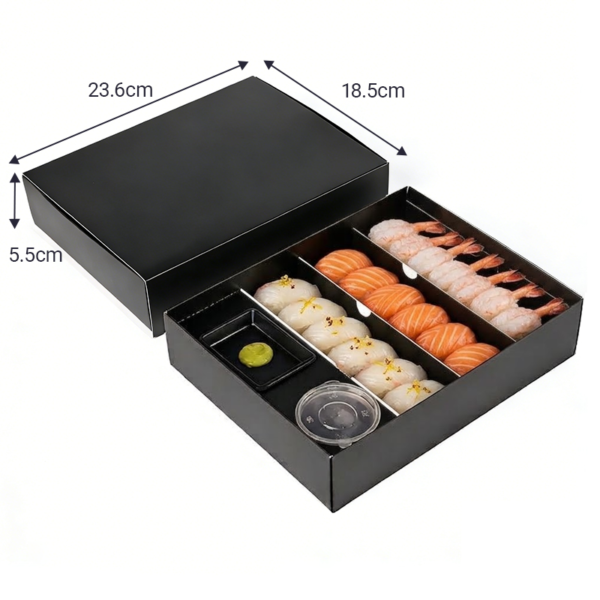
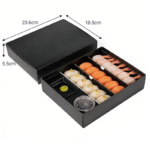
The supplied dimension image presents a reference footprint of approximately 23.6 cm by 18.5 cm with a height of about 5.5 cm. Those measurements are useful as a starting point for the shown sushi assortment, but the final size should always be confirmed against the buyer’s own food portions, container requirements and packing workflow.
Dimensions affect more than capacity. They influence how the box fits inside a delivery bag, how many units can be stacked in a carton, how much empty space appears around the food and how easily staff can reach the sauce compartment. A small increase in wall height may protect toppings, while a small change in width may make a tray much easier to load.
For a multi-size menu family, buyers can keep a shared visual language while changing the footprint for single meals, two-person assortments, family packs or event trays. The black outer color and divider logic can remain consistent, helping customers recognize the brand across different order sizes.
Before production, the buyer should share the number of pieces, average food length, maximum food height, sauce cup size, garnish position, preferred carry method and expected stacking quantity. Holidaypacfactory can then use those details to refine the die line, tray layout and sample dimensions.
The black exterior provides a strong frame for the food. Salmon, shrimp, white fish, rice, roe, greens and bright sauces stand out against the dark base, which helps the package look more intentional in the customer’s hands and in product photography. The color also gives the menu a modern restaurant feel that can suit premium takeaway and giftable food sets.
Brand artwork can be placed on the top panel, front edge, side wall, belly band or a small label depending on how the box opens. A simple white logo, metallic accent, soft lavender detail or restrained blue mark can be enough to connect the box with the wider identity. Keeping the print area calm allows the food arrangement to remain the most important visual element.
Finish selection can change the mood without changing the structure. Matte lamination gives a quiet, refined surface. Controlled gloss can highlight a mark or pattern. Foil, embossing and spot details can be reviewed for special programs where the packaging needs to feel more ceremonial. The artwork should be tested on the actual black board because contrast and small type behave differently on a dark surface.
A coordinated product family could pair this box with Custom Black Omakase Sushi Gift Box with Sauce Cup Inserts for a more gift-oriented set or Custom Disposable Takeaway Paper Sushi Gift Box for a lighter everyday package. The black multi-compartment format can become the premium anchor in that range.
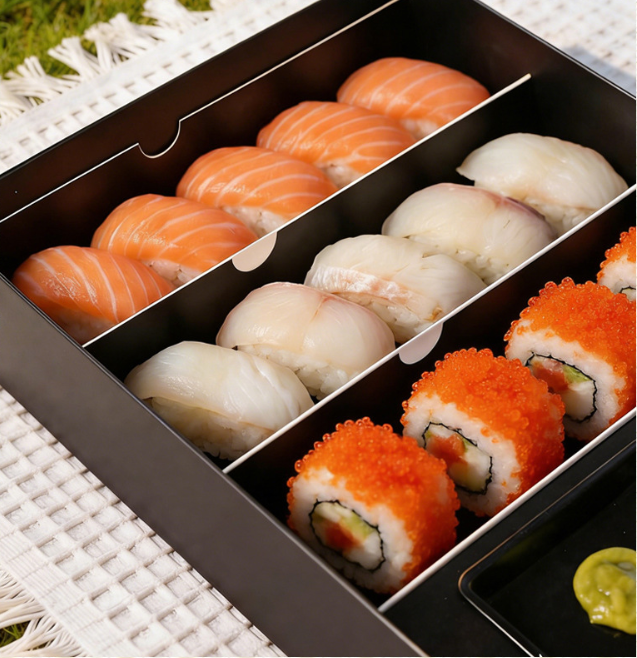
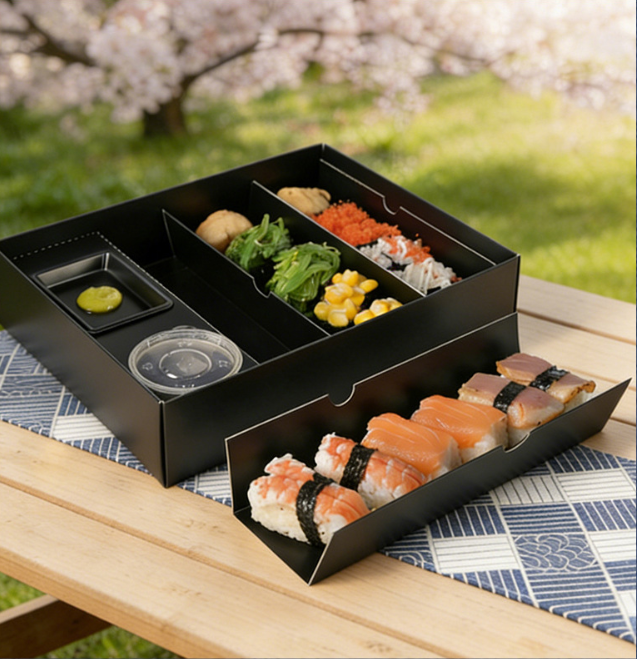
A sushi meal often includes more than the main pieces. Soy sauce, wasabi, pickled ginger, garnish and small sides all need a defined place if the package is expected to arrive neat. The dedicated sauce area shown in the images keeps accessories away from the main food lanes and makes the complete meal feel more considered when the customer opens the box.
The sauce area can be adjusted for a round cup, a shallow rectangular dish, a sealed packet or a molded insert. Its position should be easy for staff to reach while packing, but it should not reduce the useful length of the main food lanes. If two sauces are required, the insert can be divided or extended depending on the available footprint.
Separation also helps preserve texture and appearance. Wet components should not rub against rice or toppings, and garnish should not be crushed under another item. The final tray depth and wall height need to work together so the sauce container remains secure while the lid, sleeve or outer cover closes cleanly.
When the package is tested, buyers should move a filled box through the actual handoff route. Check the tray after carrying, short delivery movement and placement on a table. These practical checks show whether the sauce area is stable and whether the divider positions support the real customer experience.
This multi-compartment format can serve several channels without losing its premium presentation. Restaurants can use it for signature assortments and chef selections. Delivery brands can use it for meals that need the food to remain separated during transport. Caterers can use it for event portions where every guest should receive the same arrangement. Retail food programs can use it for chilled sets that need a clear internal structure.
The box is also suitable for seasonal menu launches, corporate lunches, picnic sets, tasting events and premium promotional bundles. A change in printed artwork or tray layout can create a new menu version while keeping the brand’s black packaging language consistent. That makes it easier to build a recognizable line instead of introducing a completely different box for every campaign.
Operational planning should include the real packing speed. Staff need to identify the correct orientation, fill each lane, place the sauce item and close or sleeve the box without extra handling. The more intuitive the layout, the easier it is to maintain quality during busy service periods.
For delivery, the package should be checked with the chosen outer bag or carton. Buyers should confirm the box sits flat, does not slide excessively and can be stacked with the intended number of units. A well-matched outer pack protects the presentation and makes the full system more efficient.
The outer body can be developed with food-grade paperboard or another suitable board combination selected around the final menu, handling method and regional requirements. The right specification should support a clean fold, stable walls and an interior that remains presentable after filling. The finish should also be compatible with the desired print sharpness and hand feel.
A coated surface can support detailed graphics and a smoother wipeable exterior. A matte finish can soften reflections and make black look more luxurious. A kraft or natural board direction may be considered for a different brand story, although the shown product is strongest when its dark visual contrast is preserved. The final material should be confirmed with the intended food use and production method.
If a clear tray or insert is included, its fit, depth and surface should be reviewed together with the paperboard body. The two components should look like one planned system rather than a loose container placed inside another box. Clear areas are helpful when the food should remain visible, while black dividers can create a more controlled presentation.
Holidaypacfactory can coordinate printed panels, logo placement, finishing, tray fit and packing details in one project brief. This reduces the risk that the artwork is approved separately from the structure and later becomes difficult to place on the finished box.
The outside dimensions should also be reviewed against storage and shipping requirements. A box can look excellent on a counter but become inefficient if it wastes too much space in a delivery bag or shipping carton. Buyers should confirm how many empty units fit in a master carton, how the finished boxes are stacked, and whether the tray remains protected during handling. These checks help control freight space and reduce the chance of crushed corners before the package reaches the kitchen.
For a growing food brand, the best material decision is the one that supports the complete service cycle. The box must arrive flat or nested in the planned way, assemble without unnecessary steps, hold the food with confidence, and remain attractive after the customer receives it. Reviewing those stages together gives the packaging team a clearer basis for choosing board thickness, coating, insert fit and finishing details.
Start with the food: list the number of pieces, roll dimensions, portion height, sauce type, garnish, side dishes and the order in which the meal should be packed. Photos of a filled sample are useful because they reveal the real height and spacing needs. If different menus will use the same box, identify the largest and tallest combination first.
Next describe the customer experience. Decide whether the box should feel modern, minimal, luxury, restaurant-focused, seasonal or giftable. That direction helps determine the amount of black space, the logo scale, the finishing treatment and whether the interior should emphasize a clear tray or stronger dividers.
Production details should include target quantity, delivery destination, required sample, preferred board, desired finishing, estimated launch date and any related packaging such as a carrier bag, sleeve, label or outer shipping carton. Sharing these details early makes the quote and sample plan more useful.
Holidaypacfactory can then recommend a practical footprint, divider arrangement and artwork area. The strongest result usually comes from one clear menu use case and an approved interior plan instead of a box that tries to serve too many unrelated foods.
Once the black multi-compartment box is approved, it can become a reference point for a wider range. A smaller lunch set, a larger party tray, a seasonal omakase pack or a dessert companion can share the same color direction and brand placement even when the dimensions change. That creates a more coherent customer experience across menus and channels.
For repeat production, keep the approved board specification, final dimensions, divider plan, artwork file version and packing method together. This record helps the next order move faster and reduces uncertainty when the brand changes a logo, menu name or seasonal accent. The main structure can remain stable while small details evolve.
The packaging family can also support different service levels. A simple printed version may be ideal for everyday takeaway. A more finished version may suit corporate catering or giftable meal programs. A larger structured version may support family sets. Consistency comes from the shared visual language, not from forcing every order into exactly the same size.
This approach helps the brand grow without making the packaging line feel scattered. Customers see a familiar black presentation, staff learn a repeatable packing logic and buyers can compare new formats against an approved reference before committing to a larger program.
Fill the sample with the real food and check every compartment. Confirm that the longest piece fits, the tallest topping has enough clearance, the sauce container stays in its position and the dividers do not interfere with packing. An empty box can look correct while a full box reveals pressure points, excess movement or unused space.
Check the opening and closing motion as well as the hand feel. The box should feel stable on a counter and comfortable to carry. If a separate cover, sleeve or folding panel is used, confirm that it stays aligned during movement and that the customer can understand the opening without instructions.
Review the printed black surface under the lighting used in the restaurant, shop or event setting. Compare the logo, text size, contrast and finishing effect on the physical sample. Small details that look clear on a screen may need adjustment when printed on a dark panel.
Finally, test the filled unit in the intended delivery bag or outer carton. Check stacking, short-distance movement, storage space and handoff. When the packaging passes these checks, the buyer has a stronger basis for repeat production and future menu variations.
| Product type | Custom black multi-compartment sushi takeaway box with sauce tray |
|---|---|
| Reference size | Approximately 23.6 x 18.5 x 5.5 cm shown; final dimensions customized to the menu |
| Best uses | Sushi rolls, nigiri, sashimi, sauces, garnish, catering portions, delivery meals and retail sets |
| Structure | Black folding paperboard body with internal dividers and dedicated accessory space |
| Material options | Food-grade paperboard, coated card, white card, kraft board and suitable insert combinations |
| Finish options | Matte lamination, gloss lamination, varnish, foil detail, embossing and custom printing |
| Custom layout | Food lanes, divider height, sauce position, wall height and usable base area can be adjusted |
| Buyer types | Sushi restaurants, takeaway counters, caterers, meal brands, retailers and event programs |
| Order planning | Share food dimensions, filled photos, quantity, artwork direction, board preference and sample needs |
Yes. The outer footprint, wall height, divider positions, sauce area and usable food lanes can be adjusted around the actual menu.
Yes. The interior can combine long lanes and smaller sections so different pieces remain separated and easy to arrange.
Yes. The accessory area can be planned for a round cup, shallow tray, sealed packet or another approved sauce format.
Yes. The lid, top panel, front edge, side wall, sleeve or label area can carry custom artwork and finishing.
Yes. The sample should be tested with the real food, delivery bag, outer carton, stacking method and handoff process before bulk production.
Send the filled food dimensions, desired compartment plan, quantity, artwork direction, material preference, destination and sample requirement.
Yes. A packaging family can retain the black visual direction and brand placement while changing the footprint and internal arrangement.
 Cassie LamFounder, HolidayPac · Online now
Packaging specialists for custom boxes, displays, bags and seasonal programs.
Leave your request anytime. Our sales team will reply with pricing, samples and production details.
Leave your request anytime. Our sales team will reply with pricing, samples and production details.
Tell us what you're packaging and we'll ship a physical sample plus a free 3D mockup within 24 hours — no cost, no obligation.
We've received your inquiry and our team will get back to you within 24 hours.