Door to Door service
Welcome to Holidaypac Packaging Solutions Factory!

tiger@holidaypac.com

+86 136 5233 6188
Welcome to Holidaypac Packaging Solutions Factory!

tiger@holidaypac.com
+86 136 5233 6188
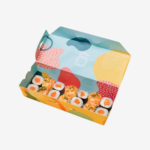
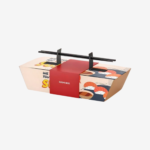
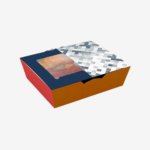
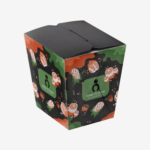
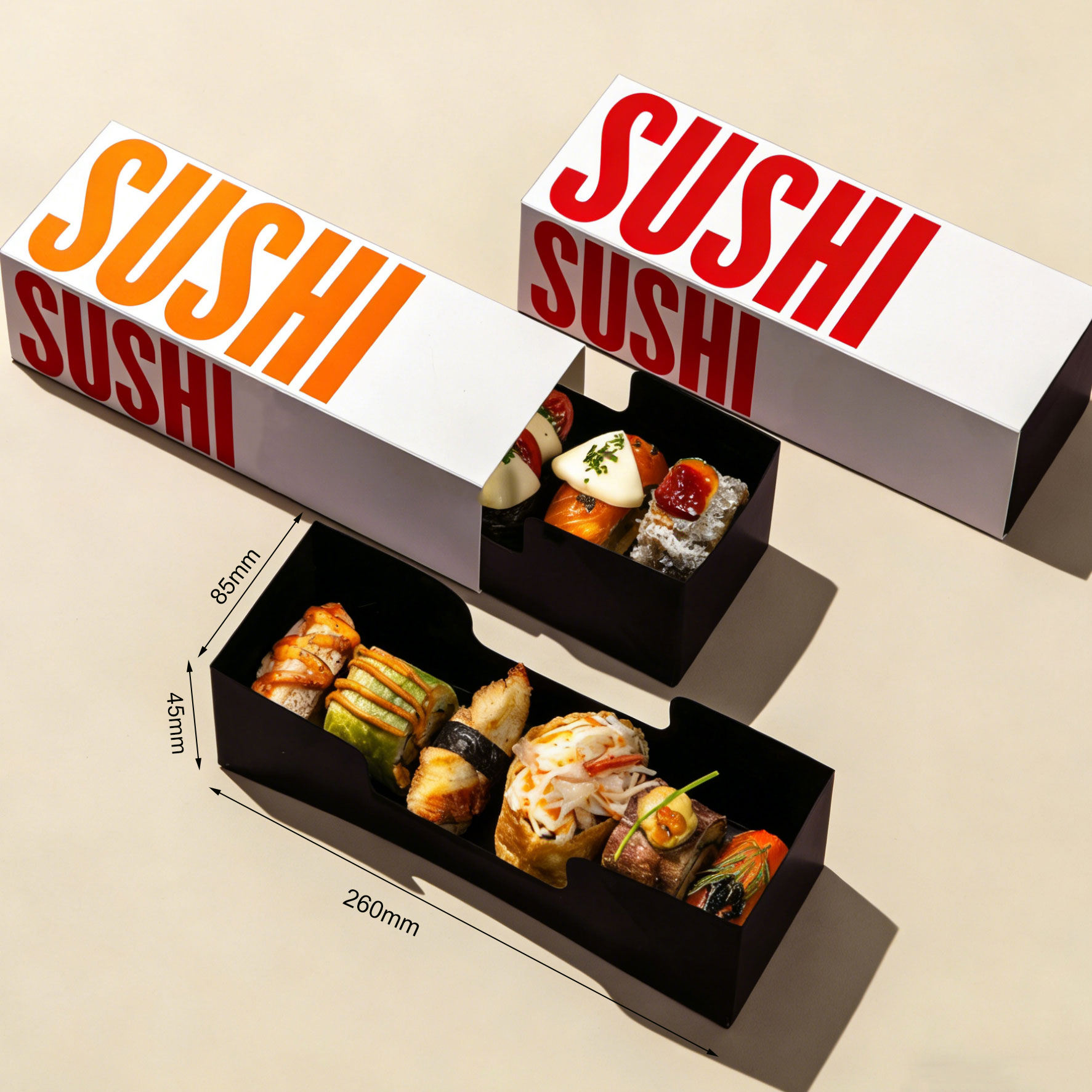
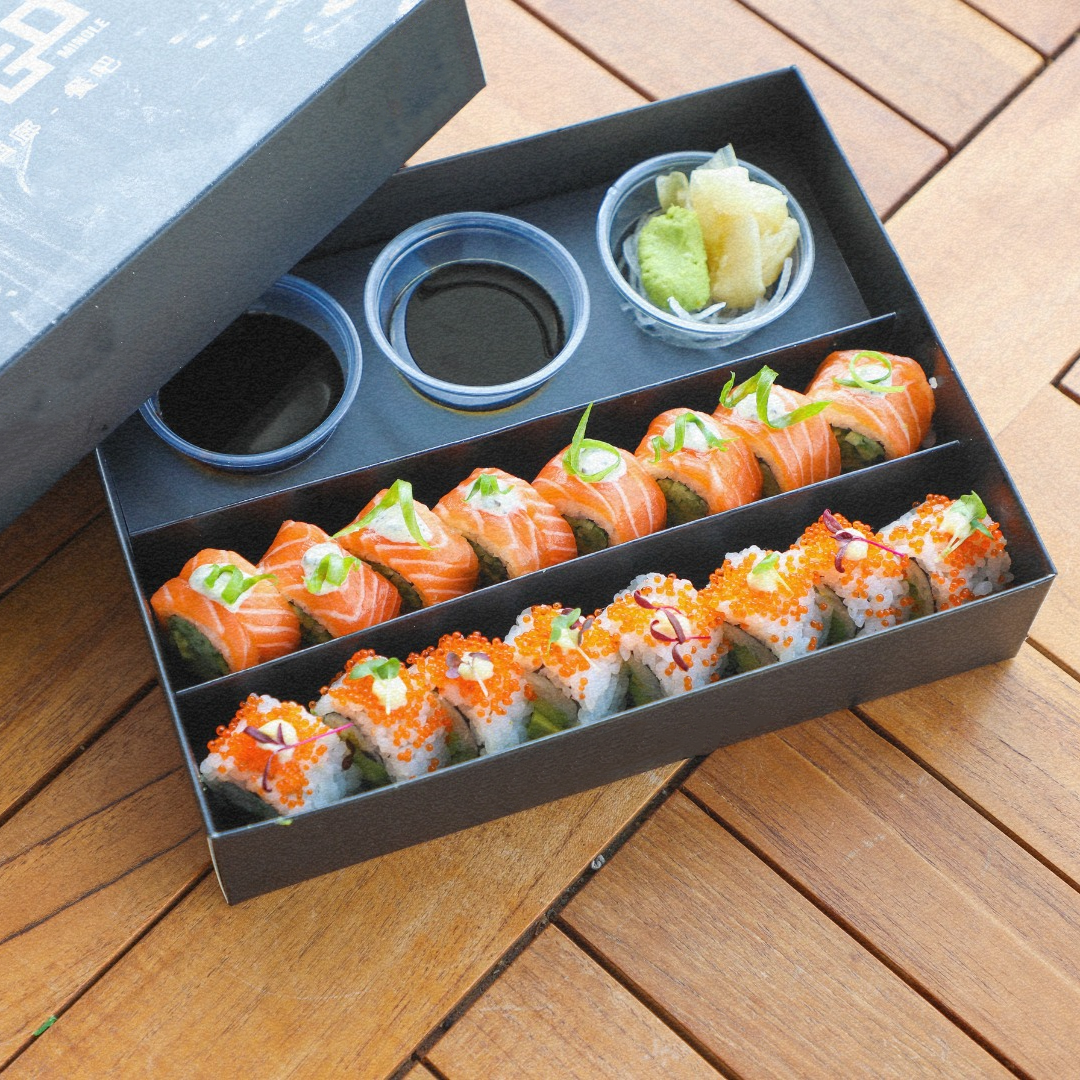
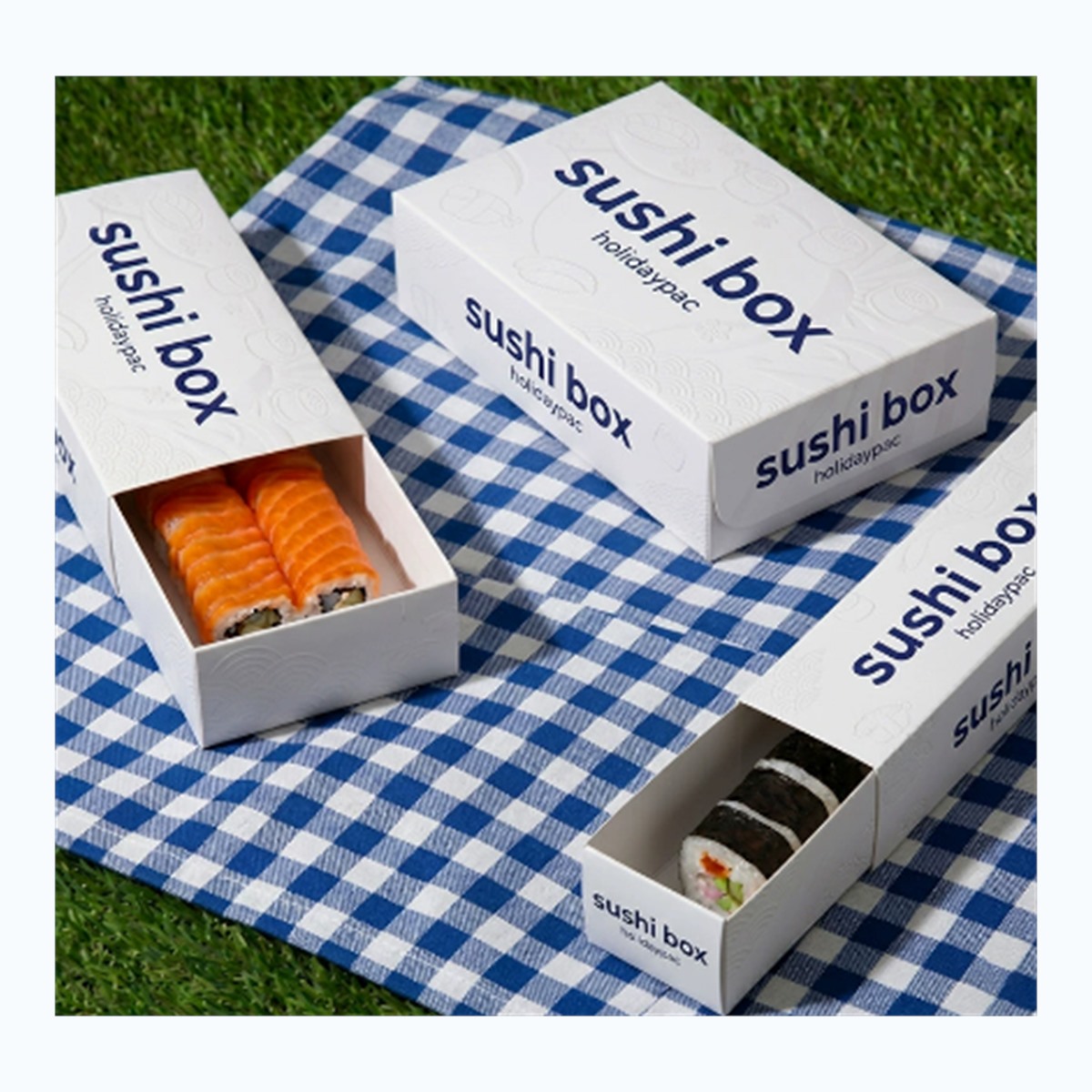
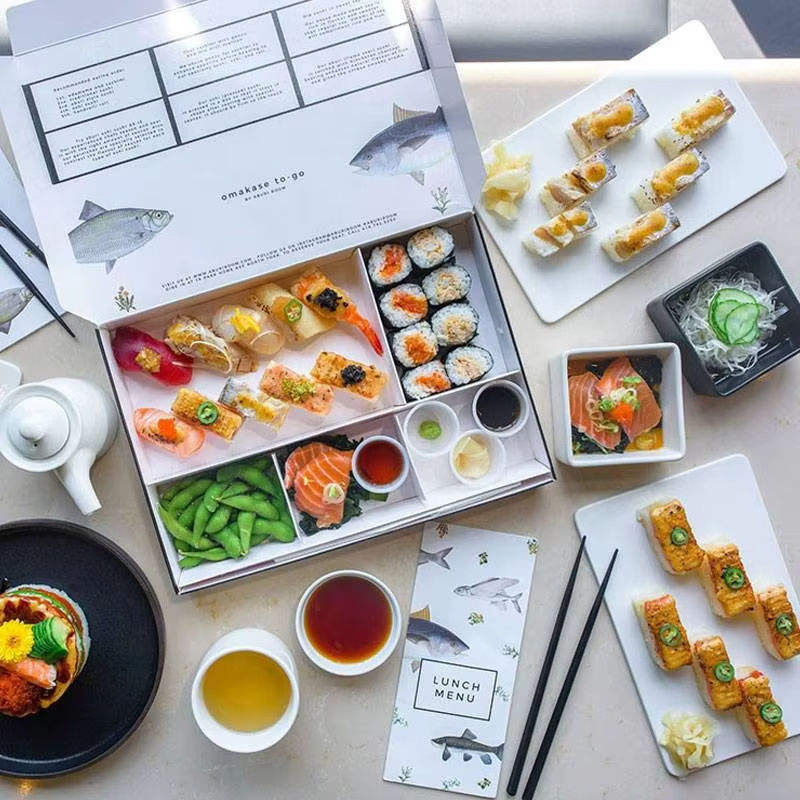
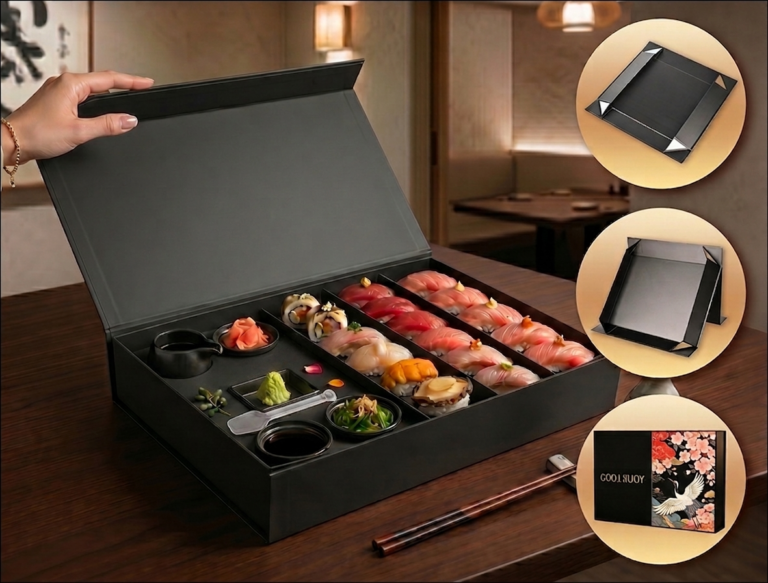
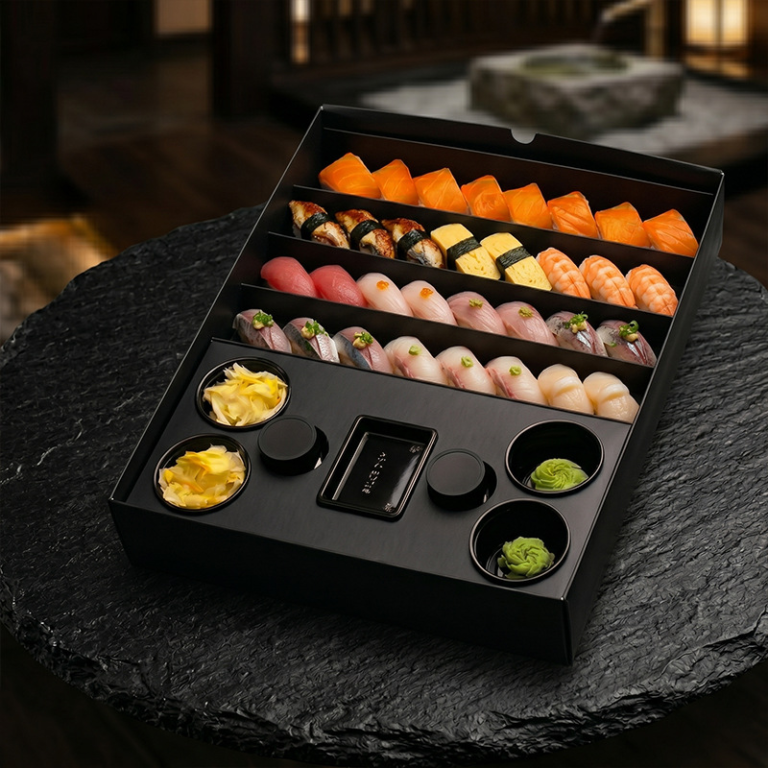
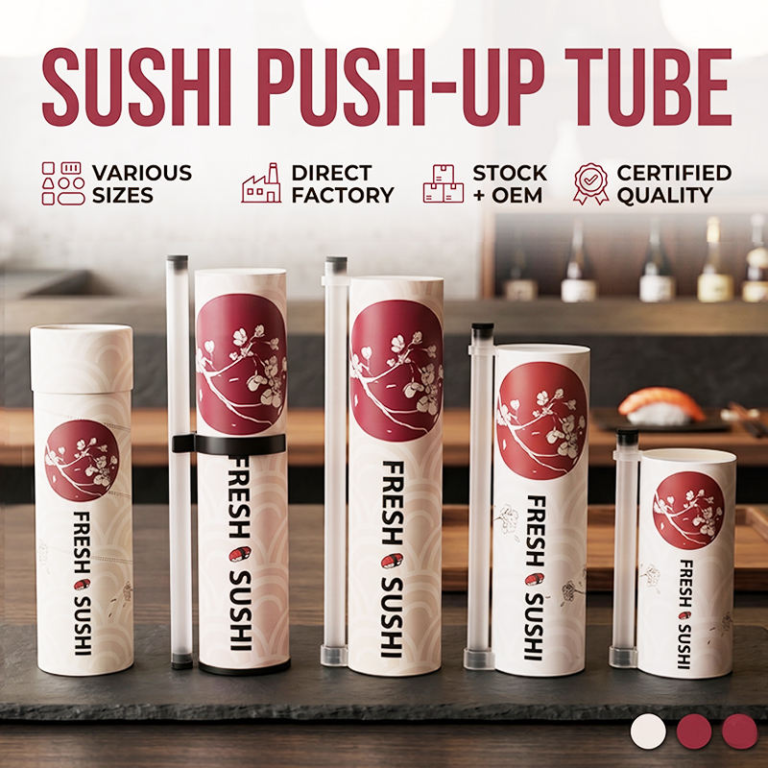
Custom sushi boxes with window and chopstick carry packaging for restaurants, retail food counters and premium takeaway programs. The shown structures include a window lid sushi box, open-lid roll display box, chopstick holder package, printed window carton and tall food box for broader meal sets.
Holidaypacfactory can adjust the box size, window cutout, lid angle, holder tabs, paperboard grade, coating and full-color artwork. Browse Sushi Packaging or send details through Request a Quote for custom production support.
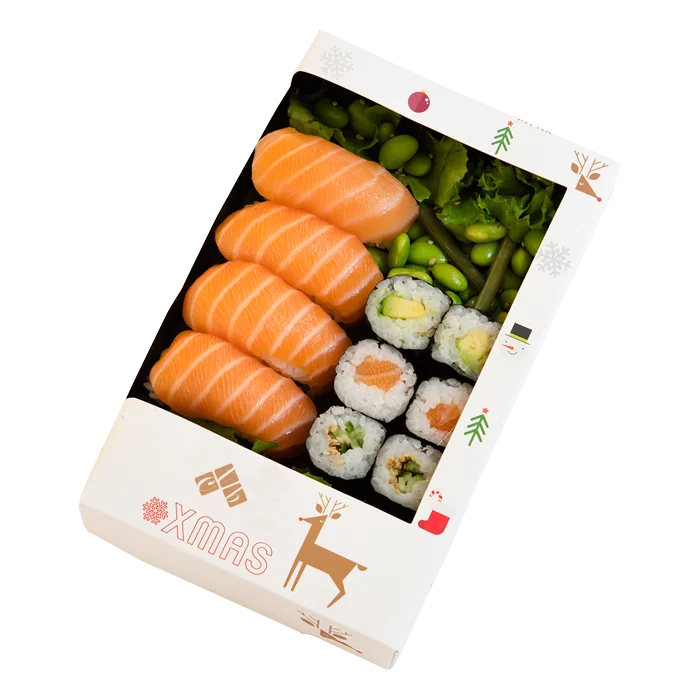
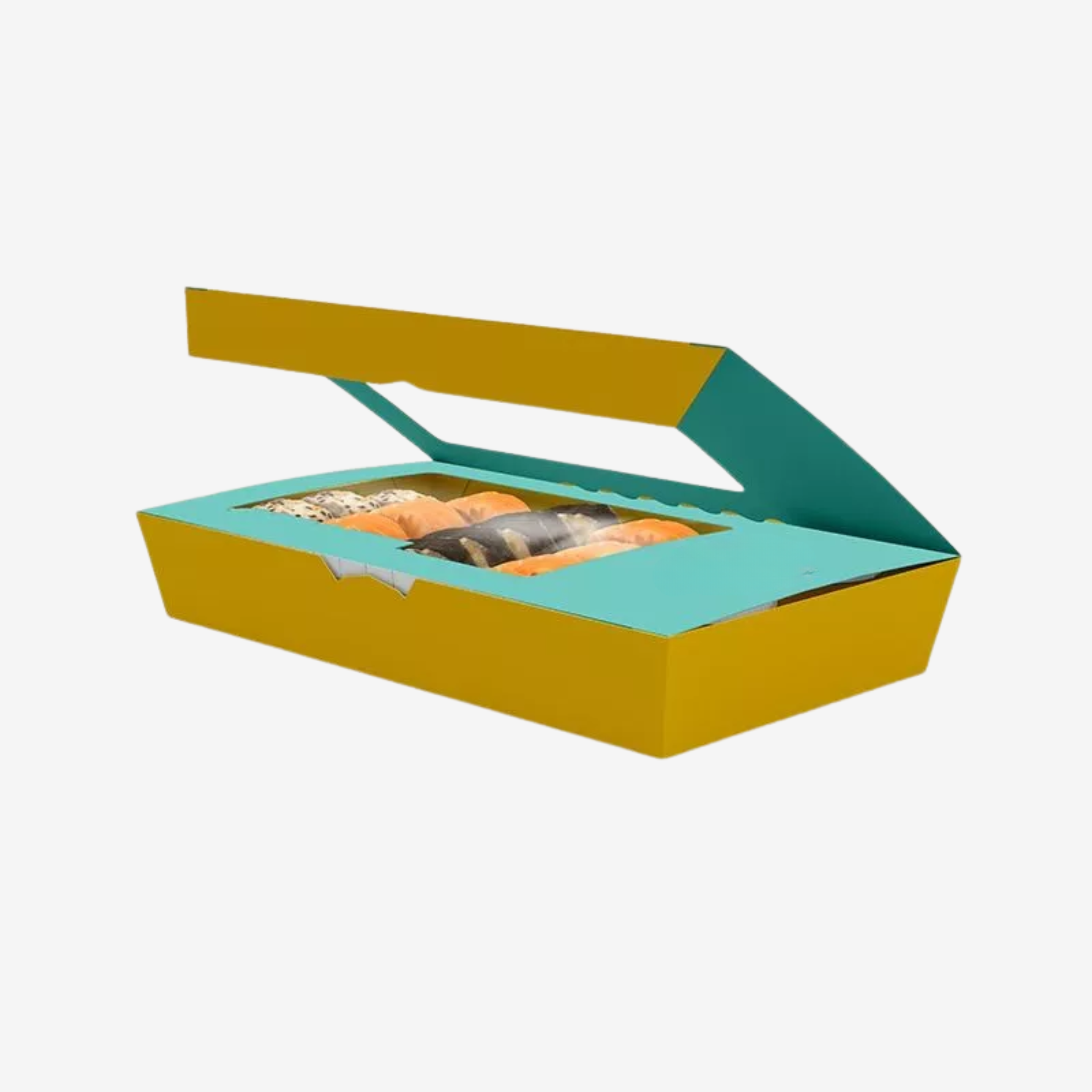
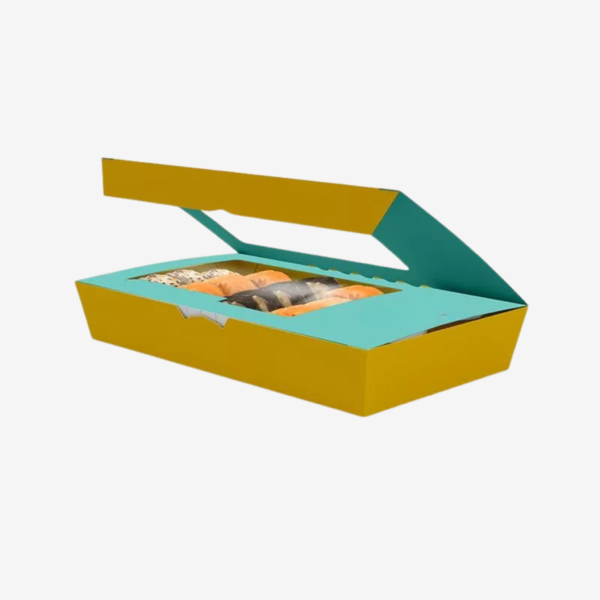
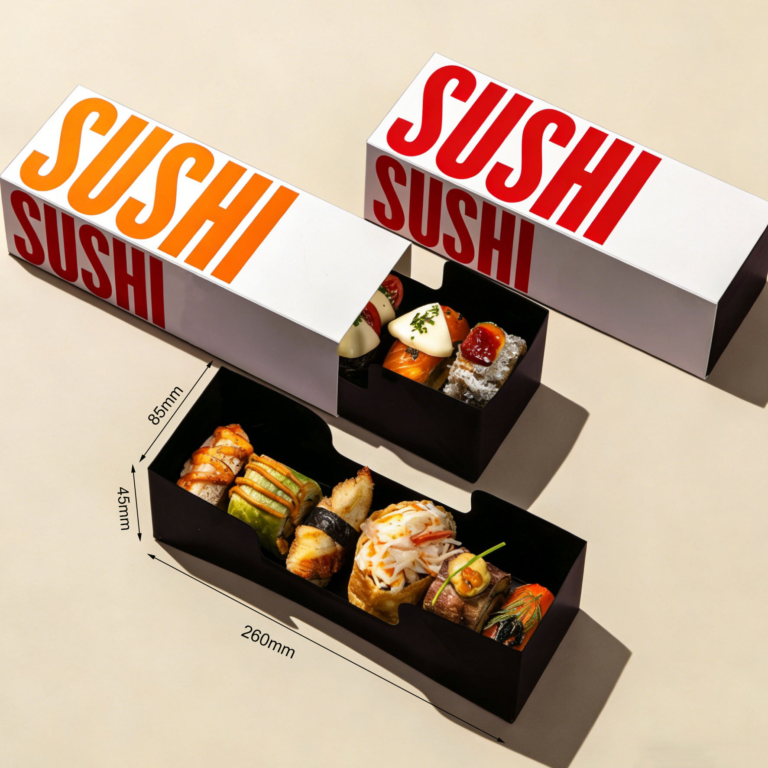
This custom sushi box uses a window-style lid area to let customers see the fresh rolls before opening the package. A clean window frame is useful for retail cases, takeaway counters and premium delivery menus because it gives the food a visible stage while the paperboard body still carries brand color and structure.
The yellow and teal sample direction shows how a bright outer board can create strong shelf recognition. Holidaypacfactory can adjust the window shape, lid depth, paperboard thickness, color palette and inner food layout so the box fits salmon rolls, mixed sushi sets, sashimi portions, snack assortments or other fresh meal items.
Buyers who want a more general sushi packaging family can compare this product with Customized Logo Disposable Paper Sushi Food Box Packaging and Custom Sushi Box Packaging for Premium Takeaway Sets. Those pages show related paper sushi formats for different service channels.
A visible window should be planned carefully. It needs a clear food view, but it must not weaken the lid or place film too close to tall toppings. The best window box protects the meal, shows enough of the contents and keeps the brand panels clean.
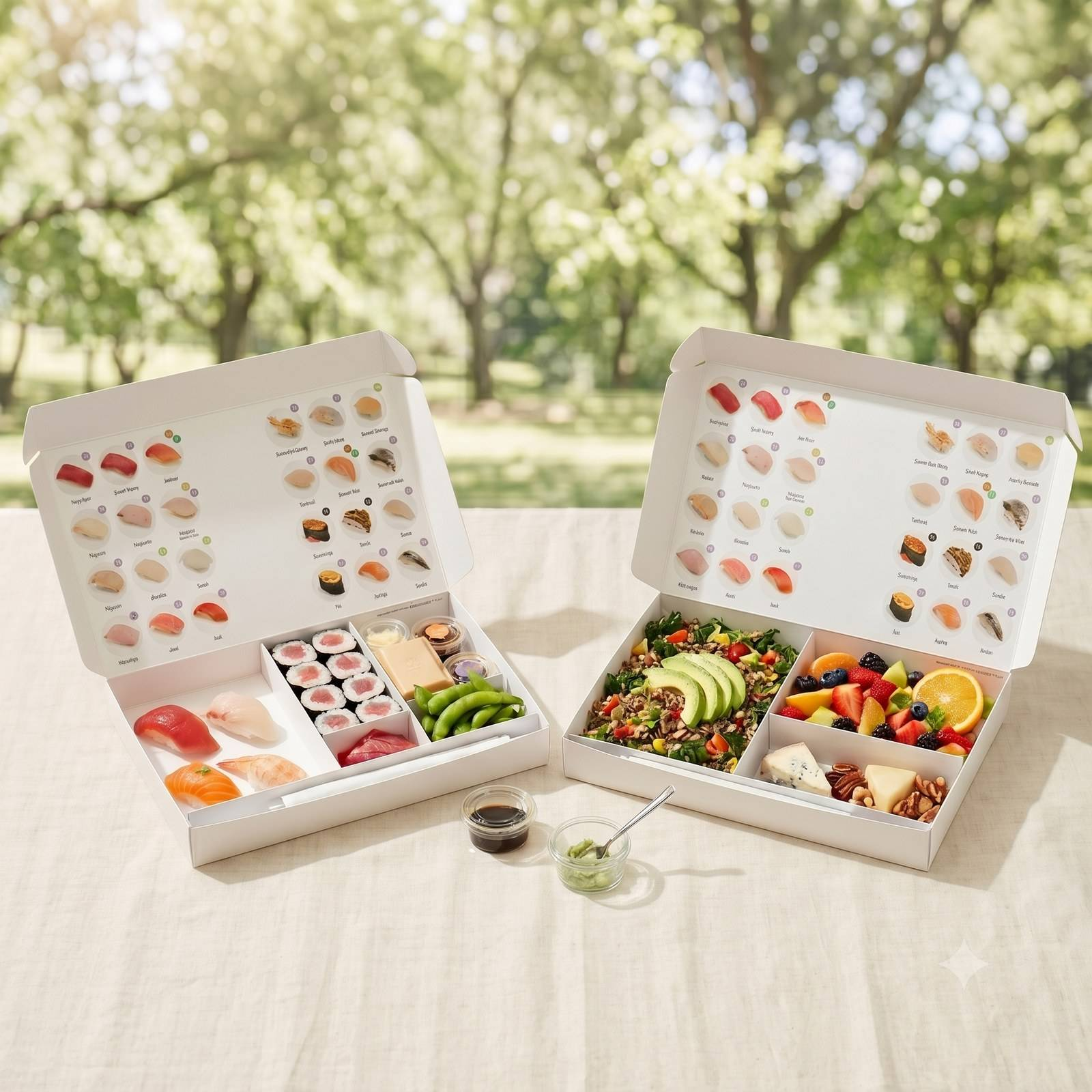
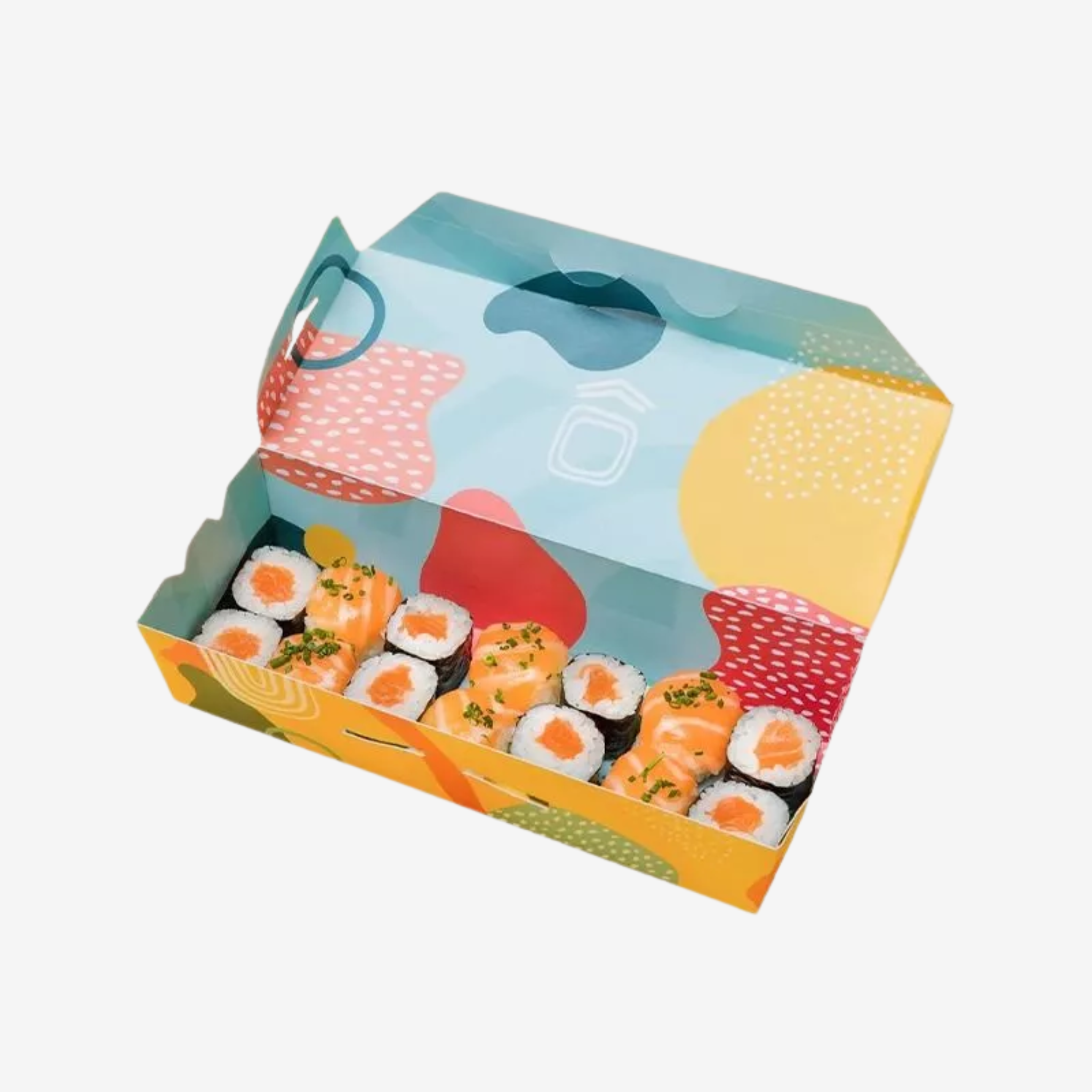
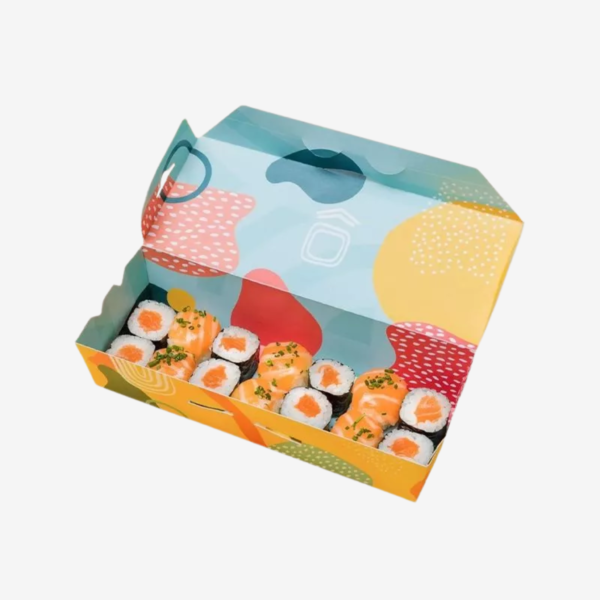
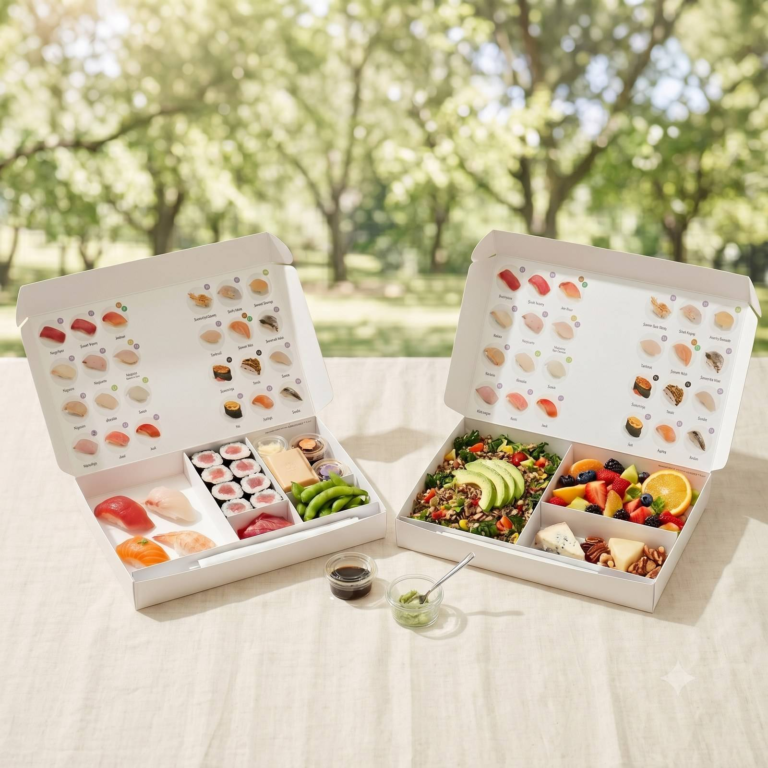
The open-lid sample shows a colorful folding paperboard box with a wide display area inside the lid. This structure works well for roll assortments, lunch sets and limited menu launches because the interior artwork becomes part of the opening moment. The customer sees the food and the brand story at the same time.
For restaurant buyers, the open-lid format should be tested with the real food height and the expected garnish. Sushi rolls need space above the toppings, and the lid must open without dragging against the meal. A smooth opening motion makes the package feel more refined even when it is designed for everyday takeaway.
Holidaypacfactory can tune the side wall height, lid angle, tuck tab, inner print and coating around the target use. A box for daily delivery may need simpler closure control, while a premium set may benefit from a cleaner inner print and a thicker hand feel.
This format is also useful when a restaurant wants packaging that photographs well. Bright side panels and an illustrated inner lid can create strong menu photos without adding excessive packaging weight.
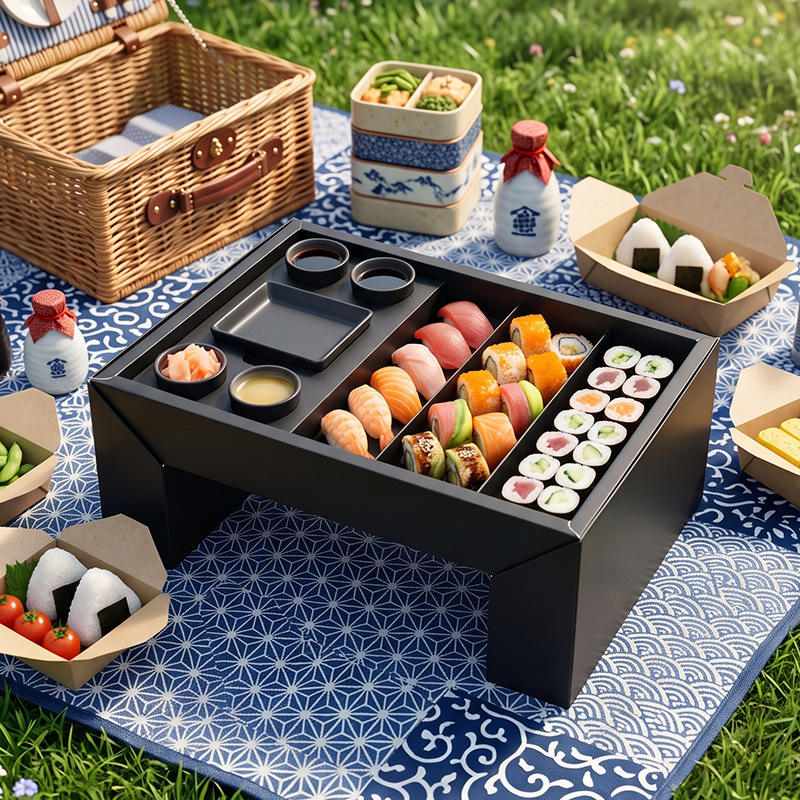
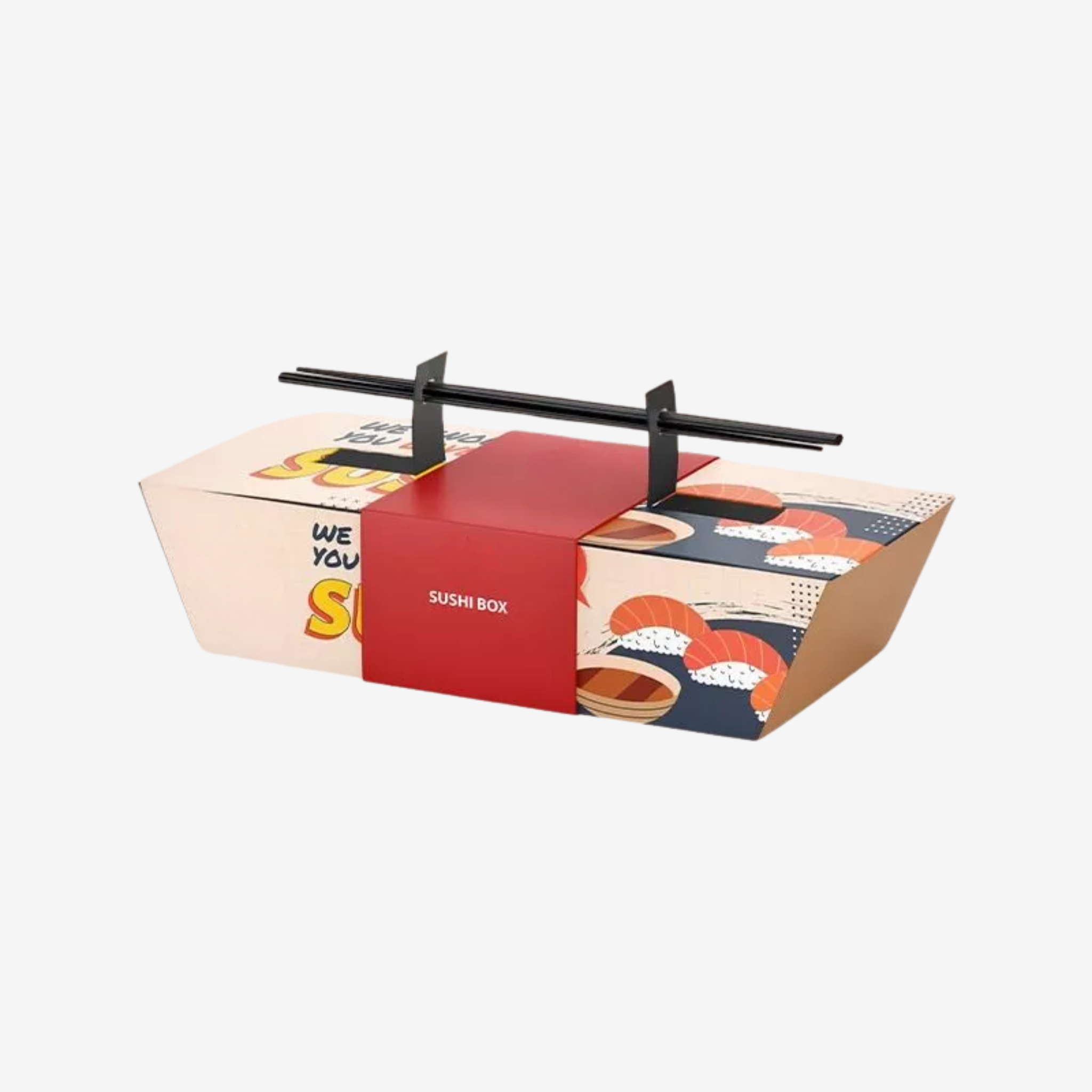
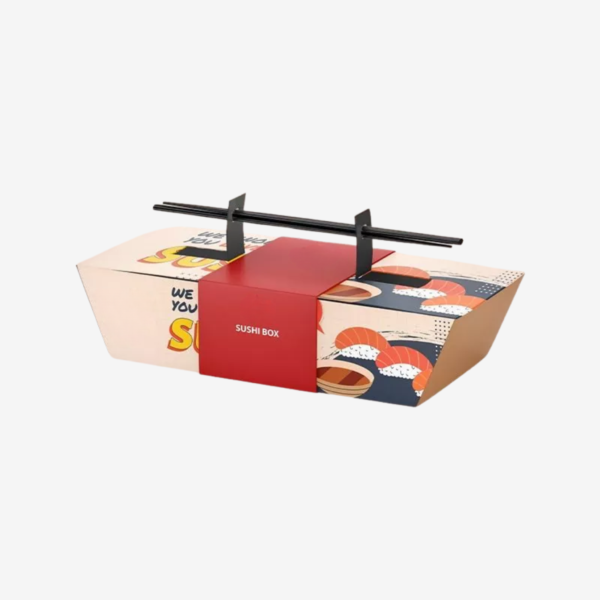
The chopstick carry image adds a practical accessory detail to the packaging range. A pair of chopsticks can be held across the top with paperboard tabs, making the meal feel complete and reducing loose items inside a takeaway bag. This is especially useful for sushi bars, office lunch programs, event meals and delivery kits.
The handle or holder area should be strong enough for real use. The tabs must hold the chopsticks securely without tearing the lid, and the package should still be easy to open when the customer is ready to eat. Small structural tests can prevent awkward handling later.
The red center band in the image also shows how a sleeve or label band can create a strong identity point. Holidaypacfactory can replace that band with a logo, menu name, flavor code, holiday mark or store label area while keeping the base box practical for packing.
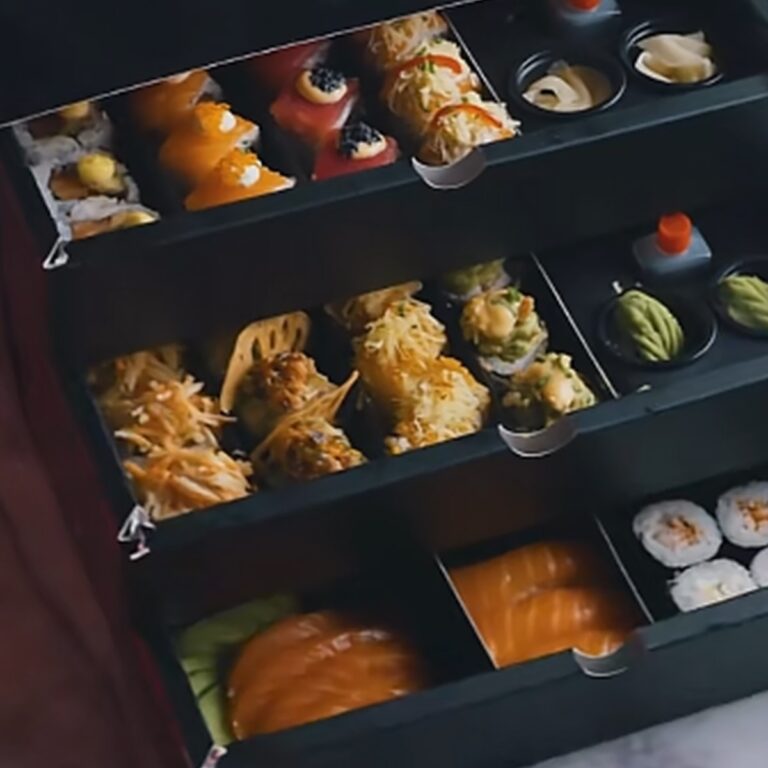
For buyers focused on drawer motion and salmon roll service, the Custom Drawer Sushi Box with Printed Sleeve product is another useful reference inside the Holidaypacfactory sushi range.
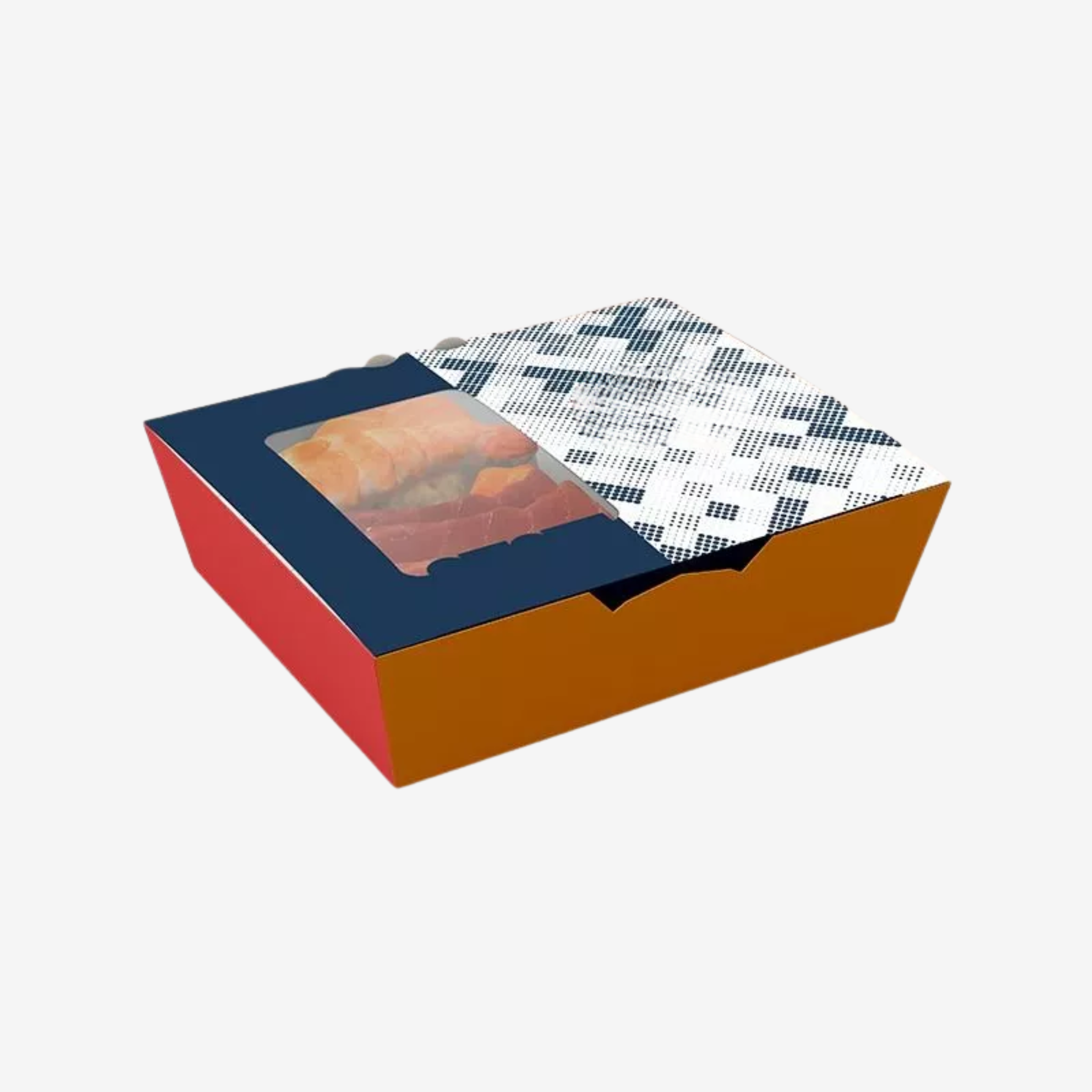
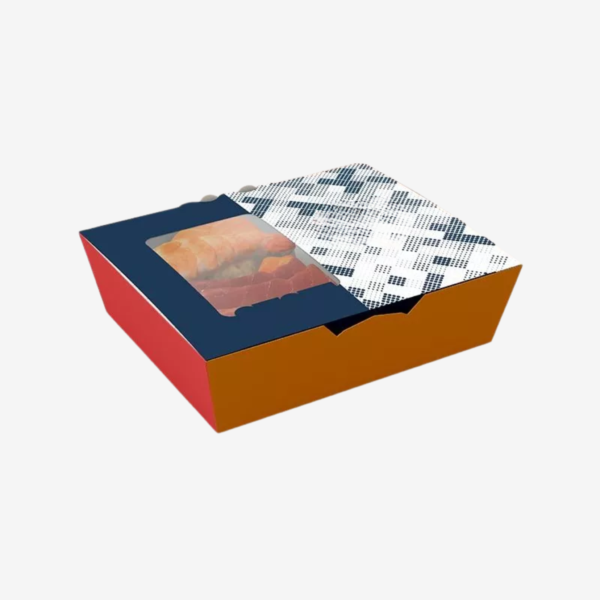
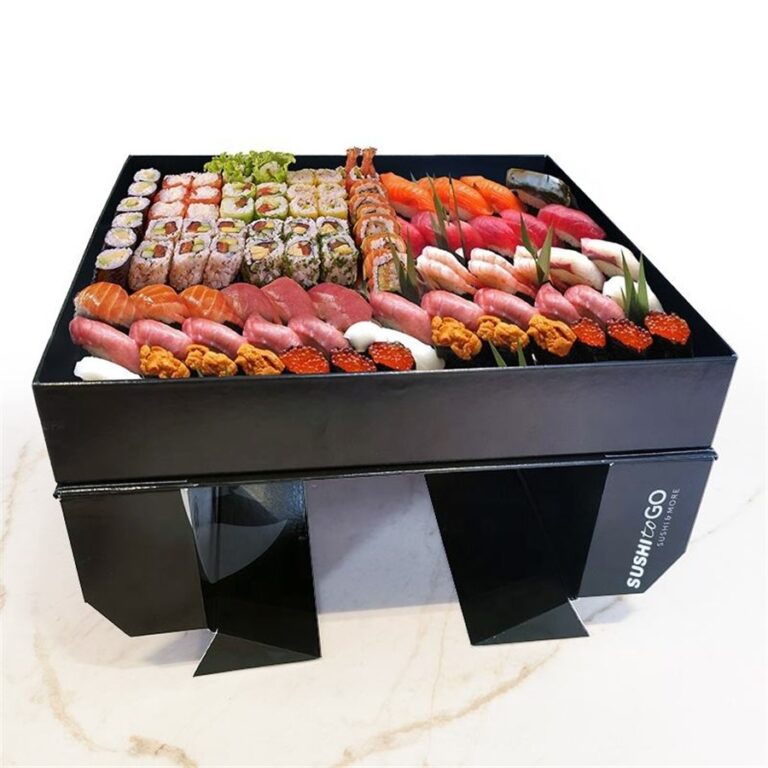
The patterned window box image shows a more graphic direction. A dark lid frame, patterned panel and warm side color can make a simple sushi box feel more curated. The clear view panel still lets customers inspect the food, while the paperboard shell gives room for custom artwork and brand color.
This structure is helpful for chilled retail and grab-and-go meal programs. Customers can see the food quickly, while the printed paperboard carries the brand. The buyer can add label areas, barcode space, date marks or item names without covering the main food view.
Window shape, film clarity and edge strength should be checked during sampling. If the window is too large, the lid may lose stiffness. If the window is too small, the food view may not justify the extra structure. The right balance depends on the menu and selling channel.
Holidaypacfactory can plan the box as a simple disposable paperboard format or a more premium retail presentation. The final specification can include matte lamination, gloss finish, varnish, food-grade coating and custom paper thickness.
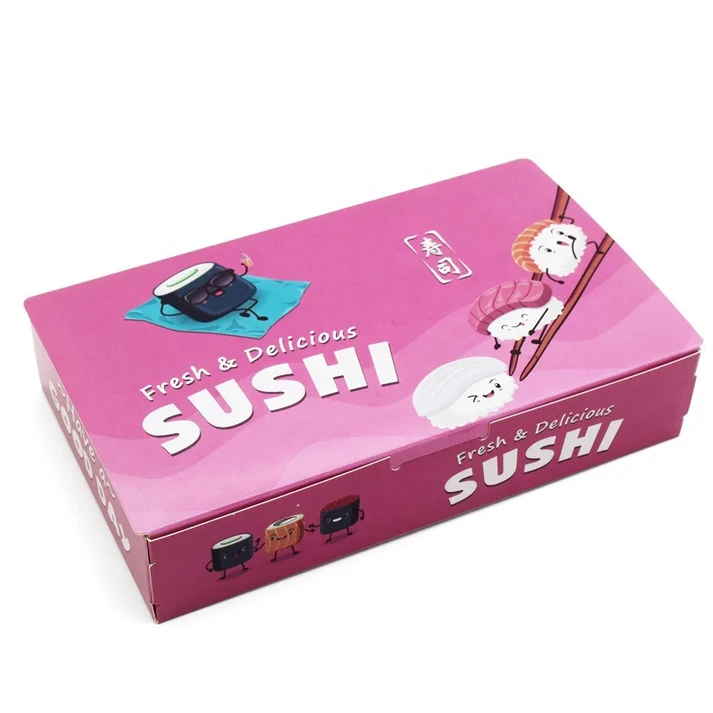
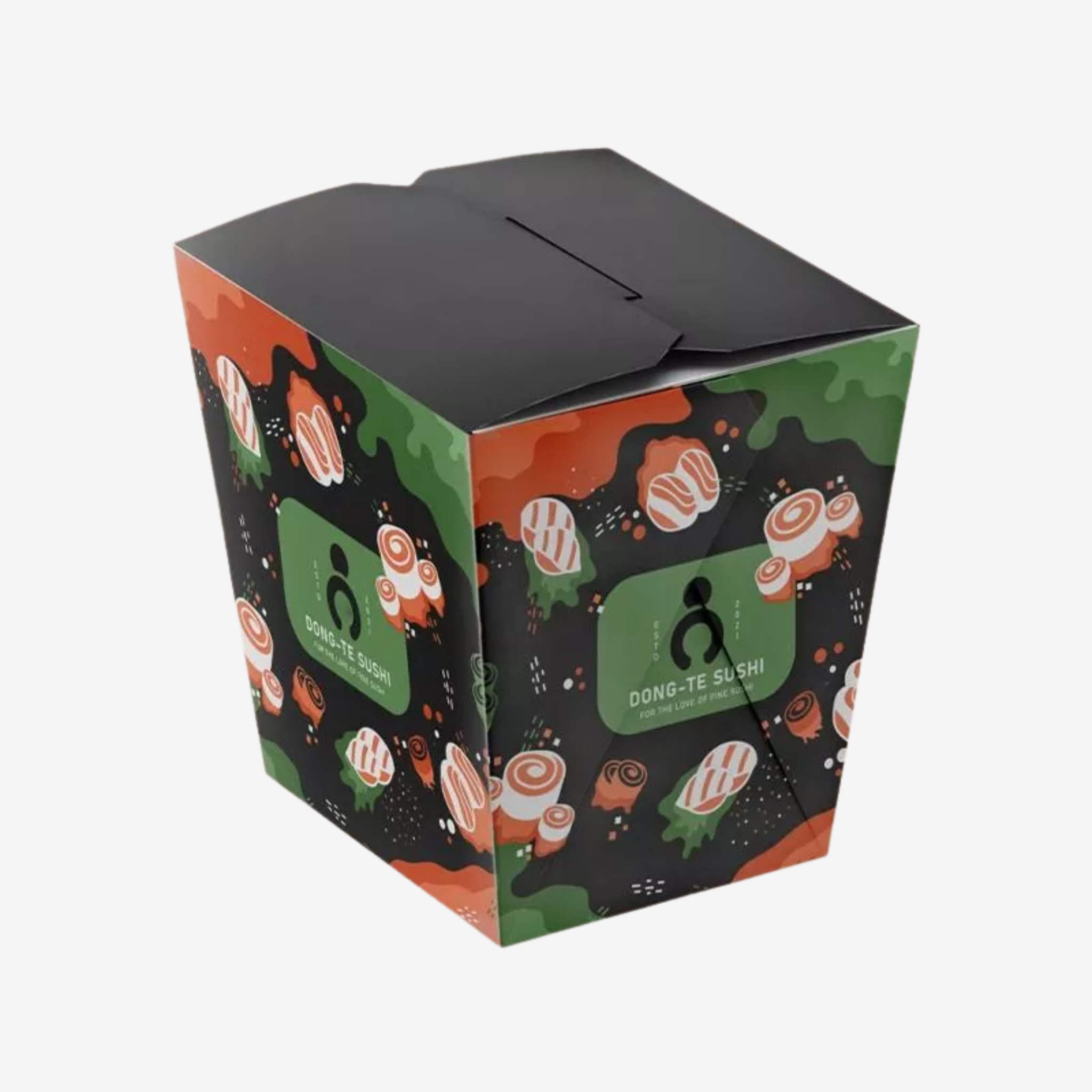
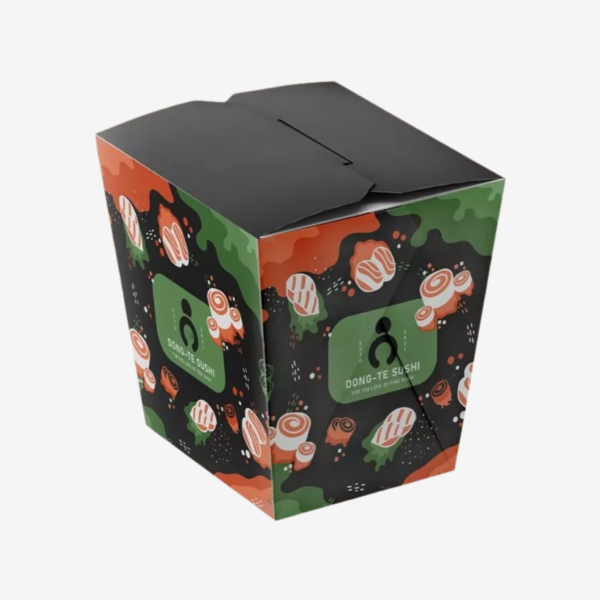
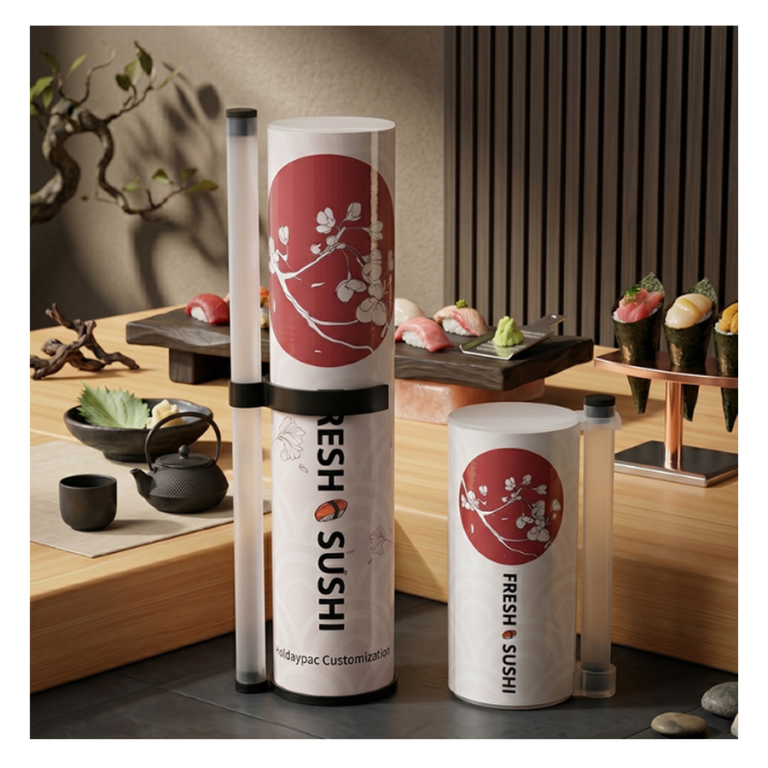
The tall printed food box image shows that sushi packaging programs often need more than one shape. A restaurant may use shallow boxes for roll sets, window boxes for display and taller cartons for sides, combo meals, rice dishes or event bundles. Planning these shapes as one family creates a stronger brand experience.
A tall box needs different engineering from a flat sushi tray. It must stand straight, close securely, resist sidewall pressure and remain easy to fill. If the box holds warm or sauced food, lining and coating choices become more important. If it holds dry snacks or side dishes, the structure can focus more on print and closure.
The graphic panels in the image show how a bold pattern can turn a functional food carton into a recognizable brand item. Holidaypacfactory can coordinate similar colors, icons, typography and panel logic across sushi boxes, side boxes, paper bags and labels.
A complete food packaging family helps buyers manage repeat orders because each item has a clear role. The sushi box protects and displays rolls, the tall box supports mixed meals, and matching accessories keep the whole customer handoff consistent.
Custom sushi boxes should start with the food. Roll count, roll height, sauce cup diameter, garnish placement and expected serving method all affect the structure. A box that looks good in a picture may still need adjustment once real sushi is placed inside it.
A window lid is valuable when customers need to see the food before purchase. It works well in chilled retail display and premium takeaway counters. The buyer should decide how much of the food should be visible and which printed areas should remain available for logo and label placement.
Open-lid boxes are useful when the customer experience matters after the package is opened. The inside lid can carry artwork, brand copy, menu information or a clean color field. That interior moment can make a simple takeaway order feel more prepared and more thoughtful.
Chopstick holder packaging is helpful for quick service. When accessories are integrated into the box, staff have fewer loose items to manage. The customer also receives a more complete meal set. The holder should be tested with the actual chopsticks planned for the order.
Tall food boxes are useful for brands that need side dishes or combo meals in the same design family. They can coordinate with flat sushi boxes while handling a different food shape. The buyer should not force every item into one structure if the meal range is broad.
Material selection should match the food and the service channel. White card, coated paperboard, kraft paperboard and custom paper thickness can all be reviewed. Moisture, sauce, oil and temperature should be considered before selecting lining or coating.
A premium sushi program may need a heavier board and a calm finish. A casual lunch menu may need a lighter paperboard with faster folding. A retail display box may need a strong window lid and label area. Each channel asks the box to do slightly different work.
Artwork should be checked on the folded sample. Panel alignment, fold lines, cutouts, holder tabs and window edges can all change how the design reads. A logo that looks centered on the dieline can feel off after folding if the panel proportions are not checked.
Color strategy should support the food. Bright yellow, teal, red, navy, orange and green can all work for sushi packaging, but the food should still remain visually appealing. The strongest packaging usually frames the meal instead of competing with it.
If the product will be sold through delivery platforms, photography matters. A box with a clean top view and a neat open view can improve menu presentation. The package should be easy to photograph from the angle the brand plans to use.
If the product will sit in a refrigerator, stacking and condensation should be considered. The lid should remain stable, the window should stay presentable and the printed board should resist normal shelf handling. A real display test is useful before approval.
If the package will be used for events, transport and fast setup matter. Catering teams may need boxes that can be filled quickly, stacked in cartons and opened neatly at the venue. The carton packing plan should support that workflow.
For chain restaurants, repeatability is a major value. Approved dielines, board grade, coating, color references and carton count should be recorded carefully. A repeat order should feel like the same product, not a new experiment each time.
For smaller restaurants, custom packaging can still be practical if the structure is focused. A simple printed sushi box with a good window or clear holder detail may create more customer value than a complicated design with too many special features.
The buyer should prepare food dimensions, product photos, estimated quantity, market, artwork direction, material preference, finish preference and target date. These details help Holidaypacfactory recommend a practical quotation and sample route.
A physical sample should be filled with real food or a realistic dummy load. The team should close it, open it, stack it, carry it and photograph it. Those ordinary tests reveal more than a flat design file.
The window panel should be checked for clarity, edge strength and film fit. The food should look clean through the window, and the lid should not bend too much around the cutout. That is especially important for retail-facing boxes.
The chopstick holder should be checked for hand feel. Customers should be able to remove the chopsticks without tearing the box or making the lid hard to open. Staff should also be able to add the chopsticks quickly.
The inner coating should be checked against the exact food. Sushi rice, sauces, fish, fried pieces and warm sides all behave differently. A coating that works for dry items may not be enough for a wet or oily menu.
The finished product should balance style and daily use. It should look attractive, protect the meal, assemble reliably and support the brand. That practical balance is what turns a custom sushi box into a useful packaging asset.
Holidaypacfactory can help buyers create one box or a whole range. The same visual language can be applied to window sushi boxes, open-lid boxes, chopstick carry boxes, tall food cartons, labels and paper bags.
A well-planned custom sushi packaging family helps the customer recognize the brand across different menu items. It also helps staff work with packaging that has predictable shapes, label positions and packing rules.
For wholesale buyers, the best result is not the most complex structure. The best result is a box that matches the food, feels good in the hand and can be produced consistently across repeat orders.
This custom sushi boxes product is built around that goal: visible food, practical folding, useful accessory details and a flexible print surface for restaurant branding.
The first decision for this package is whether the buyer wants the food to be visible before opening. A window lid supports confidence at the counter because the customer can inspect the rolls, color and portion size. A closed lid creates more suspense and stronger print control. Both choices can be correct, but they should be selected according to the selling channel.
The second decision is whether the package should behave like a tray, a folder or a carton. Tray-style boxes are familiar and fast. Folding boxes provide a better opening moment. Taller cartons can hold sides, mixed meals or items that do not sit well in a shallow tray. A brand with several menu items may need more than one of these formats.
The third decision is how much accessory integration is useful. Chopsticks across the top create a memorable visual signal and can reduce loose accessories, but they also add a structural requirement. If the chopsticks are too tight, staff lose time. If they are too loose, they shift during delivery. The holder detail should be tuned with real accessories.
For retail sushi, label position is especially important. Nutrition labels, date marks, item names and barcode areas should be reserved before final artwork approval. If these areas are not planned, store teams may place labels over the best food view or the main brand panel.
For restaurant delivery, closure security is more important than shelf display. The lid should stay closed during bag handling, and the package should resist normal movement from a courier route. A window box may still work for delivery, but the film, frame and lid must be strong enough for the channel.
For premium handoff, the paper surface should feel clean and controlled. A matte finish can reduce glare in photos and create a softer touch. A gloss finish can make colorful artwork stronger. A simple varnish can keep the project more cost aware. The finish should support the buyer’s menu value.
For event menus, inside printing can create a small sense of occasion. A lid that opens to reveal color, pattern or brand artwork can make a sushi order feel more complete. This is useful for catering, launches, office meals and seasonal sets where the package is part of the memory.
For daily takeaway, assembly speed is critical. The package should fold predictably, close without special handling and stack neatly near the service line. Staff should not need extra time to make the box look correct. A simple fold that works every time can be more valuable than a dramatic shape.
For sustainability-minded buyers, the package should be discussed in practical terms. The paperboard, coating, window film and lining choices should all be reviewed together. A paper box with a window may still require material tradeoffs, so the final construction should match the actual food and local market expectations.
For brands that want a colorful package, the artwork can use bold panels, abstract shapes, food icons or seasonal colors. The important point is to keep the food from getting lost. Sushi has strong natural colors, so the surrounding package should frame those colors rather than overwhelm them.
For minimal brands, a calmer palette can work beautifully. A white, kraft, navy or black box can feel more premium when the logo placement is precise and the folds are clean. The packaging does not need heavy decoration to feel custom if the proportions and materials are well chosen.
For wholesale programs, carton packing should be reviewed before production. A tall box may use more shipping volume than a flat folding box. A window lid may need extra protection in carton packing. A chopstick holder shape may require careful nesting. These details affect cost and logistics.
For repeat orders, the factory record should include approved dieline, board specification, window film, print reference, finish, carton quantity and sample photos. This keeps later batches aligned and helps the buyer reorder without repeating every design discussion.
For menu changes, the same structure can be updated with a new color band, new label area or seasonal artwork. That makes the packaging system flexible. A sushi restaurant can introduce limited rolls or special sets without developing a totally new box each time.
For customer experience, the box should open cleanly, show the food neatly and leave the customer with a clear brand impression. If the first opening feels awkward, the design needs adjustment. If the open package looks tidy and easy to eat from, the structure is doing its job.
Holidaypacfactory can help buyers choose between window, open-lid, chopstick carry and tall carton directions. The final recommendation should come from the menu, channel, quantity and brand tone. A custom sushi box succeeds when every design choice has a practical reason.
Yes. The window size, shape and placement can be adjusted around the food view, lid strength and brand artwork.
Yes. Holder tabs or a handle-style chopstick area can be planned and tested with the actual chopsticks.
Yes. Outside panels, inside lid areas, side graphics and label zones can all be customized with your own brand design.
Yes. Flat sushi boxes, open-lid boxes and taller food cartons can be developed as part of one packaging family.
Food-grade white card, coated paperboard, kraft board, custom thickness and lining options can be reviewed for the target meal.
Send food dimensions, photos, quantity, artwork direction, window requirement, material preference and delivery schedule.
 Cassie LanFounder, HolidayPac · Leave a message
Food packaging, paper bags and food service paper for your next project.
Leave your request anytime. Our sales team will reply with pricing, samples and production details.
Tell us what you're packaging and we'll ship a physical sample plus a free 3D mockup within 24 hours — no cost, no obligation.
We've received your inquiry and our team will get back to you within 24 hours.