

Holidaypacfactory Case Study
Case Study: Corrugated Pallet Display for a Club Store Bulk Promotion
A Holidaypacfactory case study showing how a corrugated pallet display for a club store bulk promotion moved from buyer brief to structure design, sample testing, export packing and retail-ready execution.
By Cassie Lam, Founder of HolidayPac
Why This Case Matters
Club-store and bulk retail displays are often judged by their first photo, but the real buying decision depends on structure, stability, assembly and shipment. This case study explains how Holidaypacfactory approached one anonymized pallet display project for a buyer preparing a high-volume retail promotion. The names and confidential product details are removed, but the workflow reflects the practical way our team develops corrugated display projects.
A corrugated pallet display sits between packaging and retail furniture. It carries product like a packaging system, but it sells like a visual merchandising tool. That is why the project needed more than a dieline. It needed buyer communication, structure logic, sample testing and export packing control.
Related Holidaypacfactory Display Products

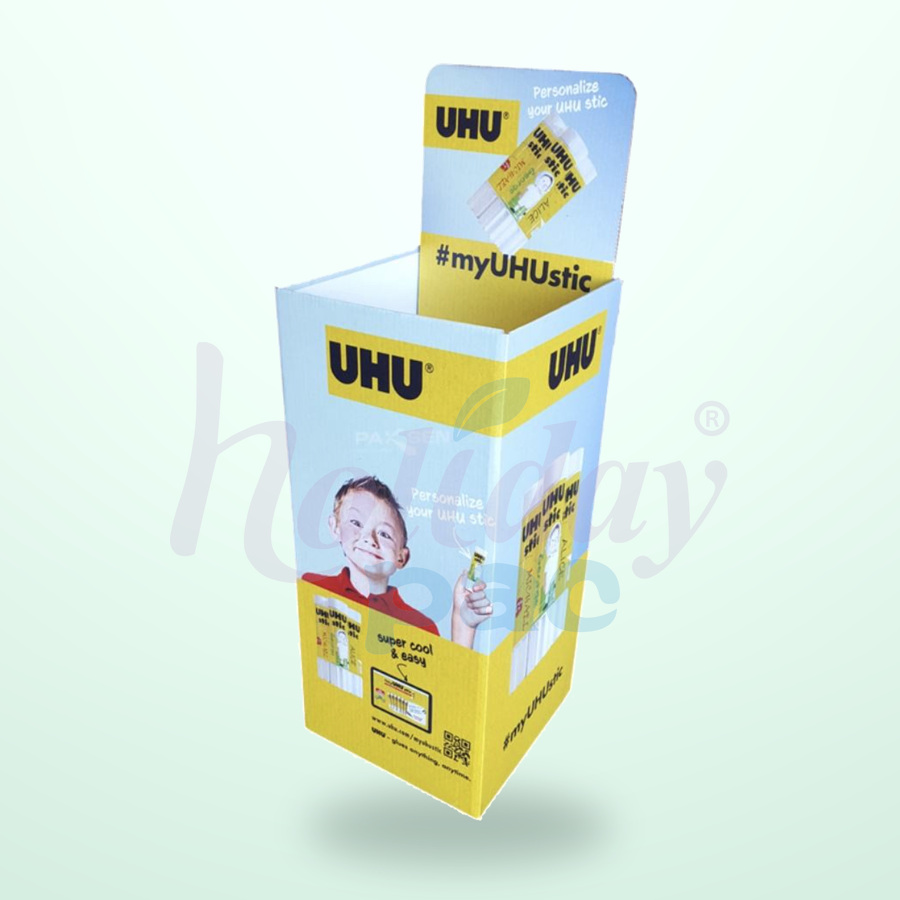
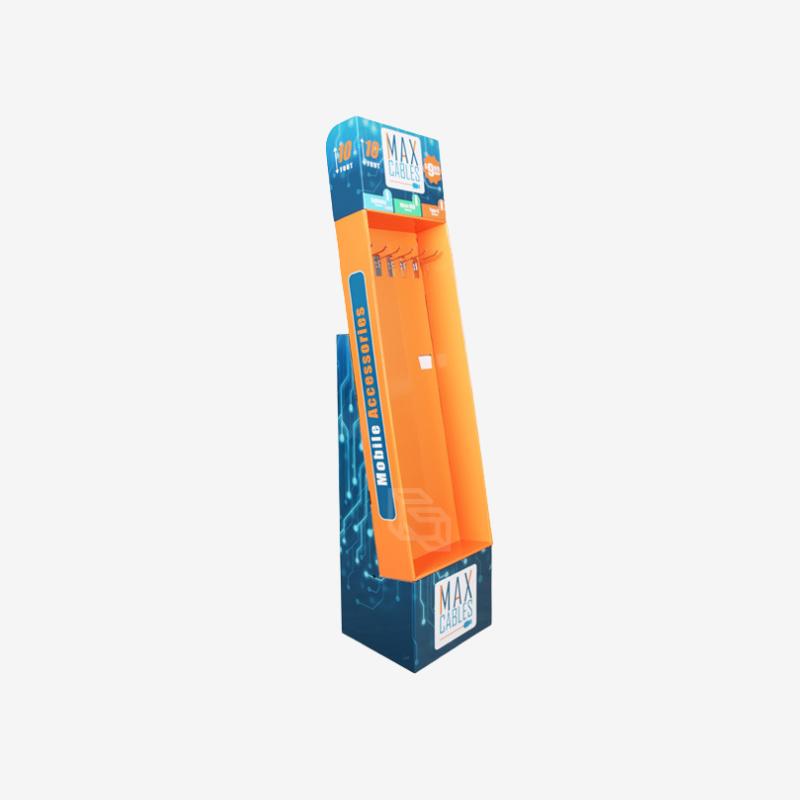
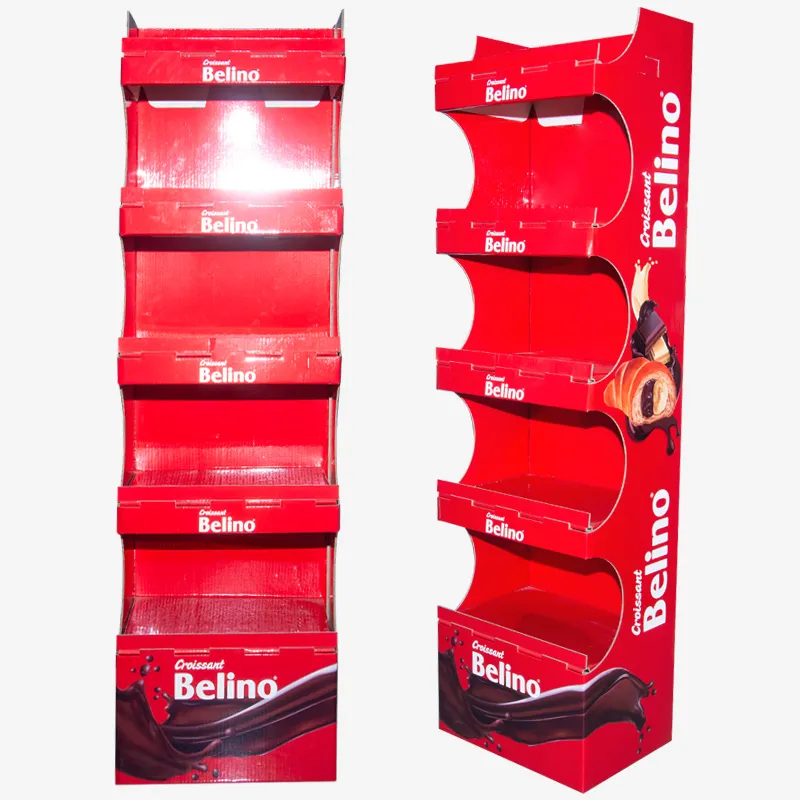
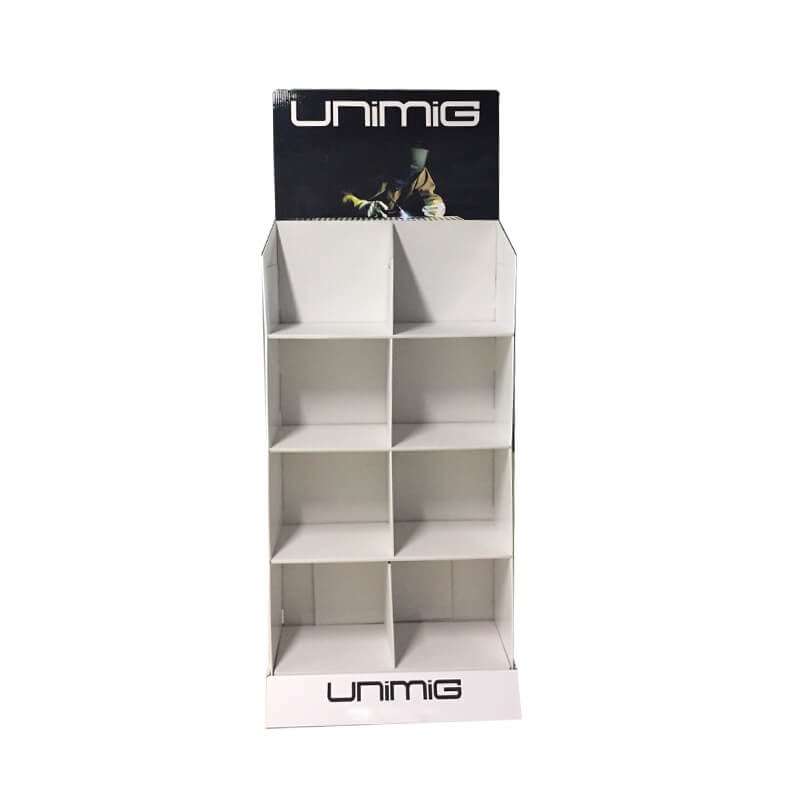
1. Case Brief: A Heavy Retail Display Had to Feel Simple in Store
This case study is based on an anonymized buyer project handled in the same way Holidaypacfactory approaches custom display work for international retail buyers. The buyer was preparing a bulk promotion for a club-store style retail environment. The product was not a small impulse item. It needed a floor-level display that could hold weight, stay stable during the campaign and give shoppers a clear message from the aisle.
The buyer first described the request as a simple corrugated pallet display. In practice, the brief included several hidden requirements: the display had to fit a retail footprint, support loaded products, reduce store setup time, protect printed panels during export packing and present the brand message without looking like a shipping carton. A display can fail when these requirements are treated separately. Holidaypacfactory treated the display as a retail operating tool, not only as a printed cardboard structure.
The final direction was a custom corrugated pallet display with a reinforced load path, printable front and side panels, controlled product access and a packing method that could support export shipment. Buyers comparing similar projects can start with our custom corrugated pallet shop display when planning a large retail floor promotion.
2. The Buyer Challenge: Four Risks Were Hiding Behind One Display Photo
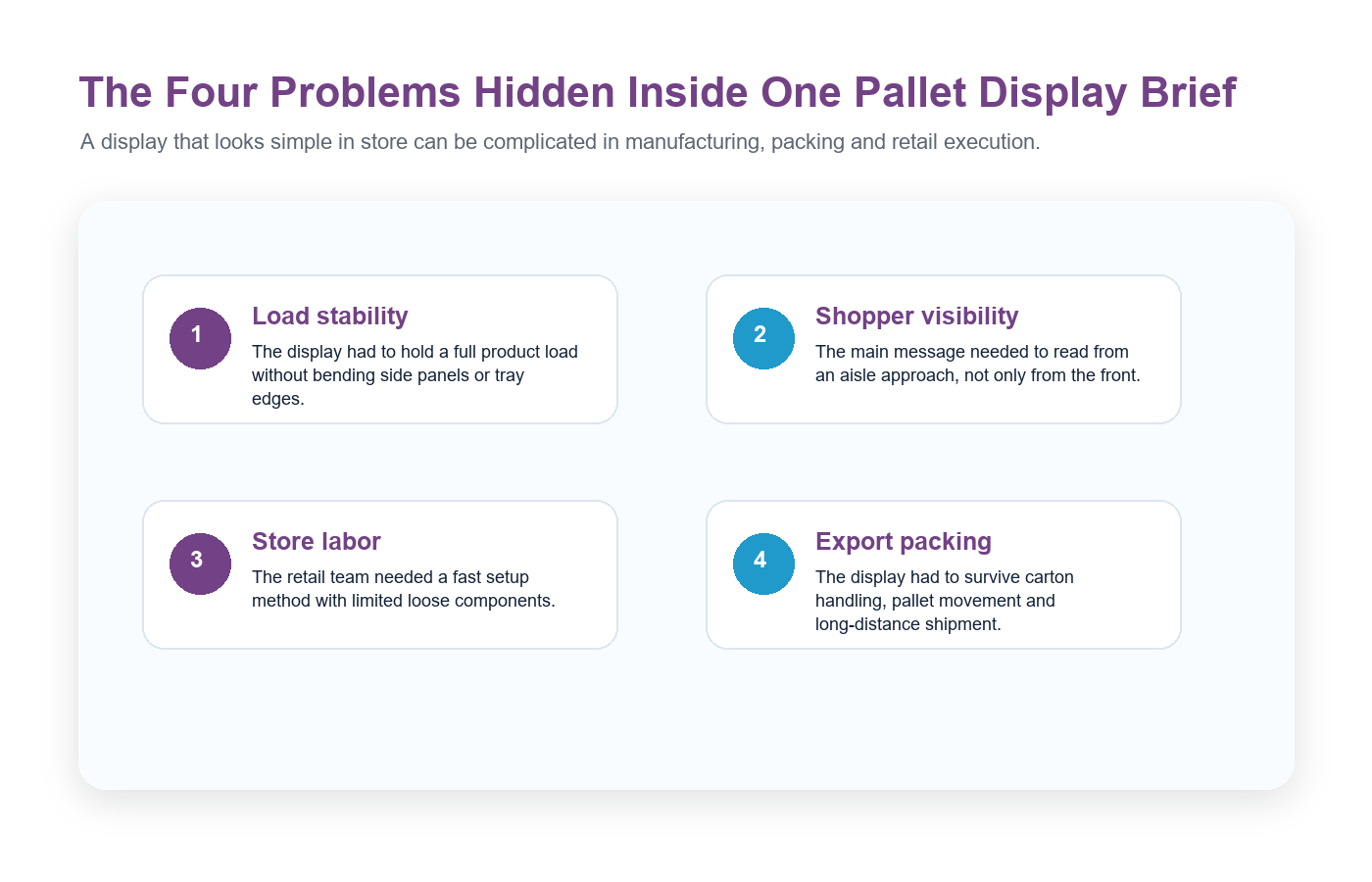
The first risk was load stability. A pallet display looks large and strong, but corrugated board behaves differently depending on flute direction, board grade, panel height, tray depth and how the product weight travels through the structure. If the load path is wrong, the display may look acceptable during an empty sample review but begin to bow after products are loaded.
The second risk was shopper visibility. The buyer wanted a large visual block, but not every panel needed the same message. The front panel had to explain the product category quickly. The side panel had to help shoppers recognize the promotion from an angled aisle approach. The header needed a simple campaign cue. Too much information would make the display crowded; too little would make the retail space feel generic.
The third risk was store labor. A display that takes too long to assemble can lose support from retail teams. Holidaypacfactory therefore reviewed whether the display should ship flat packed, semi-assembled or prepared with pre-glued sections. For other high-volume retail programs, buyers can compare this decision with custom cardboard dump bin displays, which often use a different balance of product access and setup speed.
The fourth risk was export packing. A pallet display is not finished when the sample photo looks good. It still needs to survive carton handling, warehouse movement, sea or air shipment, destination unpacking and store preparation. Printed panels, corners and tray lips all need protection before mass production is approved.
3. Holidaypacfactory Solution: Build the Structure Before Polishing the Artwork
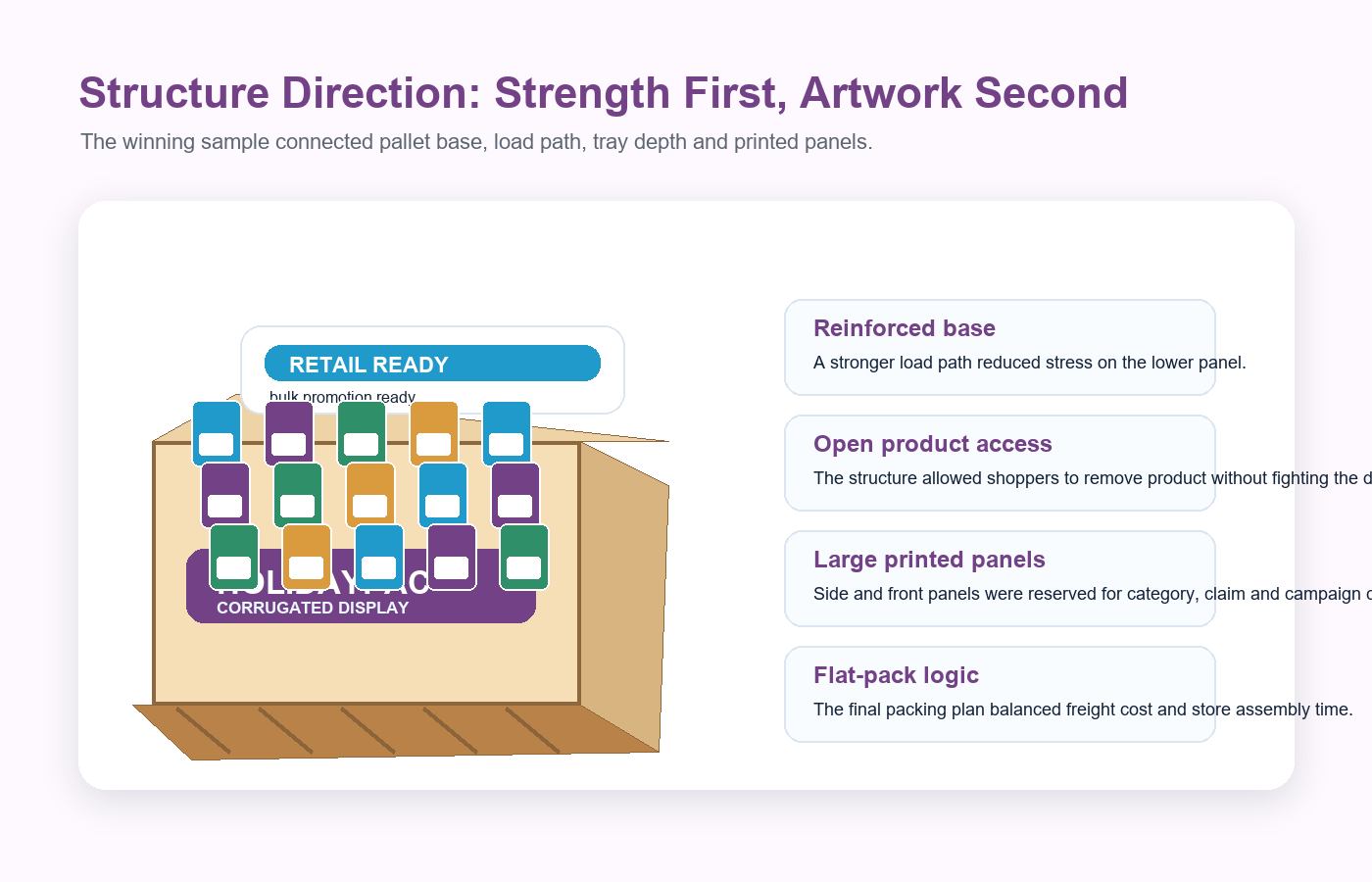
Holidaypacfactory began by separating the display into functional zones. The lower zone carried the load and needed enough compression strength to resist stress during handling. The product zone needed open access so shoppers could remove products without damaging the tray edges. The communication zone needed clean printed panels that could explain the offer from the front and side. The packing zone needed a practical method for shipment and store setup.
This order matters. Many display projects begin with a beautiful rendering, then discover that the structure cannot carry the product or that the artwork blocks access. In this case, the team worked from product data first: product dimensions, product weight, target fill quantity, expected retail footprint, display duration, assembly method and shipping path. Only after that did the design move toward panel graphics and campaign messaging.
The board direction and reinforcement plan were reviewed with the buyer before sample production. Holidaypacfactory considered whether the tray edges should be deeper, whether the side panels needed extra support, and whether the base should connect to the product load more directly. For lighter retail categories, a buyer might choose a large cosmetic dump bin display; for this heavier bulk display, the pallet format gave better visual mass and load logic.
The material direction also supported sustainability communication. Corrugated display packaging is widely used because it is paper-based, printable and often recyclable depending on coatings and local recycling systems. Industry sources such as the Fibre Box Association describe corrugated as renewable and recyclable when responsibly designed, while the U.S. EPA notes that corrugated boxes are among frequently recycled packaging products. Holidaypacfactory avoids treating this as a legal claim; instead, it helps buyers ask better material and coating questions before approving production.
4. Project Workflow: From Product Data to Export-Ready Production
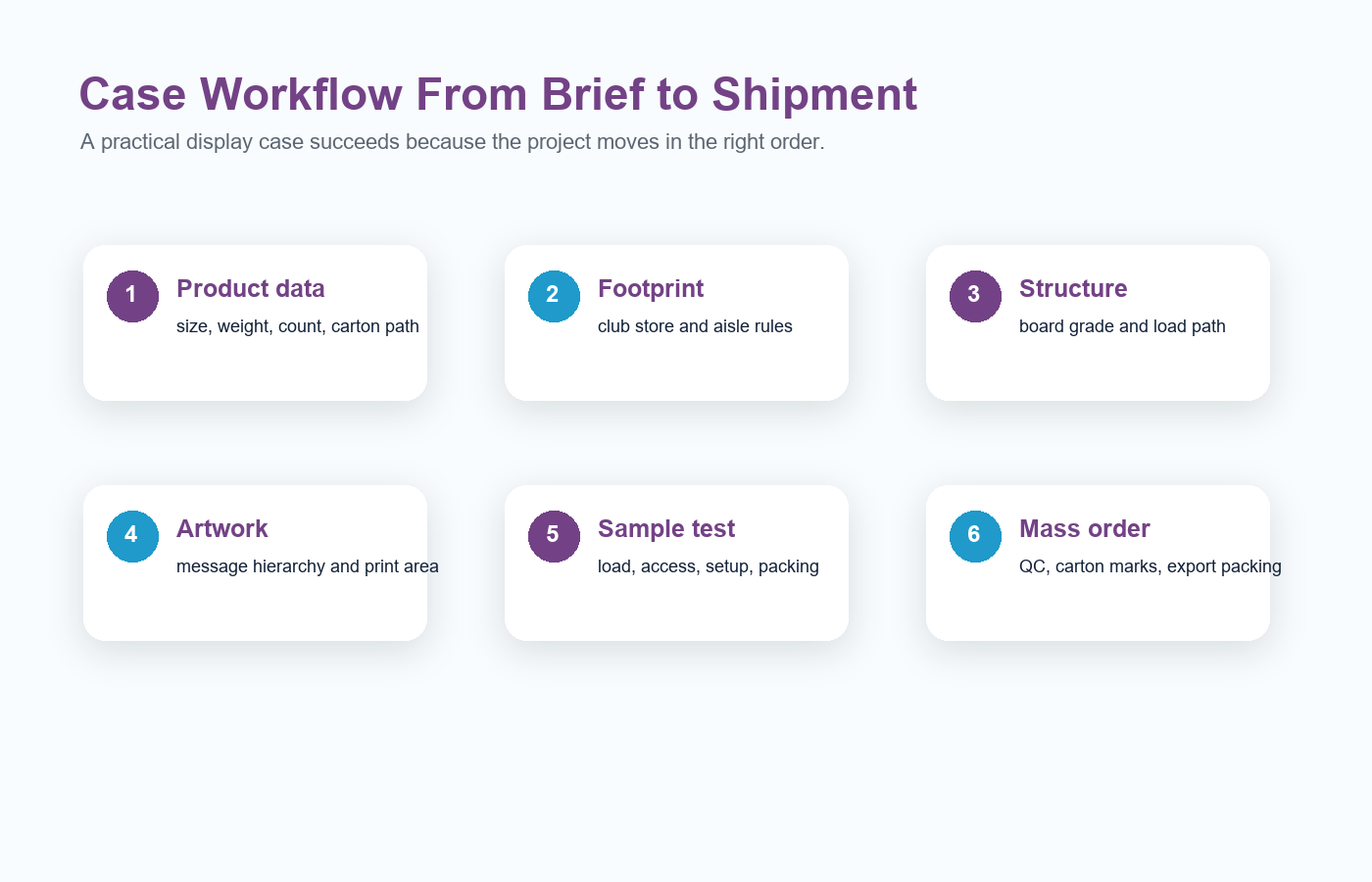
The first stage was product data collection. Holidaypacfactory asked for product dimensions, unit weight, packaging form, target quantity per display and preferred shopping direction. Without these details, a pallet display is only a visual guess. With these details, the factory can estimate where pressure will concentrate and how the shopper will interact with the display.
The second stage was retail footprint planning. Club-store and supermarket displays often have strict expectations for width, height, aisle position and visibility. The display needed to carry enough units to justify the floor space while still remaining readable and safe. The team reviewed how the display would appear from the front, side and diagonal approach.
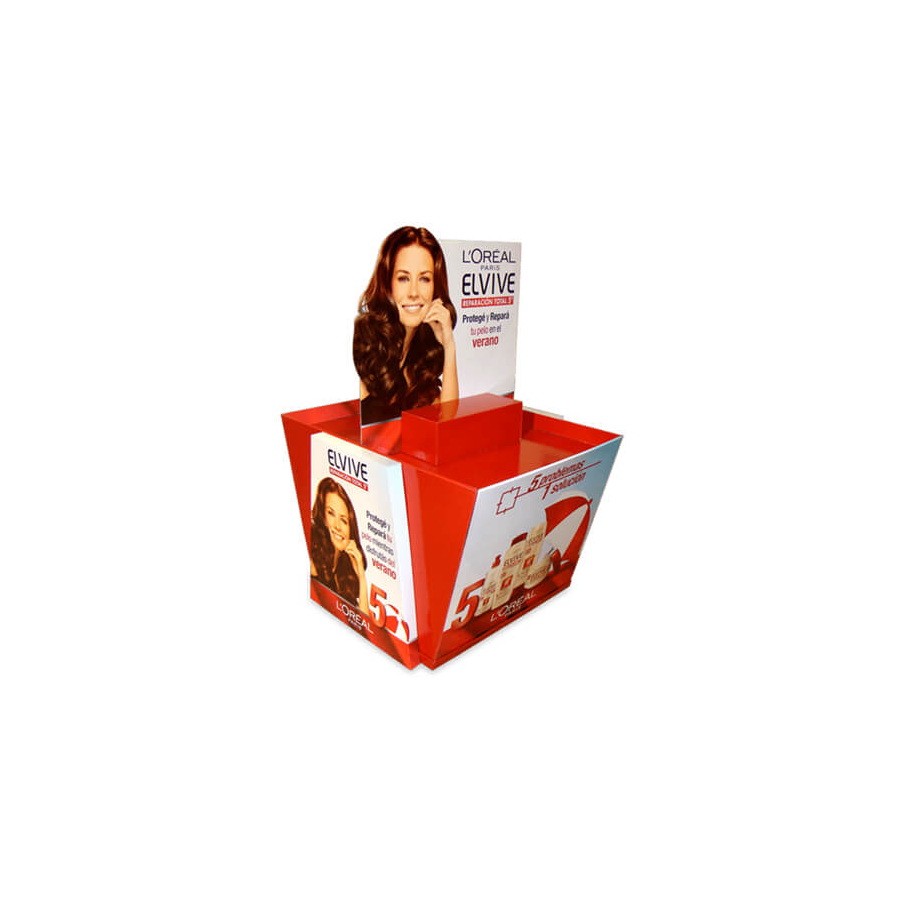
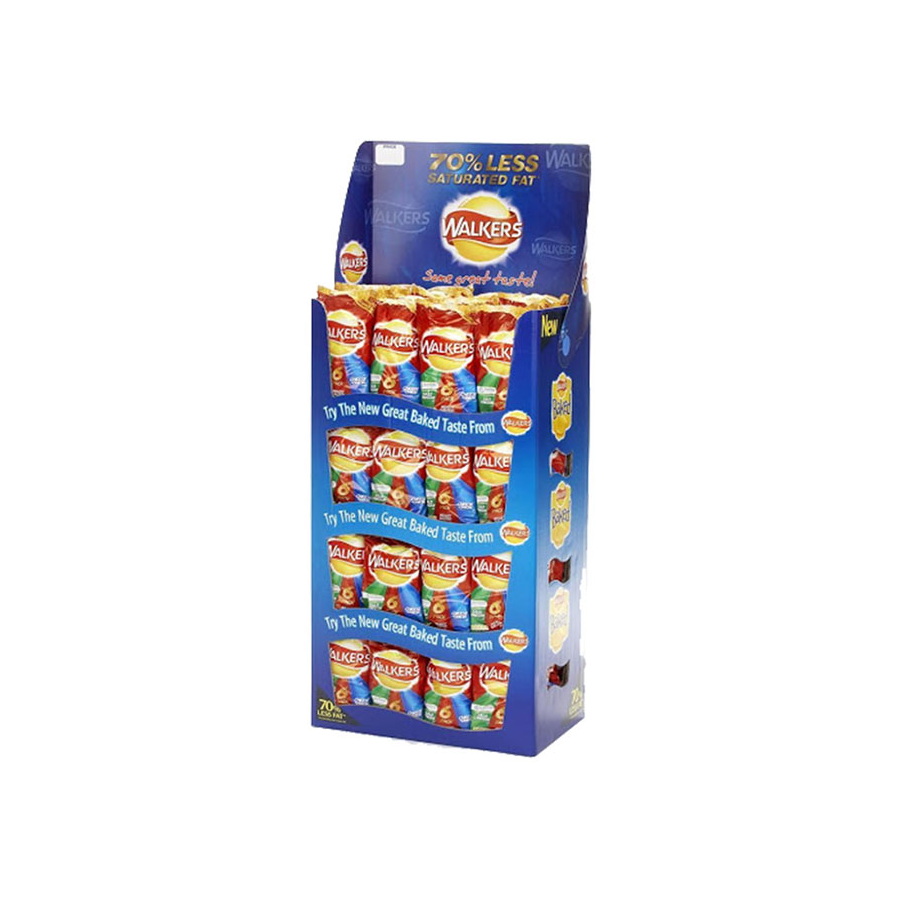
The third stage was structure development. The sample dieline considered load path, panel angle, tray depth, reinforcement and whether the display could be packed efficiently. If the buyer had wanted a narrower snack aisle unit, Holidaypacfactory might have recommended a corrugated chips case stacker display. For this case, the wider pallet format gave better bulk-selling impact.
The fourth stage was artwork. Rather than filling every surface with slogans, the team assigned a purpose to each panel. The front panel carried the strongest retail message. The side panel supported visibility from passing traffic. The header created a category cue. This made the display feel intentional instead of noisy.
The fifth stage was sample testing. The buyer could review loaded appearance, panel readability, store setup steps and carton packing. The final stage was mass order control: print color, cutting accuracy, carton marks, packing sequence and production photos before shipment.
5. Sample Testing: The Display Was Approved by Use, Not by Appearance Alone
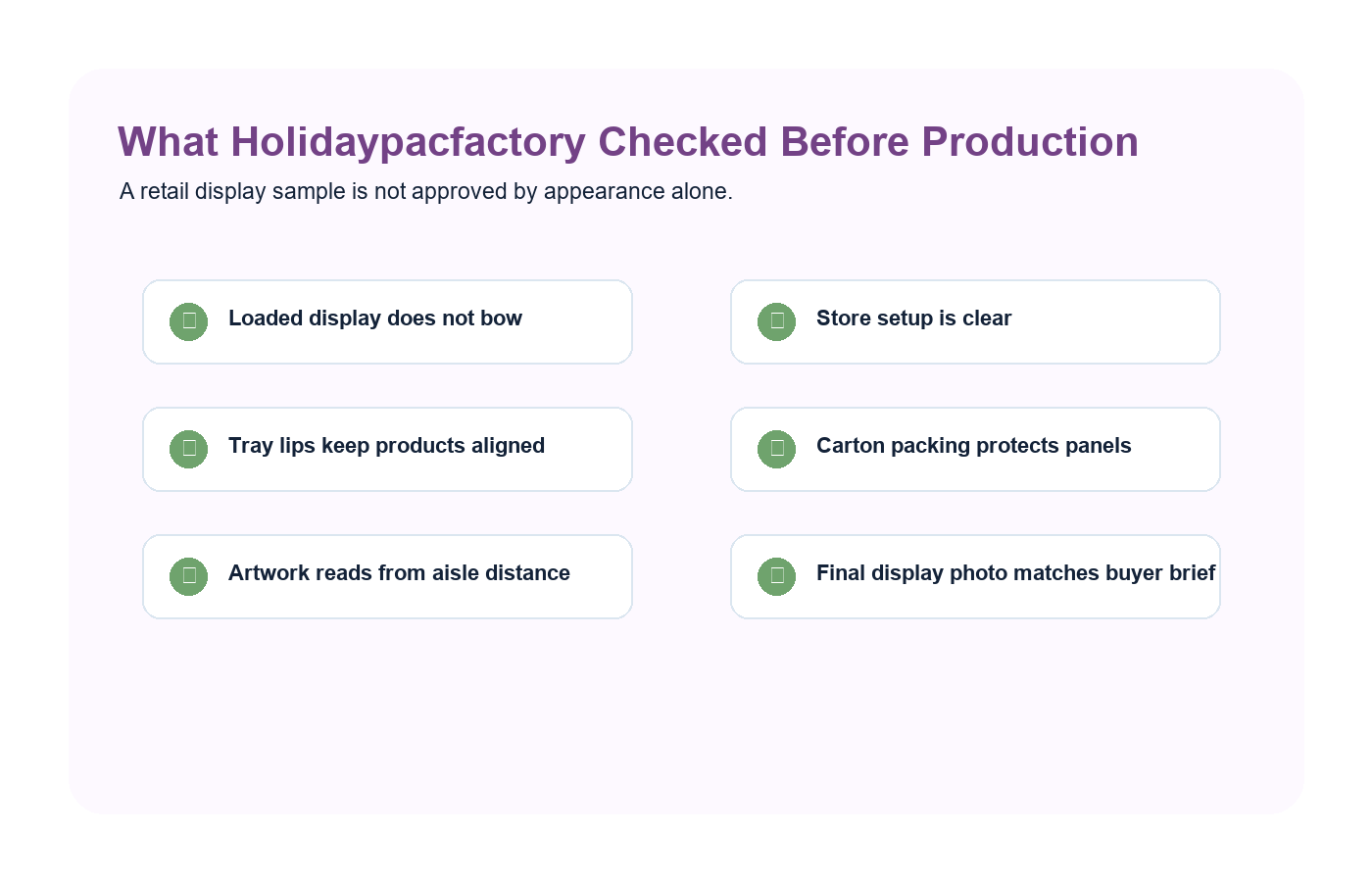
A retail display sample should not be approved only because it looks attractive in a studio photo. Holidaypacfactory checked whether the loaded display stayed stable, whether tray lips kept products aligned, whether shoppers could access the products naturally, and whether the printed panels still looked clean after handling.
The buyer also reviewed setup logic. Store teams should not need to guess how to assemble the display. If a display needs a complicated sequence, the factory should simplify the construction or provide clearer instructions. In this case, the packing method was designed to reduce loose parts and protect the printed surfaces.
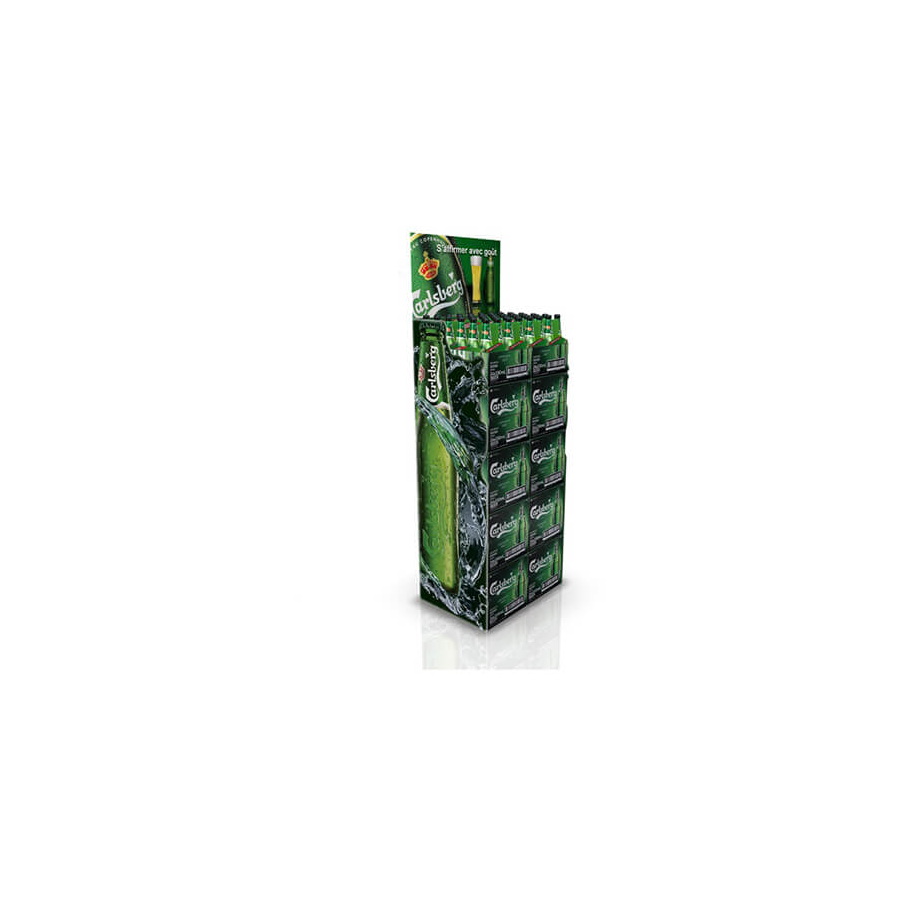
The quality review included carton protection. Long-distance export can damage corners, edges and printed faces if the pack is not planned carefully. Holidaypacfactory checked whether the display needed corner protection, inner support, clear carton marks or staged packing. For beverage-oriented bulk projects, buyers can compare a similar operational logic with our custom beer case stacker display.
The final approval was based on practical use: the display carried the product, communicated clearly, could be handled by store teams and could be shipped with a reasonable packing method. That is the difference between a display rendering and a retail-ready display solution.
6. Result: A Repeatable Retail Display System, Not a One-Time Decoration
The final outcome was not only one corrugated pallet display. The buyer gained a repeatable retail display system: a controlled structure, approved board direction, panel artwork logic, packing method and sample testing notes. This is valuable because many retail buyers need seasonal repeats, regional variations or related product-family displays later.
The display also helped the buyer speak more clearly with internal teams. Marketing could understand where the campaign message would appear. Procurement could understand board and packing choices. Logistics could understand carton and pallet requirements. Store teams could understand how the display would be set up. A strong packaging supplier connects these conversations instead of leaving each team to solve problems separately.
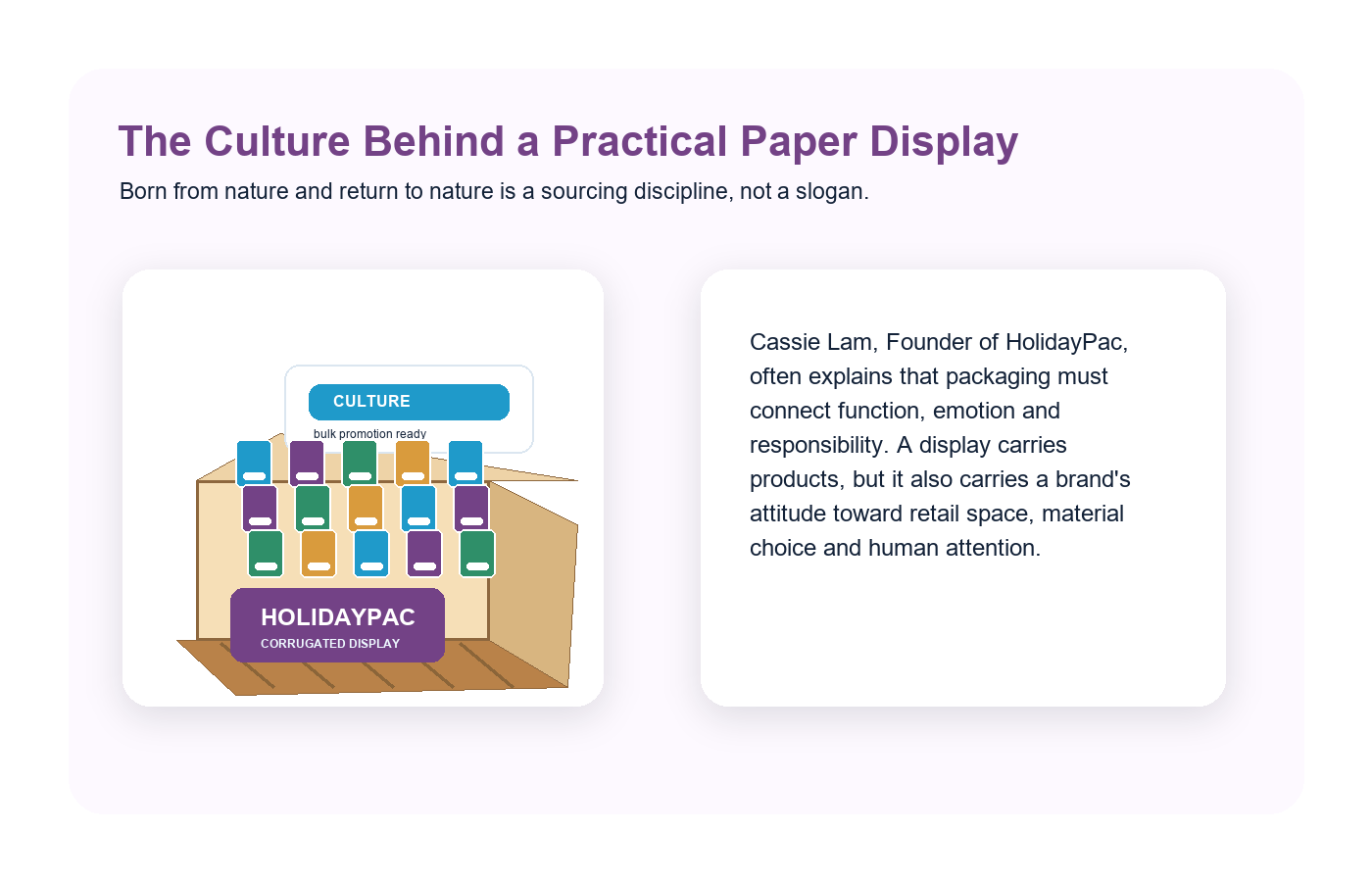
Holidaypacfactory’s founder perspective also shaped the case. Cassie Lam, Founder of HolidayPac, has 20 years in foreign trade and 16 years in packaging. She often explains that packaging carries both function and culture. In Chinese thought, harmony between people, objects and nature is not abstract; it is visible in how materials are chosen, how a product is presented and how waste is reduced. HolidayPac’s value, Born from nature and return to nature, means paper packaging should be practical, beautiful and responsible enough to serve real commerce.
For buyers, the lesson is straightforward. A pallet display should not be purchased as a photo. It should be developed as a working retail object. The right factory partner asks about product load, store footprint, print hierarchy, setup method, packing protection and repeat-order control before talking about final decoration.
If your team is planning a bulk retail launch, a club-store promotion, a supermarket aisle display or a private-label campaign, Holidaypacfactory can help turn the project from a rough display idea into a manufacturable corrugated solution. Related display formats such as one-side cardboard hook displays, 5 tier snack FSDU display stands and pet food floor display racks can also be reviewed when the retail format needs a different footprint.
7. Buyer Checklist: What to Send Before a Pallet Display Quotation
For a new pallet display project, the most helpful information is not the artwork file. It is the product data. Holidaypacfactory asks buyers to send product dimensions, product weight, product pack photos, target number of units per display and whether the goods will be loaded at the factory, warehouse or store. These details decide whether the structure should use deeper trays, stronger side support, a lower load height or a simplified replenishment opening.
The second part of the brief is retail context. Buyers should share the store type, target footprint, campaign duration, expected viewing angle and whether shoppers will approach from one side or several sides. A club-store display may need stronger block impact, while a supermarket aisle display may need better side readability. A warehouse retail lane may care more about setup speed and durability than delicate finishing.
The third part is printing and claim control. A pallet display has large print areas, but that does not mean every panel should carry every message. Buyers should prepare logo files, brand color references, product photography, campaign headline, required warnings and retailer rules. Holidaypacfactory can then organize message hierarchy so the display remains readable from distance.
The fourth part is packing preference. The same structure may be shipped flat packed, semi-assembled or pre-filled depending on freight budget and store labor. A beautiful display can become expensive if the packing method is decided too late. Buyers should discuss carton size limits, palletization, spare parts, instruction sheets and labeling requirements before mass production.
A buyer who prepares this information early often receives a better sample faster. The factory can quote more accurately, reduce revision cycles and avoid designing a display that looks good but does not fit the real selling environment.
8. Common Mistakes This Case Helped the Buyer Avoid
One common mistake is approving an empty display. Empty corrugated structures can look strong because no real load is stressing the board. Holidaypacfactory encourages buyers to test the sample with real or equivalent product weight. This reveals whether the trays bend, whether side panels bow and whether the base remains stable when the display is moved slightly.
Another mistake is treating artwork as decoration only. In retail, artwork is part of the user experience. If the headline is hidden by product, if the side panel cannot be read from the aisle, or if the offer is too small, the display loses selling power. This case used a simple hierarchy: category cue, brand block, product message and side visibility.
A third mistake is forgetting the store team. If assembly takes too long or loose parts are confusing, the display may be placed incorrectly or not used at all. The sample review therefore included setup logic. Holidaypacfactory considered whether sections could be pre-glued, whether parts needed labels and whether the final display should include simple assembly guidance.
A fourth mistake is ignoring export protection. Printed corrugated panels can be scuffed, crushed or bent during shipment. The display is only retail-ready if it arrives with the printed areas intact. The packing method in this case was reviewed as part of the product, not as an afterthought.
A fifth mistake is changing structure after artwork approval. Structural changes can affect panel size, print alignment and carton packing. Holidaypacfactory prefers to lock the functional structure before final artwork, then use the artwork stage to refine message and color rather than repair engineering issues.
9. MOQ, Reorder Control and Seasonal Version Planning
After the first campaign, the buyer should not restart the project from zero. Holidaypacfactory recommends keeping a controlled display file that includes board grade, flute direction, finished dimensions, dieline version, print method, carton packing, assembly notes and approved sample photos. This makes future quoting faster and reduces the risk of changing a structure that already passed load and retail review.
MOQ planning should also be realistic. A lower quantity may be useful for a test market, but the unit cost, print setup and packing labor can be higher. A larger quantity may reduce unit cost, but it increases warehouse pressure if the retail plan is not fixed. The buyer should connect MOQ with campaign calendar, store count, product launch timing and reorder probability before approving mass production.
Seasonal versions are common for club-store and supermarket promotions. The same structural base can often support different graphics for holiday, back-to-school, summer, pet, beverage or snack campaigns. When the structure is stable, design changes can focus on color, message hierarchy and product photography instead of rebuilding the engineering logic every time.
This is one reason Holidaypacfactory treats custom display work as a system. The goal is not only to ship one attractive display. The goal is to help the buyer create a repeatable retail asset that can be measured, improved and reused across campaigns while still keeping the brand presentation fresh.
FAQ for Corrugated Pallet Display Buyers
What information should a buyer prepare before requesting a pallet display quote?
Prepare product dimensions, unit weight, target fill quantity, retail footprint, artwork direction, expected campaign duration, packing preference and any retailer display rules.
Can a corrugated pallet display carry heavy products?
Yes, but the structure must be designed around real product load, board grade, flute direction, reinforcement and base support. Empty sample appearance is not enough.
Can the display ship flat packed?
Many corrugated pallet displays can be flat packed or semi-assembled, depending on product weight, store labor, freight cost and the launch schedule.
How does Holidaypacfactory review sample quality?
Holidaypacfactory reviews load stability, product access, panel readability, setup steps, carton protection and whether the sample matches the buyer’s retail use case.
Is corrugated display packaging recyclable?
Corrugated is generally paper-based and widely recycled in many markets, but buyers should confirm coatings, treatments and local recycling requirements for their specific project.
Reference Notes
Fibre Box Association: corrugated is sustainable
About the Author
Cassie Lam, Founder of HolidayPac, has 20 years of experience in international trade and 16 years in paper packaging. Her work connects Chinese and Western cultural understanding, practical export operations and paper-based packaging design. She believes packaging should help products travel safely, sell clearly and carry emotional value while respecting the idea that good paper packaging is born from nature and should return to nature responsibly.