Door to Door service
Welcome to Holidaypac Packaging Solutions Factory!

tiger@holidaypac.com

+86 136 5233 6188
Welcome to Holidaypac Packaging Solutions Factory!
tiger@holidaypac.com
+86 136 5233 6188
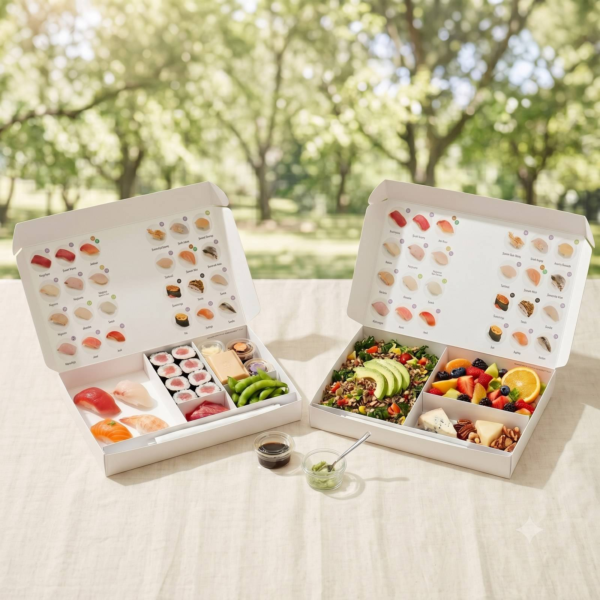
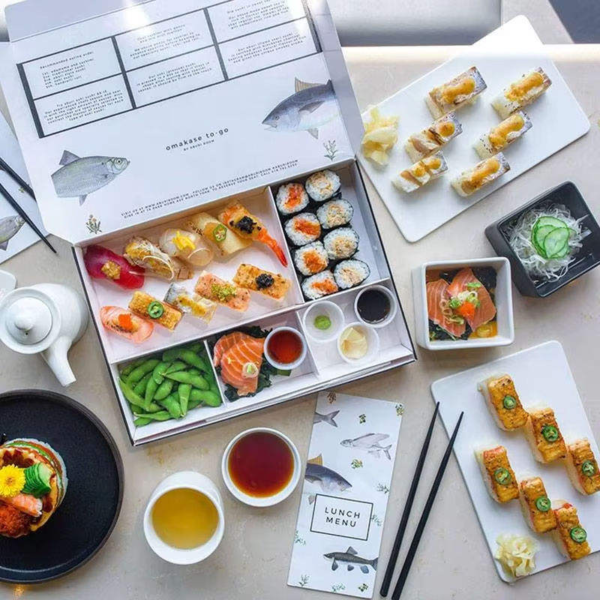
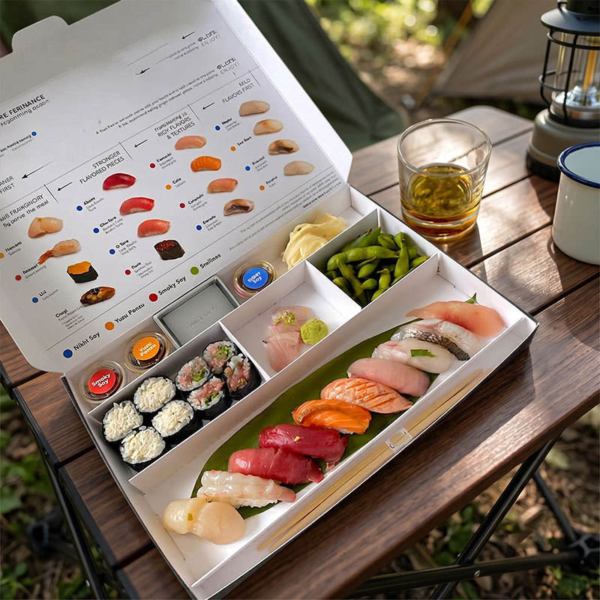
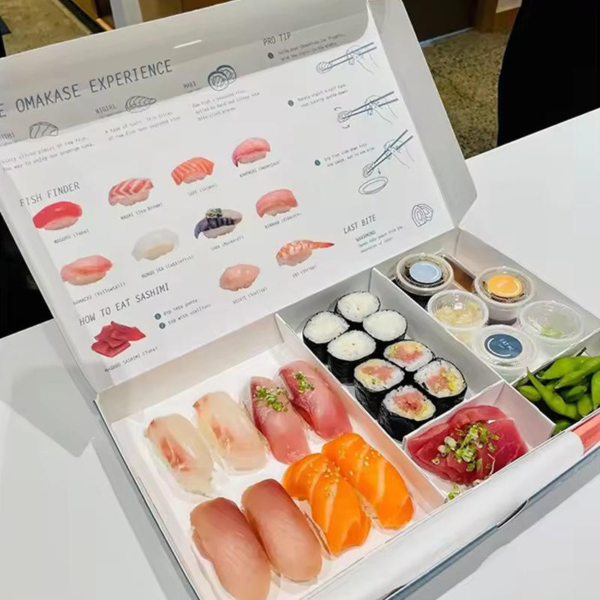
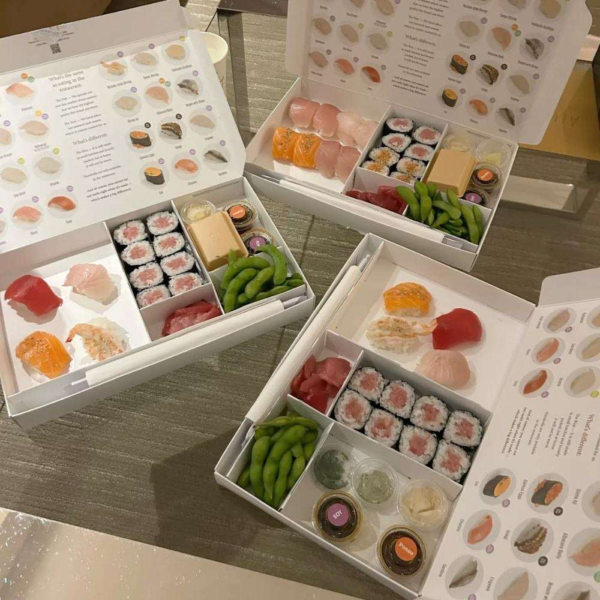
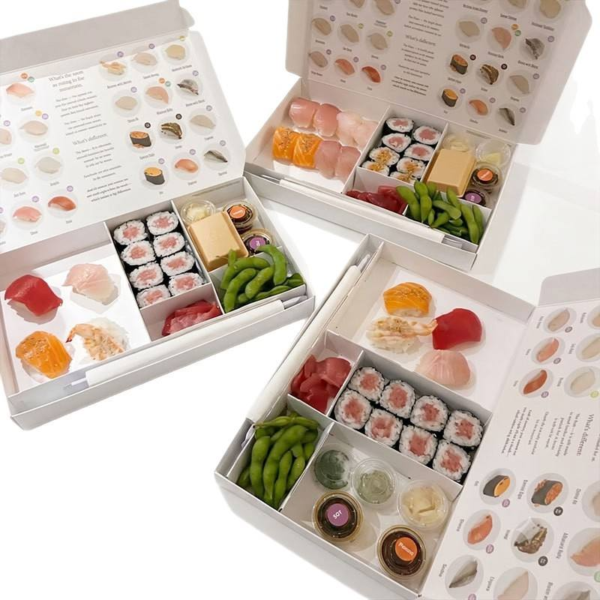
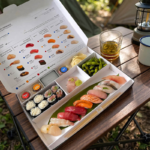
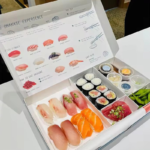
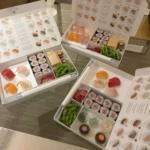
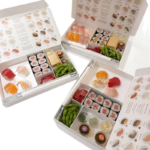
This wholesale custom white cardboard double sided printed omakase sushi box is built for premium fresh food programs that need a clean outer presentation and an informative printed interior. The lid can become a menu guide, tasting map or brand story panel, while the base protects sushi, rolls, sauces, salads, fruit and side dishes in organized compartments.
Holidaypacfactory can adjust the paperboard grade, lid structure, divider layout, print area, coating and finish around your real meal. It is a strong fit for omakase takeaway, catering, picnic meal sets, supermarket chilled programs and private-label fresh food boxes.
This wholesale custom white cardboard double sided printed omakase sushi box is designed for restaurants, catering teams, picnic meal brands and premium fresh food programs that want the package to teach, present and protect at the same time. The outside gives a clean white presentation, while the inside lid can carry a menu guide, tasting notes, product icons, brand story or service instructions that become part of the meal experience.
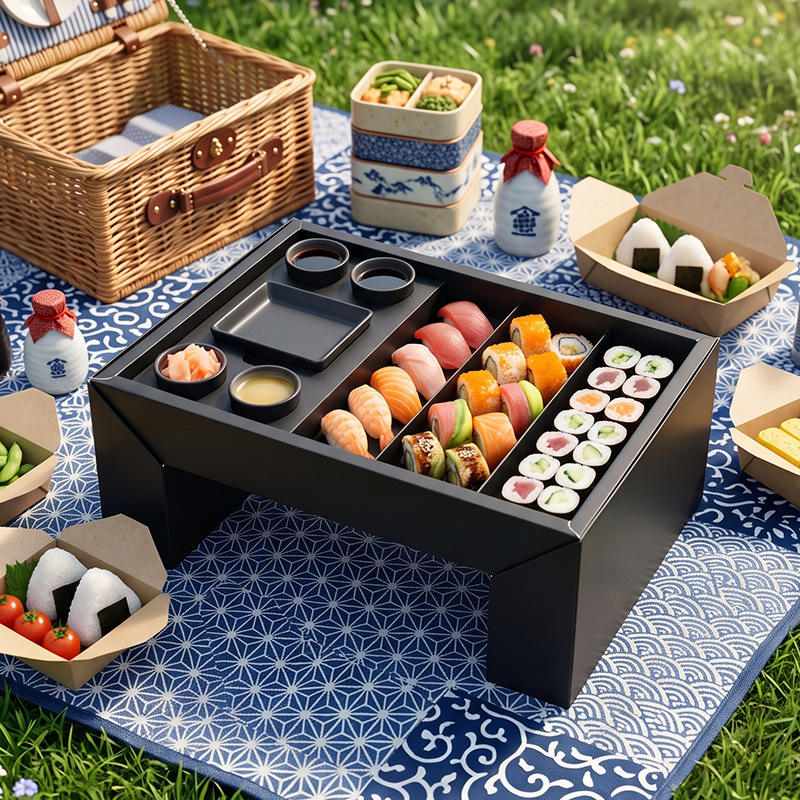
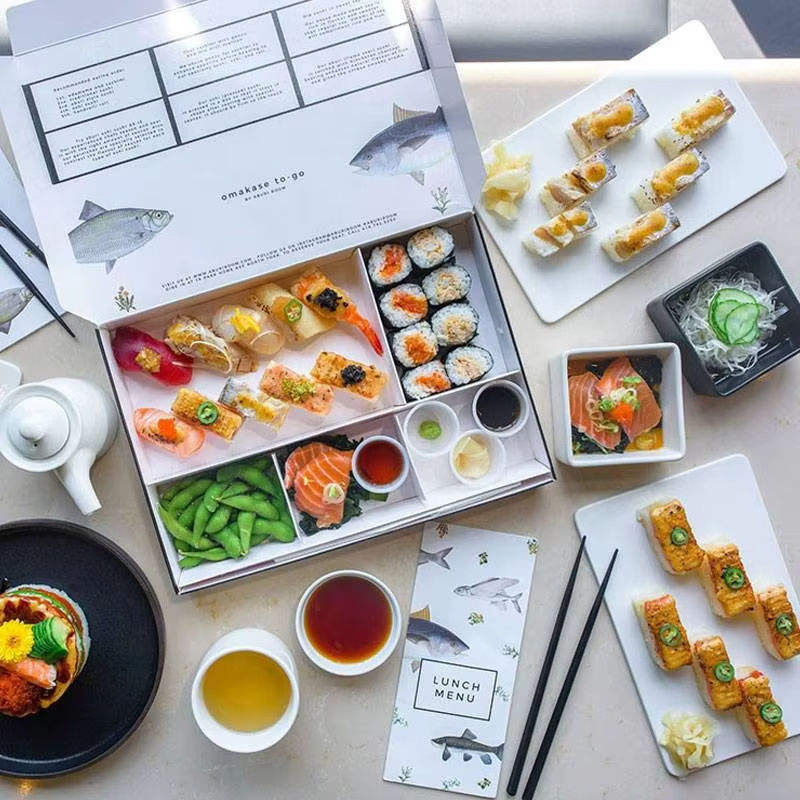
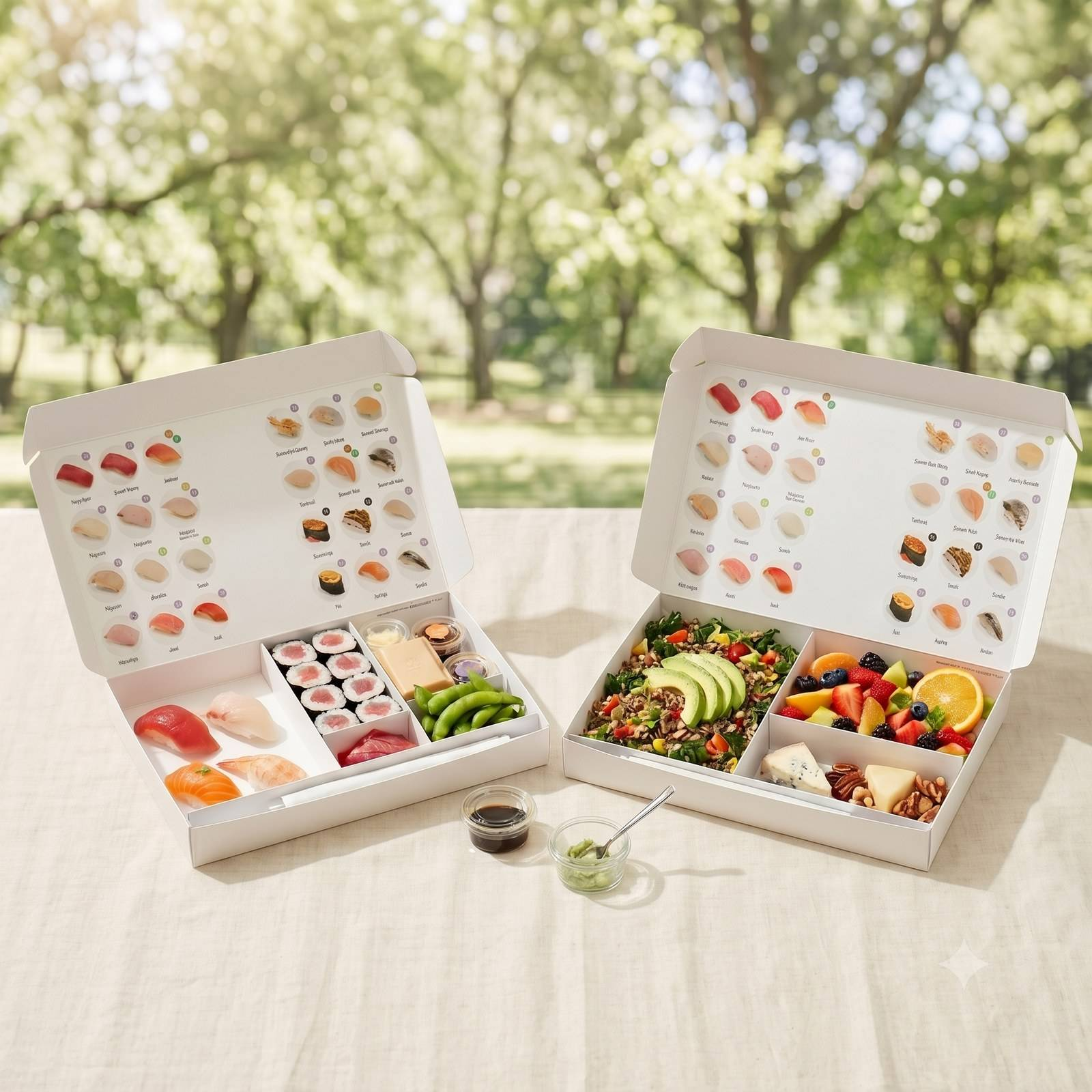
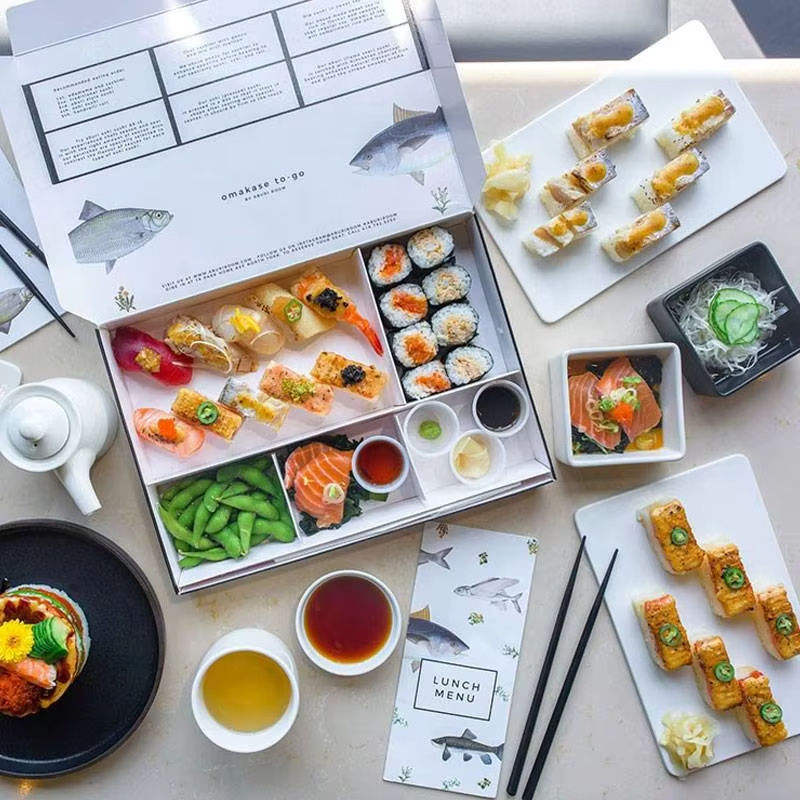
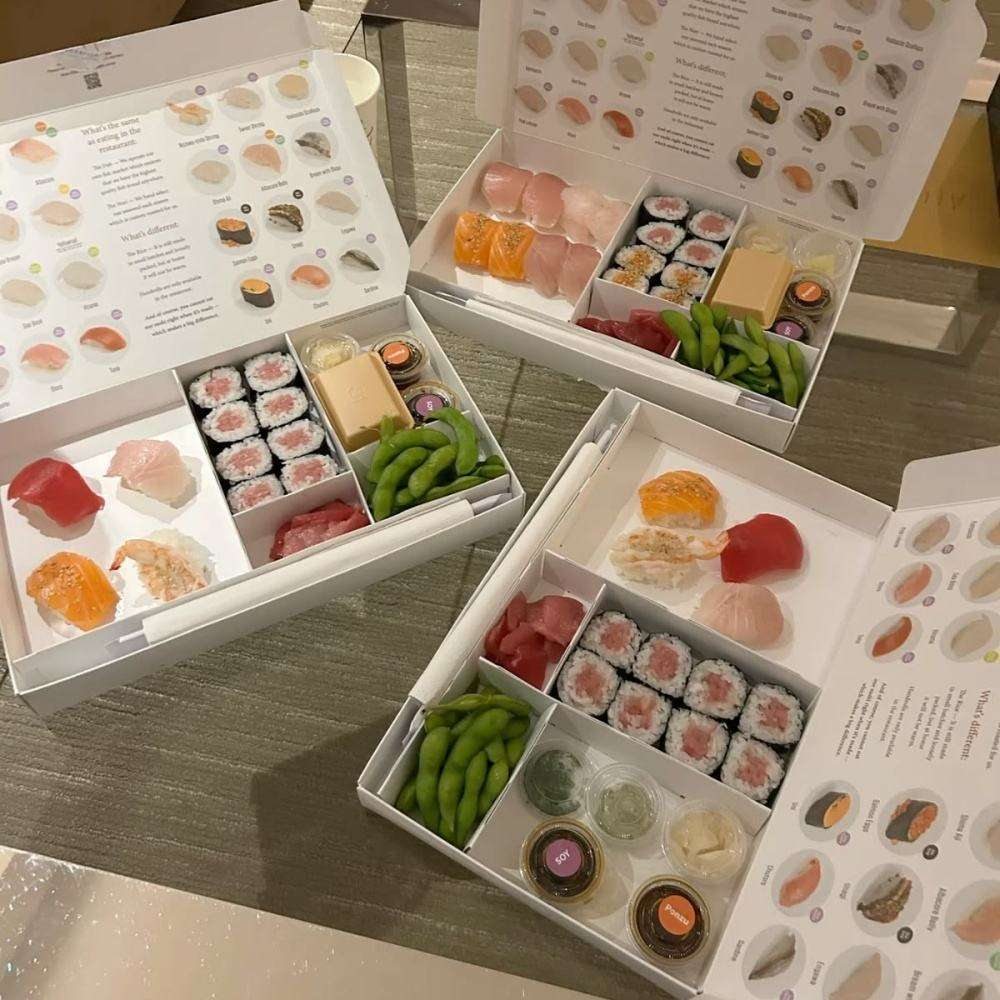
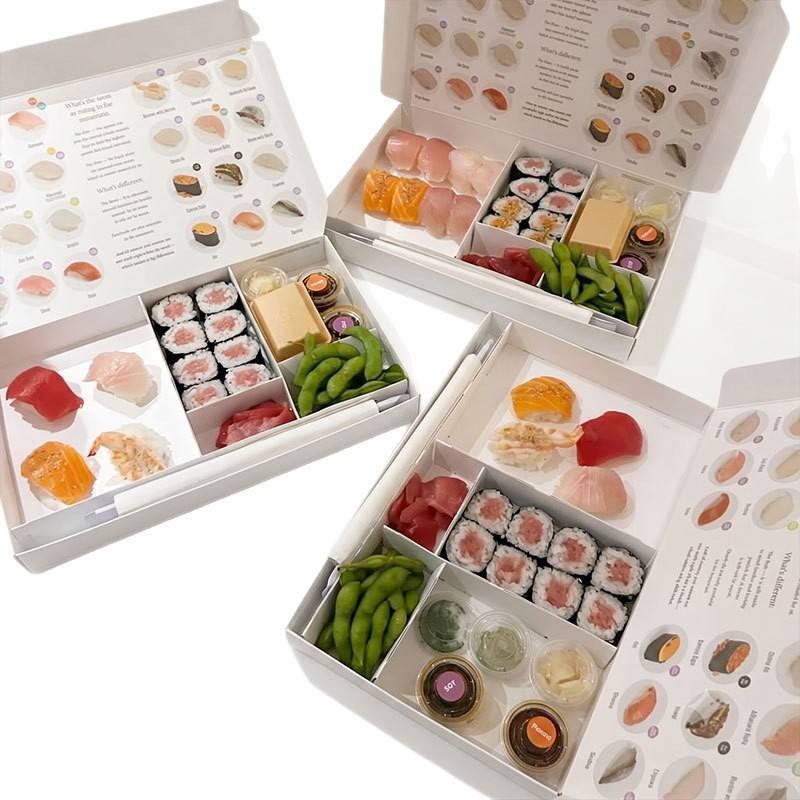
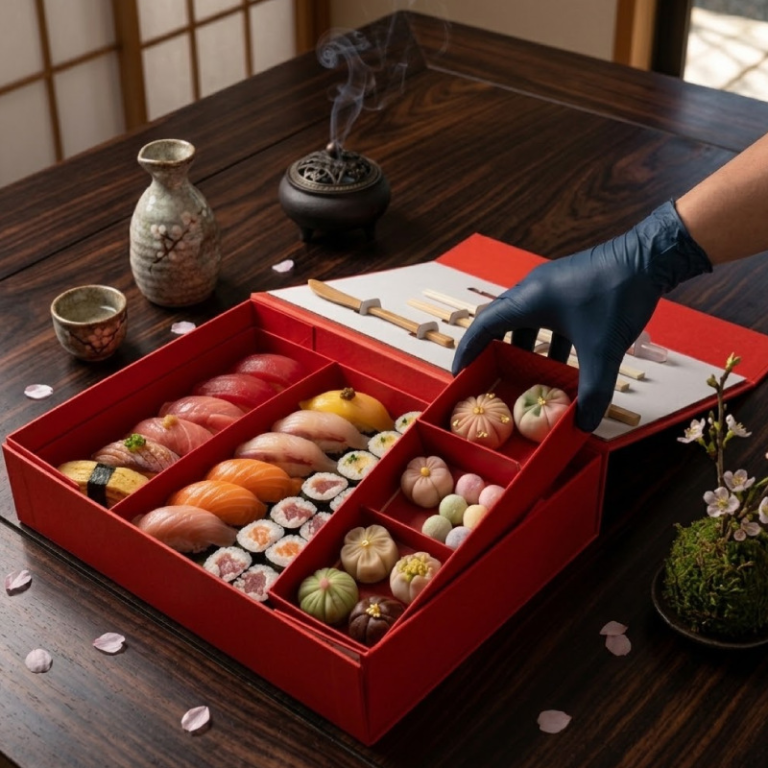
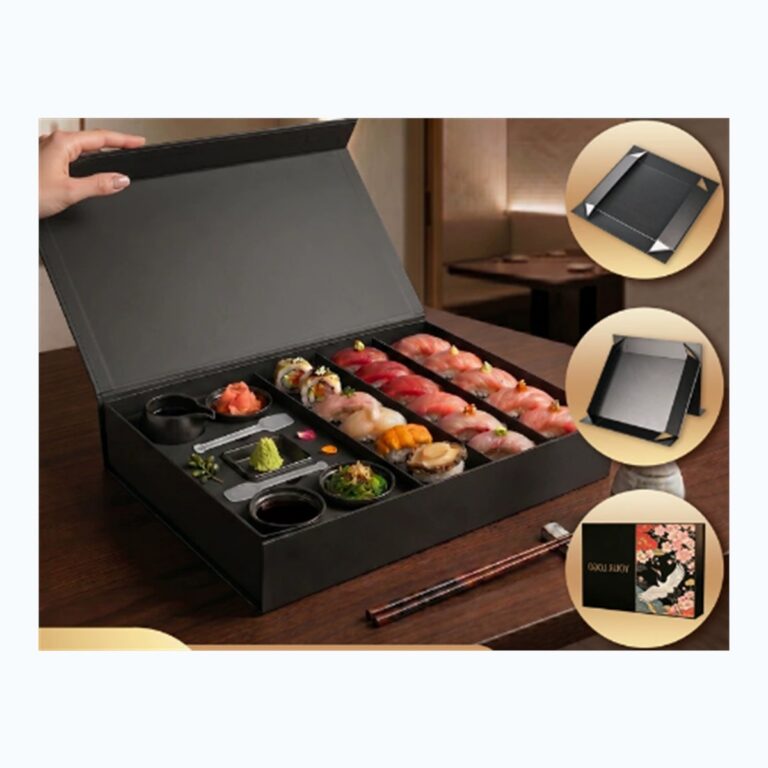
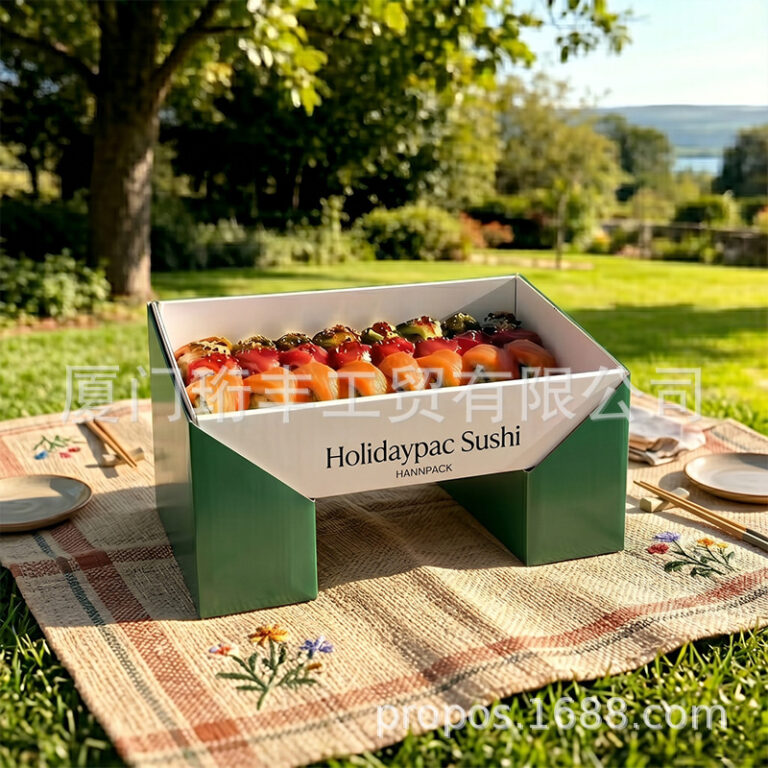
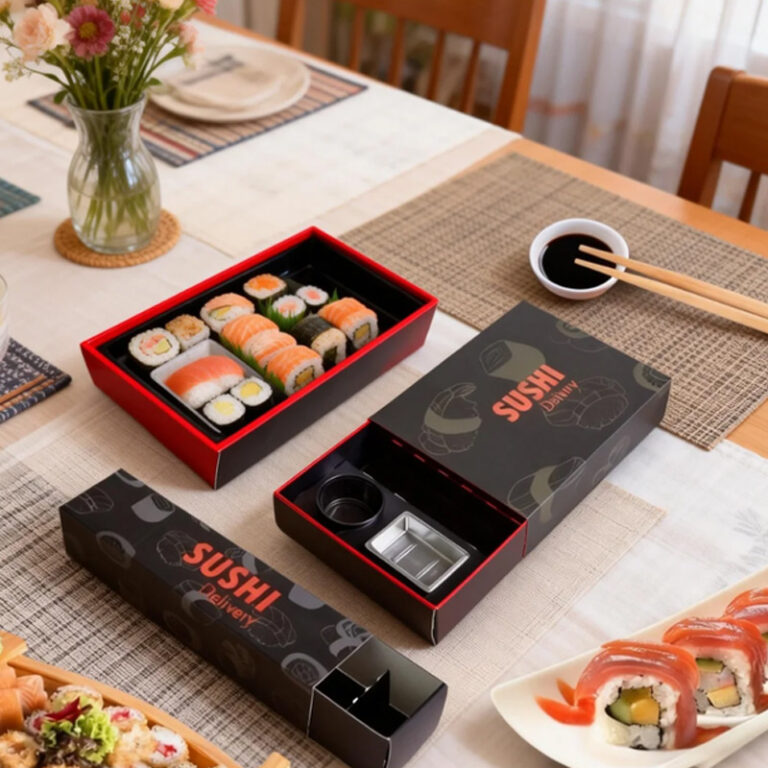
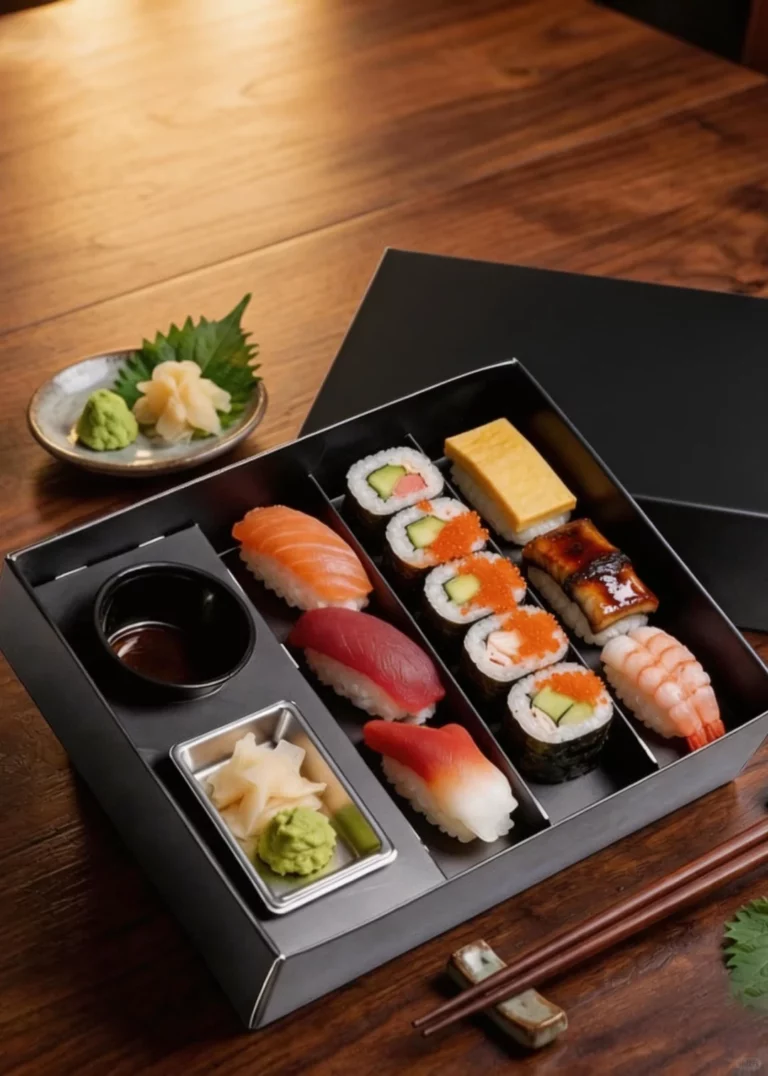
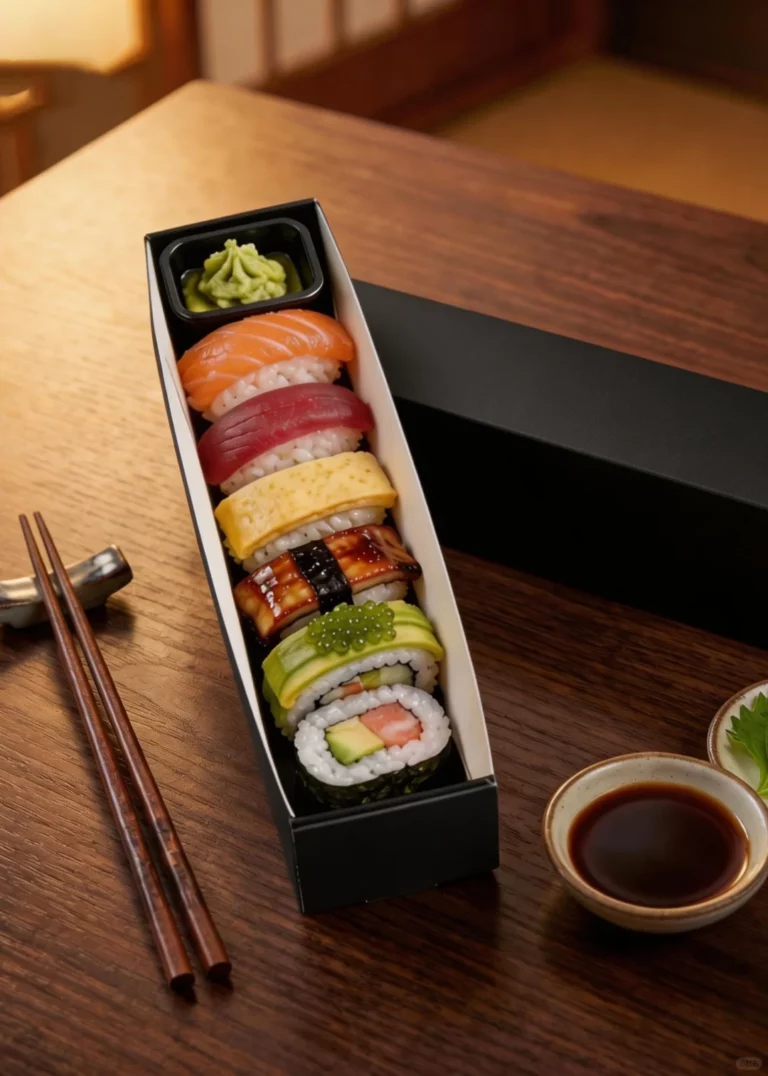
The reference images show a paperboard box used for sushi, rolls, condiments, edamame, salad, fruit and cheese assortments. That wide use range makes the structure attractive for omakase takeaway, chef-curated lunch sets, outdoor meals, event catering and retail meal kits. Instead of treating the lid as empty space, the buyer can turn it into a printed information panel that helps customers understand what they are eating and how the meal has been arranged.
Holidaypacfactory can adjust the box length, width, lid height, compartment layout, insert depth, board thickness and print finish around the menu. A sushi program may need narrow roll sections and sauce cup placement. A salad or fruit program may need larger compartments and a cleaner lid guide. A catering set may need stronger base support and clear item separation so the box still looks composed after transport.
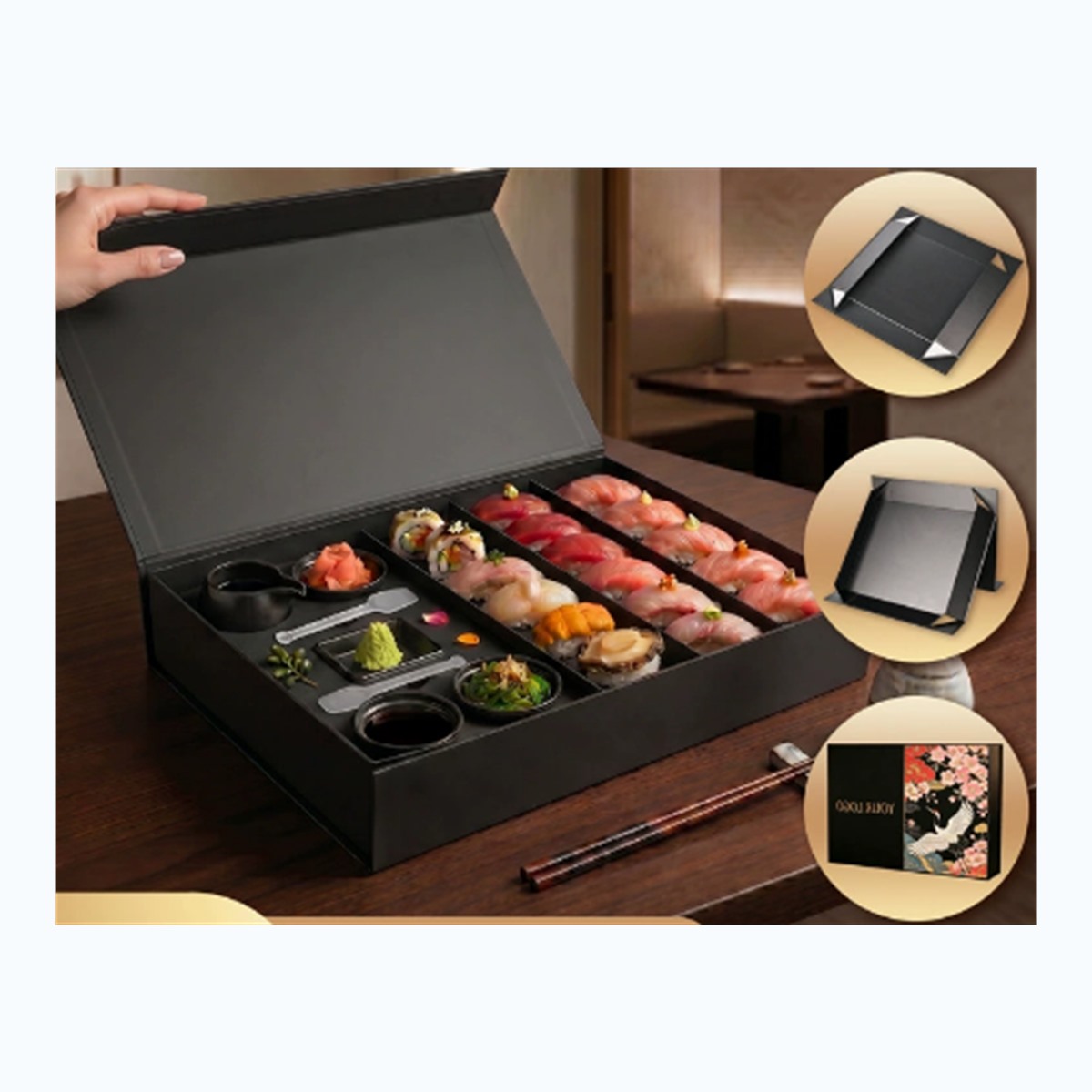
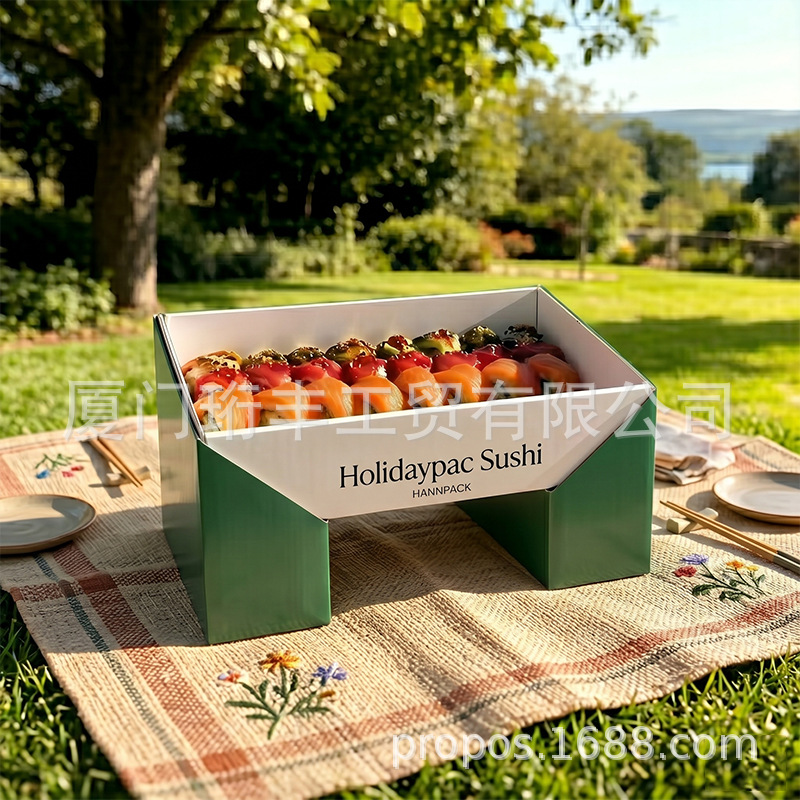
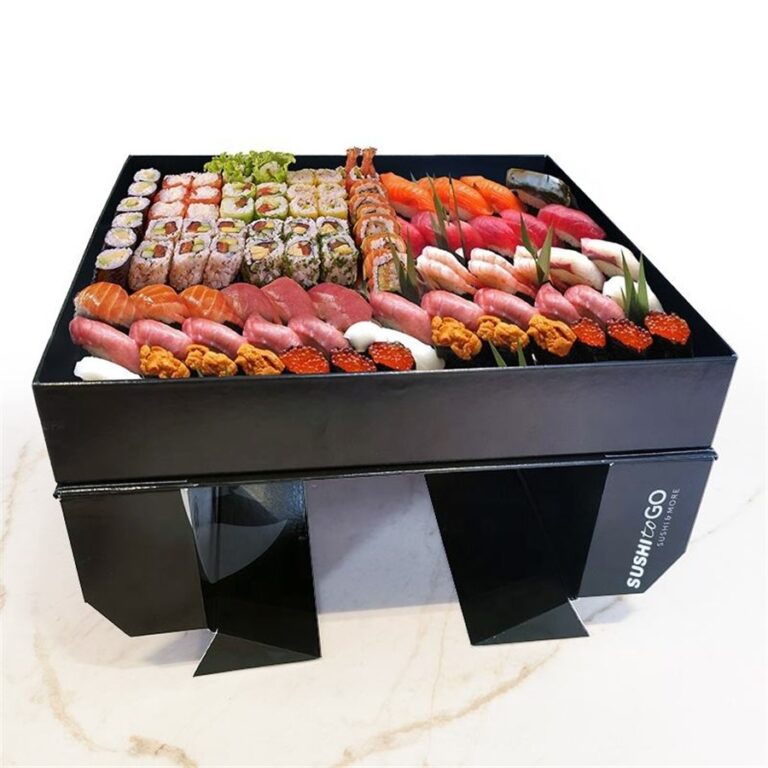
If you are comparing formats, the Custom Disposable Paper Flip Sushi Box page shows a simpler picnic flip structure, while the Biodegradable Luxury Disposable Sushi Packaging Box page shows a more compact black tray direction. This white cardboard version is stronger when the inside lid needs to become part of the brand experience.
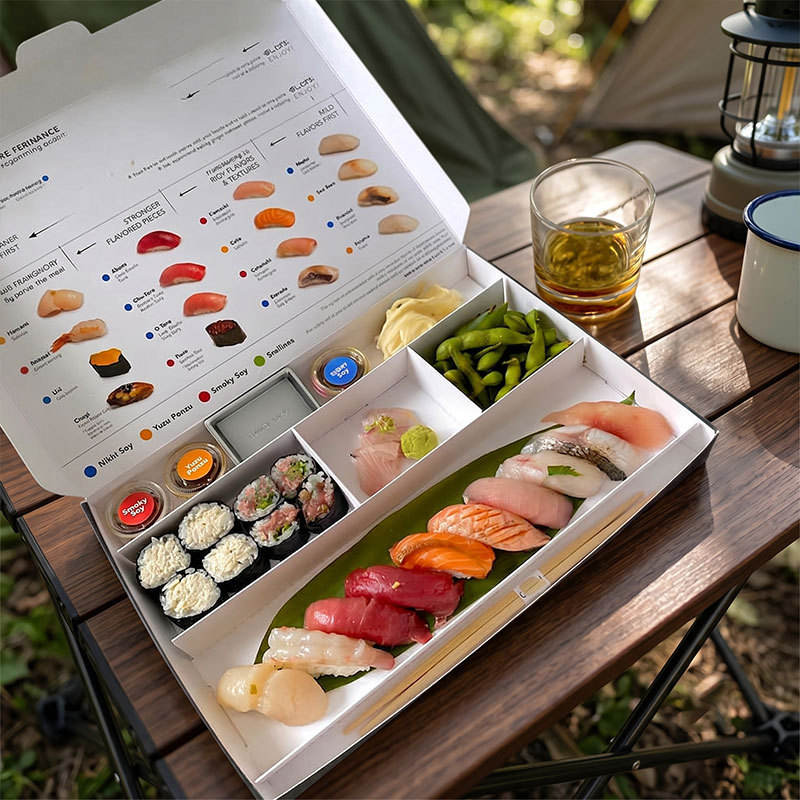
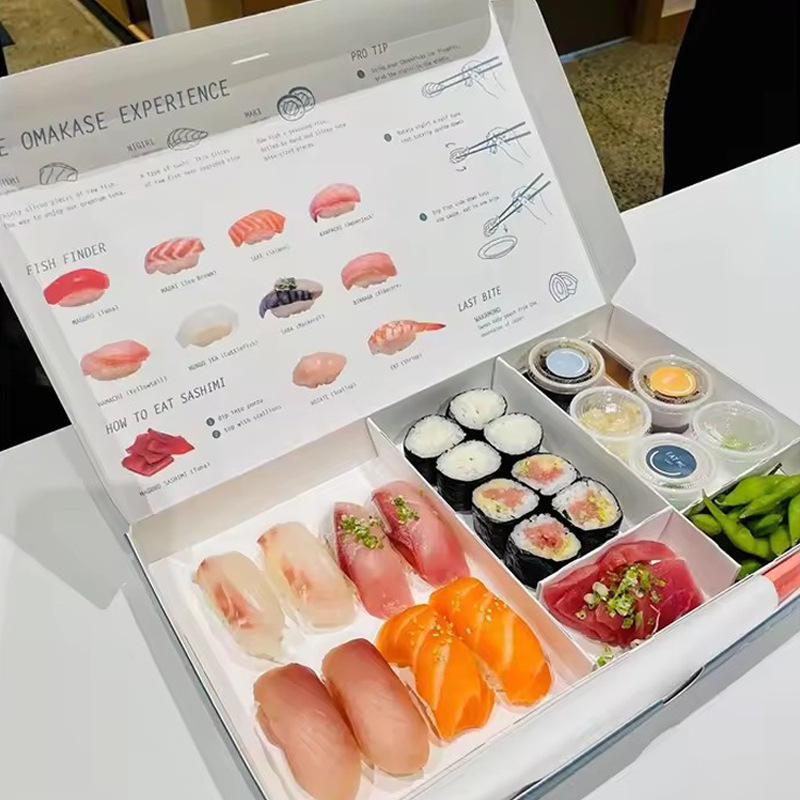
The most important feature of this product is the inside lid printing. When the customer opens the box, the printed panel can show sushi names, flavor notes, eating sequence, chef notes, allergen icons or a simple visual map. That detail turns the package from a disposable container into a small presentation tool. For omakase takeaway and tasting menus, this can be the difference between a meal that feels anonymous and a meal that feels guided.
Double sided printing also helps premium catering programs. A box may travel closed, but the experience begins when it opens. If the interior lid carries a thoughtful guide, customers can understand each portion without staff needing to explain every item. That is useful for office catering, hotel events, outdoor parties and brand activations where the meal may be opened away from the restaurant.
Artwork on the inside lid should be planned with restraint. Small icons, clean product names and enough open space are easier to read than dense text. The customer may open the box outdoors or under event lighting, so contrast and type size matter. Holidaypacfactory can help adjust the print layout so the guide looks useful rather than crowded.
The outside can remain very simple while the inside carries the storytelling. That creates a quiet premium effect: the package looks clean when delivered and becomes more informative when opened. It is a good strategy for brands that want packaging to feel polished without making the exterior too busy.
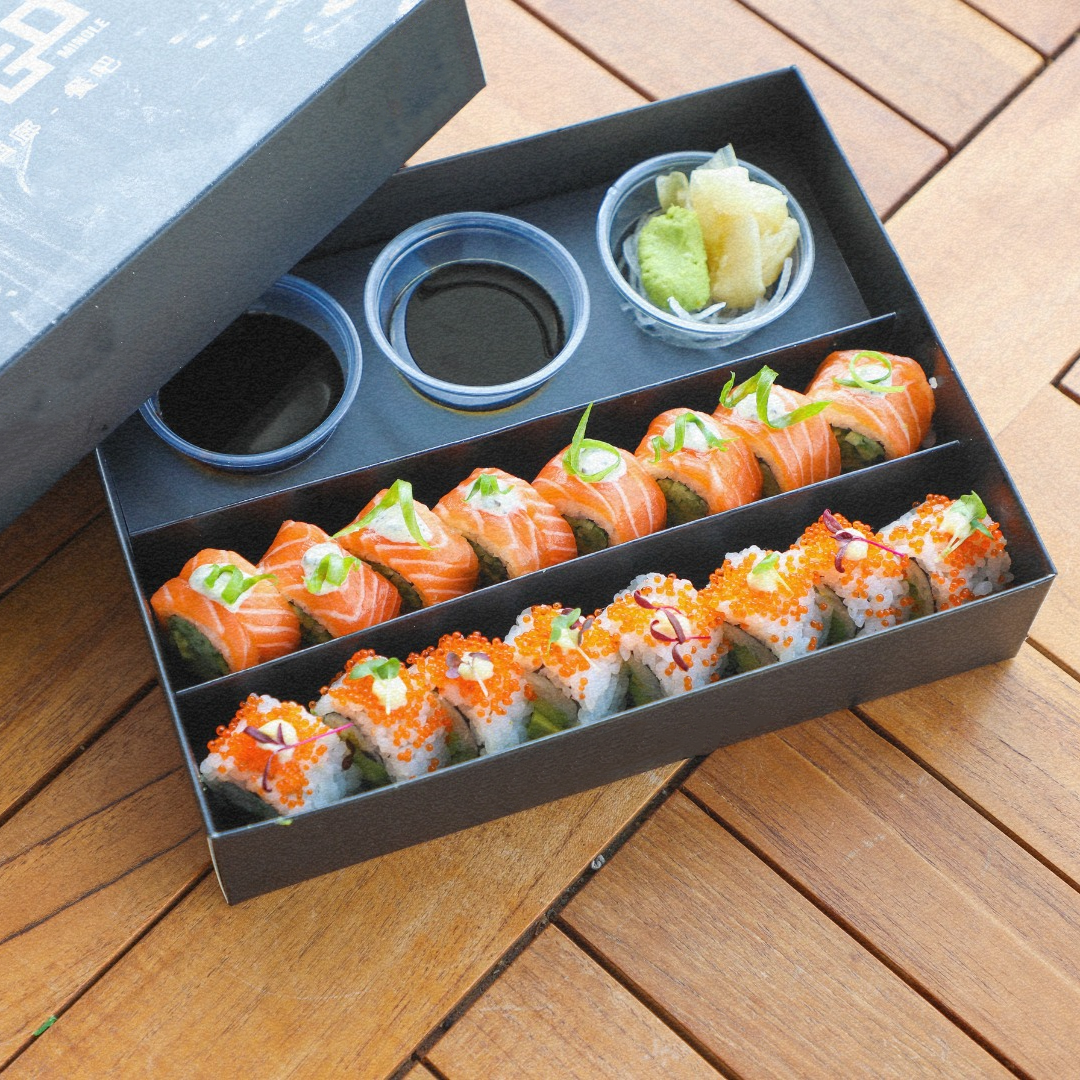
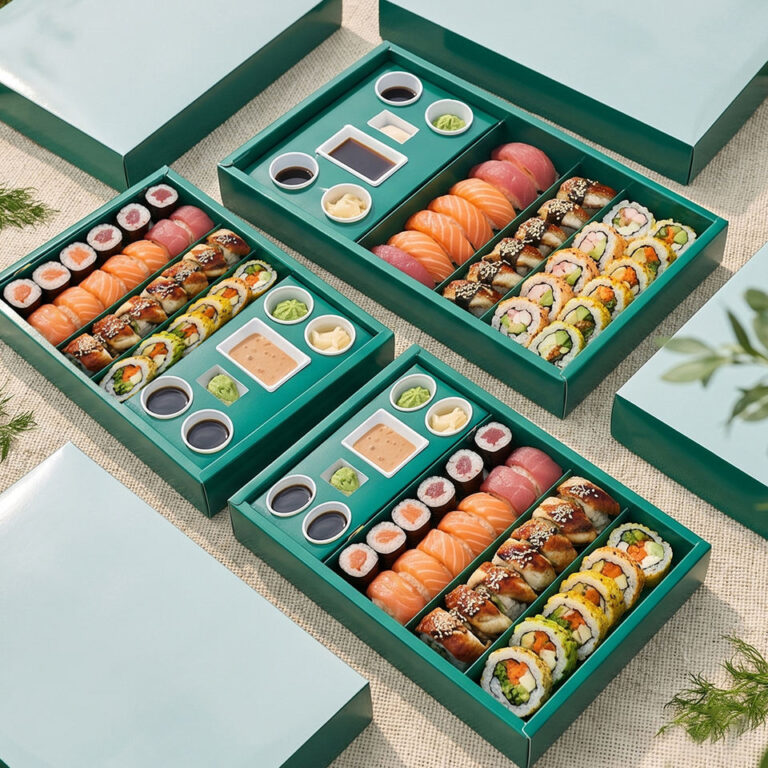
A successful omakase sushi box depends on the internal layout. The images show long channels for nigiri, smaller sections for rolls, areas for edamame or side dishes and small spaces for condiments. This kind of mixed layout is useful because premium meal sets rarely contain only one product. They often need a balanced combination of sushi, sauces, pickles, vegetables, fruit or dessert.
Compartment size should be based on the real meal, not only on an attractive photo. Nigiri height, roll diameter, sauce cup diameter, side dish volume and garnish shape all influence the tray. A divider that is too high can hide the food. A divider that is too low may let items move during transport. Holidaypacfactory can sample the layout so each section supports both presentation and handling.
For salad or fruit sets, the same box can use wider compartments and fewer dividers. For sushi sets, a more organized grid may be better. For catering, a mix of open tray zones and smaller sauce sections can keep the box practical. The white board color helps the food read clearly, especially when the ingredients are colorful.
The goal is a box that looks curated when opened. Customers should immediately understand where each item belongs, while staff should be able to fill the package quickly and repeat the same arrangement across many orders.
White cardboard is a strong choice for fresh food because it creates a clean frame around colorful ingredients. Salmon, tuna, avocado, fruit, greens and sauces all stand out against a white base. The material also gives buyers a neutral canvas for brand printing, menu guidance and lid illustration. For omakase and premium lunch sets, that clean canvas can make the meal feel lighter and more refined.
The material still needs to be practical. Food-grade paperboard, coated paper, white card and liner options can be reviewed according to the meal. Sushi rice, sauces, chilled greens, fruit and cheese all behave differently in a paper package. The inside surface should support the expected holding time and handling route without making the box overly complicated.
Board thickness influences both the appearance and the packing process. A thicker board can make the lid stand more confidently and keep the base from flexing. A lighter board may help high-volume programs control cost and storage. The correct choice depends on portion weight, delivery distance, shelf display, event setup and whether the box will be handled by staff or customers.
Holidaypacfactory can help compare paperboard options, coating direction, insert style and carton packing so the box supports both premium appearance and daily use. The finished structure should look calm, open smoothly and protect the meal until the customer opens it.
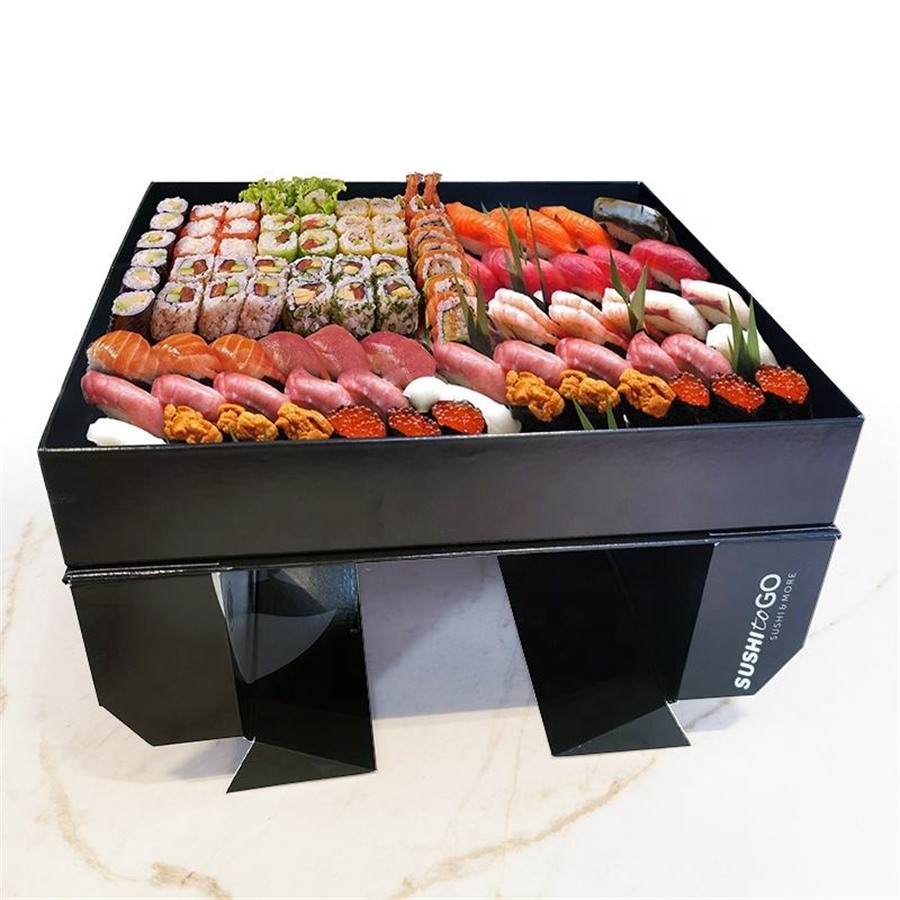
This white cardboard omakase box is suitable for several buyer groups. Restaurants can use it for chef-curated takeaway, special roll sets, holiday menus and tasting flights. Picnic meal brands can use it for outdoor lunch sets that need an elegant presentation. Catering teams can use it for meetings, private dinners and events where each guest receives a complete meal in one organized package.
Retail buyers can adapt the structure for chilled meal kits, premium salad sets or fruit and cheese assortments. The printed lid can explain the contents, show serving notes or carry a brand story. That is useful when the customer buys the product without a staff member nearby. The package becomes part of the communication between the brand and the customer.
The box can also support mixed menus. One section may hold sushi, another may hold side dishes, another may hold sauces, and another may hold a dessert element. When the package is planned correctly, the customer sees a complete meal rather than separate items thrown into one carton.
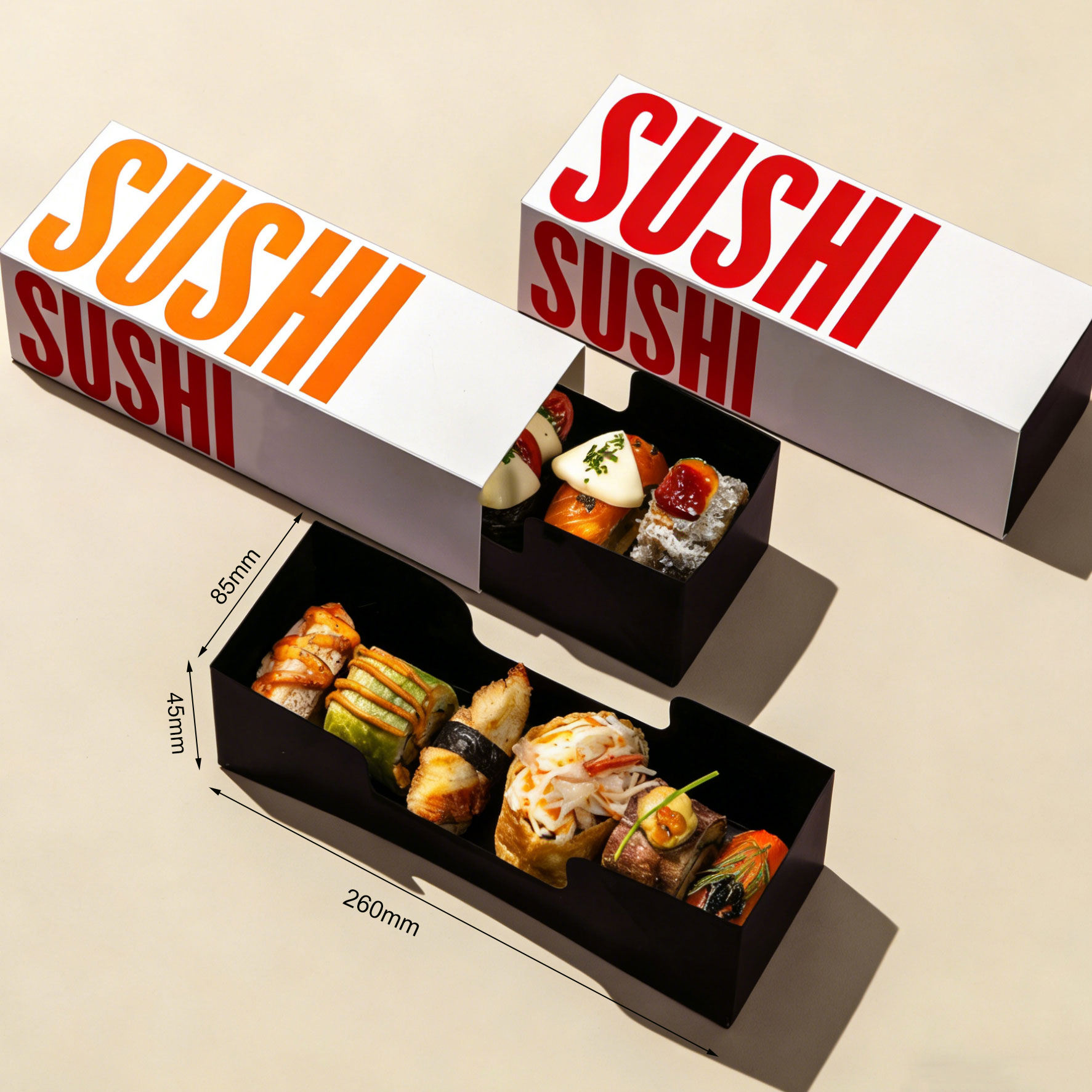
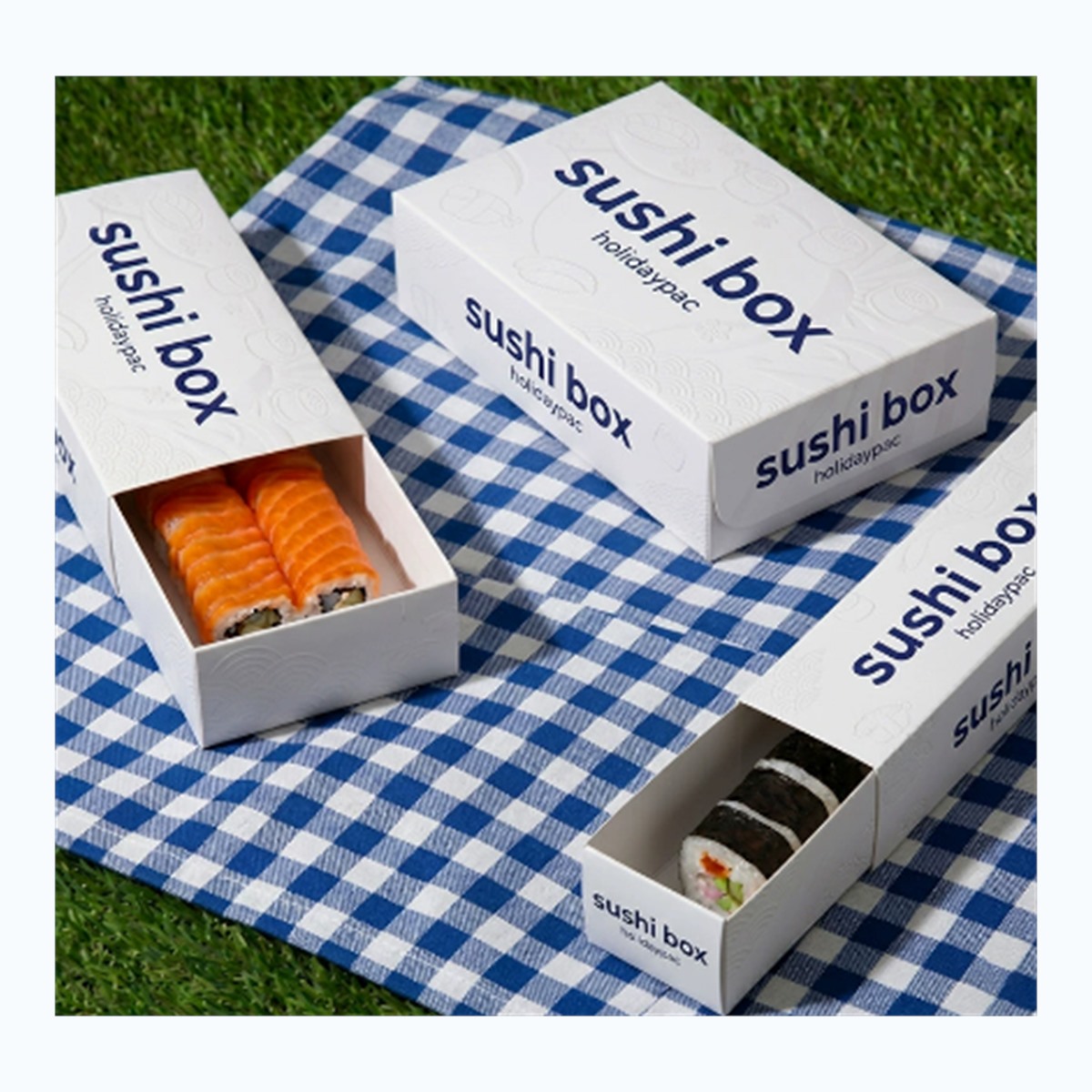
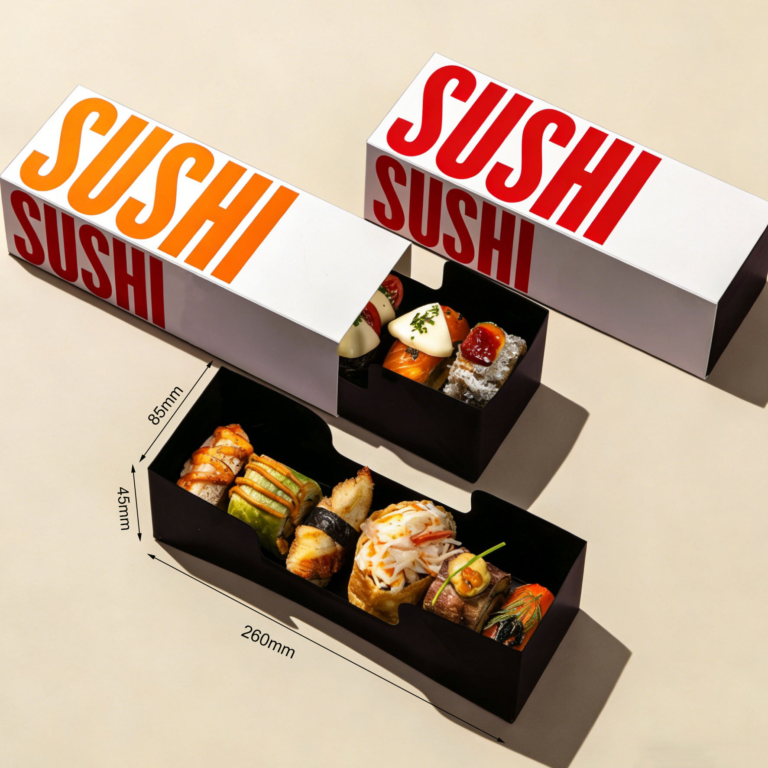
For buyers building a larger range, this box can sit beside Custom Logo Biodegradable Sushi Burger Food Packaging Drawer Box for narrow bite sets and Custom Drawer Sushi Box with Printed Sleeve for sleeve-based roll packaging. Each structure supports a different service style while keeping the sushi packaging family consistent.
The inside lid should be designed around how the customer will actually read it. A simple grid, numbered item map, chef note or flavor ladder can help the meal feel curated. If the lid becomes too dense, the customer may ignore it. If it is too empty, the packaging loses a useful opportunity. The strongest interior prints usually give just enough guidance to make the meal easier to enjoy.
A menu map can be printed directly on the inside lid or built as a removable insert. Direct printing feels integrated and tidy. A removable insert gives more flexibility for menu changes. The choice depends on how often the menu changes and how many box versions the buyer plans to run. Holidaypacfactory can help compare both approaches during sampling.
Exterior branding should stay aligned with the interior. A simple outside logo and a detailed inside guide can create a nice reveal. A fully illustrated exterior may need a simpler inside panel so the package does not feel overloaded. White cardboard makes both choices possible because it gives the design team enough visual quietness.
For event catering, the lid can include a sponsor mark, event name or short serving note. For restaurant programs, it can show chef intent or a tasting order. For retail meal kits, it can show contents and eating suggestions. The structure gives buyers a flexible communication area without adding another printed card.
A premium printed lid only matters if the box works during daily packing. Staff should be able to fold the base, place the insert, load the food, close the lid and stack orders without slowing the line. The lid angle, side flaps and front locking detail need to be tested during a real packing routine. If the box is awkward to close, it can create labor cost even when it looks good.
Transport behavior also matters. A white box should stay clean during handling, and the inner compartments should keep food in place. Sauce cups, greens, rice and fruit can all move if the layout is not tuned. For delivery, the buyer should test bag fit, stack height and how the lid handles movement. For catering, the buyer should test how the open box looks on a table and how fast staff can place many sets.
Cold-chain or chilled display programs may need extra checks. Condensation, label placement, barcode areas and shelf lighting can change how the package performs. If the box is used in a retail case, the front panel and lid should still communicate clearly when several units sit together.
Holidaypacfactory can adjust board thickness, tab shape, insert layout, coating and carton packing so the final box supports both the beautiful opening moment and the practical steps that happen before the customer sees it.
A clear brief should start with the meal layout. Buyers should share the number of sushi pieces, portion sizes, sauce cup diameter, side dish volume, garnish height and whether the box will carry salad, fruit, cheese or only sushi. Photos of a filled meal are helpful because they show real spacing and color balance.
The second part is the print plan. Buyers should decide what belongs on the outside and what belongs on the inside lid. A logo, menu name, tasting map, serving order, allergen icons and brand story should each have a clear place. If the inside lid has many items, the artwork should be tested at real size before sampling.
The third part is the material and production plan. Quantity, target date, food contact needs, preferred finish, shipping destination and carton handling should be shared early. If the buyer needs matching paper bags, labels, sleeves or outer cartons, those items should be included in the request so the full packaging program can be coordinated.
Holidaypacfactory can then recommend a size, paperboard specification, insert layout and print route. A focused brief shortens the sample stage and helps the final box match the real service flow.
Quality control for this kind of box should cover cutting accuracy, fold line strength, lid alignment, print registration, color consistency, board thickness and insert fit. The inside lid printing needs special attention because small icons and item names can become hard to read if the print shifts or if the artwork is too small.
White cardboard also needs clean handling. Scuffs, glue marks or handling stains are more visible on white surfaces, especially for premium meal packaging. Carton packing should protect the lid panels and keep the boxes clean before they reach the restaurant or distributor. A good packing plan protects the appearance as much as the structure.
Repeat orders are easier when the approved dieline, color reference and board specification are recorded. The buyer can update the menu guide, change the seasonal item map or add a new brand note while keeping the core structure stable. That keeps future orders consistent without slowing down each menu refresh.
Holidaypacfactory keeps these details connected so the finished box can move from sample to bulk production with fewer surprises. The result is packaging that looks refined, opens cleanly and supports repeat wholesale programs.
This white cardboard double sided printed omakase sushi box works because it combines food presentation with customer guidance. The package does not only hold the meal; it explains the meal. For premium sushi, salad and tasting sets, that added layer of information can make the customer experience feel more personal and more complete.
The structure is also flexible. It can be made for sushi, bento meals, fruit assortments, salad boxes, cheese sets or event catering. The interior print can change by menu, while the overall box shape stays familiar. That makes it useful for brands that want a recognizable packaging system across several fresh food offers.
For operators, the value is repeatability. Once the layout is approved, staff can fill the same compartments in the same order, customers can read the same lid guide and the brand can update artwork without replacing the entire format. That kind of consistency is useful for growing restaurants, private label programs and event catering teams.
When material, layout and printing are planned together, the box becomes a polished customer-facing tool rather than only a takeaway container. That is the reason many premium food brands choose this style for curated meal experiences.
A box with printed interior guidance is especially valuable when a brand changes menus often. The structure can remain stable while the inside lid map, item names or tasting notes are updated. This keeps the packaging familiar for returning customers but still lets the meal feel fresh when the menu changes.
For seasonal programs, the outside can stay clean and the interior can carry the special story. A spring picnic set, summer sushi tasting box, autumn catering lunch or winter gift meal can each use the same box format with different printed details. That gives the buyer a flexible tool for marketing without adding too much structural complexity.
The packaging family can also expand into related boxes. A narrow drawer box can carry small bite sets, a flip sushi box can serve picnic portions and this larger omakase box can carry a complete tasting meal. By keeping color, typography and print tone consistent, the brand can offer several formats that still feel connected.
Holidaypacfactory can help organize this family, record approved specifications and support future artwork updates. That makes the box useful for long-term programs, not just one launch.
Yes. The inside lid can carry item names, tasting notes, eating order, icons, a menu map or brand story details.
Yes. Divider size, tray depth, sauce cup space and food zones can be adjusted around the real meal layout.
Yes. The same white cardboard box can be adapted for salad, fruit, cheese, bento meals and mixed picnic sets.
Food-grade white cardboard, coated paper, kraft options, liners and reduced-plastic construction choices can be reviewed for the project.
Yes. The outside can carry brand identity while the inside lid can carry a menu guide or visual meal explanation.
Send product dimensions, food layout, order quantity, artwork direction, material preference, finish needs and target delivery date.
Yes. The dieline can stay stable while the inside lid artwork, menu names or seasonal message change for future orders.
 Cassie LanFounder, HolidayPac · Leave a message
Food packaging, paper bags and food service paper for your next project.
Leave your request anytime. Our sales team will reply with pricing, samples and production details.
Tell us what you're packaging and we'll ship a physical sample plus a free 3D mockup within 24 hours — no cost, no obligation.
We've received your inquiry and our team will get back to you within 24 hours.