Door to Door service
Welcome to Holidaypac Packaging Solutions Factory!

tiger@holidaypac.com

+86 136 5233 6188
Welcome to Holidaypac Packaging Solutions Factory!
tiger@holidaypac.com
+86 136 5233 6188
Related packaging range
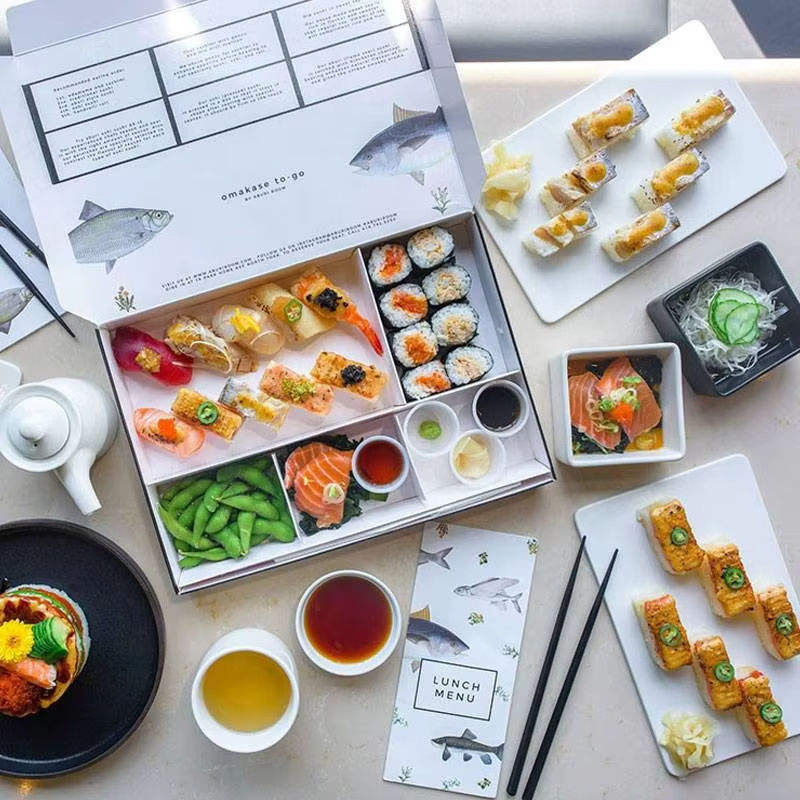
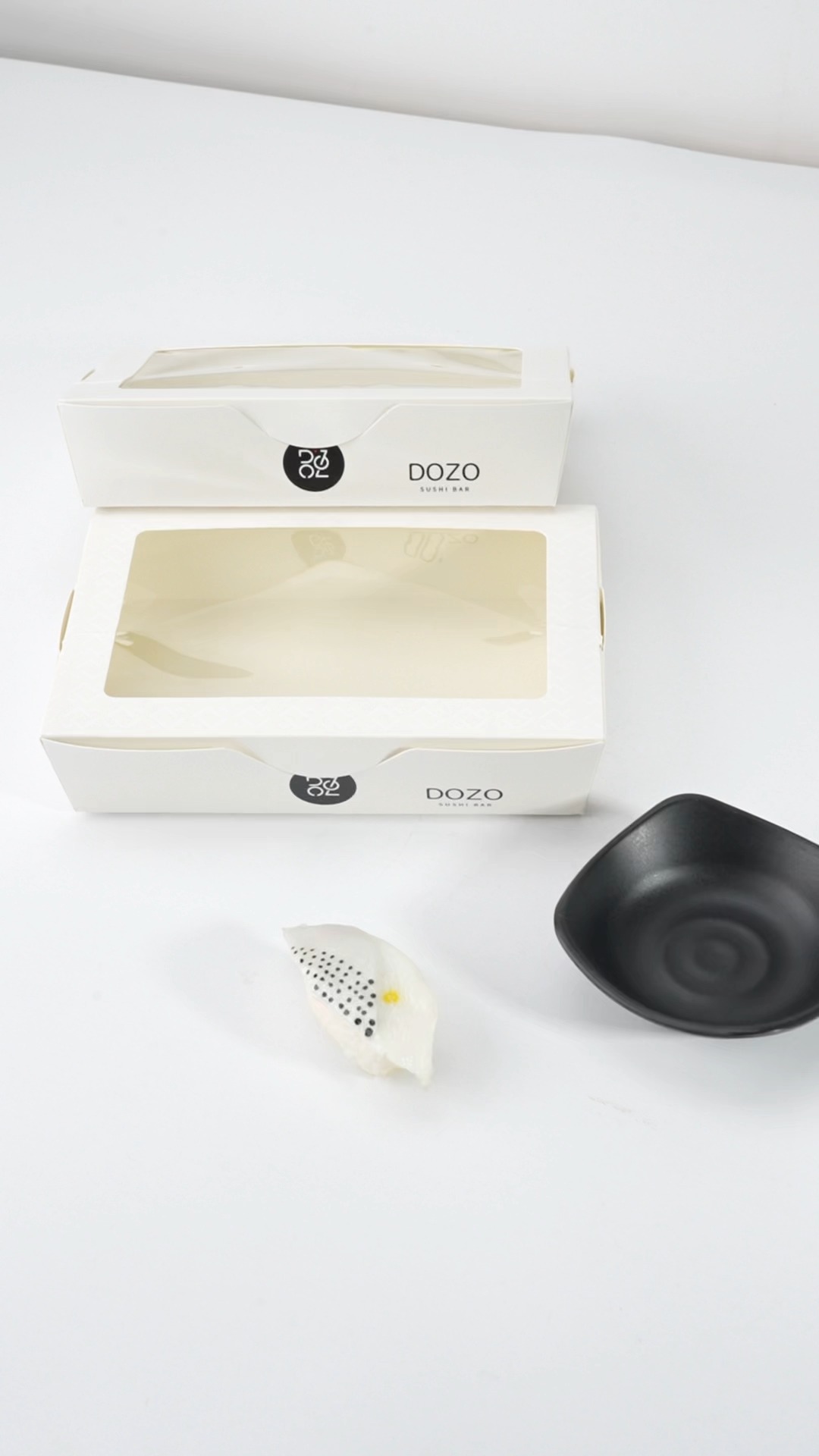
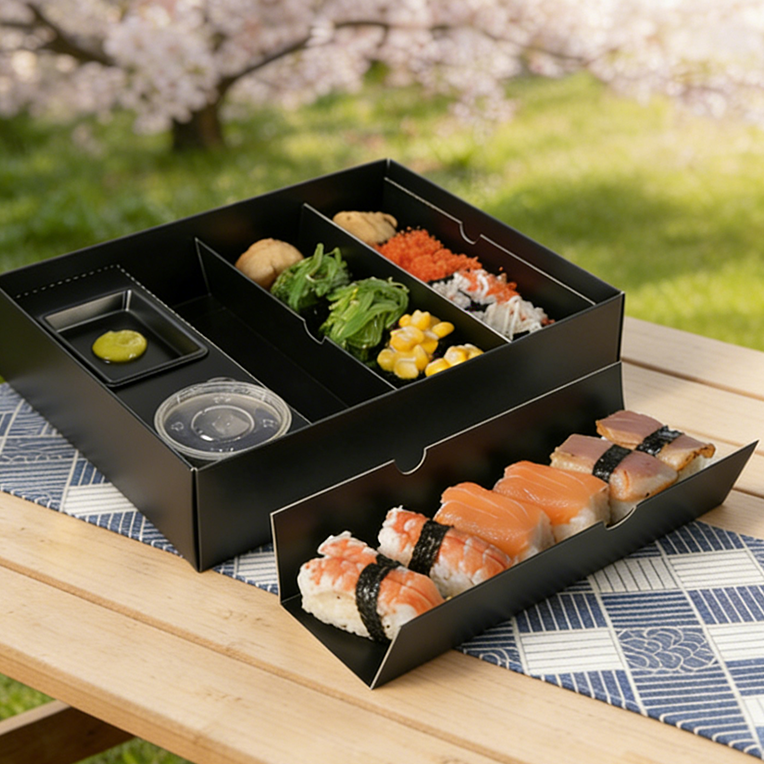
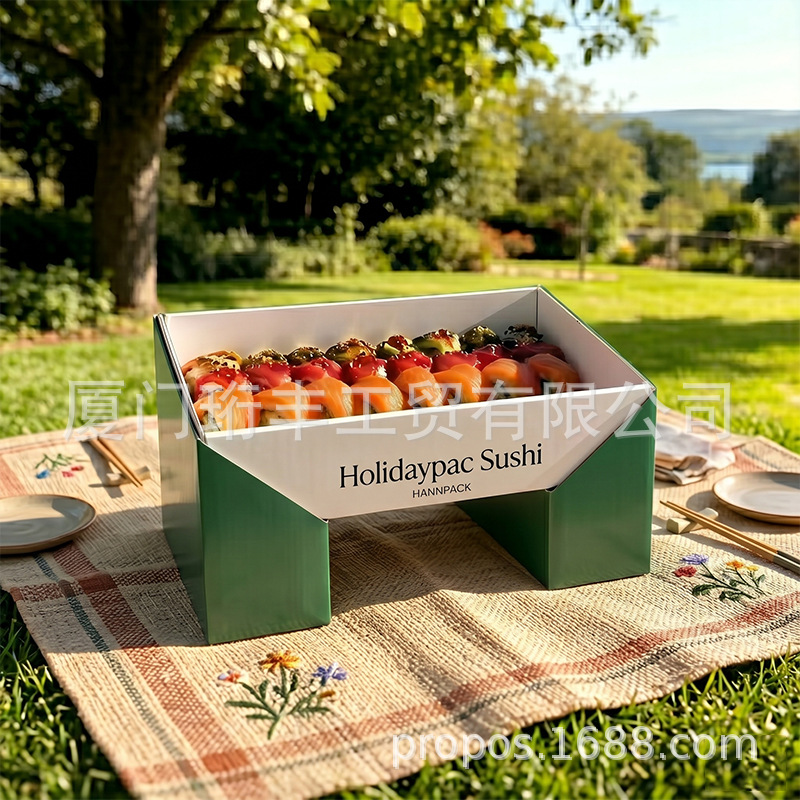
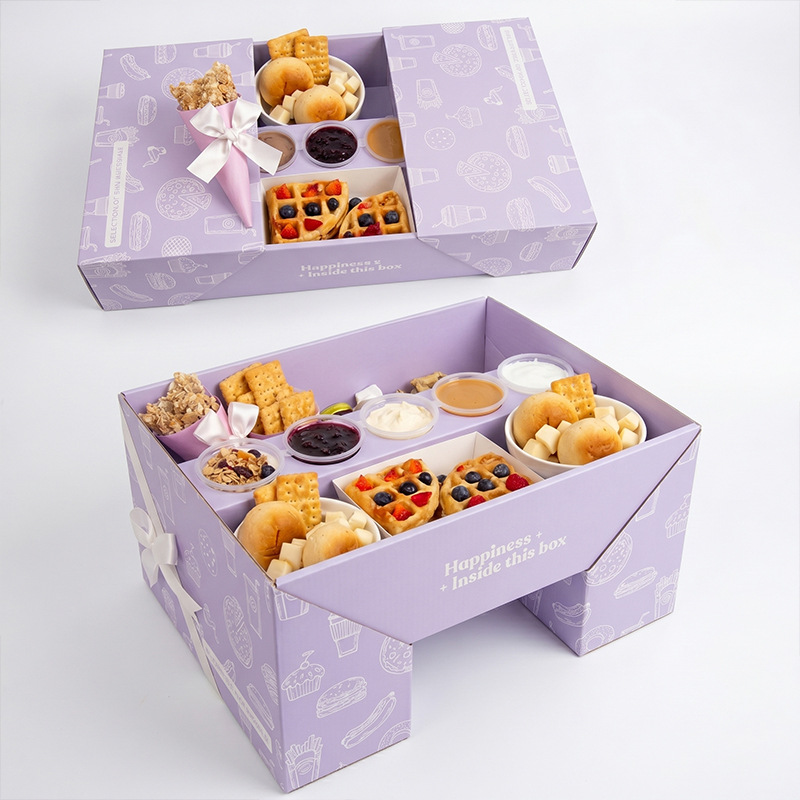
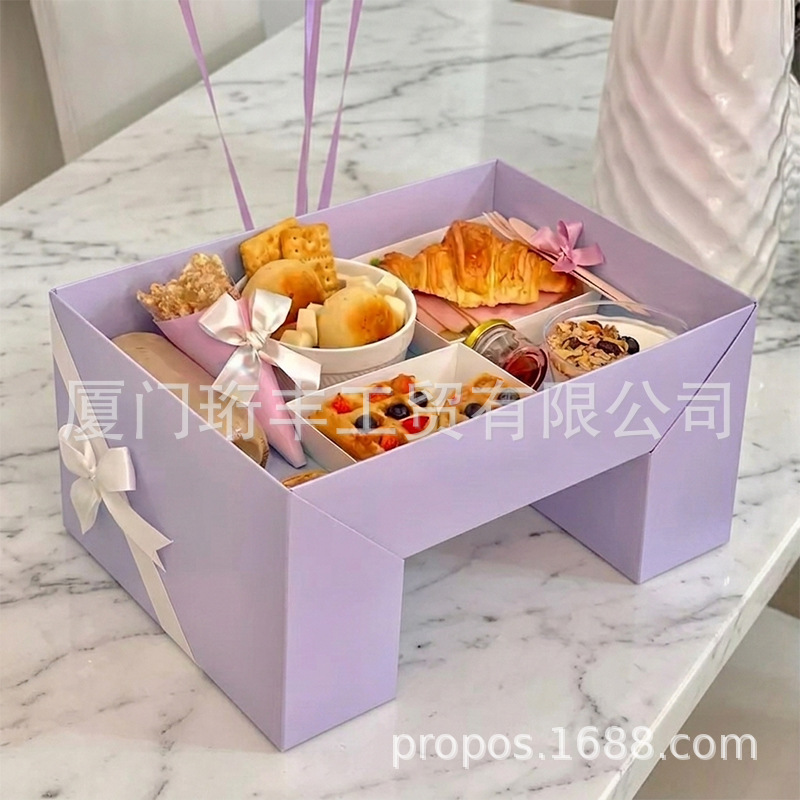
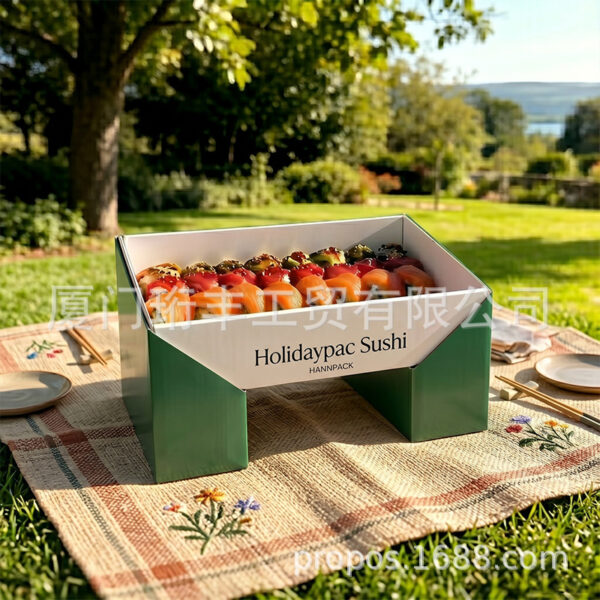
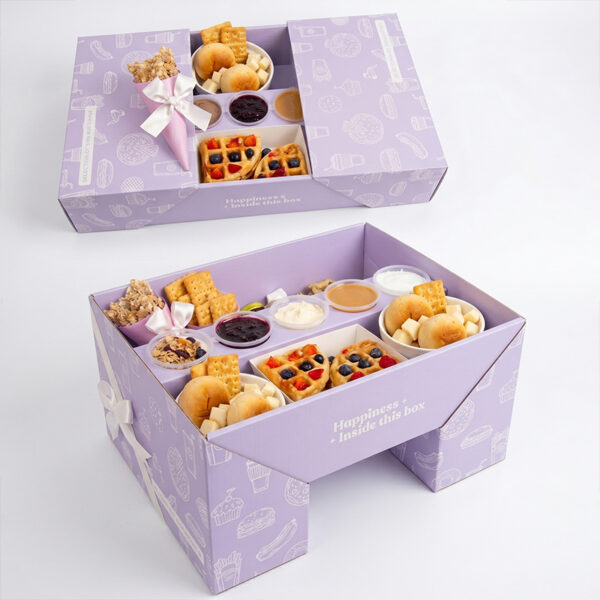
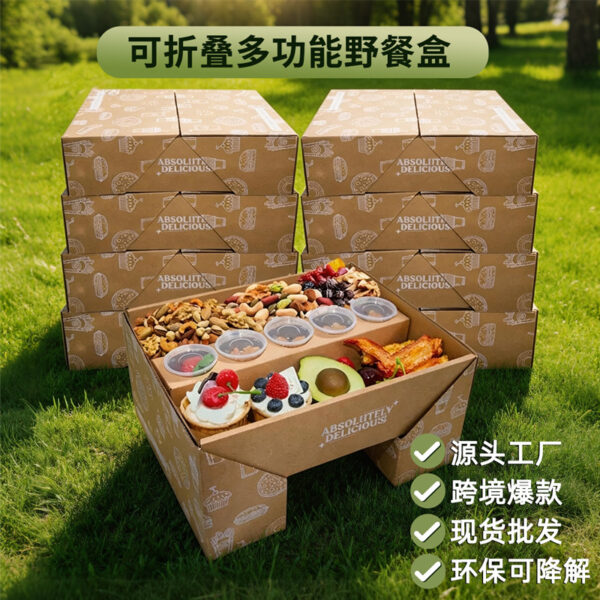
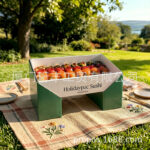
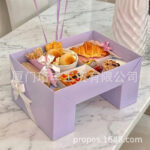
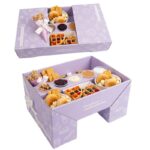
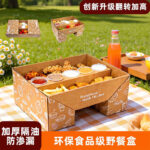
Quick Note A memorable takeaway box starts with silhouette Many paper meal boxes look interchangeable when they are closed or stacked. This design works differently because the stand-up structure creates a recognizable outline even from a distance, which helps the package feel more branded before any logo is read. Distinctive shapeVisual liftRetail impact First cue The lifted side profile makes the box feel less generic than a flat carton. Food framing The shape guides the eye toward the meal instead of burying it in a deep tray. Use scene This is especially useful for sushi, deli snacks, tea boxes and curated picnic assortments. Commercial value A more distinctive shape helps buyers explain why the packaging looks premium. +A differentiated silhouette gives the product more stopping power in both table and retail settings. +The structure can support gifting, social-media-friendly presentation and more polished takeaway service. | Stand-up picnic box identity Custom Stand-Up Picnic Sushi Box Packaging That Makes Light Meals, Afternoon Tea and Prepared Food Sets Look More IntentionalA successful picnic or sushi takeaway box needs to solve two problems at the same time. First, it has to protect the food and keep the arrangement readable during transport, display and handoff. Second, it has to create a stronger presentation moment than a simple flat tray. This stand-up picnic box format does both. The raised side structure gives the meal more presence, while the paperboard body keeps the package practical for daily service, custom branding and export-friendly packaging programs. For a wider meal-pack family, compare this format with our custom sushi, bento and deli paper boxes. That combination matters for buyers who are trying to turn food packaging into part of the customer experience. When a package looks well-composed, people read the food inside as more premium and more giftable. That is useful not only for sushi operators, but also for afternoon tea brands, deli counters, grazing meal sellers and prepared-food programs that want the packaging itself to feel curated. The box should not compete with the food, yet it should still contribute to the overall mood and perceived value. If the buyer needs a window-led presentation, review our kraft sushi bento box with clear window. The structure is especially effective because it lets the food sit within a framed presentation instead of a deep and hidden cavity. In many takeaway cartons, good food disappears once it is packed. Here, the stand-up format keeps the meal visible, which helps operators present color, portion balance and compartment planning more clearly. That can support better front-counter selling, more useful meal photos and a stronger sense of design when the package is opened at home, at a picnic table or in an office setting. For a stronger print-led shell, explore our high quality printed sushi bento box. For importers and private-label buyers, the appeal goes beyond looks. A stand-up picnic box can become a reusable packaging language across several products: sushi sets, pastry samplers, deli brunch packs, snack assortments and portable afternoon tea collections. Once the structural idea is approved, the same family can be adapted through print, size, dividers and surface finish. That is why this page should present the product not just as a one-off box, but as a practical packaging direction with repeat commercial value. A slower premium opening experience appears in our luxury sushi drawer bento box. |
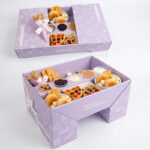
Structure and specification planning Use the Stand-Up Box as a Structured Meal Platform for Sushi, Afternoon Tea, Bakery Snacks and Deli CombinationsOne of the best features of this stand-up picnic box is that it can support more than one food logic. A sushi operator may want a long, open composition that keeps rolls and garnish visible. An afternoon tea brand may want a divided arrangement with pastries, fruit cups and sauce containers. A deli business may need a layout for mixed snacks and prepared items. Because the box is shaped around a display idea rather than a single rigid tray concept, it can be developed into several commercial formats without losing its core identity. For compartment-led meal separation, browse our compartment paper sushi bento box. The two visible reference sizes, 320 x 235 x 80 mm and 260 x 180 x 80 mm, already suggest how flexible the structure can be. The larger format can support fuller picnic sets, mixed sharing meals or a broader afternoon tea assortment. The smaller format can work for individual light meals, compact sushi sets or boutique snack programs. Buyers can treat these as starting points, then fine-tune the dimensions according to food count, cup diameter, insert needs and the type of outer bag or carton the product will be packed into. A practical single-piece format can also be seen in our food grade disposable paper sushi box. It is also important to think about how the inside arrangement affects the outside perception. When compartments are too tight, the food feels crowded and the package loses elegance. When the spacing is too loose, the product may feel underfilled. A better result comes from matching the box dimensions, divider rhythm and portion size together. That is why a product page should explain not only the material and size options, but also the meal-planning logic that makes the packaging look composed after packing, transport and opening. For broader lunch and event use, compare this shape with our custom picnic box disposable bento lunch box. From a private-label perspective, this is where the project becomes more valuable. If the box can be planned around the operator’s real food system, the packaging becomes part of the service flow rather than a decorative afterthought. Brand colors, logo placement, menu labels and compliance stickers can all be arranged around a structure that already works. The result is a product that looks premium to customers while still remaining operationally practical for kitchen teams, retail staff and distributors. Prepared-food buyers can extend the same packaging language through our custom takeaway food boxes for deli meal service. | Quick Note Good meal packaging is really layout management Food buyers do not only buy material. They buy organization: where the sauce sits, how the pastry is separated, whether the meal still looks composed after delivery, and whether the consumer understands the product immediately after opening. Layout clarityDivider rhythmPortion control Reference sizes 320 x 235 x 80 mm and 260 x 180 x 80 mm provide a useful starting brief. Food fit Compartment planning can be adjusted for sushi, fruit, pastry, crackers, sauces and brunch snacks. Branding The outer walls still leave space for logo, pattern, copy and label strategy. Workflow Better spacing can make packing faster and reduce messy visual overlap. +The right size should follow portion count and service style, not only a reference drawing. +A clean internal layout gives the product a more finished, higher-value appearance. |
The specification block is placed below the paired row so the image and text remain balanced at the top. That keeps the section easier to read and avoids the large empty image-column problem that often appears when a long table is forced into the same row.
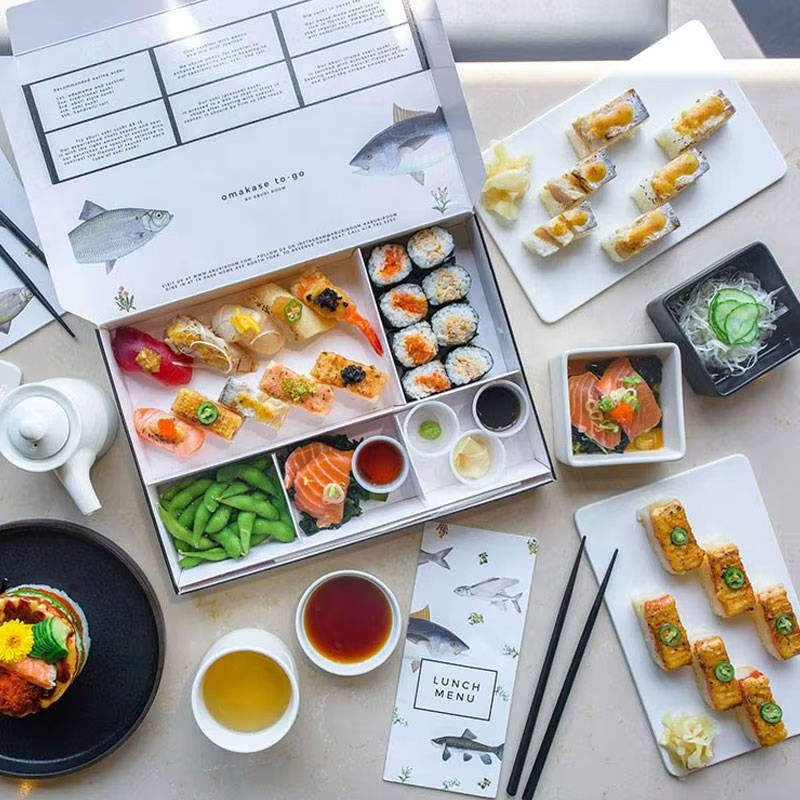
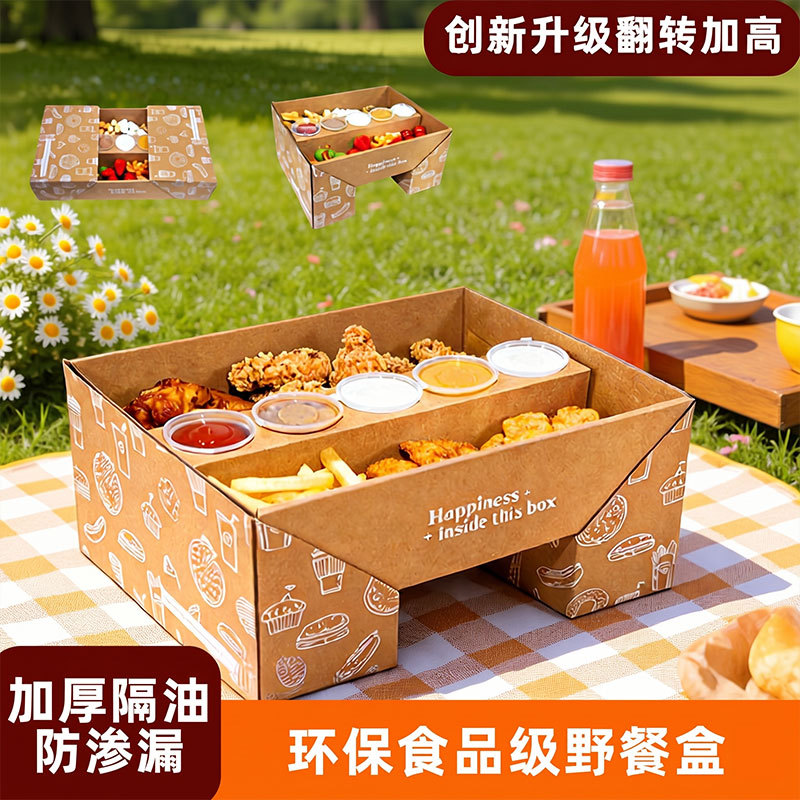
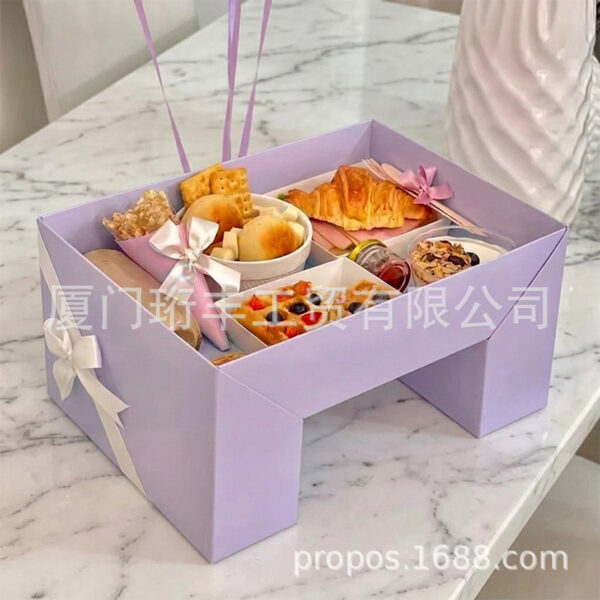
Quick Note Presentation value is part of the buying decision Buyers in this category are often not only comparing cost per piece. They are also comparing how well a box supports their selling story, from premium brunch drops to event catering, boutique takeaway or curated meal gifting. Premium cueOccasion useBrand story Use case Brunch boxes, high-tea packs, dessert samplers and food gifting all benefit from a more elevated presentation. Photography A better-looking package supports stronger menu photos and customer sharing. Table presence The stand-up side walls help the box remain visible after it is placed down. Repeat value Customers tend to remember packaging that feels designed rather than disposable. +A photo-friendly structure can help brands look more polished across social and menu platforms. +Premium appearance is often what separates a memorable takeaway product from a forgettable one. | Lifestyle and customer-facing value Design the Box for More Than Delivery: Use It to Support Gifting, Events, Brunch Programs and Curated Meal PresentationA packaging page becomes more persuasive when it shows how the product fits into real customer moments. This stand-up picnic box is not limited to delivery or takeaway in the narrow sense. It can also support brunch presentations, boutique afternoon tea, event grazing sets, holiday snack boxes and gift-style prepared meals. The structure feels more considered than a plain lid-and-base carton, which makes it useful for brands that want the customer to notice the packaging before the food is fully unpacked. For display and bakery crossover packaging, see our custom kraft window food boxes. That wider positioning matters commercially. Buyers in premium prepared food categories often want one packaging family that can serve everyday takeaway and higher-value occasions. If a box only works in a basic utility context, it becomes harder to extend into gifting or special programs. Here, the same structural idea can support both. A retailer could use a simpler print treatment for daily sale and a more decorative print for events or festive launches, while keeping the same basic silhouette and production direction. A broader sustainability-oriented assortment appears in our PFAS-free paper food packaging solutions. The lifestyle image also reinforces an important buyer concern: will the food still feel special when it is packed? Many meals lose visual impact once they are moved into standard takeaway containers. This format helps maintain the sense of arrangement. Cups, pastries, sushi pieces and side items remain visible and legible. That can improve menu perception, make product photography more useful and help the final package feel more premium at the moment of unboxing, even when the contents themselves are quite familiar. For a wider meal-pack family, compare this format with our custom sushi, bento and deli paper boxes. For distributors and importers, this creates a better selling proposition. Instead of offering a generic food box, they can present a packaging concept tied to premium convenience, curated presentation and contemporary meal styling. That story is easier for downstream buyers to understand and easier for end customers to remember. A product page that captures this broader value can help the packaging feel less like a commodity and more like a design tool for prepared-food brands. If the buyer needs a window-led presentation, review our kraft sushi bento box with clear window. |
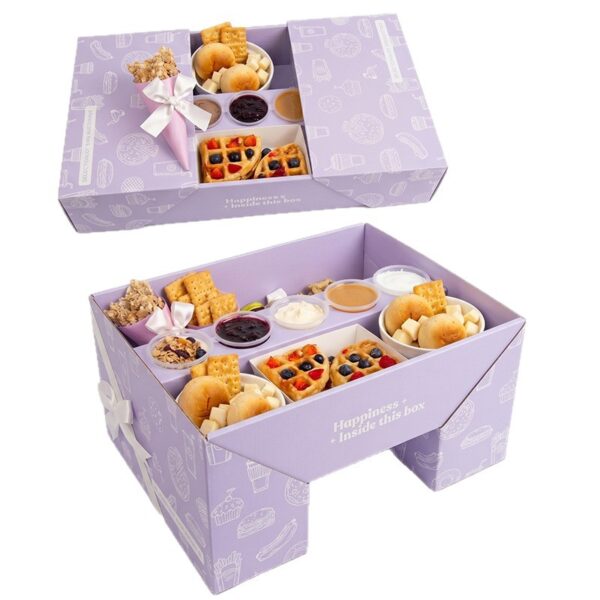
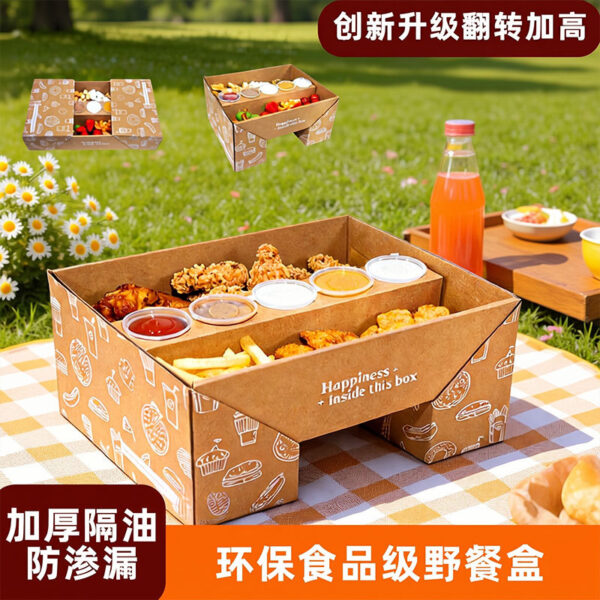
Material and print adaptation Develop the Same Stand-Up Box Across White Card, Kraft-Look and Market-Specific Brand DirectionsOne reason this product is commercially strong is that it does not depend on only one visual identity. The stand-up silhouette remains recognizable whether the outer shell is developed in a clean white-card look, a pastel premium look or a more natural kraft-facing treatment. That makes the structure easier to reuse across different buyers and different subcategories. A sushi operator may prefer a cooler, cleaner palette, while a deli or bakery brand may want a warmer material impression that feels more handcrafted and rustic. For a stronger print-led shell, explore our high quality printed sushi bento box. That flexibility helps both manufacturers and buyers. Instead of developing completely separate structural systems for every brand story, they can keep the same basic engineering and adapt the visual language. The print can become more minimal, more decorative or more retail-direct according to the market. Buyers can also localize copy zones, add stickers, change divider planning or introduce secondary colors without losing the recognizable stand-up effect that gives the package its identity. A slower premium opening experience appears in our luxury sushi drawer bento box. The kraft-style variant is also useful when discussing sustainability narratives and more natural food positioning. Even when the technical material brief remains practical and production-oriented, the visual outcome can feel warmer and more grounded. That matters for organic snack brands, boutique prepared-food programs and outdoor meal concepts that want the packaging to reinforce a relaxed, natural dining mood. The structure still feels premium, but it does so without relying only on bright or glossy presentation cues. For compartment-led meal separation, browse our compartment paper sushi bento box. A good product page should therefore show the box not as a fixed object, but as a packaging platform. The buyer should come away understanding that the same stand-up architecture can support several brand directions. That makes the product easier to justify, because it opens room for future line extension, seasonal design changes and market-specific visual adaptation without forcing the buyer to start structural development from the beginning every time. A practical single-piece format can also be seen in our food grade disposable paper sushi box. | Quick Note Customization should feel like extension, not redesign When a structure is commercially useful, it should support several brand directions without becoming unrecognizable. That is exactly where this format has strength: the silhouette remains stable even when the print, surface or color tone changes. Material flexibilityPrint adaptationConsistent structure Surface direction White-card and kraft-facing variants can support different market moods. Brand fit Organic deli, bakery crossover and natural-food brands often prefer a softer kraft tone. Development path Logo, pattern, icons and message blocks can be rebalanced without changing the structure. Sales use The same family can serve retail, takeaway, catering and event meal packs with tailored graphics. +Customization is easier when the base structure already reads clearly in every colorway. +A stable packaging family lowers development friction for future launches and regional variants. |
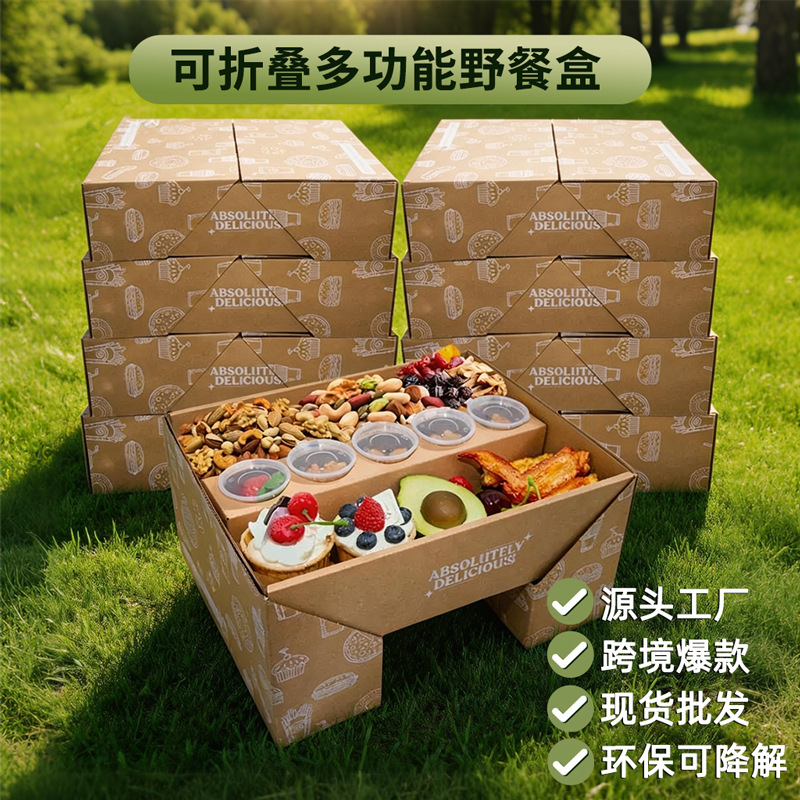
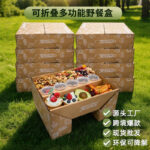
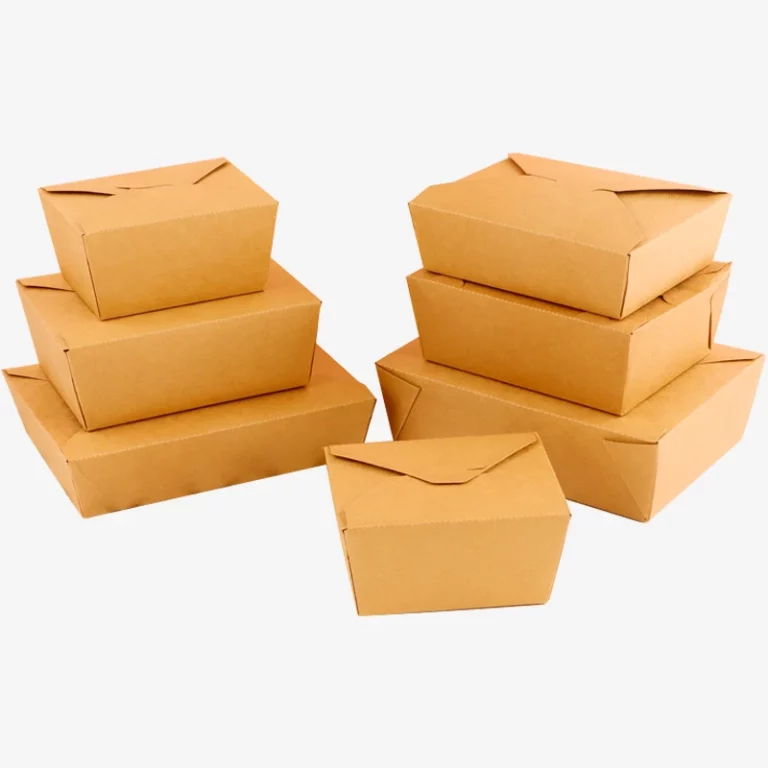
Quick Note A strong sample becomes valuable when it can be repeated reliably Beautiful packaging is only half the story. Buyers still need to know how the product behaves when it becomes a program: stacked units, consistent print, export cartons, replenishment schedules and future SKU extensions. Repeat supplyStorage logicProgram continuity Warehouse view Stacking behavior affects storage, carton planning and handling efficiency. Repeat graphics Clear design rules help maintain visual consistency across restocks and future variants. SKU growth A good first structure can later support smaller, larger or themed formats. Buyer confidence Operational clarity makes the packaging easier to approve beyond the first sample. +The best product pages close by showing how a concept becomes a repeatable program. +Buyers want proof that attractive packaging can still behave well in real ordering cycles. | From sample approval to supply program Plan the Stand-Up Picnic Box as a Repeatable Packaging System for Importers, Retail Meal Brands and Multi-SKU Food ProgramsThe final story on this page should move the buyer from inspiration into execution. A stand-up picnic box might attract attention because of its shape, but it earns repeat orders only when the structure can be supplied consistently and adapted intelligently. Buyers need to think about how the box will be stored, how it will be shipped, how it will be packed by staff and how future formats will extend the same family. That is why an image showing multiple units together is useful at this stage of the page. For broader lunch and event use, compare this shape with our custom picnic box disposable bento lunch box. For importers and distributors, repeatability is everything. A first order may be linked to one program or one launch window, but the real value comes when the structure can support ongoing business. If the box works only as a photo sample, it does not build long-term packaging value. If it can be tied to clear dimensions, stable materials, predictable print zones and sensible carton planning, it becomes easier to restock, easier to brief and easier to extend into new sizes or related meal concepts. Prepared-food buyers can extend the same packaging language through our custom takeaway food boxes for deli meal service. This is also where operational teams will care about the less glamorous details: how the box fits in outer cases, whether the assembly and filling rhythm feels efficient, whether labels or stickers can be applied cleanly, and whether the product still looks composed after storage and transport. Good packaging pages should acknowledge these questions, because they are what separates a visually attractive package from one that is commercially dependable. Buyers need both if they are going to commit beyond sampling. For display and bakery crossover packaging, see our custom kraft window food boxes. Holidaypacfactory can present this stand-up picnic box as a repeatable platform rather than a novelty structure. That message is helpful for customers because it connects the emotional appeal of the package with the practical reality of ordering, storing, packing and extending it. Once the shape, print language and size logic are defined, the same packaging family can support future menu launches, seasonal themes, local-market artwork and ongoing distribution programs with much less development friction. A broader sustainability-oriented assortment appears in our PFAS-free paper food packaging solutions. |
Start with the actual food, not only with a desired box size. Share photos of the meal set, portion count, condiment cups, garnish elements and the way the food should be presented after the box is opened. The stand-up format works best when the packaging is planned around real arrangement logic. That helps avoid a situation where the structure looks attractive in theory but feels either cramped or underfilled when the real meal is packed. For a wider meal-pack family, compare this format with our custom sushi, bento and deli paper boxes.
Next, define the service scene. Is this for sushi takeaway, high tea, event gifting, deli display or picnic-ready meal sets? The answer will influence not only print style, but also divider needs, height planning, label zones and how visible the food should remain. A premium brunch program may want softer decorative branding, while a retail deli line may need cleaner information blocks and a faster visual read from the shelf. If the buyer needs a window-led presentation, review our kraft sushi bento box with clear window.
Then review the graphic hierarchy with practical discipline. Buyers should decide where the logo sits, where flavor or menu labels will be placed, which areas must remain clean, and whether the box should feel more natural, more premium or more playful. The most successful custom packaging programs are not overloaded with decoration. They use the structure clearly, then let color, typography and pattern support the story without crowding the product. For a stronger print-led shell, explore our high quality printed sushi bento box.
Carton planning should also be discussed early, especially for export or multi-location customers. Even a beautiful structure becomes difficult to scale if storage, stacking and dispatch are ignored until the end. Buyers should confirm expected quantities, shipping method, target markets and whether the same family may later need smaller or larger variants. That broader planning makes the first sample more useful because it is developed with real operating conditions already in mind. A slower premium opening experience appears in our luxury sushi drawer bento box.
Finally, think about continuity. A stand-up picnic box should not be treated as a one-season novelty unless that is the explicit goal. The stronger approach is to build a stable packaging system that can support future menus, seasonal graphics, private-label adaptation and repeat purchase cycles. That mindset helps buyers make better decisions on size, material, print and structure from the very beginning. For compartment-led meal separation, browse our compartment paper sushi bento box.
Prepared food brands are under pressure to make convenience look more considered. Consumers still want portability and speed, but they also respond to products that feel curated, visual and worth sharing. This is where a stand-up picnic box becomes valuable. The structure helps the food feel arranged rather than simply packed, which can lift the perception of the meal without forcing the brand into expensive rigid packaging or overly complicated assembly. A practical single-piece format can also be seen in our food grade disposable paper sushi box.
The format also suits the current overlap between categories. Many brands are no longer only sushi shops, bakeries or delis in the traditional sense. They sell snack assortments, tea-time bundles, brunch kits, picnic packs and gift-style prepared food sets that borrow cues from several categories at once. A flexible paper structure that can move between these use scenes gives buyers more freedom. They can keep one recognizable packaging family while testing new food concepts and seasonal combinations. For broader lunch and event use, compare this shape with our custom picnic box disposable bento lunch box.
Retailers and distributors benefit because the box has a clearer story to sell. It is easier to explain a package that stands, frames the food and supports a more premium opening moment than it is to defend a plain generic tray. The buyer sees functional value, visual differentiation and the potential for custom branding. That combination makes the product more persuasive for private-label work, premium convenience lines and export programs that need packaging to feel contemporary and commercially adaptable. Prepared-food buyers can extend the same packaging language through our custom takeaway food boxes for deli meal service.
For events and catering, the stand-up format adds another layer of usefulness. It can help smaller meal sets or snack collections look more complete when placed on a table, delivered to a venue or opened during a group occasion. The packaging becomes part of the presentation instead of only a transport shell. That is a practical advantage for brands that want a stronger visual result without moving into much heavier or more expensive formats. For display and bakery crossover packaging, see our custom kraft window food boxes.
Holidaypacfactory can position this product as a modern paper-based packaging platform for prepared food categories that want more design value. That is the clearest commercial message: the box supports takeaway, display, gifting and private-label development at the same time. When the page explains that well, the buyer understands that they are not only purchasing a container. They are choosing a packaging idea that can support how their food is seen, sold and remembered. A broader sustainability-oriented assortment appears in our PFAS-free paper food packaging solutions.
It works especially well for sushi rolls, nigiri sets, afternoon tea snacks, pastries, deli brunch packs, fruit cups, sauce containers, mixed grazing foods and light prepared meals that need a more display-friendly arrangement than a standard flat takeaway tray. For a wider meal-pack family, compare this format with our custom sushi, bento and deli paper boxes.
Yes. Buyers can customize size, logo, color direction, print layout, divider rhythm, insert support, label positions and exterior finish so the box fits the real menu, target customer and brand story rather than forcing the food into a generic pre-set format. If the buyer needs a window-led presentation, review our kraft sushi bento box with clear window.
A stand-up structure gives the package a stronger silhouette, keeps the meal more visible, improves the opening moment and helps the food feel more curated. It is especially useful when brands want takeaway packaging that also supports gifting, events or premium retail-style presentation. For a stronger print-led shell, explore our high quality printed sushi bento box.
Please prepare food photos, portion count, target size, cup or condiment needs, preferred print mood, logo files, market destination, carton expectations and any future SKU plans. That information helps align the sample with the real business case instead of only with a rough visual reference. A slower premium opening experience appears in our luxury sushi drawer bento box.


 Cassie LanFounder, HolidayPac · Leave a message
Food packaging, paper bags and food service paper for your next project.
Leave your request anytime. Our sales team will reply with pricing, samples and production details.
Tell us what you're packaging and we'll ship a physical sample plus a free 3D mockup within 24 hours — no cost, no obligation.
We've received your inquiry and our team will get back to you within 24 hours.