Door to Door service
Welcome to Holidaypac Packaging Solutions Factory!

tiger@holidaypac.com

+86 136 5233 6188
Welcome to Holidaypac Packaging Solutions Factory!

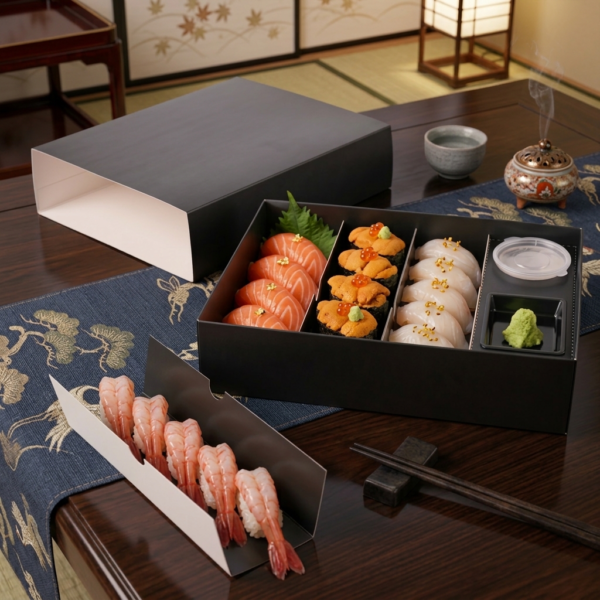
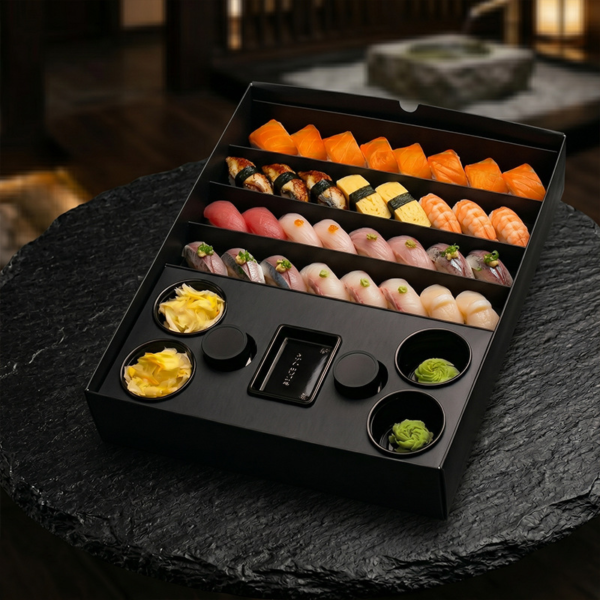
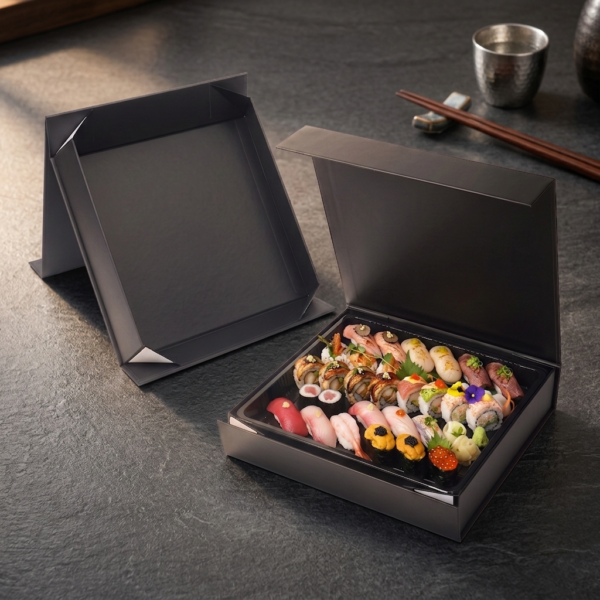
1-2 Days Free Customization
7-12 Days Production Time
12000m2+ Factory Since 2008
Door to Door service
Related Sushi Packaging
8 product links with images
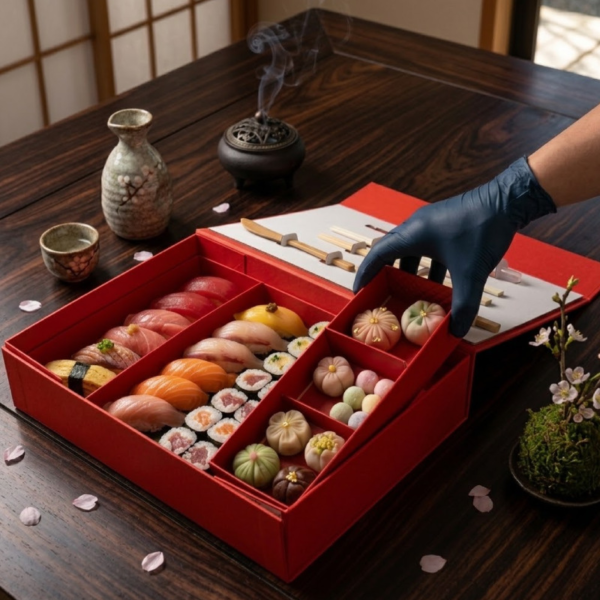
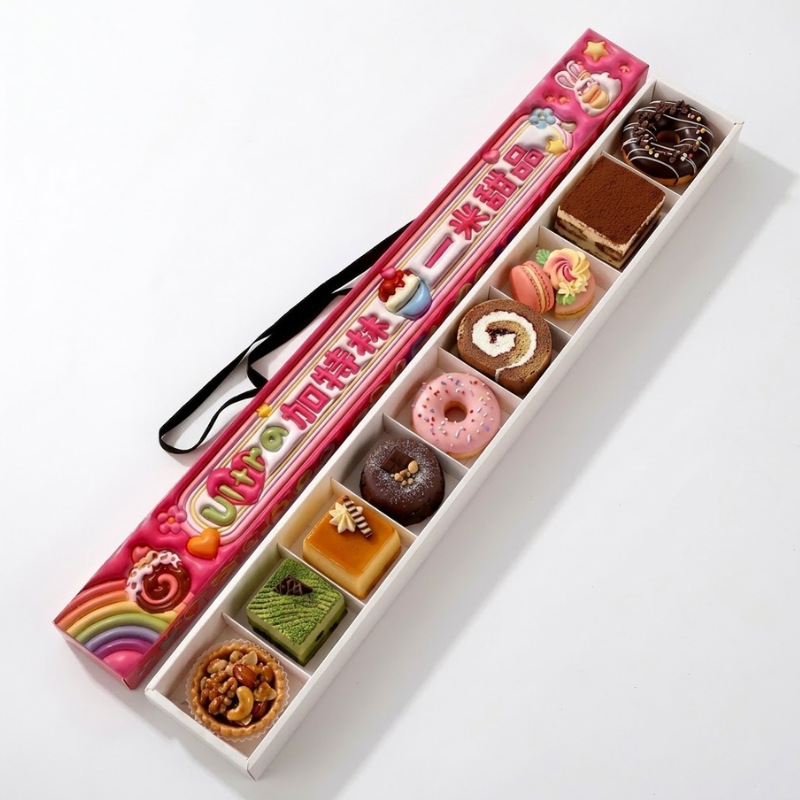 Custom Long Sushi and Dessert Display Box with Ribbon Handle
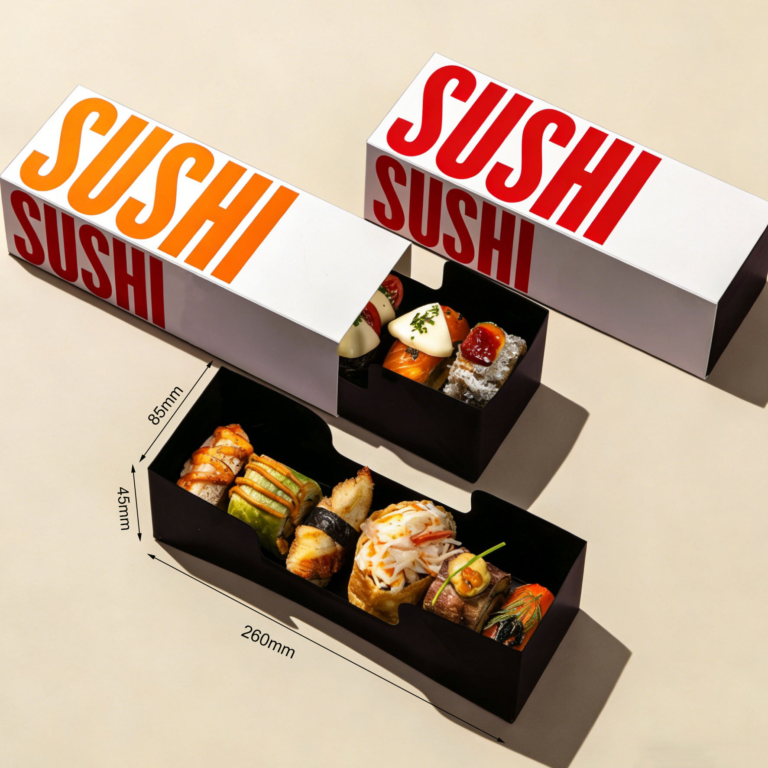
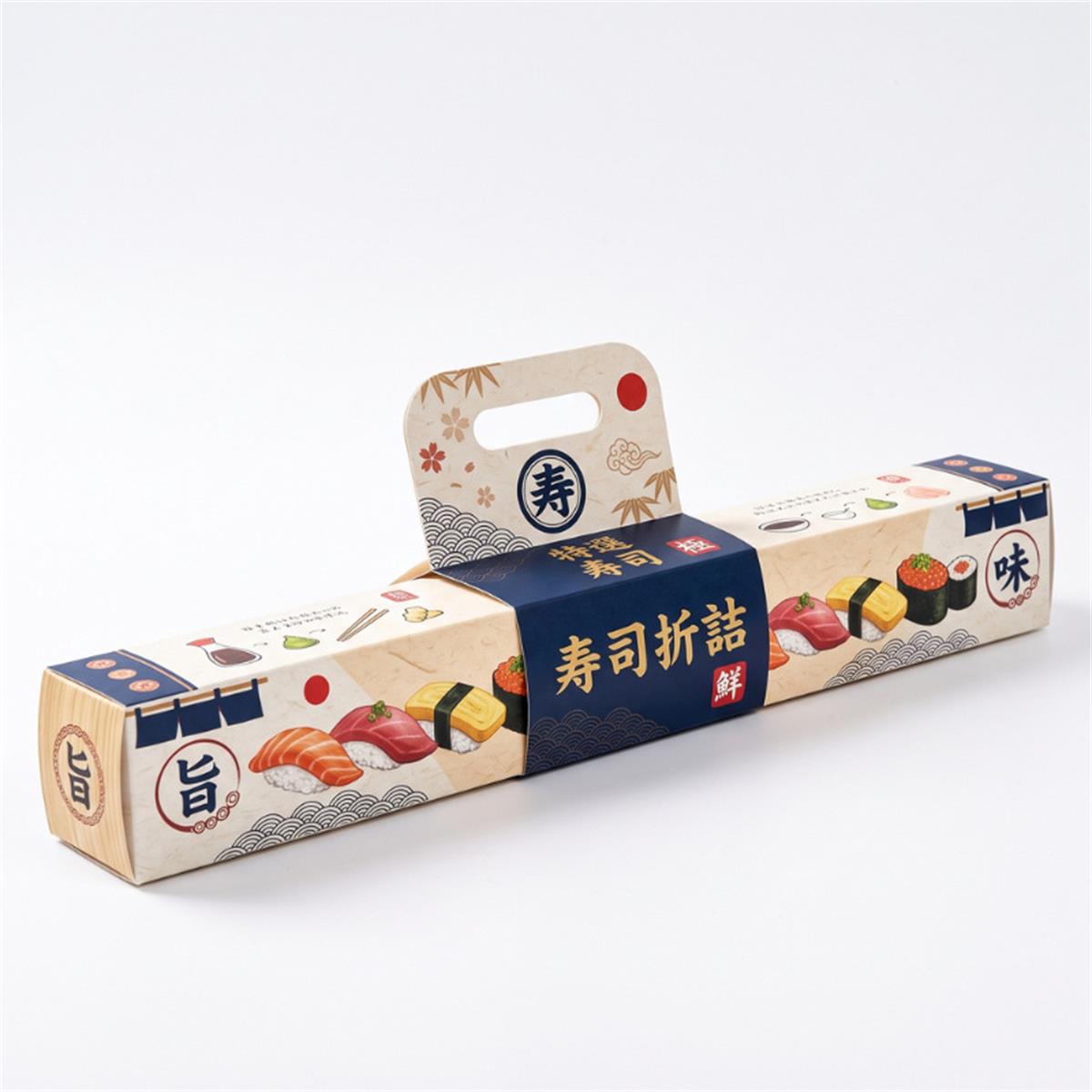 Custom Printed Long Sushi Takeaway Box with Built-In Carry Handle
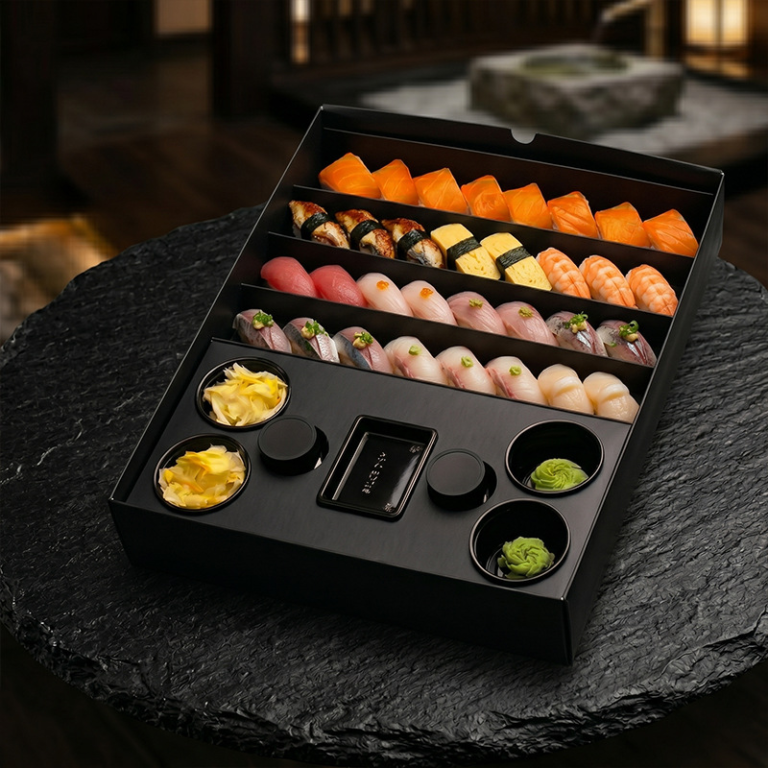
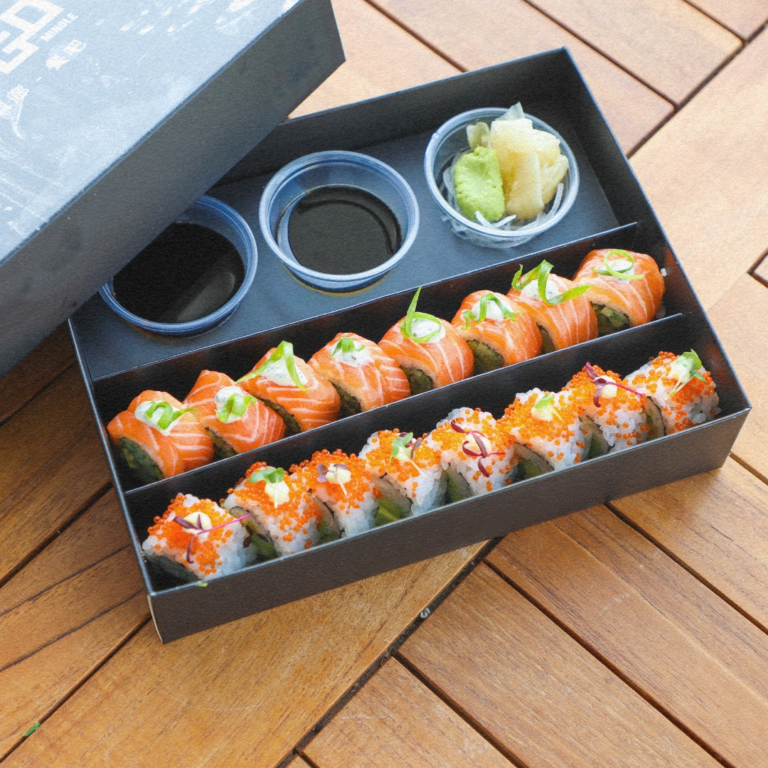
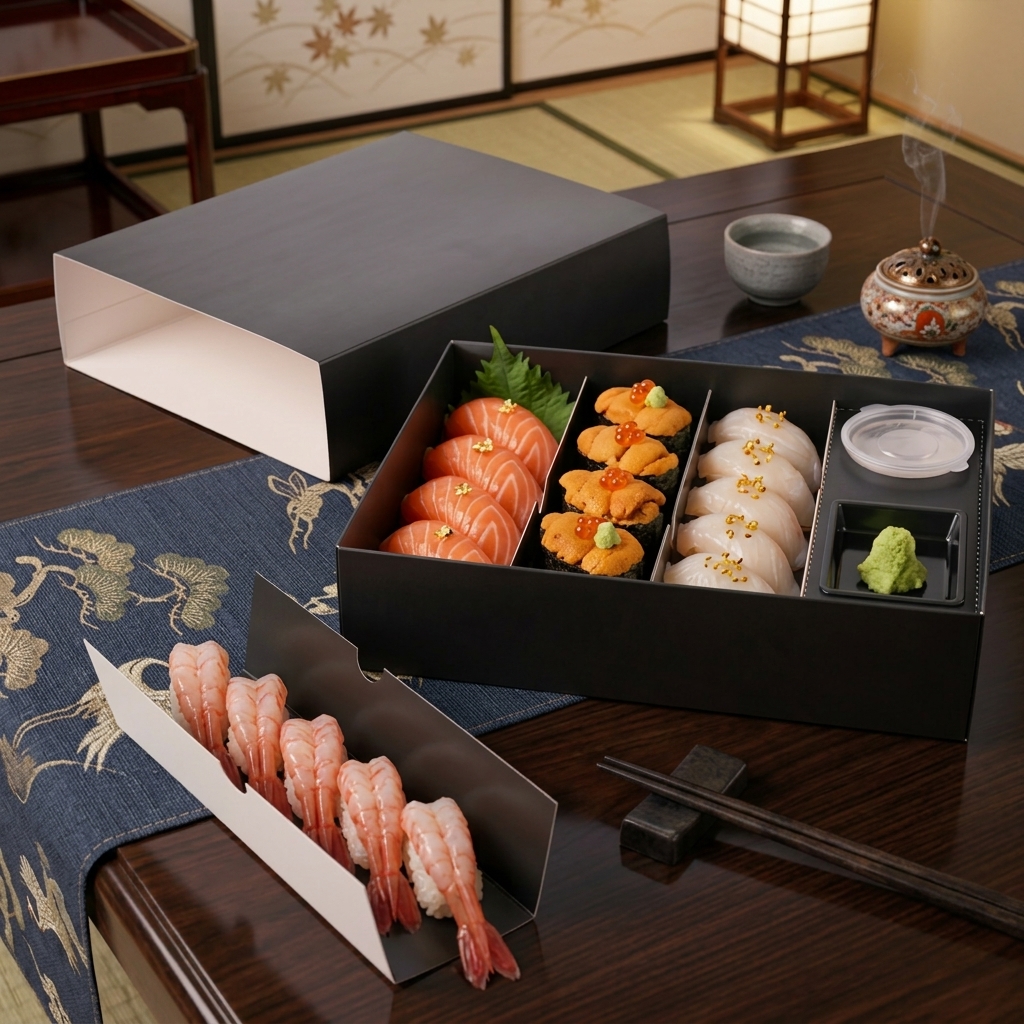 Custom Black Multi-Compartment Sushi Takeaway Box with Sauce Tray
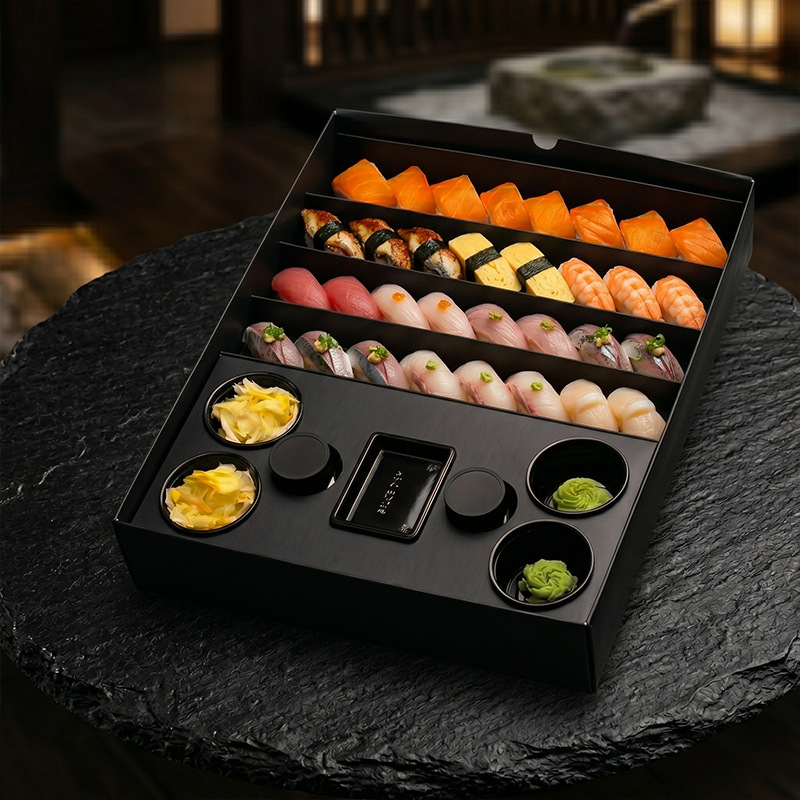 Custom Black Omakase Sushi Gift Box with Sauce Cup Inserts
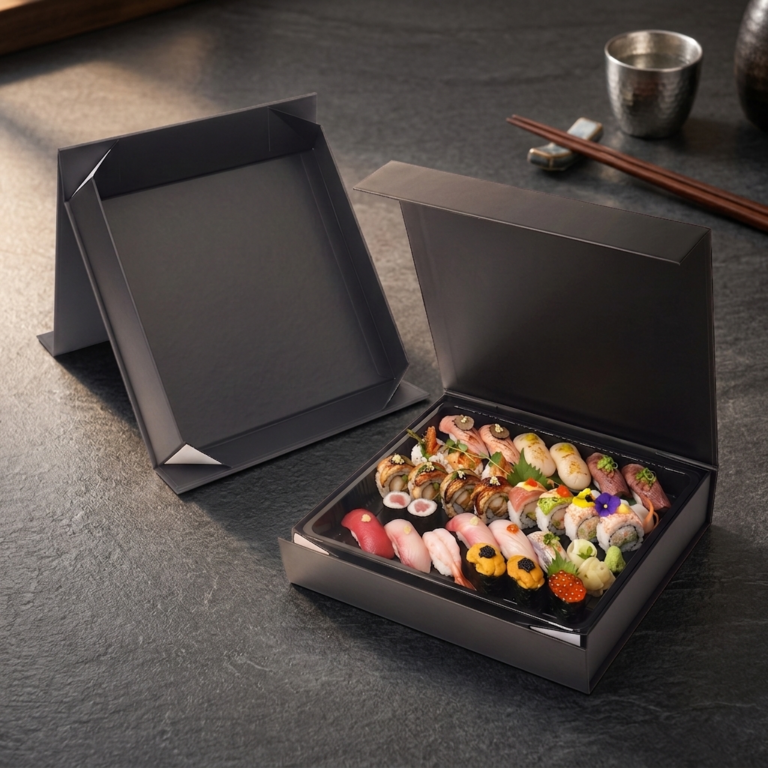
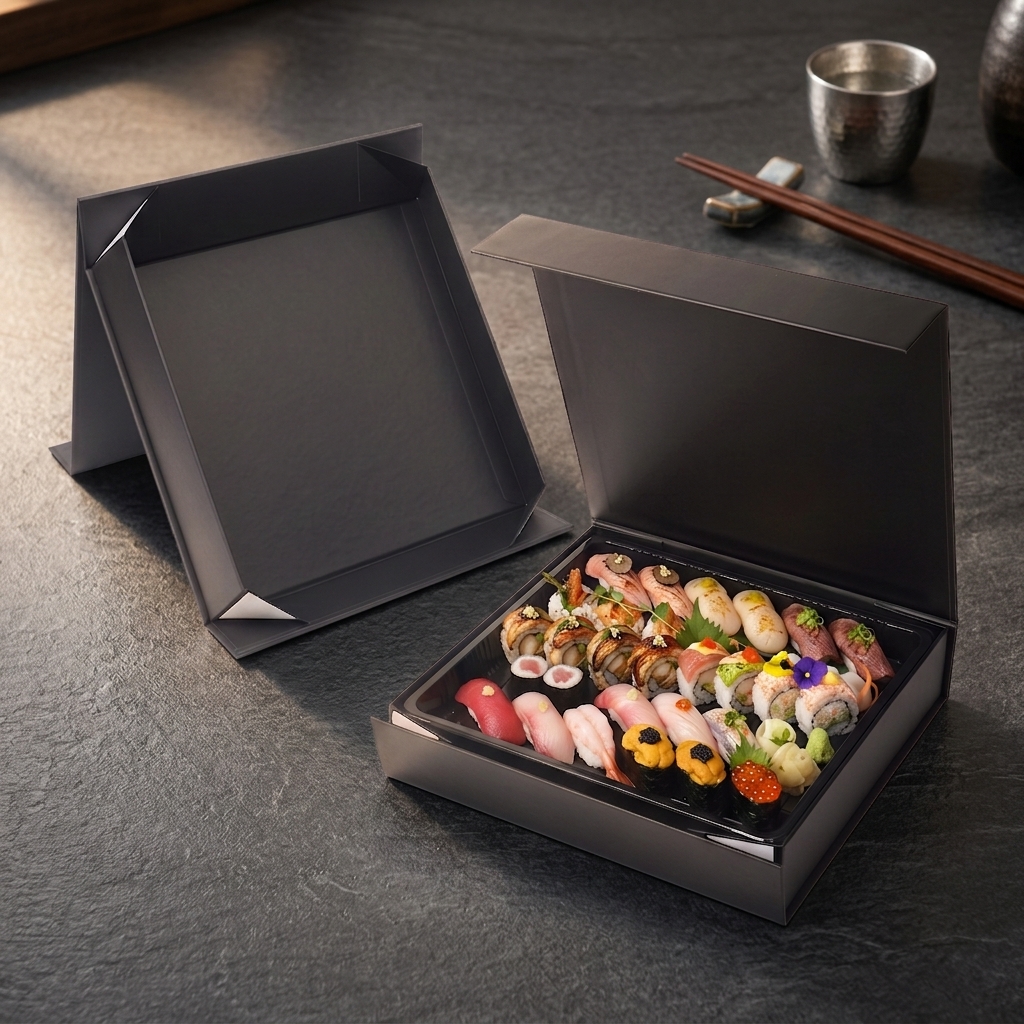 Custom Black Hinged Lid Sushi Box with Clear Tray and Compartments
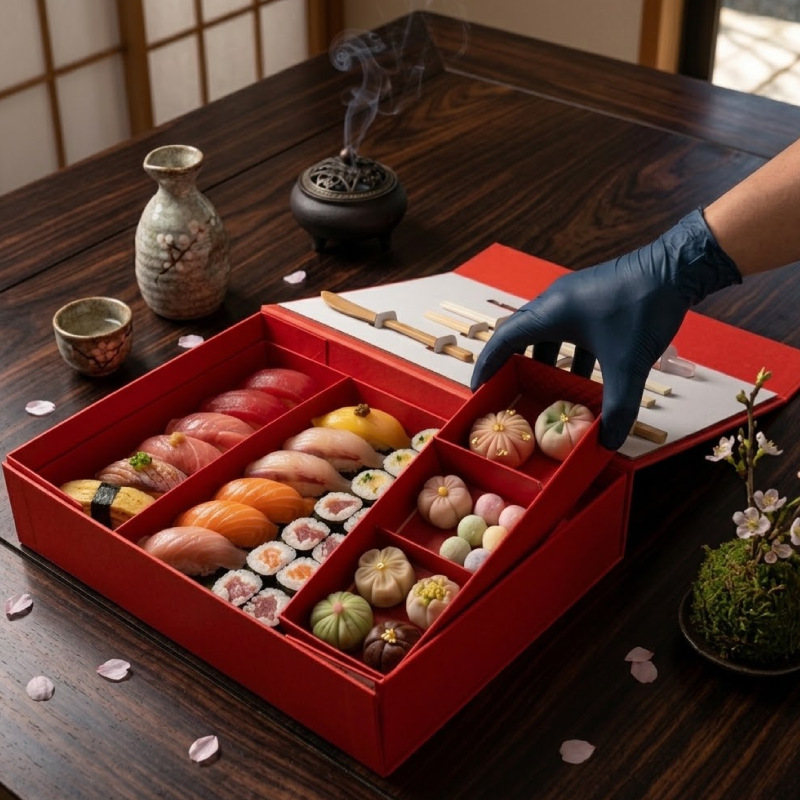 Custom Red Three Layer Drawer Sushi Box with Compartments
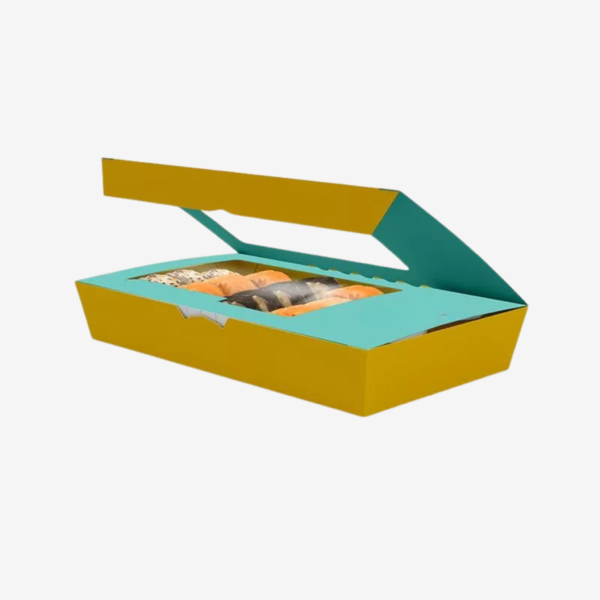
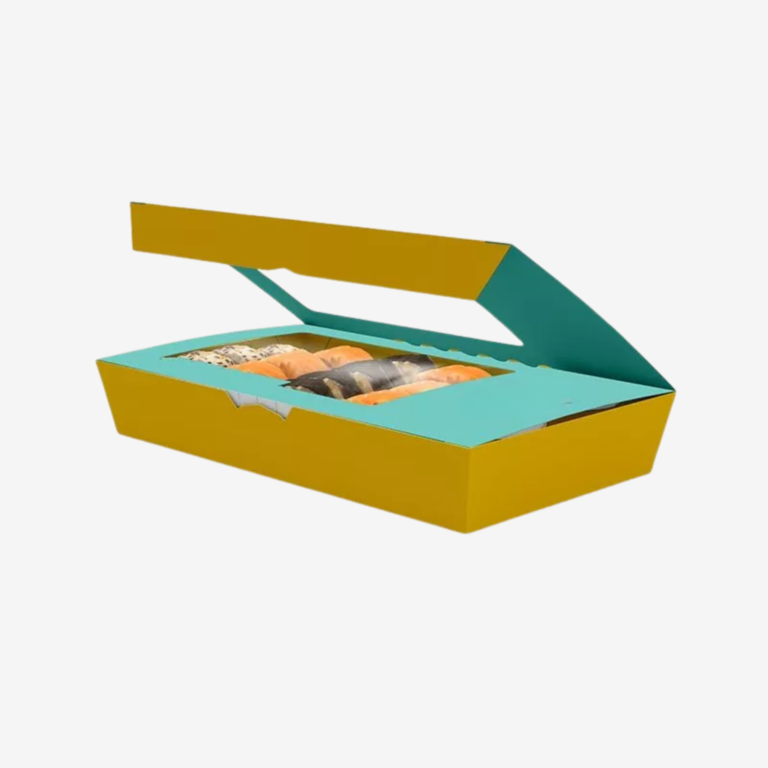
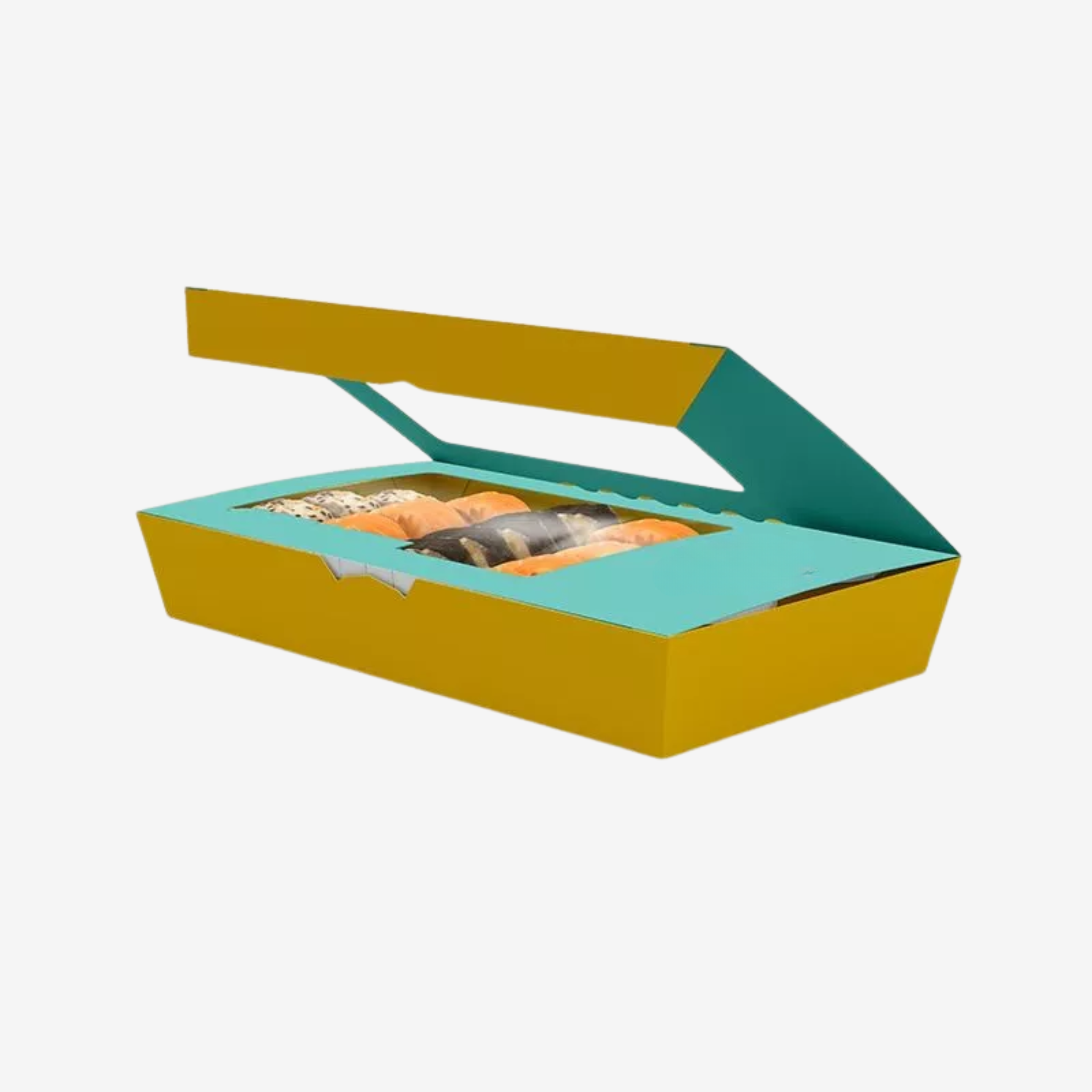 Custom Sushi Boxes with Window and Chopstick Carry Packaging
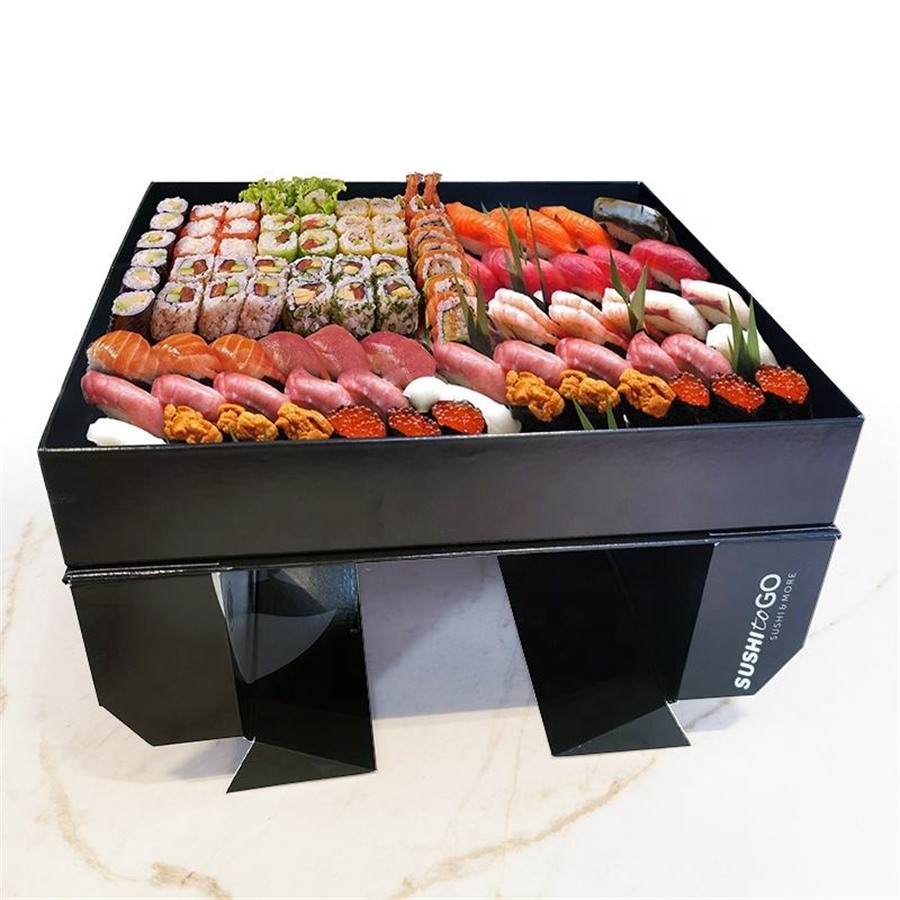 Custom Disposable Takeaway Paper Sushi Gift Box
Custom Japanese Food Packaging Collection
This custom sushi packaging boxes collection brings several presentation directions together for restaurants, sushi counters, catering teams, meal brands and food retailers. The reference styles include triangular takeaway gift boxes, long roll boxes, structured compartment trays and premium printed formats that can be developed around different menus and service routes.
A sushi box is part of the meal experience. It protects the food, organizes the assortment, creates space for condiments and gives the customer a clear first impression before the lid is opened. Holidaypacfactory can help match the opening style, insert plan, board direction, print area and carry method to the food being packed.
Browse our Sushi Packaging collection collection to compare other Japanese food packaging formats, or review custom black multi-compartment sushi takeaway box with sauce tray, custom black omakase sushi gift box with sauce cup inserts and custom sushi boxes with window and chopstick carry packaging when you are deciding between a tray-led meal box, a gift presentation or a visible takeaway structure.
The shown designs are style references rather than fixed stock specifications. Share the finished food dimensions, number of pieces, sauce cup size, desired compartments, order quantity and destination market so the final structure can be developed around the real product.
Collection Overview
Restaurants do not always need one identical box for every menu. A quick weekday roll order may need a compact disposable container, while a chef tasting set, seasonal gift or catering platter may need a more deliberate opening and stronger presentation. This collection gives buyers a starting point for comparing those directions within one packaging program.
The triangular style creates a distinctive silhouette for individual meals, sharing portions and gift-ready takeaway. The long box gives narrow sushi rolls, hand-roll formats or organized assortments a clear linear presentation. A compartment tray can separate different pieces, toppings and condiments so the contents arrive in a planned sequence instead of shifting together.
The same brand language can be adapted across several structures. A restaurant might use one print system for a triangle box, a long roll box and a black premium tray. A retail sushi brand might keep the logo, color palette and information hierarchy consistent while changing the closure, window and insert for different products.
When comparing structures, start with the food and service route. Our custom long sushi and dessert display box is useful when length and presentation are priorities, while custom printed long sushi takeaway box with built-in carry handle shows how a carry feature can support a long takeaway format. These are related directions, but the final size should always follow the finished menu.
A collection approach also helps with future reorders. Once a base artwork system, board direction and print standard are approved, new box styles can be developed with a recognizable family appearance. That can make seasonal launches, catering programs and menu extensions easier for staff and customers to understand.
Triangular Takeaway Style
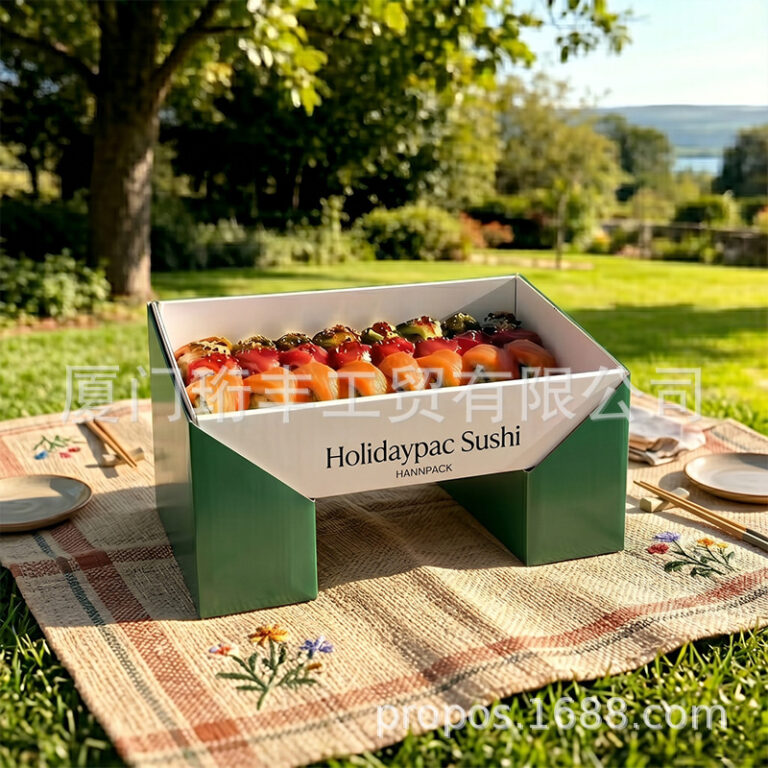
A triangular or wedge-shaped sushi box can make a familiar takeaway meal feel more individual. The angled outline gives the package a strong shelf and table presence, while the opening can reveal a focused portion of sushi, sashimi, rolls or mixed Japanese food. It can suit a special set, a celebration meal, a picnic portion or a compact gift.
The internal tray should be planned around the actual arrangement. Narrow roll pieces may sit in a row, while nigiri and garnish may need separate zones. A sauce cup, pickled ginger, wasabi or small utensil pack can be placed in a defined area so it does not press into the food. The pointed end may also be used as a visual feature or reserved for a small condiment.
A shaped package deserves careful attention to loading order. Staff should be able to place the food without turning the box repeatedly or disturbing the finished arrangement. The closure should guide the lid into place, and the base should remain stable when the filled box is carried from the counter to a bag, table or delivery handoff.
The exterior can be printed with a logo, menu name, pattern, seasonal message or color block that follows the geometry. A restrained design often works well because the shape already provides visual interest. A small window can reveal the food, while a more closed design gives the brand greater print area and a more gift-like reveal.
If the triangular format will be used for several portion sizes, create a clear size family rather than changing every detail. Keep the brand mark, closure logic and internal orientation familiar while adjusting the length, width and cavity arrangement around the food. This supports repeat packing and makes the assortment easier to train and manage.
Long Roll Box
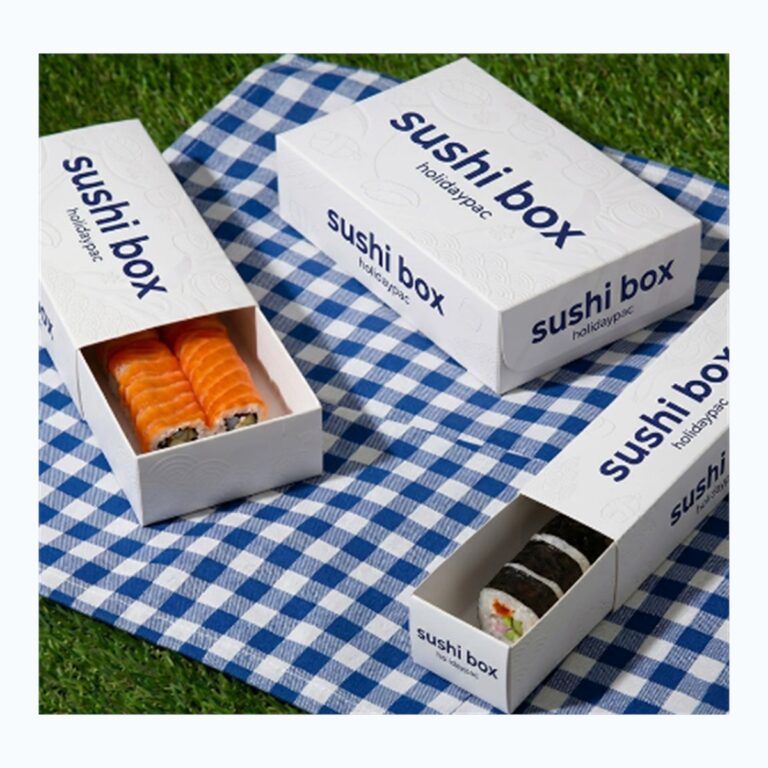
A long sushi box is useful when the menu is built around rolls, hand-roll style items, sushi sticks, narrow tasting sets or a sequence of pieces that should remain visually connected. The extended footprint lets the customer read the assortment from one end to the other and can create a more premium impression than a crowded square tray.
The inner length should be measured against the finished product, including end cuts, toppings, sauce lines, garnish and any paper liner. A small amount of clearance can help staff load the box, but too much space may allow movement during delivery. The best fit comes from testing the real food in a filled sample rather than estimating from the raw roll size.
The long box can use a separate sleeve, a hinged lid, a tuck closure, a removable cover or a printed outer wrap. Each opening changes how the customer discovers the food. A clear panel can help with quick counter recognition, while a closed lid gives more room for branding, menu information and a controlled unboxing moment.
For a related carry-led direction, compare custom printed long sushi takeaway box with built-in carry handle. For a longer presentation used across sushi and desserts, custom long sushi and dessert display box shows how a linear tray can become part of a larger gift or catering experience. The collection page here is broader and can cover shorter roll formats as well as extended layouts.
Long boxes also need a practical outer-carton plan. If several units are stacked, the corners and cover edges should be protected. If they are placed in a delivery bag, the length and closure should be reviewed with the actual bag dimensions. Storage space for empty boxes and the speed of assembly should be included in the project discussion.
Compartment And Insert Planning
An insert is more than a divider. It can define the order of the meal, protect toppings, create a place for condiments and make the package easier to load consistently. A multi-compartment layout is especially useful when one box contains several sushi types, colors, textures or temperatures that should arrive as a complete set.
Cavity dimensions should be based on the finished product. Measure the widest piece, the tallest topping and the part most likely to move. Include the thickness of paper cups, liners, sauce containers and any garnish. If the menu changes often, the insert may need a flexible layout or a common footprint that can accept several approved assortments.
A regular grid can help staff pack quickly and make the final presentation feel orderly. A varied arrangement can give a chef selection more personality and create larger zones for signature pieces. The choice depends on the menu, the packing team and the way the customer should read the meal when the lid is opened.
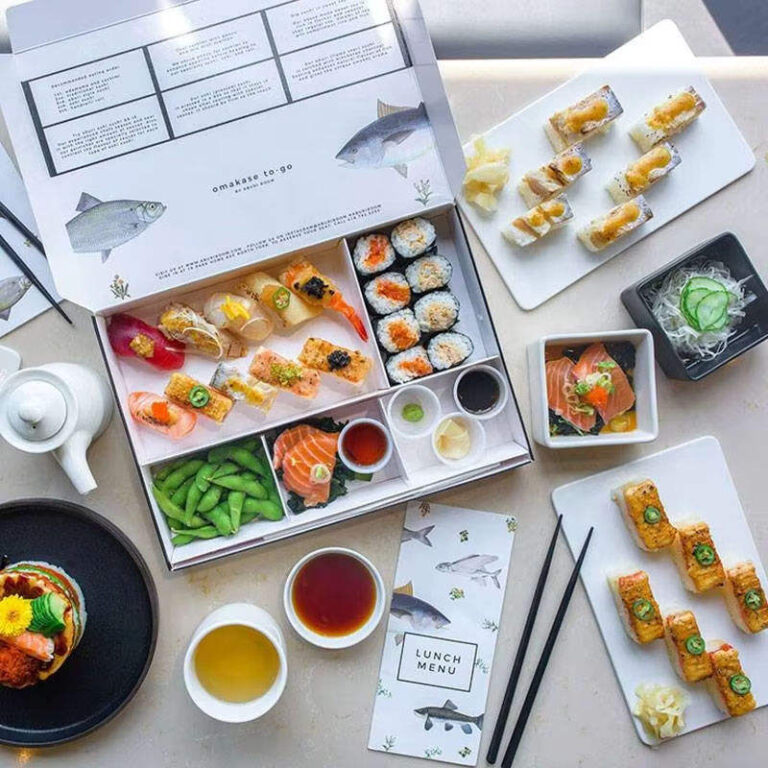
Our custom black multi-compartment sushi takeaway box with sauce tray focuses on a multi-compartment takeaway structure with a sauce area, while custom black omakase sushi gift box with sauce cup inserts shows a more gift-oriented presentation with defined rows and condiment positions. These related formats can help clarify whether your next box needs speed, ceremony or a balance of both.
Before approving the insert, load the actual food, close the box, move it through the intended handling route and reopen it. Check that pieces remain centered, that dividers do not catch toppings and that the lid does not touch the highest item. A short filled trial can reveal changes that are difficult to see in an empty mock-up.
Opening And Closure Options
A sushi box can open from the top, side, drawer front, hinged lid or sleeve. The best choice depends on the food height, the need for visibility, the desired presentation and the way the package is filled. A fast takeaway program may benefit from a simple closure, while a premium omakase set may justify a more considered reveal.
A hinged lid keeps the base and cover connected and can be easy for staff to handle. A sleeve creates a clean outer surface and can be replaced for seasonal artwork. A drawer structure can make the opening feel special, but the tray and sleeve need enough clearance to move smoothly. A separate lid and base can provide a balanced gift presentation and clear access to the full assortment.
For a hinged direction, review custom black hinged lid sushi box with clear tray. For a drawer-led concept, compare custom red three layer drawer sushi box. These structures are already part of the Holidaypacfactory sushi range and show how the opening sequence changes the balance between fast packing, product visibility and gift presentation.
The closure should also be checked after the food is filled. Sauce cups, tall garnish and protective liners can change the available clearance. The package should close without forcing the lid and should stay secure when carried. If a tamper-evident label or branded seal is needed, leave a clean area for it in the artwork and structure.
A good closure makes the intended action obvious. Customers should understand where to lift, slide or unfold without damaging the box. Staff should be able to assemble and close several units in a row without stopping to interpret the structure. A sample review with the people who will pack the orders is an important part of the final decision.
Window And Visibility
A clear window can help a customer recognize the sushi assortment without opening the package. This is valuable for chilled retail displays, restaurant counters, catering handoffs and online order pickup where the box may be seen briefly before it is carried away. The window can reveal the full arrangement or frame one signature section.
The window shape should be designed with the insert. If the aperture sits above a divider, the view may feel fragmented. If it is too large, the cover can lose stiffness or leave less room for branding. A smaller framed window can provide product visibility while preserving a strong printed surface around the opening.
Our custom sushi boxes with window and chopstick carry packaging explores the combination of visible food, chopstick carry and printed paperboard. The collection here also includes more closed formats for brands that want the customer to discover the meal after opening. The decision should follow the merchandising setting, the food protection needs and the visual story of the brand.
Film selection, attachment and edge finishing should be reviewed together. The clear panel should remain clean, securely fixed and aligned with the printed artwork. The interior should be protected from unnecessary contact during packing, and the finished sample should be checked under the lighting used in the restaurant or retail display.
Not every menu needs a window. A closed package may offer better protection from dust, light or repeated handling and may give more space for a premium logo treatment. The best collection can include both options, allowing one artwork family to serve everyday takeaway, premium gift sets and retail display without forcing one structure to do every job.
Sauce Cups And Accessories
Sushi packaging often needs space for soy sauce, spicy mayo, ginger, wasabi, toppings, chopsticks or a small message card. When these items are placed loosely inside the box, they can move into the food or interrupt the presentation. A planned cup well, side pocket or accessory channel keeps the order easier to pack and easier to understand.
The diameter and depth of a sauce cup should be measured before the insert is finalized. A cup that sits too high may touch the lid, while one that is too loose can spill or move during delivery. The same applies to chopsticks: the package needs a secure placement that does not press against the sushi or make the box difficult to close.
The defined condiment layout in custom black omakase sushi gift box with sauce cup inserts is a useful reference when a complete meal set needs to feel organized. For a simpler everyday order, custom disposable takeaway paper sushi gift box represents a more direct takeaway direction. The right solution depends on whether the box is built for speed, a premium reveal, or both.
Accessory space can also support brand communication. A paper band, printed chopstick sleeve, flavor card or small care note can be integrated without overcrowding the main food compartment. Keep the information short and place it where the customer can find it without lifting every piece in the box.
Review accessories during the filled sample test. Pack the cups, chopsticks and garnish exactly as they will be used, then close and carry the box. Check for movement, condensation, lid clearance and the time required for staff to complete the order. Small layout adjustments can improve both the appearance and the daily packing rhythm.
Material And Food Contact Planning
Paperboard, coated stock, laminated board, kraft board and clear components can create very different handling experiences. The right combination depends on the box style, food moisture, temperature, order quantity, required print quality and delivery route. A lightweight folding package may be ideal for everyday takeaway, while a rigid-feel presentation may suit a premium set.
The outer printed box should not automatically be treated as a direct food-contact surface. If the sushi touches an insert, tray, liner or cup, that component should be reviewed for the intended food use and destination-market requirements. Discuss any food-contact documentation, barrier layer or separate liner requirement before the production specification is approved.
Moisture and temperature can affect the feel of the package. A chilled meal, sauce cup or oily topping may require a different inner treatment from a dry snack. The box should be tested in the expected holding time and handling environment so the buyer can evaluate the assembled package rather than only the artwork.
Surface finishing can support the brand, but it should be balanced with the use case. Matte lamination can give a quiet premium feel, while gloss details or foil can highlight a logo. A clear window, black board, red panel or kraft surface can each create a different tone. Final choices should be made after the structural sample and print proof are reviewed together.
For repeat orders, keep a record of the approved board direction, inner component, artwork version, finish, closure and filled sample. This makes it easier to add a new sushi assortment or seasonal sleeve without losing the fit and handling characteristics that staff already understand.
Artwork And Brand Identity
A collection product works best when the structures can change without making the brand feel unrelated. Use a shared logo position, type hierarchy, color system or pattern language across the triangle box, long box, compartment tray and gift format. The customer should recognize the restaurant or food brand before reading every panel.
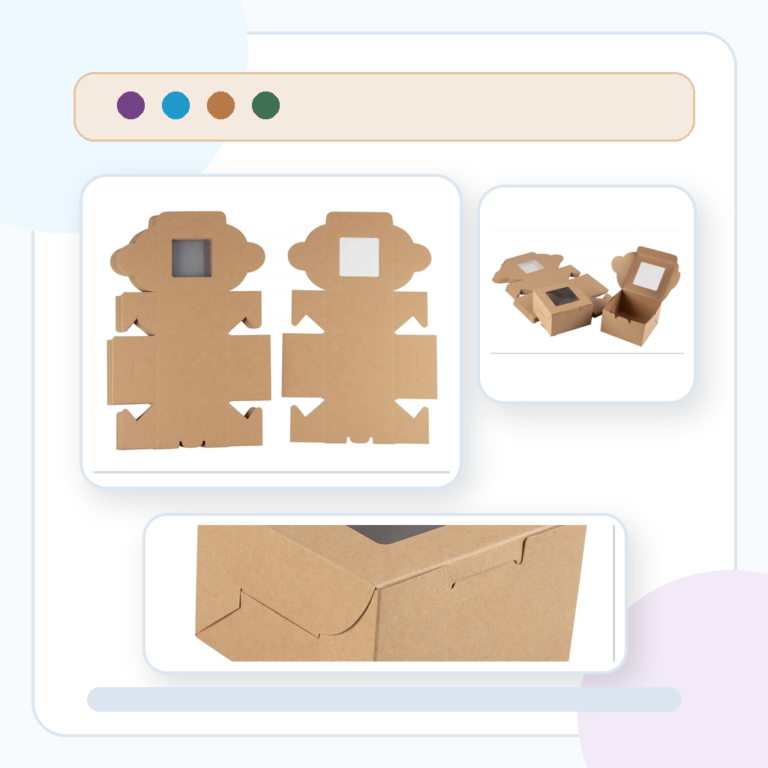
Artwork should be drawn around the dieline, not placed on a generic rectangle and adjusted at the last minute. The cover, sleeve, folds, windows, handle points and tray walls all affect what the customer sees. Keep important information away from creases and make sure small type remains readable after the package is assembled.
A black box can use white ink, restrained metallic detail or a quiet logo for an omakase direction. An orange or red box can support a lively takeaway identity. Kraft and white paperboard can communicate a different mood. The structure and food should guide the visual language rather than forcing every product into one color or finish.
Retail or catering versions may need product names, flavor identifiers, ingredient information, allergen notices, date coding or barcodes. Those details vary by market and by the business responsible for sale. Reserve practical print zones and provide the final approved information before artwork is released for production.
A physical color proof or assembled sample is valuable for long panels, dark backgrounds and clear windows. Review the result under restaurant lighting, retail lighting and photography lighting where possible. This helps the buyer decide whether the print contrast, finish and logo scale communicate the intended value.
Restaurant And Takeaway Operations
The package must work at the packing station as well as on the customer table. Staff need to identify the correct orientation, place the food quickly, add the condiments, close the lid and prepare the order for handoff without repeated adjustment. A beautiful structure that slows every order can become difficult to sustain.
Run a packing trial with several units, not only one. Measure the time required to assemble the box, load the sushi, position sauce cups, close the package and apply any seal or label. Note where fingers catch, where dividers move and where the food needs extra clearance. These observations can guide practical changes before production.
The box should also fit the restaurant’s storage system. Flat-packed cartons, nested trays and assembled units require different shelf space. If the package is pre-assembled, confirm how many units can be stored without crushing the corners. If the package is erected during service, confirm that the folding sequence is easy to teach to new staff.
A collection approach can reduce training time by keeping familiar elements across styles. The triangle box may use a different footprint from the long box, but the logo orientation, condiment logic and closure cues can remain consistent. Staff can then move between menu formats with less confusion.
For delivery, check the box inside the actual bag or outer carton. The package should not slide excessively, press against the bag wall or block other orders. If several boxes are stacked, review corner strength, lid movement and the order in which staff remove the units from the case.
Omakase, Catering And Gifting
Omakase sets and catering orders are often judged as complete experiences. The customer may open the package in front of guests, photograph the assortment or carry it to a meeting, celebration or private event. A refined lid, clear food order and carefully placed condiment area can make the packaging feel intentional from the first moment.
Gift-ready sushi boxes may use a stronger cover, a sleeve, a ribbon, a window or a printed message. The outside should feel presentable without hiding essential handling information. The inside should open in a way that reveals the food cleanly and gives the recipient an easy route to remove each piece.
For a black premium direction, compare custom black omakase sushi gift box with sauce cup inserts. For a wider tasting or presentation format, custom long sushi and dessert display box may be closer to the desired visual impact. A catering buyer may also compare custom black hinged lid sushi box with clear tray when a clear tray and fast access are more important than a formal unboxing.
The final structure should still be practical. Event staff may need to prepare many units in a short window, and the boxes may spend time in a vehicle before service. The design needs to protect the food, remain stable when carried and allow the staff to see whether the assortment is complete before the order leaves the kitchen.
When a brand offers both everyday takeaway and premium gifting, a shared collection helps the customer move between those occasions. The everyday box can be simpler, while the special set adds a richer board, window, sleeve or insert. The visual family connects the two without making them feel like the same product.
Retail And Chilled Meal Display
Retail sushi programs need a package that communicates quickly. A shopper may see the box for only a few seconds, so the product type, portion count, brand and visual variety should be easy to understand. A window can help, but the outer artwork and label area still need enough room for practical information.
A tray-led box can create a neat grid of sushi pieces, while a long box can highlight a roll selection or premium set. A triangular structure can stand out among regular rectangular packages and may work well for a special edition or sharing portion. Each format should be tested for shelf stability, stacking and visibility from the intended viewing angle.
Labels, dates and barcodes often need to be added after the main packaging is printed. Reserve a clear zone that does not cover the window, logo or opening instructions. If the assortment changes frequently, a flexible label or insert card may be more useful than permanently printing every flavor on the outer box.
Clear windows should remain clean through handling and chilled storage. The film, adhesive and board edge should be checked on the assembled sample. If the package will be placed in a refrigerator, confirm that condensation and temperature changes do not make the cover difficult to open or the print uncomfortable to handle.
A retail sample review should include the filled product, label, date code, outer case and the display shelf. Look at the box from the customer side, then remove it from the shelf and open it. This connects the visual presentation with the real shopping and eating experience.
Sustainable And Practical Design Choices
Material efficiency is part of responsible packaging planning, but the right decision depends on the actual structure and market. A compact folding box may reduce storage volume, while a rigid-feel gift format may provide a stronger presentation but use more board or components. Compare the full use case rather than judging one material in isolation.
Board thickness, insert depth, window size and accessory count can often be reviewed together. Removing unnecessary layers may reduce complexity, while a well-designed insert can prevent food damage and reduce the need for extra protective packing. The best balance comes from testing the real meal in the intended delivery and service conditions.
If recycled content, recyclable components or a particular fiber direction is important, state that requirement at the beginning. The package should be assessed for the local collection system, coatings, films, adhesives and mixed materials. Avoid making a broad environmental claim until the selected construction and documentation have been reviewed.
A collection can also help reduce unnecessary variations. One common footprint may support several menus through a sleeve, label or insert card, subject to production economics. This can simplify storage and staff training, but it should not be used when the common structure compromises food fit or delivery protection.
Keep the final specification clear. Record the selected board, inner tray, film, closure, print finish and packing method so future orders can reproduce the approved result. A practical design is one that stays understandable to the buyer, the production team and the customer.
Sample And Fit Testing
Images are useful for choosing a direction, but a filled sample is what confirms whether the package works. Load the actual sushi, including the tallest topping, the widest piece, sauce cups, garnish, chopsticks and any liner. Then close the box and move it through the planned route before making the final decision.
Check the opening motion, food clearance, insert stability, corner strength and ease of removal. If the package uses a window, look at whether the food is framed clearly. If it uses a sleeve or printed lid, confirm that the artwork remains aligned after the structure is filled and closed.
Ask the packing team to assemble and load several samples. Record the time required and any repeated adjustment. Then ask someone unfamiliar with the package to open it, identify the food, find the condiments and remove one piece. This can reveal unclear orientation or awkward access that a packaging specialist may overlook.
Delivery testing should include the real bag, outer carton, temperature condition and approximate holding time. Watch for sauce movement, sliding trays, loose lids, crushed corners and condensation. Catering testing should include stacking, carrying and table placement, especially when the package is part of a formal presentation.
Once the buyer has compared the styles, consolidate the chosen structure, dimensions, insert, artwork and material requirements into one approved specification. This gives the next stage a clear reference and helps prevent a visual idea from being confused with the final production design.
Wholesale Project Planning
A quotation is easier to prepare when the product brief is specific. Share the sushi type, finished piece dimensions, quantity per box, desired number of compartments, sauce cup size, chopstick requirement, preferred opening and whether the package is for everyday takeaway, gifting, catering or retail.
Include the target order quantity, artwork status, destination market and desired launch date. If the box will be reordered, state the expected replenishment pattern. These details help the packaging team review the construction, print method, sample route and outer-carton plan around the way the business actually operates.
Send a logo, color direction or rough artwork when available. A reference image can explain the mood, but the final dieline should be built around the selected box and the filled food. State which elements must remain fixed and which can change between menu versions or seasonal releases.
If you are comparing a compact meal box with a gift format, use the related products above and compare custom disposable takeaway paper sushi gift box, custom red three layer drawer sushi box and custom printed long sushi takeaway box with built-in carry handle. Each highlights a different balance of speed, visibility, carry comfort and presentation. The right choice is the one that fits the food, staff workflow and customer promise.
When the requirements are ready, use the Holidaypacfactory contact page and include the packed dimensions, desired style, quantity, artwork direction and destination. A clear brief gives the first sample a much better chance of answering the practical questions that matter.
Product Specifications
| Product type | Custom sushi packaging box collection with multiple box styles and optional inserts |
|---|---|
| Reference styles | Triangular takeaway gift box, long sushi roll box, compartment tray, hinged lid, sleeve and drawer directions |
| Suitable uses | Sushi rolls, nigiri, sashimi, omakase sets, catering portions, restaurant takeaway, retail meal sets and gifting |
| Insert options | Dividers, individual lanes, sauce cup wells, clear trays, liners, accessory pockets and custom support pieces |
| Customization | Length, width, height, opening, window, logo placement, board direction, print, finish and carry method |
| Material discussion | Paperboard, coated stock, kraft board, laminated board, clear film and inner components selected by project |
| Food-contact planning | Confirm direct contact, liner needs, food condition and destination-market documentation before approval |
| Order support | Dieline planning, artwork review, filled sample, packing trial, production and outer-carton planning |
FAQ
Yes. A restaurant or food brand can compare a compact triangular box, long roll box, compartment tray or gift structure and develop a related family with shared artwork, print direction and brand details.
Yes. Provide the finished length, width, height, toppings, portion count, sauce cups and accessories so the cavity or divider layout can be reviewed around the actual food.
These features can be discussed with the selected structure. Their position should be checked with the insert, closure, artwork, carrying method and required print area.
It can be developed for delivery, restaurant pickup, catering or gifting after the filled box is tested in the intended bag, carton, stacking and holding conditions.
Paperboard, coated stock, kraft board, laminated board, clear film, matte, gloss, foil detail, white ink and other project-specific options can be reviewed with the food and market requirements.
Send the preferred style, food dimensions, portion count, compartment plan, sauce cup size, artwork direction, order quantity, destination market and sample requirement.
Start Your Custom Project
Share the food dimensions, desired style, compartment plan, opening, window or carry requirement, artwork direction and order quantity. Holidaypacfactory can help compare the collection, prepare a practical structure, review a filled sample and plan the production route.
 Cassie LanFounder, HolidayPac · Leave a message
Food packaging, paper bags and food service paper for your next project.
Leave your request anytime. Our sales team will reply with pricing, samples and production details.
Leave your request anytime. Our sales team will reply with pricing, samples and production details.
Tell us what you're packaging and we'll ship a physical sample plus a free 3D mockup within 24 hours — no cost, no obligation.
We've received your inquiry and our team will get back to you within 24 hours.