Door to Door service
Welcome to Holidaypac Packaging Solutions Factory!

tiger@holidaypac.com

+86 136 5233 6188
Welcome to Holidaypac Packaging Solutions Factory!
tiger@holidaypac.com
+86 136 5233 6188
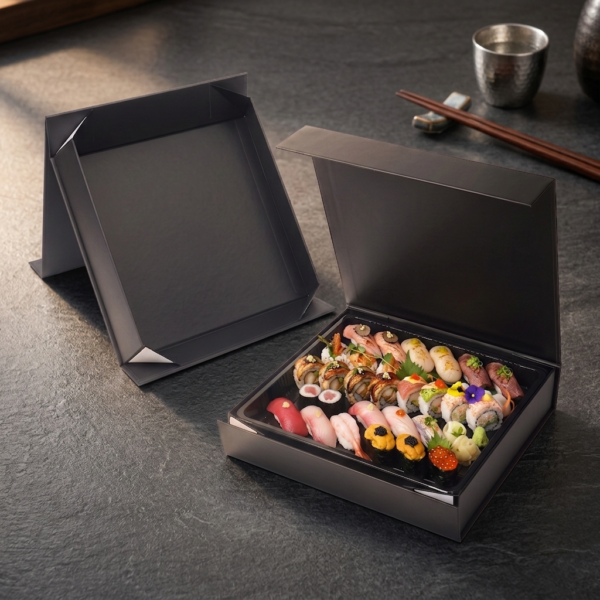
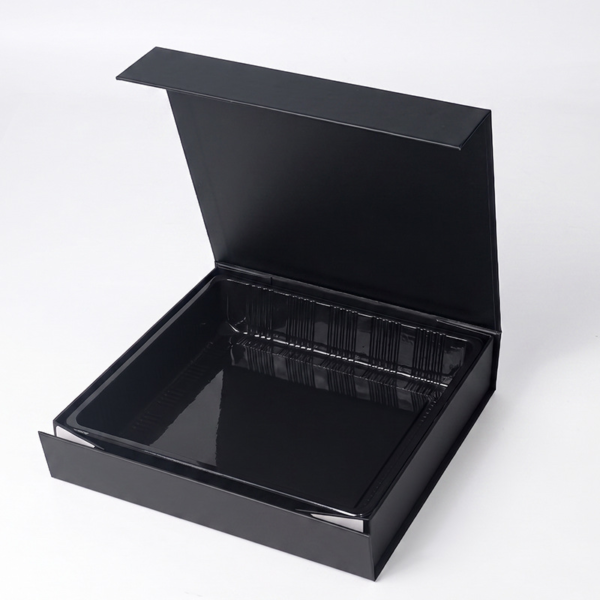
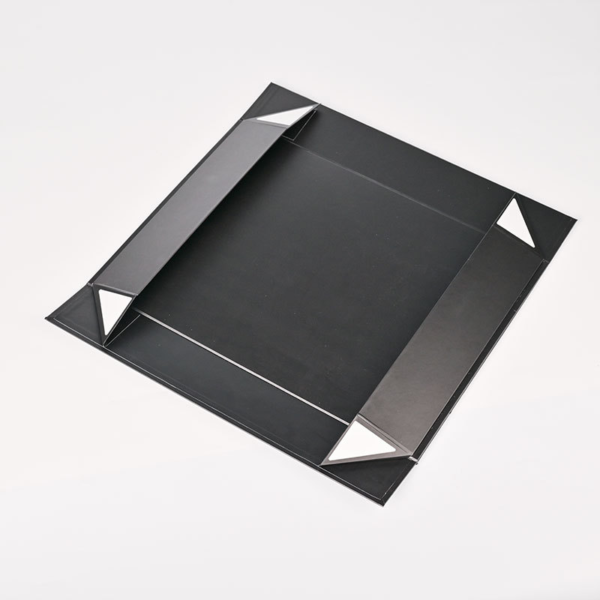
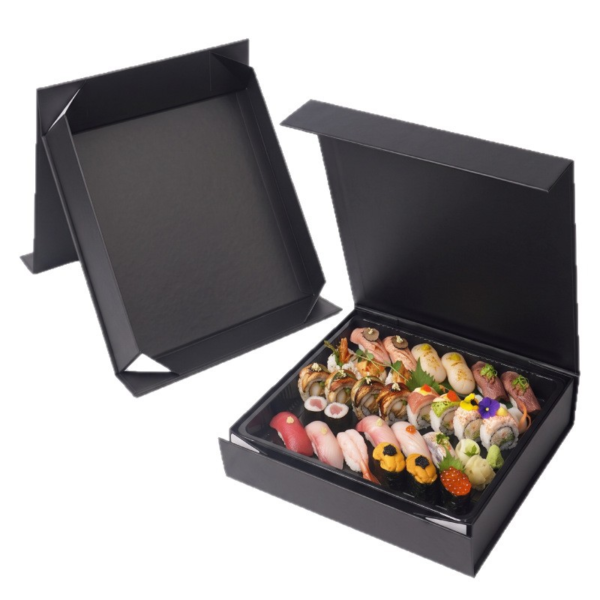
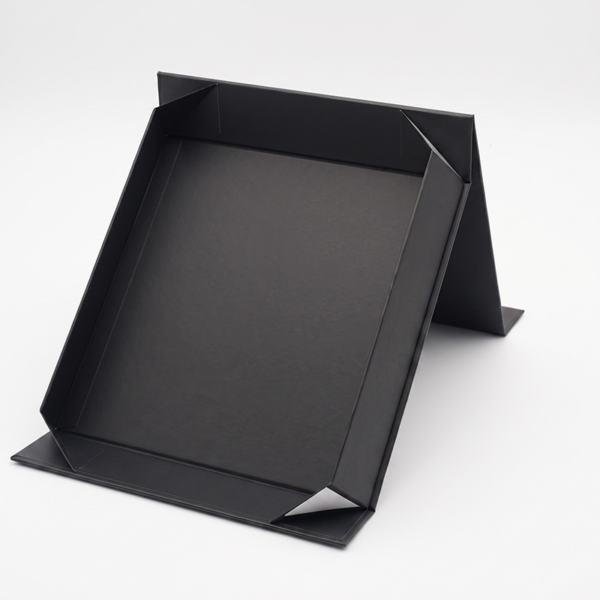
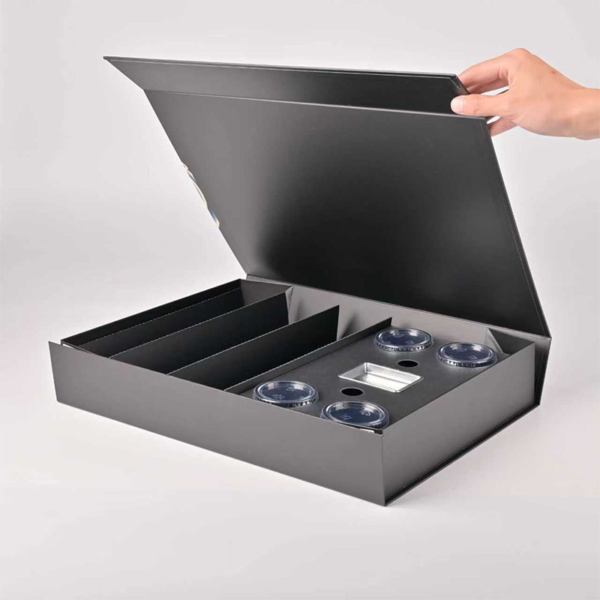
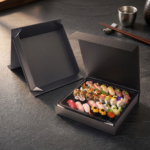
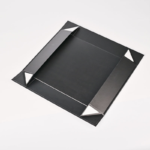
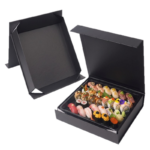
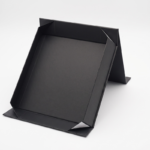
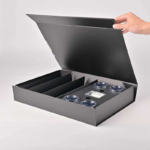
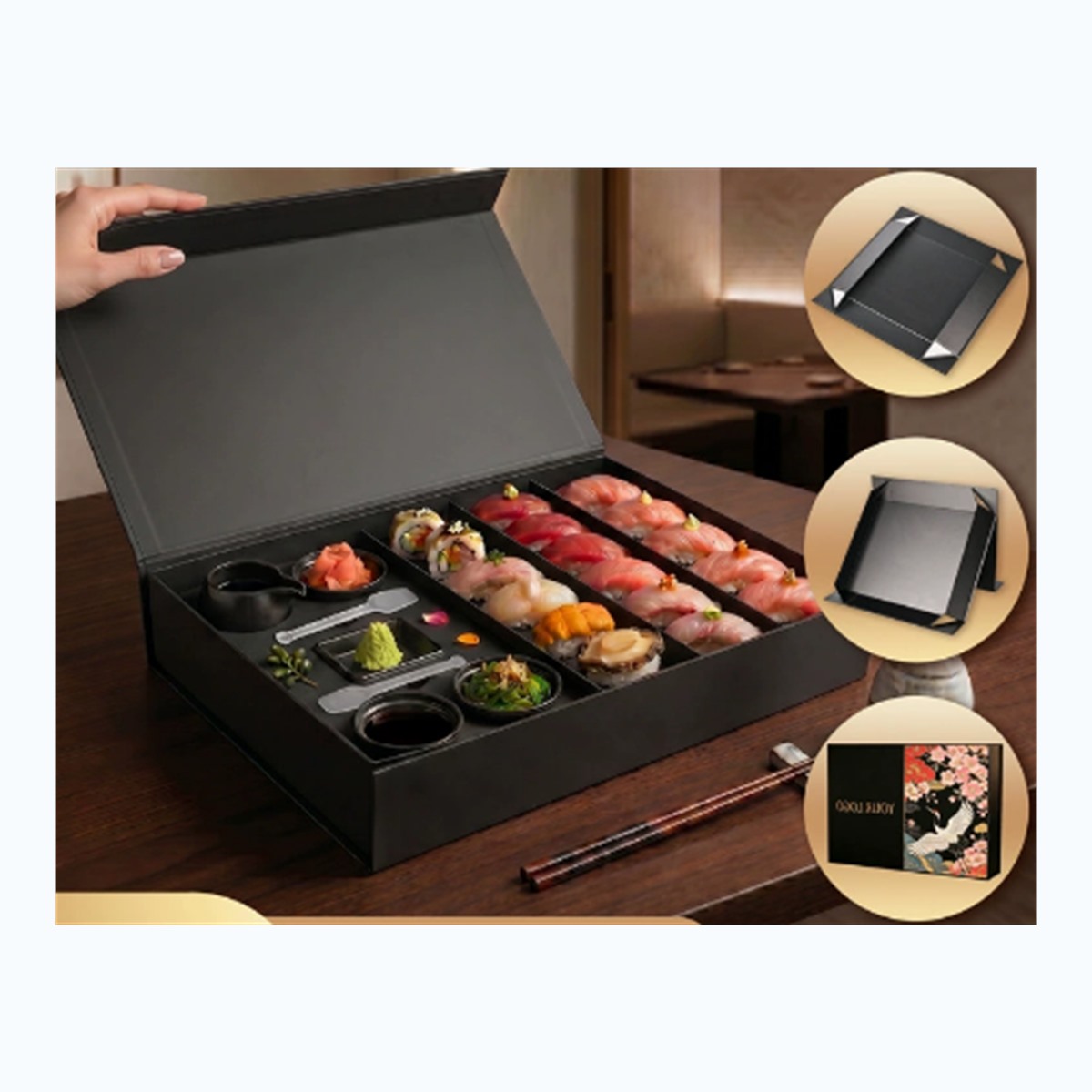
This custom black hinged lid sushi box is built for premium takeaway sets, compact bento meals and fresh food brands that want a cleaner opening moment. The attached lid creates a polished presentation while staying practical for everyday restaurant use, delivery service and retail food programs.
Holidaypacfactory can adjust the size, board grade, clear tray shape, lid movement and print finish so the final packaging fits your menu, your service speed and your brand direction. It is a useful choice for sushi rolls, sashimi assortments and divided meal programs that need more style than a plain carton.
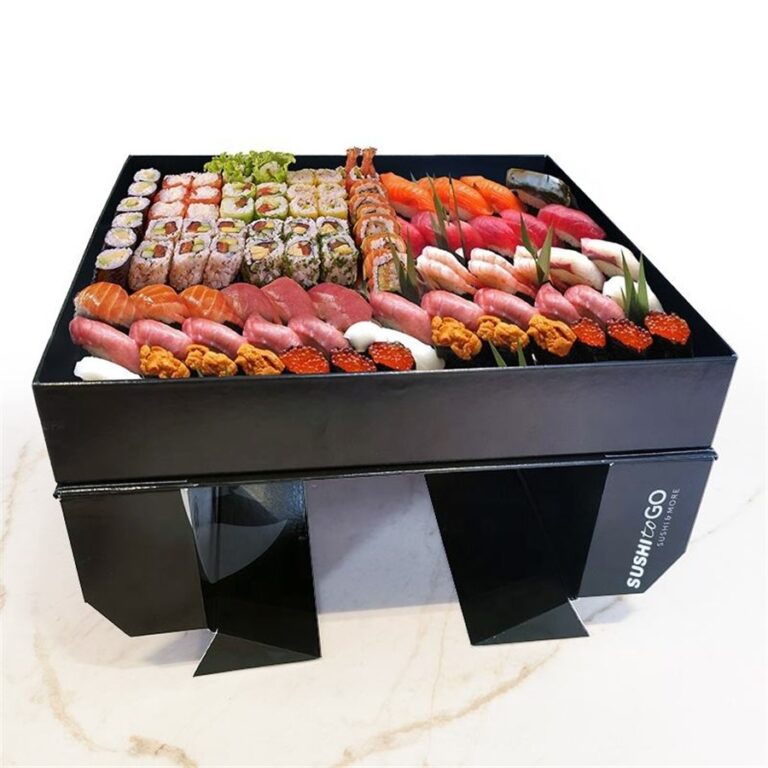
This custom black hinged lid sushi box is designed for restaurants, caterers, meal brands and retail food programs that want a sharper presentation than a basic takeaway carton. The dark outer body creates a refined frame for colorful sushi, while the attached lid keeps the opening motion simple for staff and clear for customers. It is suitable for roll assortments, sashimi selections, nigiri sets, party portions and premium delivery meals.
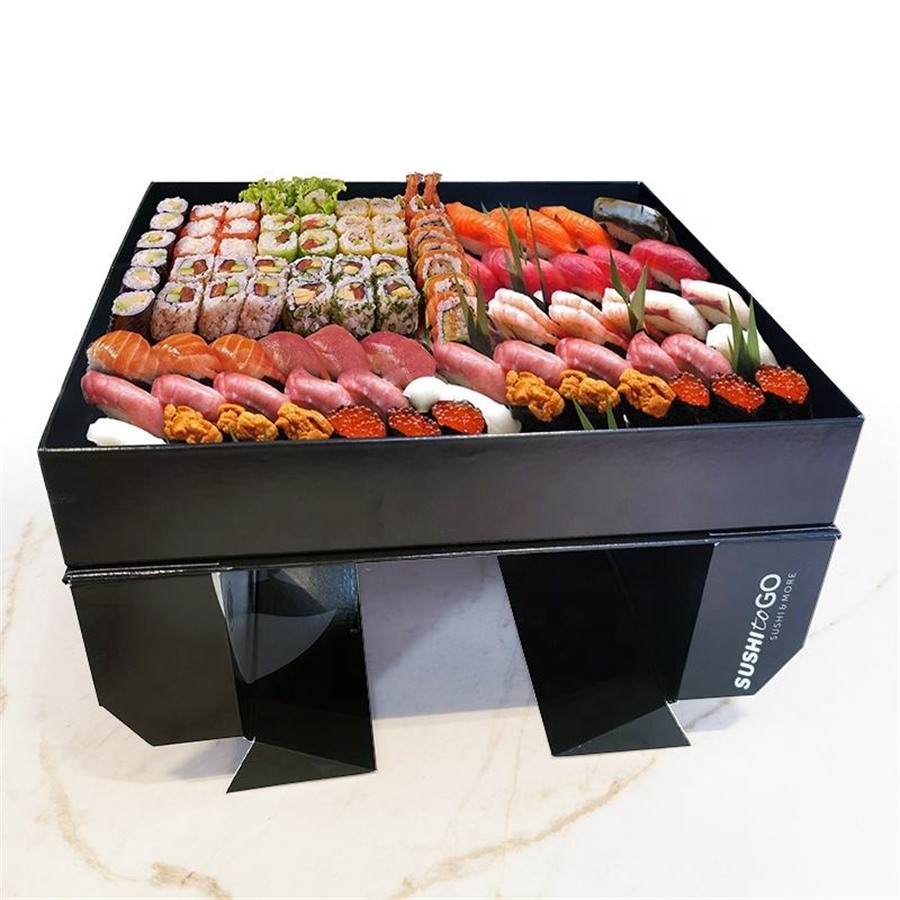
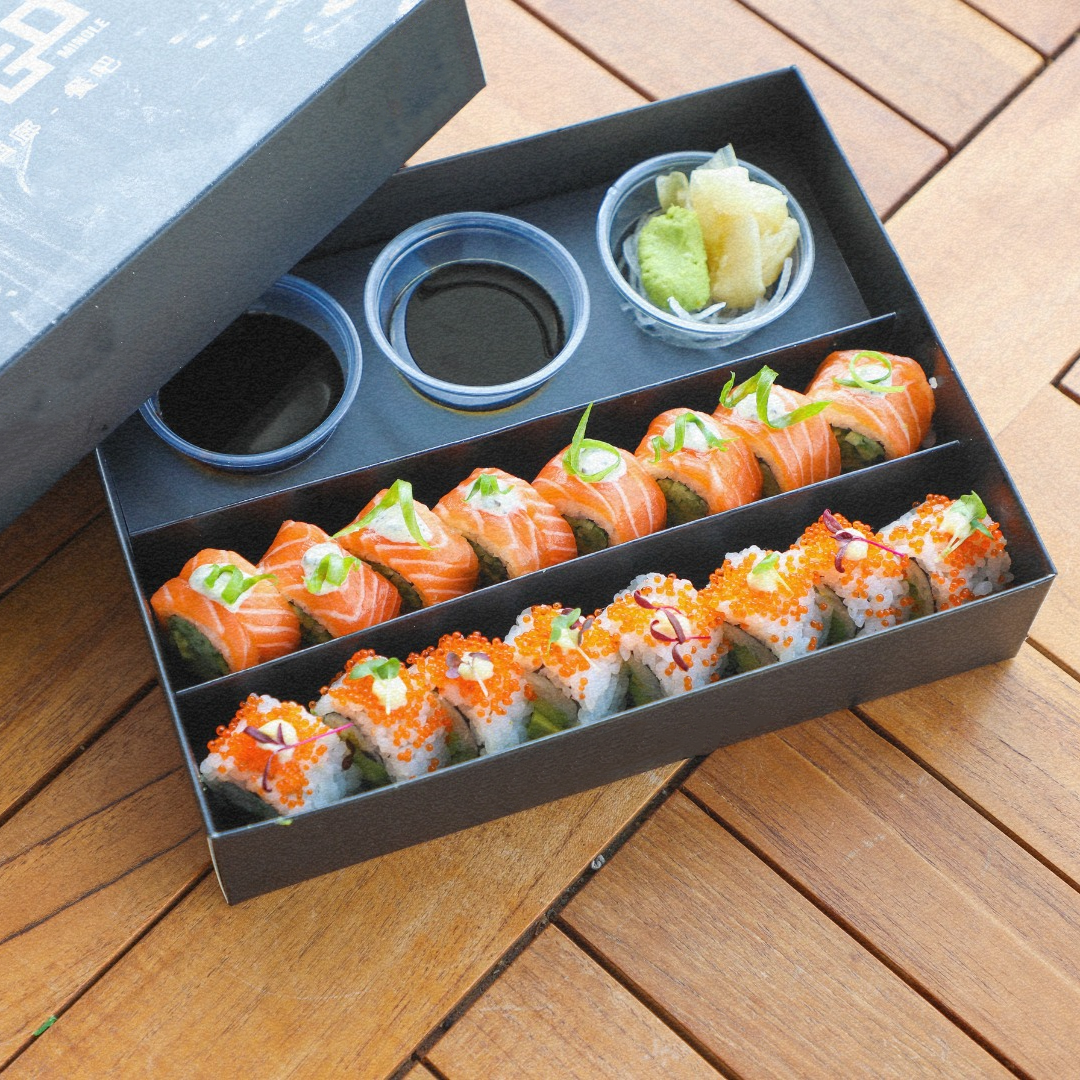
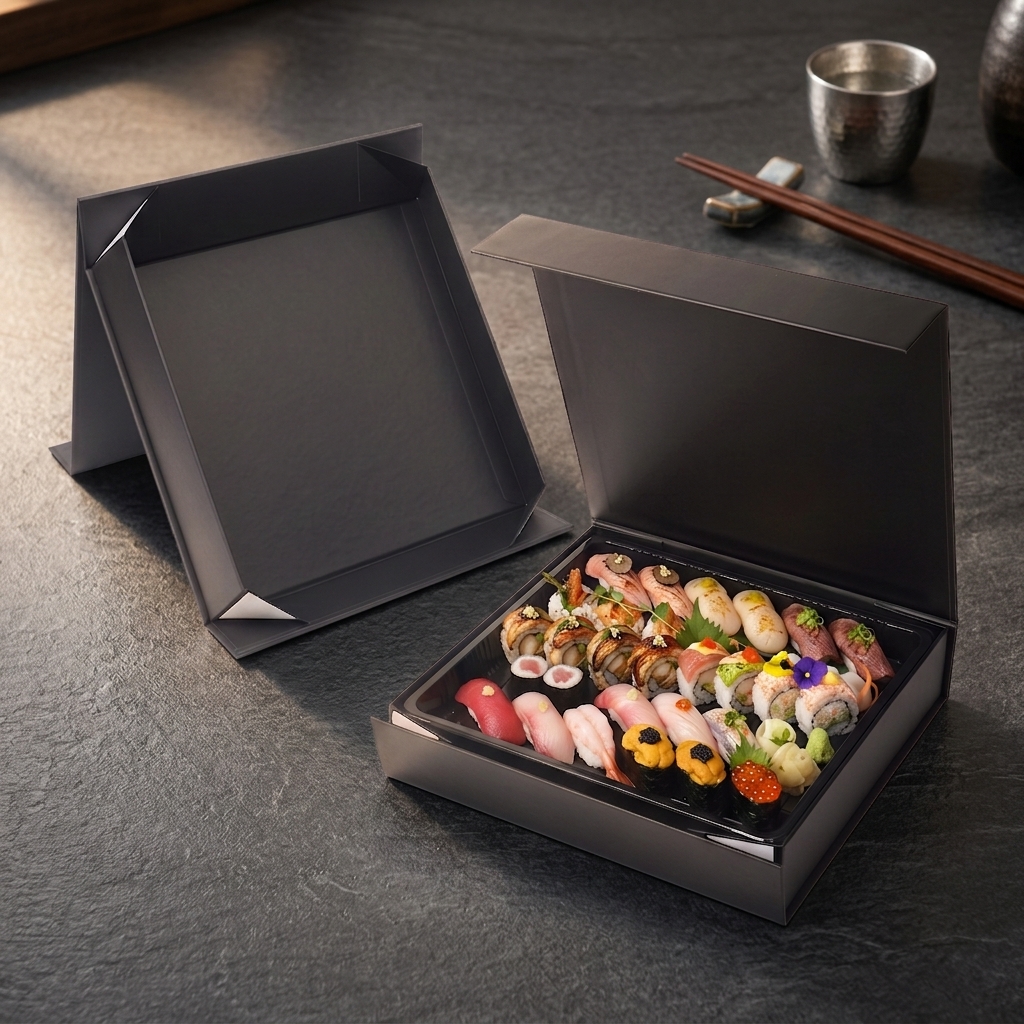
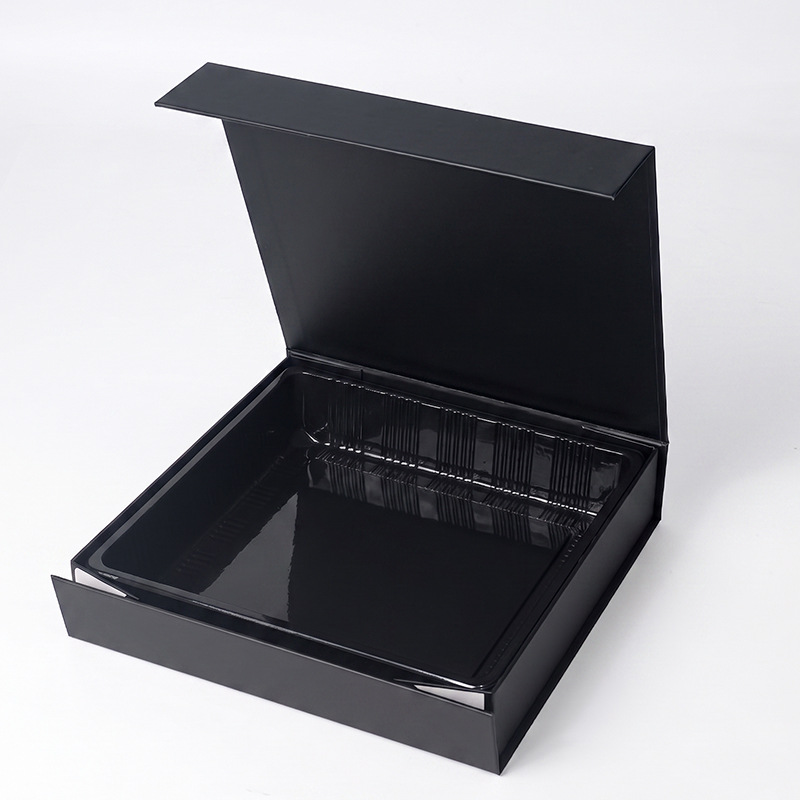
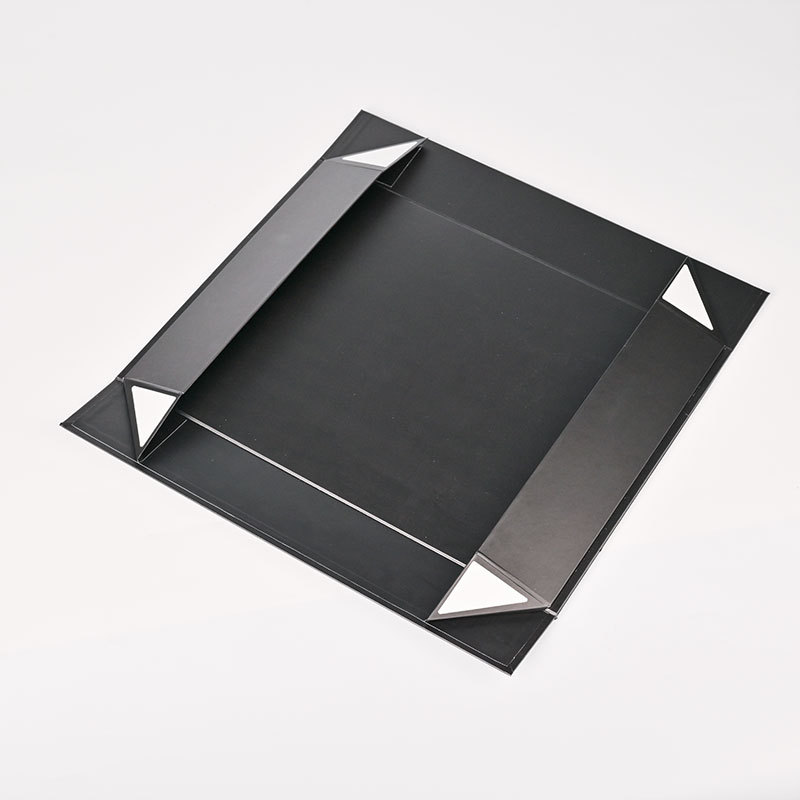
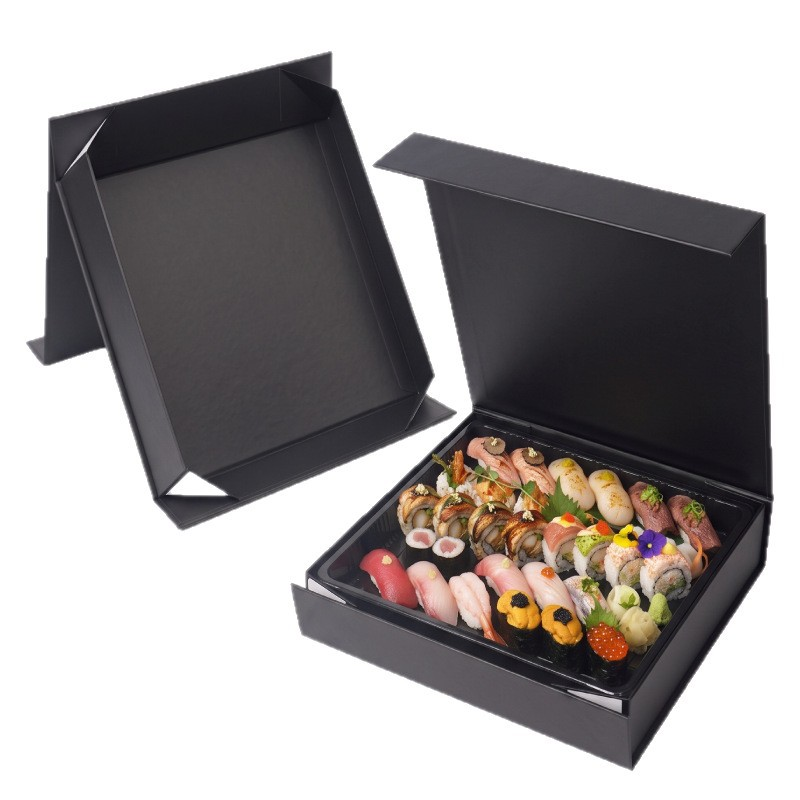
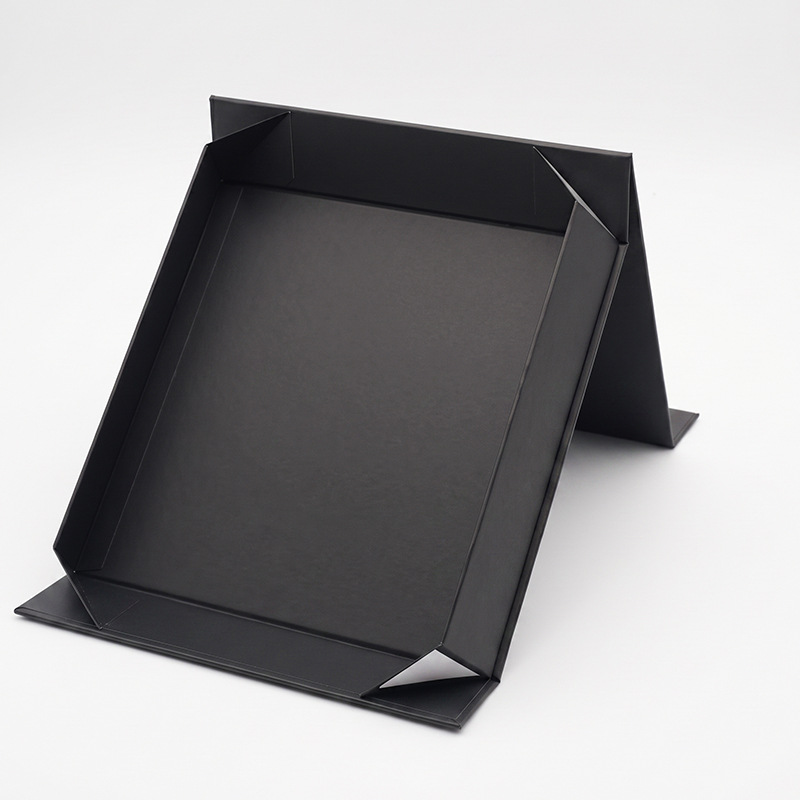
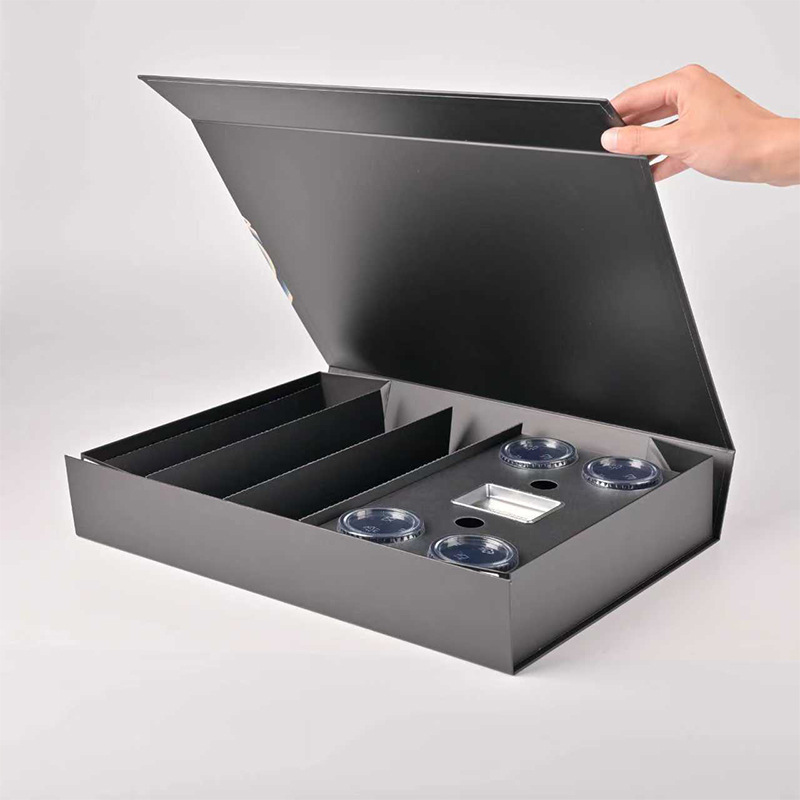
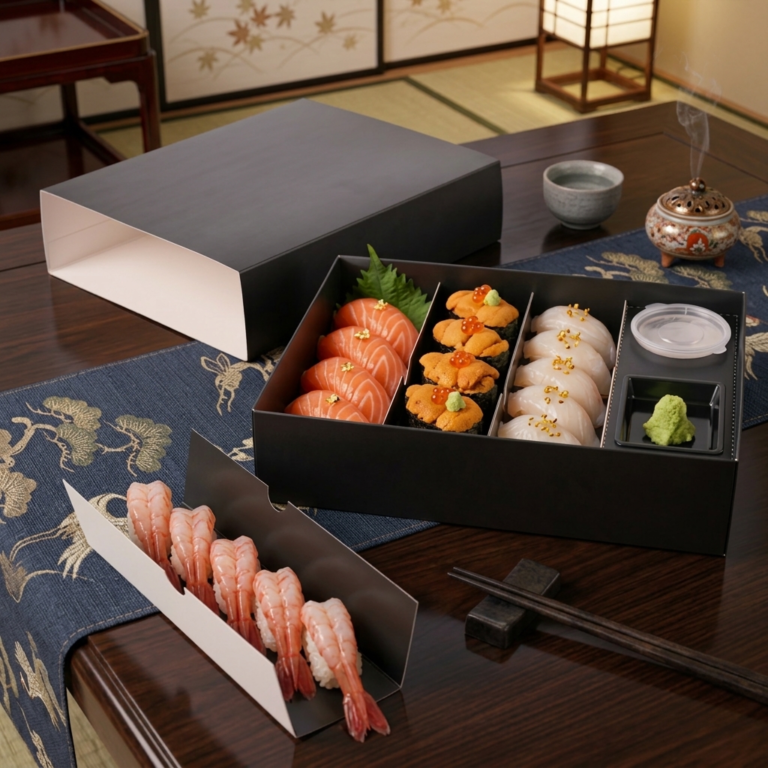
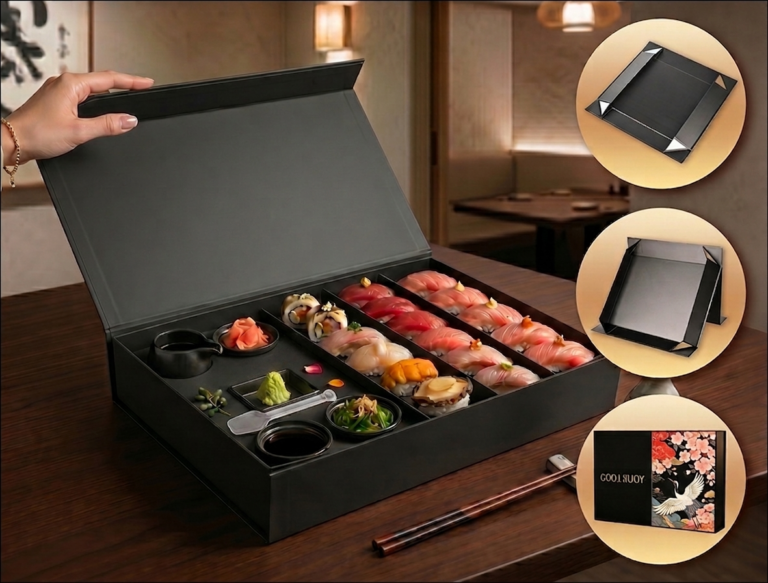
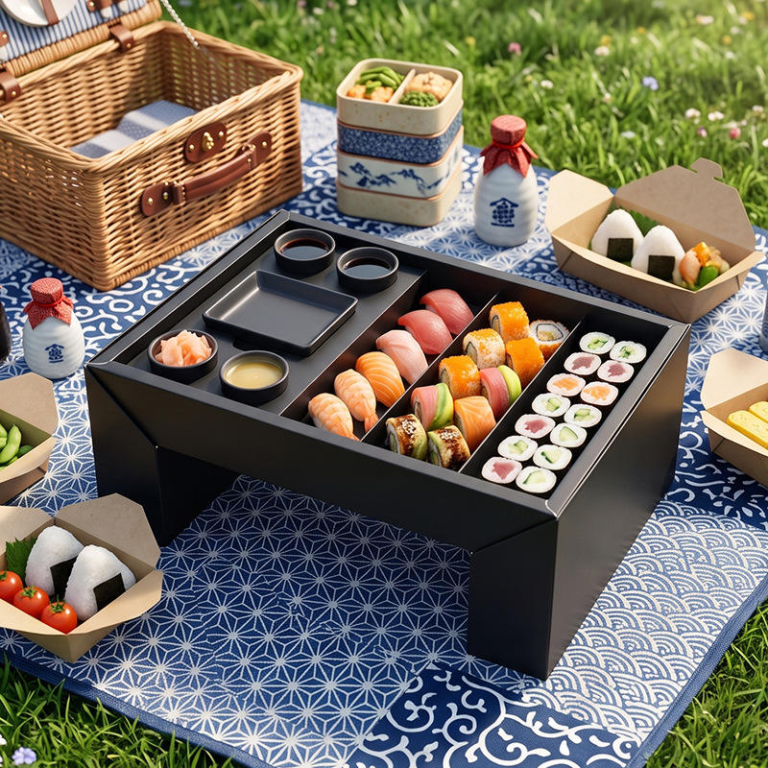
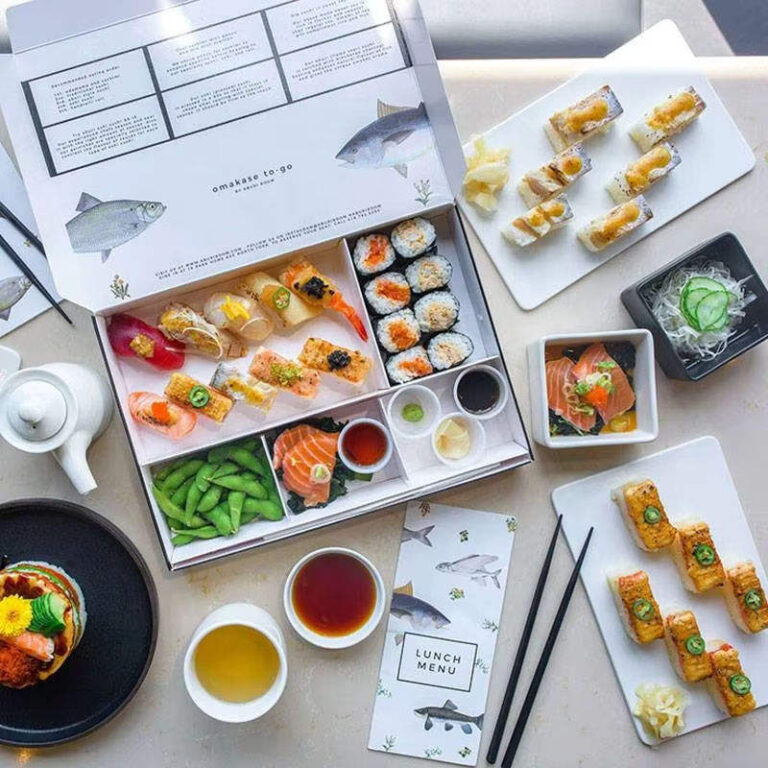
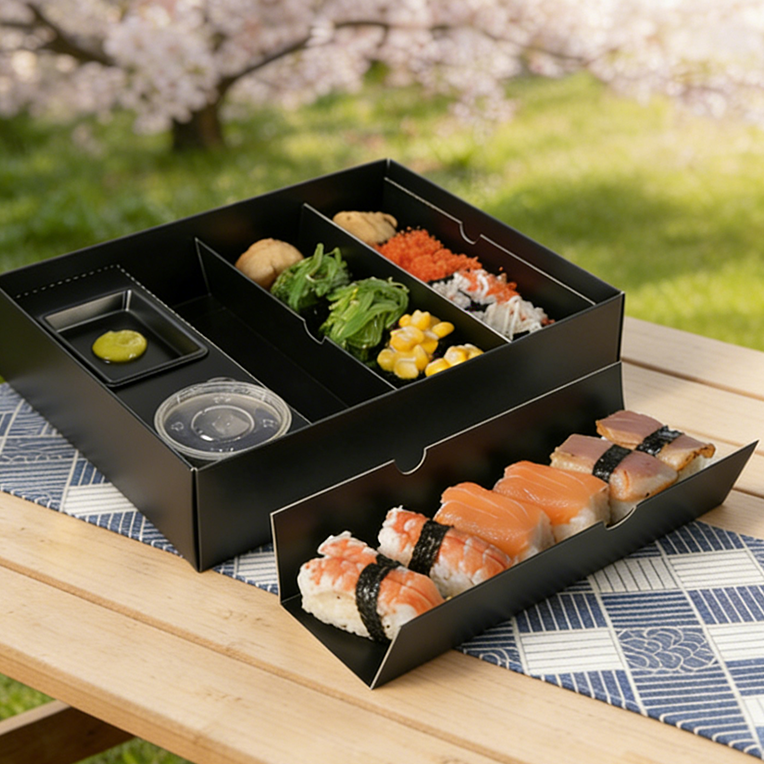
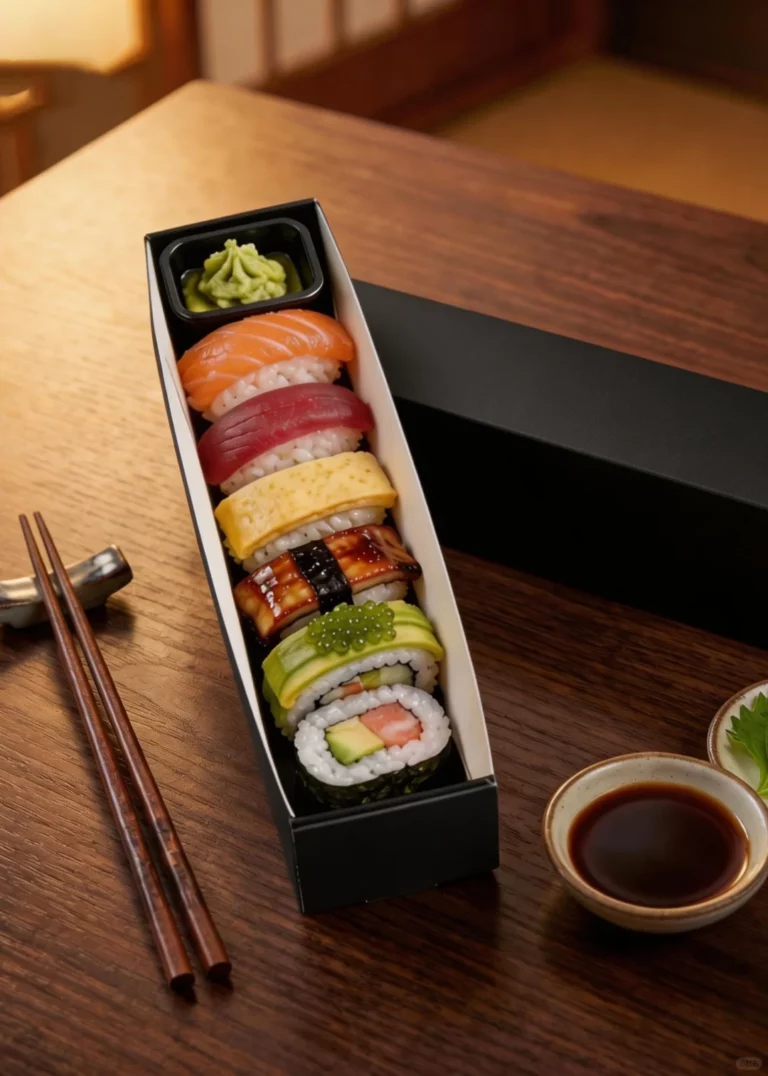
The product images show the box as a complete packaging system: a black folding body, a connected lid and a clear inner tray with multiple food compartments. That combination lets the package protect the menu while keeping the arrangement easy to read. The tray can separate sushi pieces, sauce cups, garnish, wasabi or other small components so the meal arrives in a more composed condition.
Holidaypacfactory can adjust the footprint, wall height, hinge position, tray depth, compartment count and print area around the actual menu. The lid can be developed for a clean close and a practical opening angle, while the clear tray can be planned around the largest food item and the accessories that must stay separate. The result is a custom food package that feels premium without making the service workflow unnecessarily complicated.
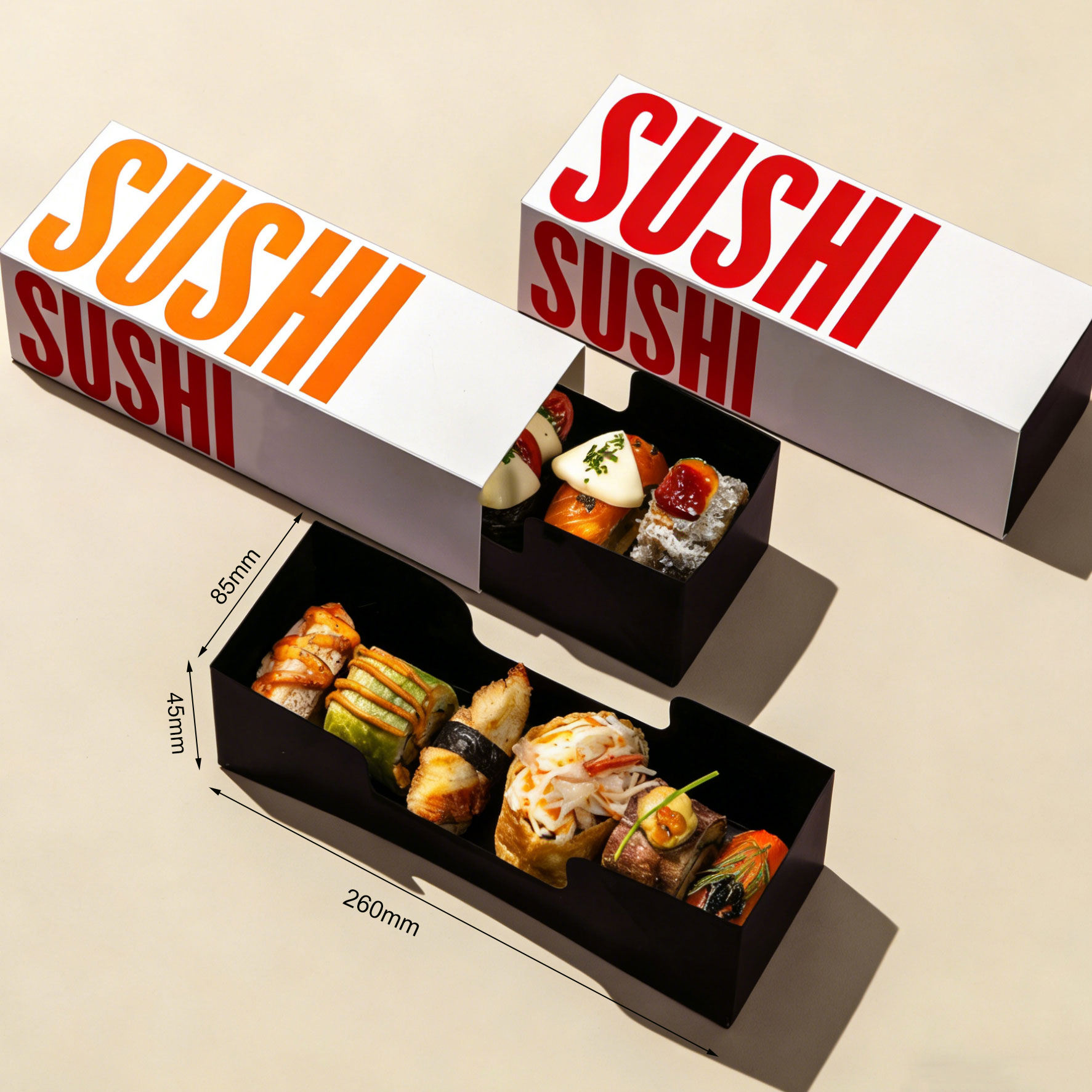
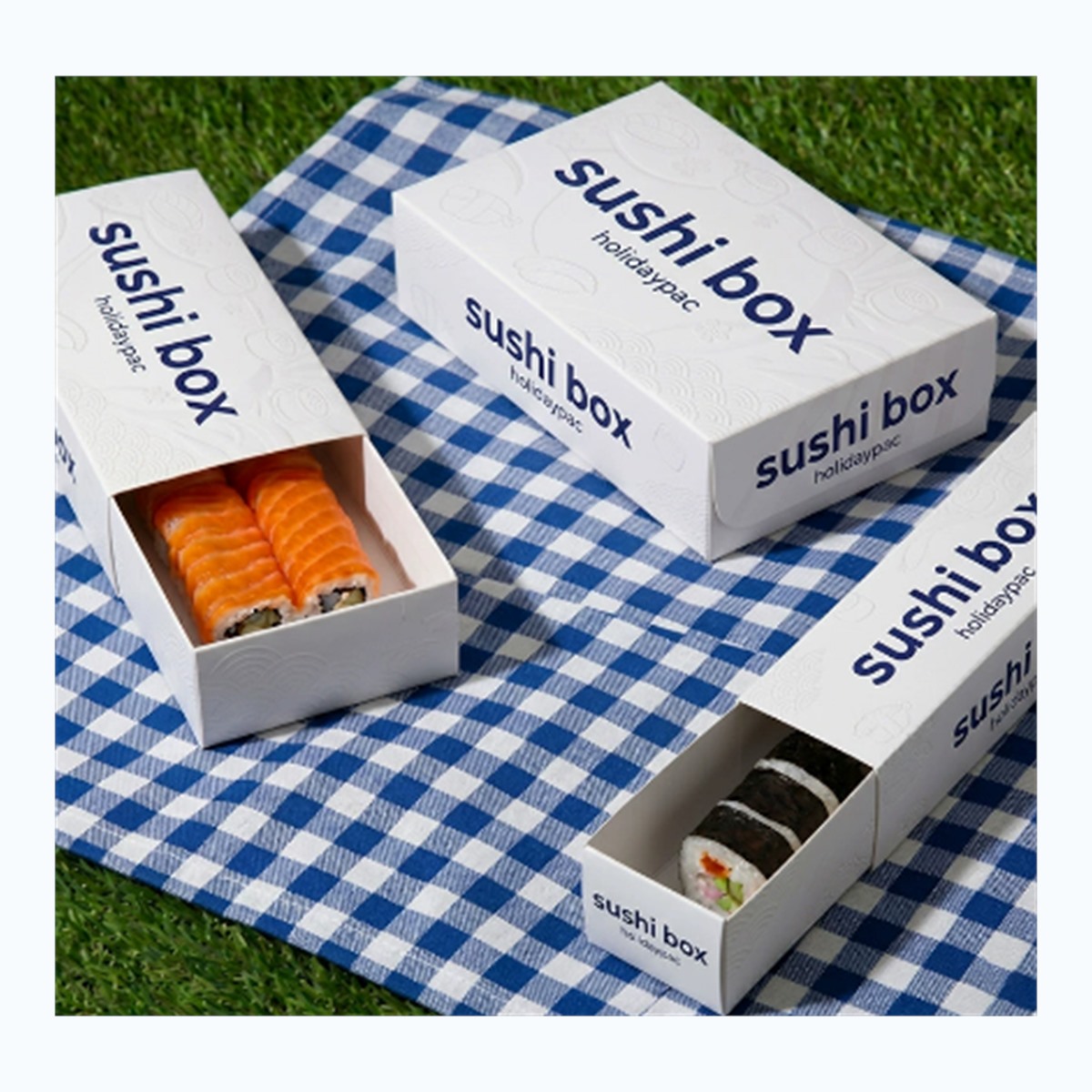
For buyers comparing other sushi structures, it helps to look at Custom Disposable Takeaway Paper Sushi Gift Box and Custom Drawer Sushi Box with Printed Sleeve as well. Those formats offer different opening motions, while this hinged lid box is a strong fit when the brand wants one attached lid, one clear presentation tray and a direct handoff from kitchen to customer.
The hinged lid is a practical part of the customer experience. It stays connected to the base, opens without a loose separate cover and gives the customer a natural view of the food as soon as the package is lifted. In a busy takeaway setting, that makes packing and handoff easier because staff do not need to match a lid to a separate tray or explain how the package opens.
The clear inner tray gives the sushi a defined presentation surface. Its compartments can be arranged for narrow rolls, larger maki, sashimi pieces, nigiri, sauce cups, garnish or small side portions. Clear material helps the food remain the visual focus while the black outer box provides contrast and structure around it. The compartment plan should be based on the actual portion sizes rather than a generic grid.
A successful hinged format should open smoothly while remaining stable when placed on a counter, dining table or delivery surface. The fold line, side walls and base support need enough strength for the expected food weight, but the package should still be easy to assemble and close. Sample testing with the real tray and a full food load helps confirm that toppings do not touch the lid and that the tray does not shift inside the box.
This structure is useful for single premium meals, sharing sets, catering portions and retail packs. It gives a more deliberate opening moment than a plain clamshell while keeping the handling path straightforward. If a brand later develops several sizes, the same lid and tray logic can be adapted to smaller lunch sets, standard assortments and larger party boxes.
The black exterior gives the packaging a strong premium character and makes lighter food colors stand out. That contrast can work especially well for sushi restaurants, omakase programs, corporate catering and giftable meal sets where the package needs to look polished before it is opened. The clear tray adds visibility inside the box, so the outer color and the food presentation support each other instead of competing.
Brand artwork can be placed on the lid, front panel, side wall or a surrounding paper band depending on the structure. A restrained logo, menu name or short message usually keeps the box easy to recognize. The black surface can support white, silver, light blue, soft lavender or a single bright brand color. Artwork should leave enough quiet space for the box shape and the food to remain the main visual story.
Holidaypacfactory can review printing, matte or gloss finishing, foil accents, spot details, embossing and logo placement for the intended market. A matte surface can create a softer luxury feel, while a controlled gloss detail can help a logo or pattern catch the light. The clear tray should remain visually clean, with labels or inserts used only where they improve food identification or service accuracy.
If you are building a wider food packaging family, the same brand direction can connect with Biodegradable Luxury Disposable Sushi Packaging Box and Custom Logo Biodegradable Sushi Burger Food Packaging Drawer Box. The hinged lid box can act as the premium presentation item while other structures support everyday takeaway and retail meal lines.
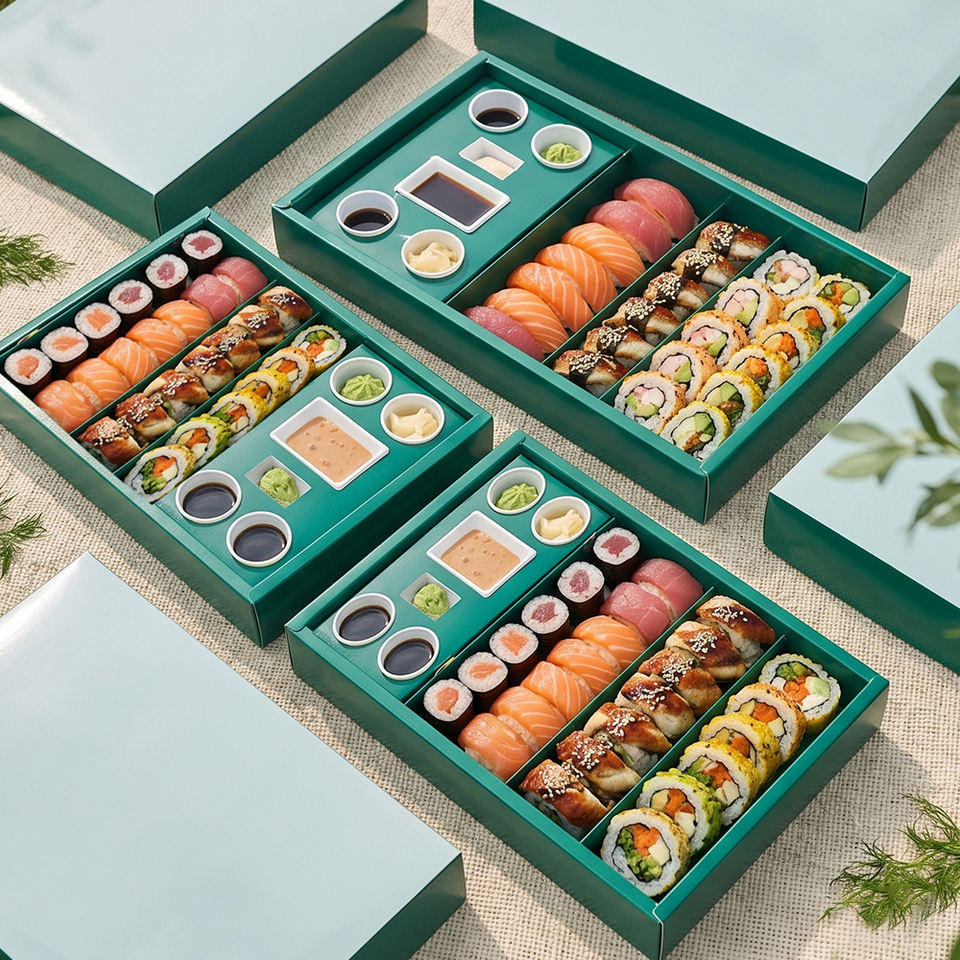
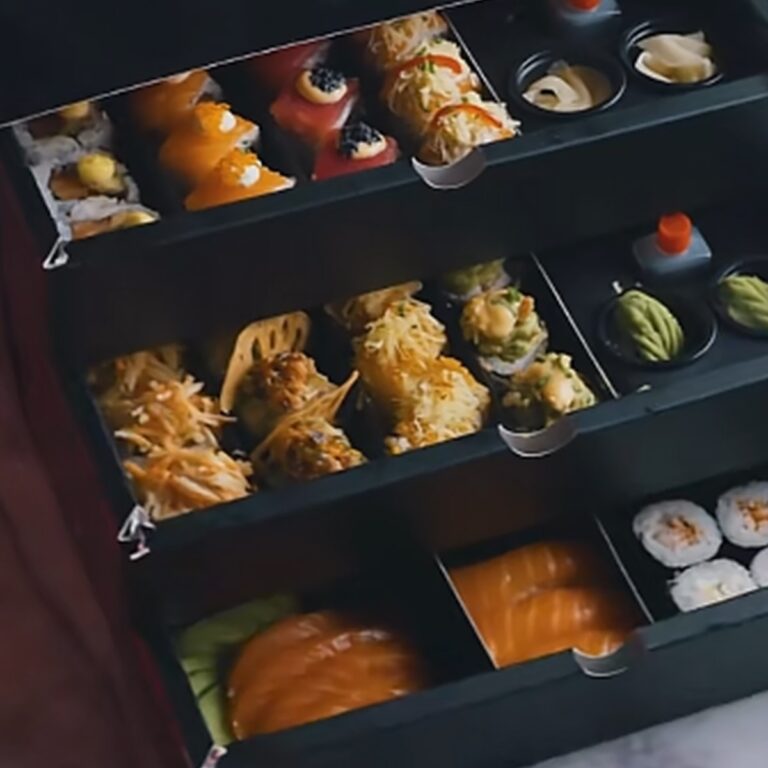
The inner tray is where the package becomes specific to the menu. A clear tray can be divided into long lanes for sushi rolls, smaller wells for nigiri, broader areas for sashimi and dedicated points for sauce cups or garnish. The exact layout should follow the food dimensions, portion count and service sequence so every item has enough room without leaving unnecessary empty space.
Compartment separation helps protect the appearance of delicate food. Sushi pieces can remain aligned, sauces can stay away from rice and toppings, and garnish can be placed where it supports the final presentation. For a mixed set, different compartment widths can create a visual rhythm that makes the meal easier to understand at a glance. That matters for both customers and staff preparing many orders at once.
The tray should sit securely inside the black outer body and remain easy to remove for cleaning or disposal handling according to the final specification. Its depth should allow the lid to close without pressing the food, while the base should provide enough support for carrying. If the brand uses chilled ingredients or sauces, tray clearance and surface selection should be reviewed together with the paperboard body.
For teams comparing other sushi formats, the Custom Sushi Magnetic Folding Box with Sauce Insert and Custom Eco-Friendly Green Sushi Box with Built-In Sauce Cup pages show alternative ways to manage condiments and visibility. This product is more direct: the clear tray organizes the food inside a dark hinged box and keeps the opening experience easy to understand.
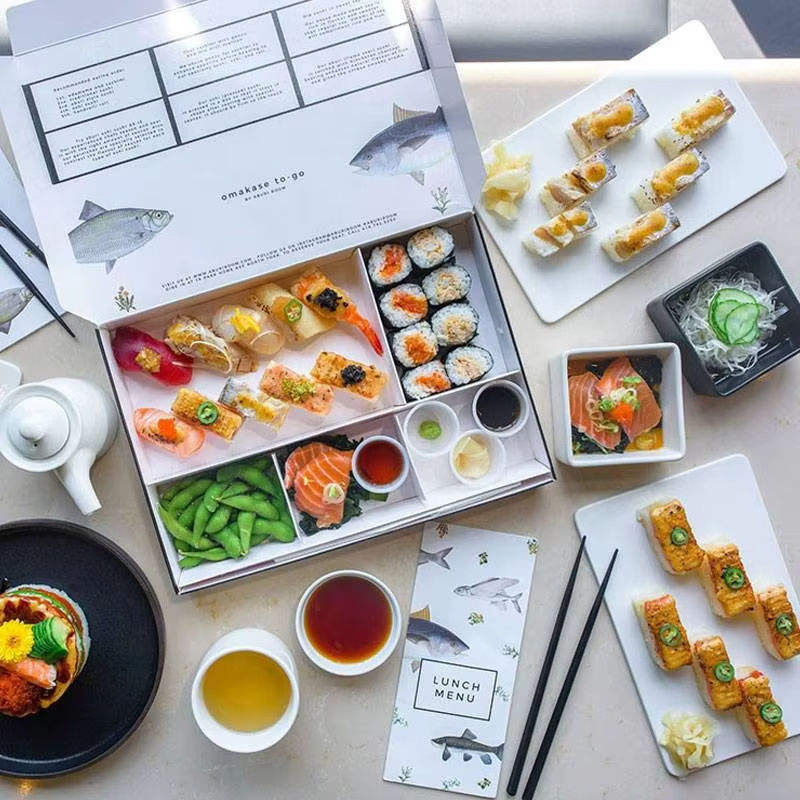
This hinged lid structure is especially useful when the food should feel ready to present as soon as the package is opened. Restaurant pickup benefits from a tidy one-piece format, delivery benefits from a stable outer body and retail display benefits from a clear compartment tray that keeps the assortment visually organized. The packaging can be sized for individual meals, shared sushi selections, mixed sashimi sets or branded event portions.
For sushi brands, the box can hold standard rolls, salmon selections, nigiri assortments, premium chef sets or party trays. For broader fresh food programs, the same basic idea can also support small cold appetizers, tasting bites, desserts or neatly divided snack assortments where a clear tray is useful. The structure gives the packaging team a polished platform without requiring a separate rigid gift box.
The black exterior is suited to brands that want a modern restaurant feel rather than a casual picnic look. It can present well on a takeaway counter, in a delivery bag or in professional photography, while the clear tray keeps the internal portion layout legible. The design should still be practical: the package must close efficiently, stack sensibly and arrive with the food kept in place.
Holidaypacfactory can adapt this concept for restaurant groups, caterers, specialty retailers and seasonal menu launches. Once the outer dimensions and tray configuration are approved, future food changes can often be handled by adjusting compartments, printed artwork or label placement rather than starting the packaging design again.
A good hinged lid box has to work on the production line as well as in the customer’s hand. Staff should be able to open the lid, position the clear tray, load the food, close the package and move it without fighting the structure. That means the hinge fold, sidewall height, locking detail and base support all need a practical review during sampling. If the lid is too stiff, packing becomes slow. If it is too loose, the package can feel unfinished.
The inner tray needs a stable fit. It should sit flat in the base, leave the right amount of headroom for food and remain properly positioned when the box is carried. The sample images are useful for checking whether the compartments provide enough separation and whether the customer can clearly see the meal when the lid is opened. A small adjustment to tray depth can significantly improve the final food presentation.
For delivery, the box should fit standard bags or outer cartons cleanly. The service team should test stacking, short-distance movement and the way the lid remains closed during handoff. If several box sizes are planned for the same menu family, the tallest item should be tested first so the buyer knows whether the same carry bag, carton and storage approach can support the entire range.
Holidaypacfactory can coordinate the structure, tray, printing and packing method so the box is not only attractive, but also reliable for real food service. This planning matters most when the product will be used repeatedly across a busy lunch counter, premium delivery program or high-volume catering schedule.
A useful brief starts with the food itself: number of sushi pieces, roll dimensions, side dishes, sauce cup diameter, garnish height and whether the package is intended for pickup, delivery, catering or retail display. Photos and measurements of the real menu are helpful because they show the food height and visual balance more clearly than a written list alone.
The next part is the desired box experience. Buyers should decide whether the package should feel minimal, luxury, restaurant-focused, seasonal or giftable. That direction guides the black board finish, logo size, lid artwork, color accents and the amount of clear tray visibility. A focused brand direction prevents the final package from looking crowded after it is folded and filled.
The final part is production planning. Quantity, delivery destination, sample requirement, material preference and desired finishing all influence quotation and timing. If the buyer needs a coordinated bag, label, sticker, menu sleeve or carry carton, those elements should be mentioned early so the complete packaging range can be planned as one system.
Holidaypacfactory can then suggest a practical footprint, lid height and compartment layout. The strongest result usually comes from one clear food use case and an approved tray plan rather than a box that tries to fit too many unrelated meals at once.
A hinged lid sushi box often becomes the first piece in a wider food packaging family. Once the customer approves the opening motion and the visual tone, the same language can be carried across takeaway cartons, sandwich packs, snack boxes, dessert sleeves and meal kits. That gives the brand a stronger shelf identity without forcing every package into the same structure.
For reorders, it helps to keep the approved board thickness, color code and dieline on record. That way the next run can update the artwork or menu name without reworking the whole box. This is especially useful for seasonal changes, regional menu edits and limited-time lunch campaigns.
The same family approach also supports channel changes. A casual takeaway version may use lighter color and a more open feel. A retail chilled version may use stronger logo contrast and clearer label space. A premium restaurant version may use black or deep navy with a more restrained print layout. The base structure can remain the same while the final look changes by market.
Holidaypacfactory can keep these variations organized so the packaging program grows without becoming visually scattered or difficult to reorder.
This box works because it sits between a standard takeaway tray and a formal gift box. It is more organized than a simple folding carton, but it is still fast enough for daily restaurant work. The attached lid creates a small sense of occasion, which makes the meal feel more intentional without demanding a heavy rigid construction.
For sushi and premium fresh-food brands, that balance matters. Customers want a package that feels clean and modern, while staff want a box that is easy to load, close and stack. A hinged lid sushi box can do both when the clear tray, hinge line and base are planned carefully. It supports food visibility, brand printing and practical handling in a single format.
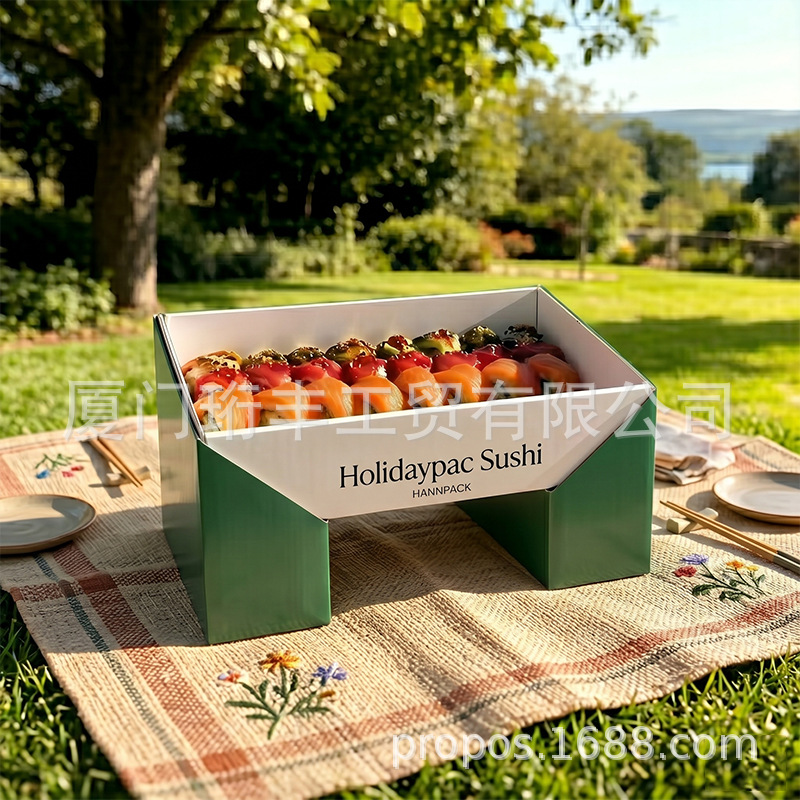
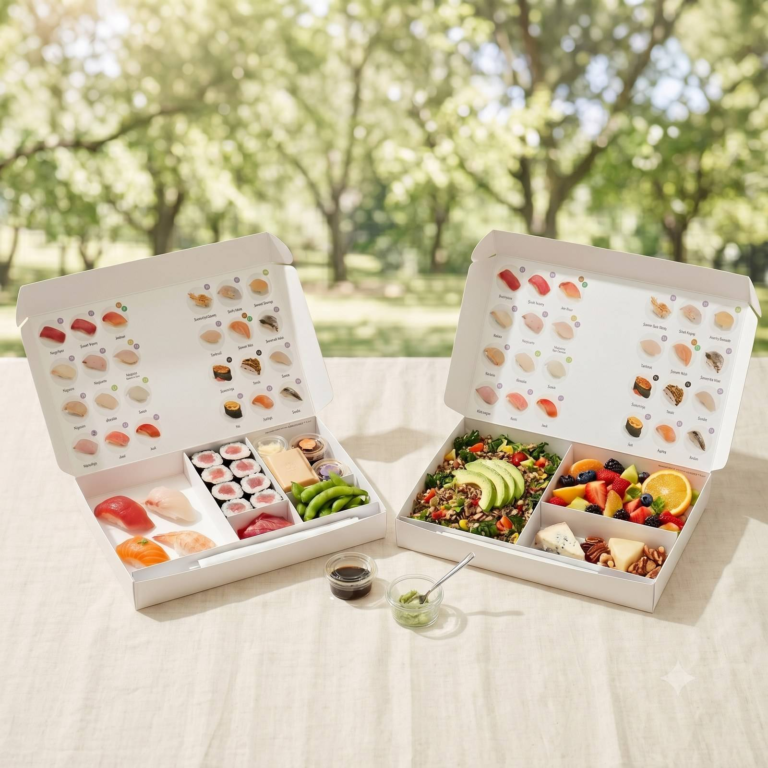
The structure also supports wider creative use. A restaurant can use it for lunch sets, a seasonal picnic special, a family sushi pack or a retail lunch offer. The same box can be adapted to different menu types by changing the internal layout and artwork. That keeps the packaging system flexible without losing consistency.
When the size, material, clear tray and print are all aligned, the hinged lid sushi box becomes a useful brand asset rather than just a container.
Once the first sample is approved, a well-planned hinged lid sushi box can move into repeat production with far less effort. That is important for restaurant groups and takeaway brands because menus often change by season, ingredient availability or customer demand. If the structure record is clear, the buyer can update the artwork while keeping the tray and lid behavior stable.
For repeat orders, the most helpful information is usually the actual box size, the approved board specification, the artwork file version and the packing method. When those details are written down, the next production run is easier to control. The factory can keep the same folding line, same lid movement and same tray depth while changing the branding or menu line name as needed.
If the brand plans to release several menu sets over time, the same structure can be used to create a packaging family. A lunch assortment may use a clean logo panel, a premium omakase version may use a deeper black finish and a seasonal set may use a limited accent color. The customer still recognizes the same attached-lid format, which helps the brand feel more stable across campaigns.
Holidaypacfactory can also help compare the hinged lid structure with other food packaging options when a buyer wants to expand the line later. That way the packaging system grows in a controlled way instead of becoming a group of unrelated boxes that are hard to reorder or explain to staff.
The final sample should be checked with the real food whenever possible. Sushi pieces, salad components, condiments and garnish height can all change how the box behaves. A tray that looks correct when empty may feel too tight once the food is loaded, and a lid that seems tall enough may touch the top of the meal after the first packing test. A physical review is the safest way to avoid surprise issues later.
Buyers should also check hand feel. The lid should open without fighting the fingers, the hinge angle should feel natural and the base should sit flat on the table or service counter. If the box is intended for delivery or catering, it should remain stable when moved, set down and opened repeatedly. Those are small details, but they shape the customer’s real experience more than the artwork alone.
Color approval matters too. Light boards, matte black surfaces and printed logos can look slightly different in the sample than they do in the artwork proof. The buyer should compare the sample under the same kind of lighting that will be used in the shop, the kitchen or the picnic display. That helps the final packaging feel consistent from first launch to future production.
When all of these points are checked together, the hinged lid sushi box becomes easy to approve and easier to repeat. That is the practical advantage of a custom food packaging project that is planned around the real meal instead of only around the visual mockup.
Yes. Length, width, height, lid clearance, tray depth and compartment arrangement can all be adjusted around the real food layout and packing method.
Yes. The tray can be planned with lanes or wells for rolls, sashimi, nigiri, sauce cups, wasabi, garnish and other small components that should remain separated.
Yes. The lid, side panels and outer body can all carry custom print, and the finish can be matched to the brand tone.
Yes. The dimensions, board strength, tray fit and carton packing should be tested against the actual delivery route, stacking method and food weight.
Food-grade paperboard, coated paper, white card, kraft board and clear inner tray combinations can be reviewed for your program.
Send product dimensions, compartment plan, order quantity, artwork direction, preferred material, target delivery date and whether you need a sample before bulk production.
Yes. The same hinged body can usually be kept while the tray layout, lid artwork, logo or menu text changes for seasonal launches and reorder programs.
 Cassie LamFounder, HolidayPac · Online now
Packaging specialists for custom boxes, displays, bags and seasonal programs.
Leave your request anytime. Our sales team will reply with pricing, samples and production details.
Tell us what you're packaging and we'll ship a physical sample plus a free 3D mockup within 24 hours — no cost, no obligation.
We've received your inquiry and our team will get back to you within 24 hours.