Door to Door service
Welcome to Holidaypac Packaging Solutions Factory!

tiger@holidaypac.com

+86 136 5233 6188
Welcome to Holidaypac Packaging Solutions Factory!
1-2 Days Free Customization
7-12 Days Production Time
12000m2+ Factory Since 2008
Door to Door service
Holidaypacfactory takeaway packaging
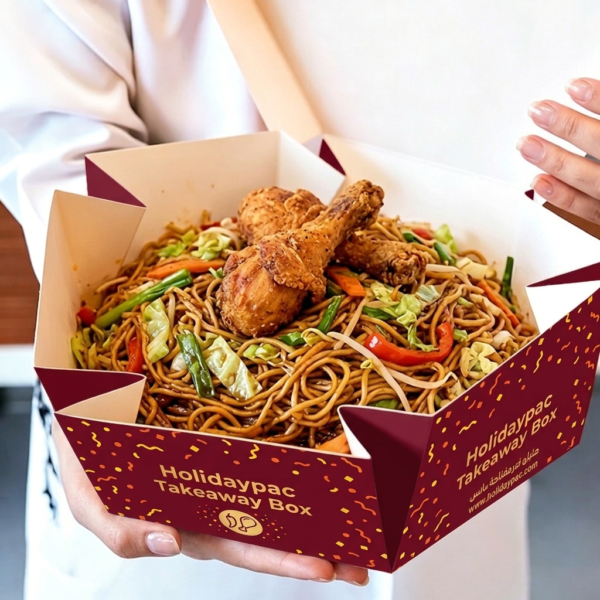
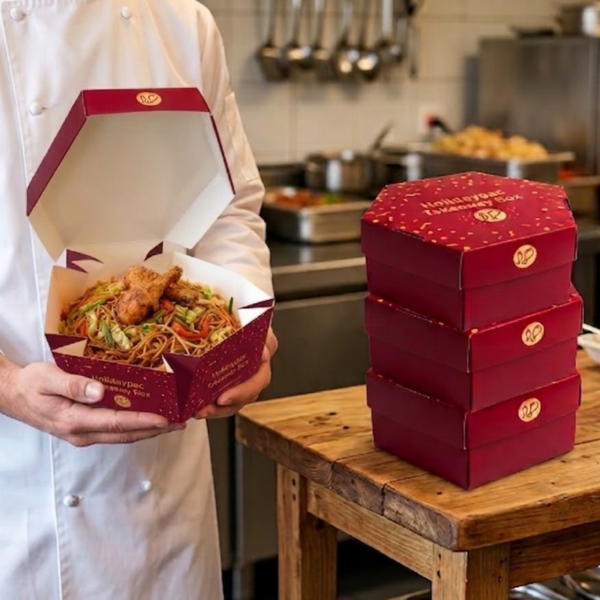
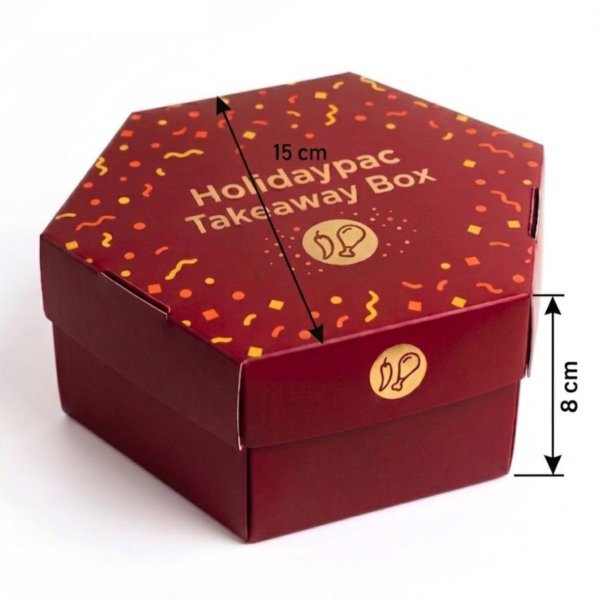
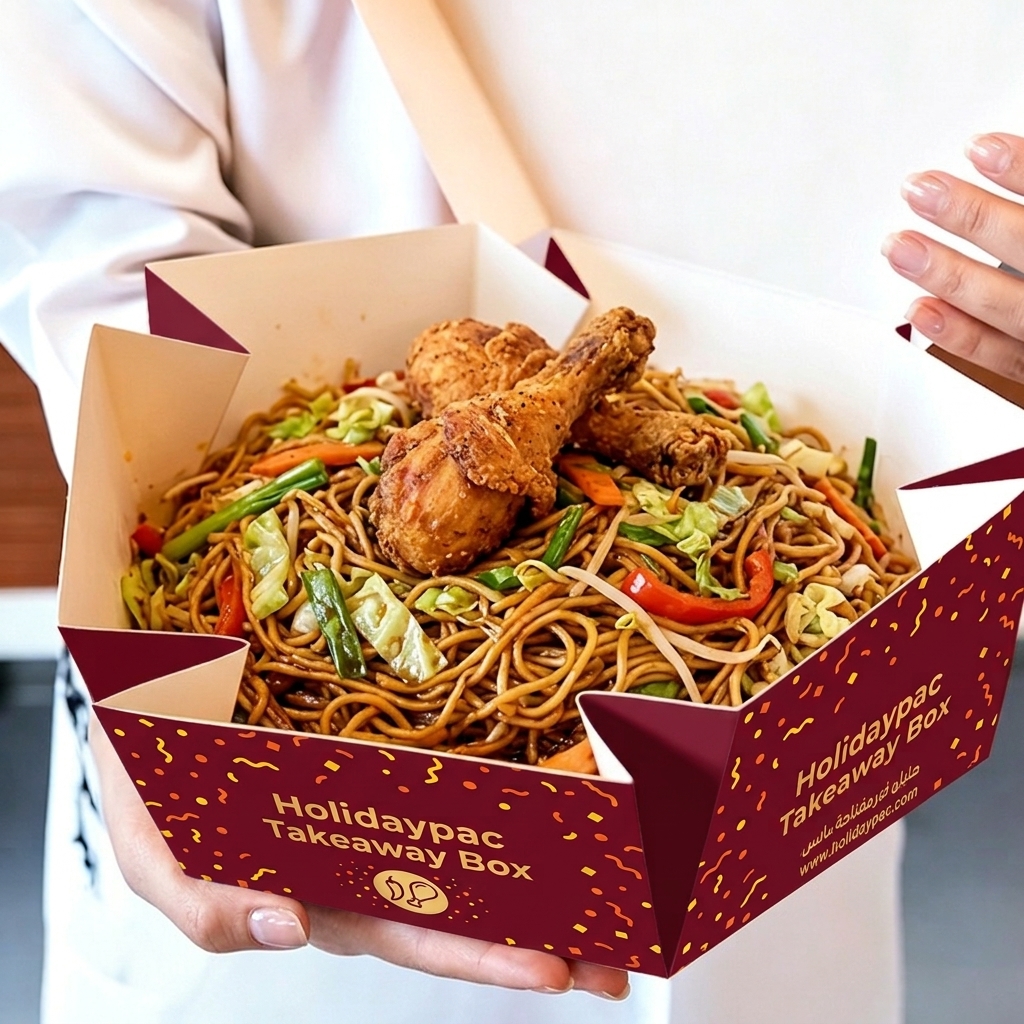
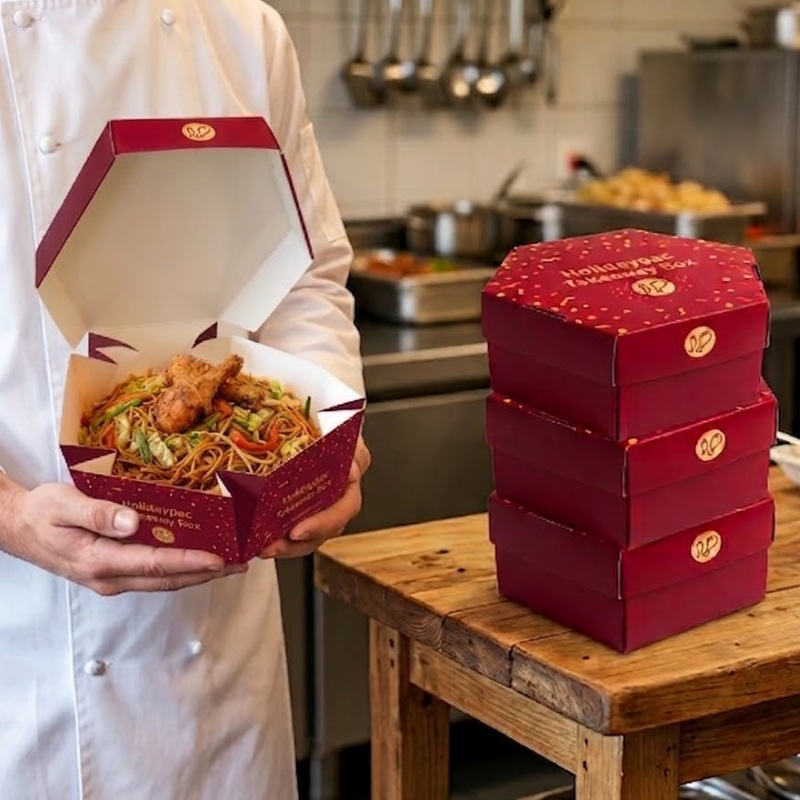
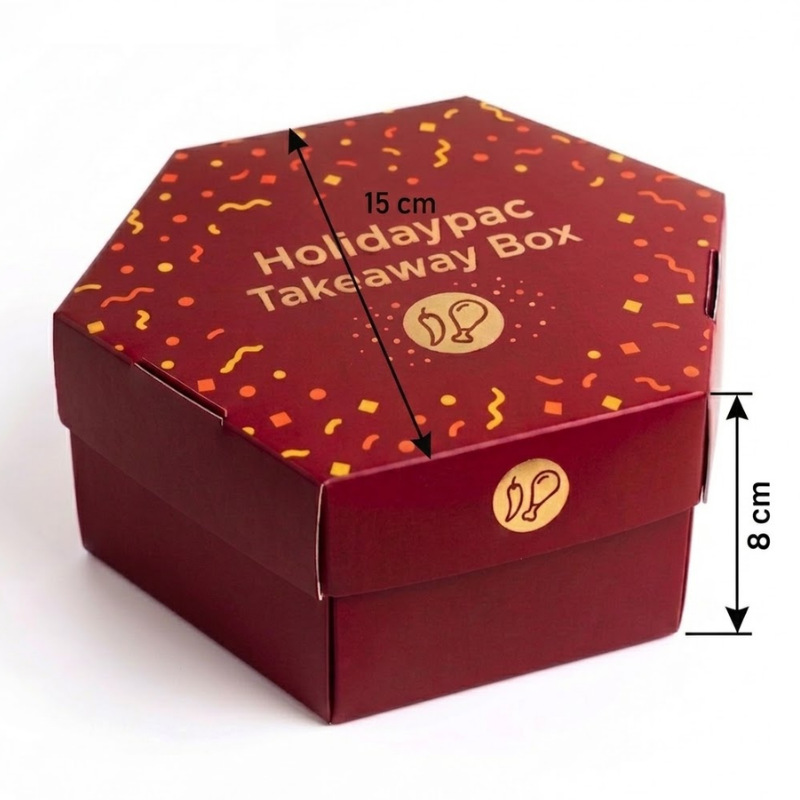
This custom hexagon takeaway box is designed for meals that should feel more considered than a standard square carton. The six-sided footprint gives the package a more gift-like silhouette while still keeping the service logic familiar for restaurants, catering teams and takeaway counters. The burgundy sample shown in the images is especially useful when a brand wants a deeper color story, a stronger table presence and a package that looks deliberate in both hand and camera.
Holidaypacfactory can adjust the footprint, wall height, locking flap depth, board grade and print layout around your real food portion. The format works well for noodles, salad, fried chicken, rice meals, tasting sets, desserts and mixed hot-and-cold selections. If you are also comparing a simpler foldable meal format, the internal Custom Takeaway Food Boxes for Salad, Noodle and Deli Meal Service page is a useful reference; if you need a window display version, the Custom Kraft Window Food Boxes for Bakery, Sushi and Dessert Takeaway page shows another direction for shelf appeal.
The aim is to keep the box practical at packing speed and still memorable when the customer opens it. The shape should feel neat from every angle, the lid should sit cleanly, and the flaps should help the meal stay centered during pickup, delivery and photo moments. That balance is what makes the hexagon style useful for premium casual dining, event catering and branded meal programs.
Related takeaway box ideas
8 product links with images
 Custom Insulated Takeaway Meal Boxes for Salad, Noodle and Fresh Hot Food Service
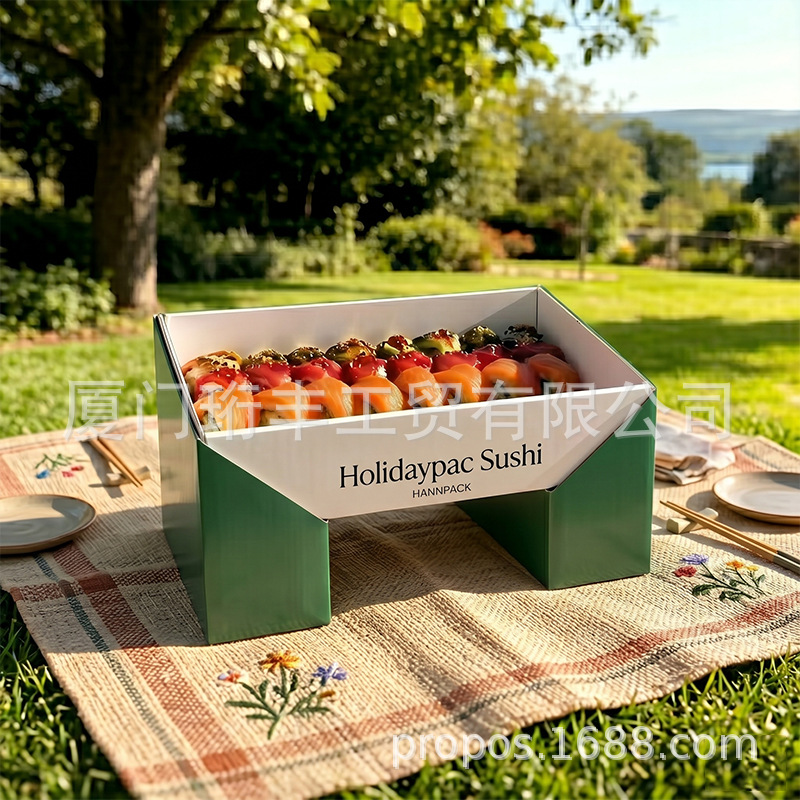 Custom Stand-Up Picnic Sushi Box
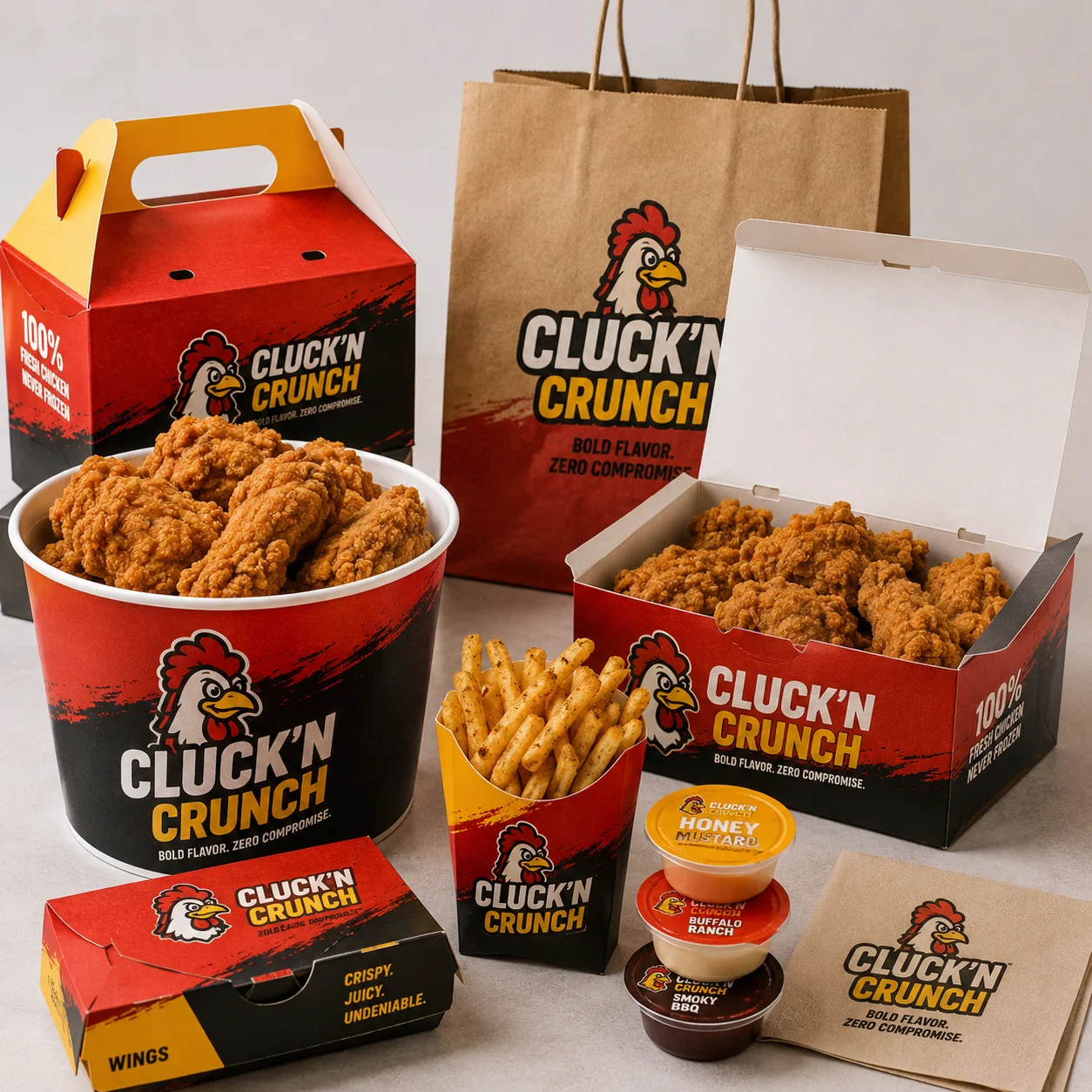 Custom Disposable Takeaway French Fries Paper Food Packaging Chicken Wing Burger Boxes
 Bakery Paper Packaging for Pastry Boxes, Cake Liners and Dessert Takeaway
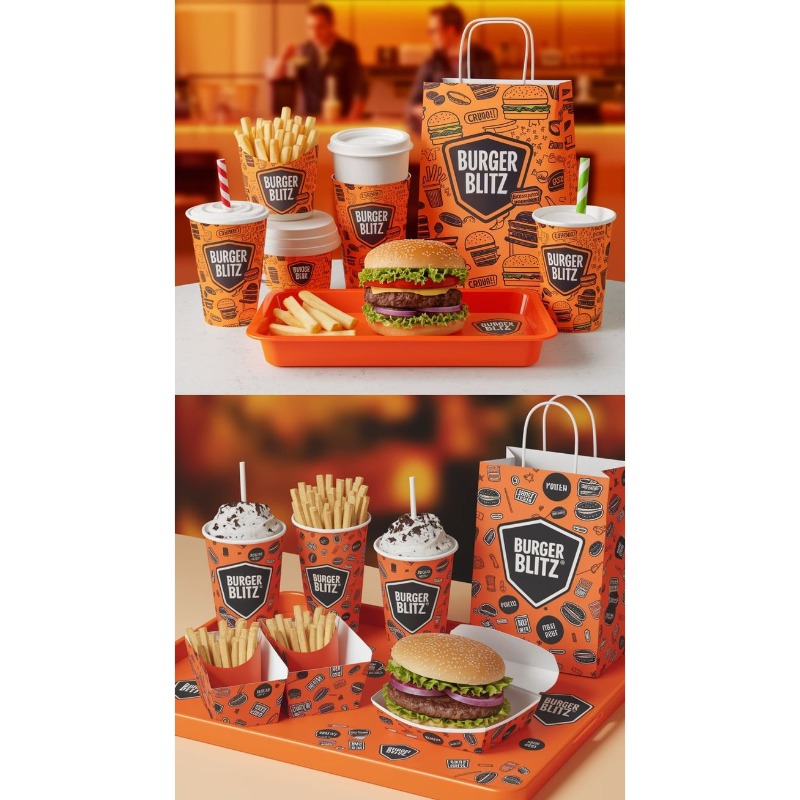 Custom Takeaway Food Boxes for Salad, Noodle and Deli Meal Service
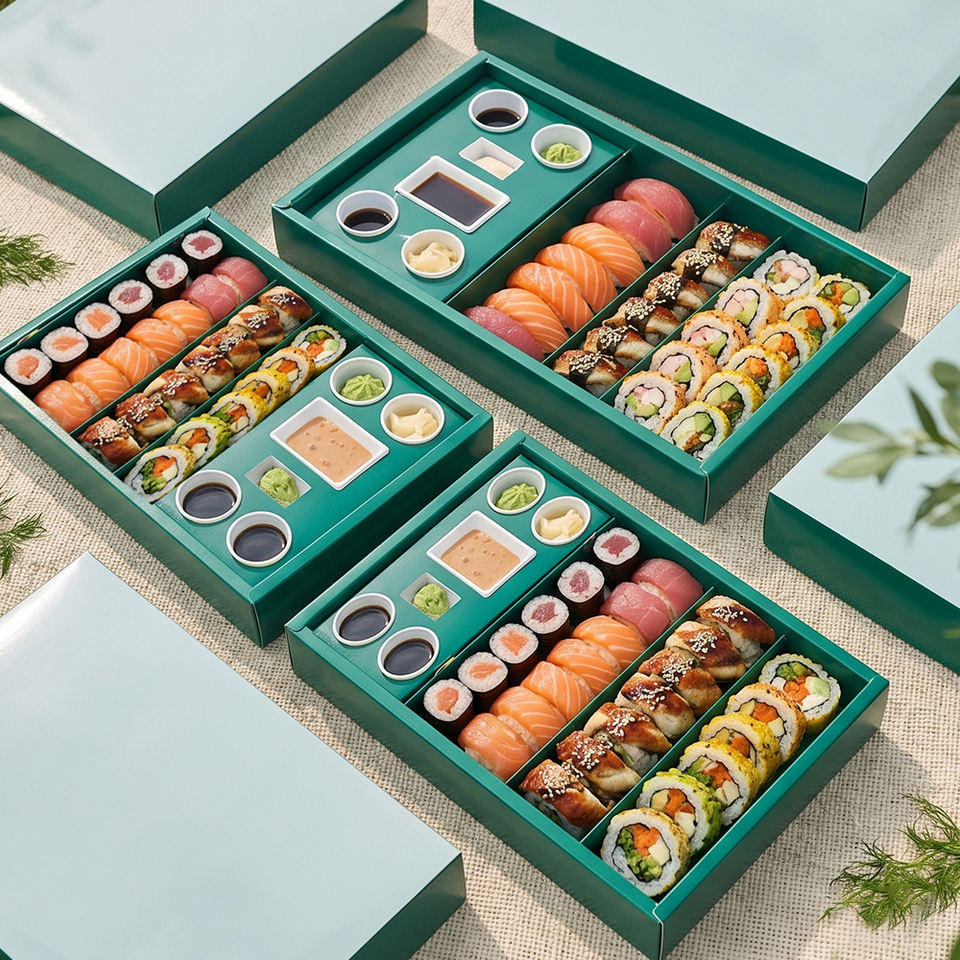 Custom Eco-Friendly Green Sushi Box with Built-In Sauce Cup for Japanese Takeaway
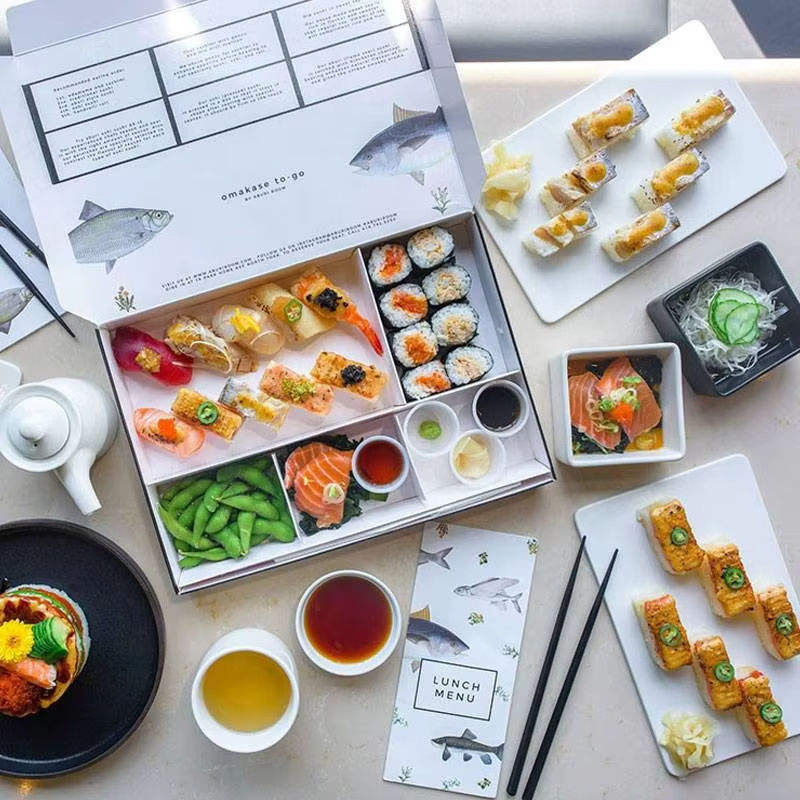 Custom Sushi, Bento and Deli Paper Boxes for Takeaway and Retail Meal Programs
 Custom Kraft Window Food Boxes for Bakery, Sushi and Dessert Takeaway
Six-sided structure
The hexagon geometry creates a different first impression without making the service harder. A six-sided box can feel more curated than a square carton, especially when the top panel is printed with a logo, seasonal artwork or a simple color field. That makes it appealing for restaurant groups that want a higher perceived value without moving to a gift box structure that slows the kitchen team down.
The shape also gives the customer a wider visual reveal when the lid opens. Instead of a narrow rectangular opening, the meal can be seen across several angled sides, which helps noodles, vegetables and protein read more attractively. For social media and takeaway photography, that wider reveal often makes the package feel more abundant.
The burgundy sample is a strong example of how a single color can carry the whole presentation. A deeper tone feels warmer than a light kraft carton and more complete than a blank white fold box. Because the outer surfaces are broad enough for print, the brand can keep the structure restrained while still making the package look intentional.
If your current menu already uses other takeaway formats, the hexagon box can sit beside them as the special-occasion option. That makes it easier to reserve this shape for premium meal sets, limited-time launches or higher-value SKUs while keeping the rest of the line simple and familiar.
Locking flap control
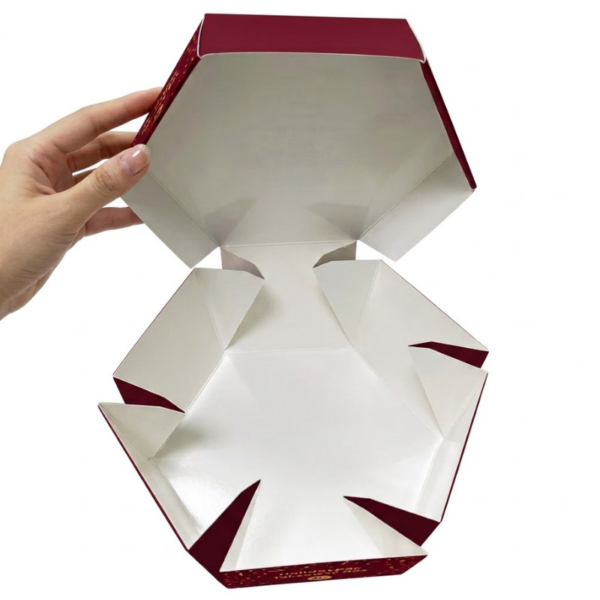
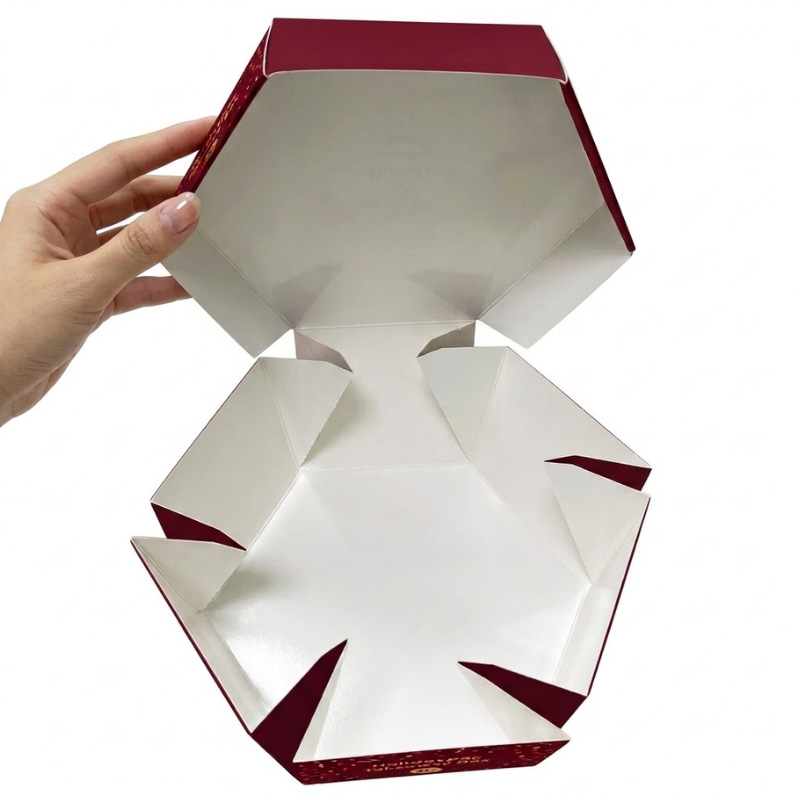
The folding locking flaps are doing more than closing the top. They help the side walls keep their shape, guide the stacking sequence and reduce the chance of the box opening too easily in transit. For a service team, that means the package can be loaded quickly while still feeling secure enough for delivery and carry-out handling.
On a practical level, the flap design should be reviewed together with the real meal height. A box that looks correct when empty can behave differently once noodles, sauces, steam and garnish are added. Holidaypacfactory can fine-tune the flap geometry so the top closes without forcing the contents and the walls do not puff outward after filling.
The locking action also matters for presentation. When the customer picks up the box, the top panel should feel flush and the side edges should stay clean. That makes the structure look more finished on the tray, in the delivery bag and in the hands of the end customer. The opening experience stays simple, but it feels more controlled.
If you are comparing this structure to other meal options, the Custom Insulated Takeaway Meal Boxes for Salad, Noodle and Fresh Hot Food Service page shows a more insulated direction, while the Custom Stand-Up Picnic Sushi Box page shows how a more upright meal box can work for compact service. The hexagon box sits between those ideas by offering a memorable shape with a straightforward fold path.
Menu fit
This shape is flexible enough for several food groups, but it works best when the menu has a clear portion plan. Noodle meals, rice sets, fried foods, salad bowls, snack mixes and dessert assortments all fit better when the interior height and footprint are mapped around the real serving scoop, not around a guessed size.
For hot food, the board choice and closure method matter just as much as the shape. The package should hold steam without feeling soft too quickly, and it should stay balanced when the customer carries it by hand. For chilled or mixed menus, the same structure can be tuned to feel clean, bright and premium without taking on the heavier look of a traditional clamshell.
The box can also support branded meal sets that include side dishes or sauces. If your menu needs a simpler family format, the Custom Takeaway Food Boxes for Salad, Noodle and Deli Meal Service page is useful for comparing a more conventional service box, while the Custom Insulated Takeaway Meal Boxes for Salad, Noodle and Fresh Hot Food Service page is better for warmer delivery settings.
From a buyer’s point of view, the real value of the hexagon shape is not novelty alone. It is the way the package helps the meal look organized, slightly special and easy to open. That makes it a strong choice for lunch programs, airline-style meal packs, event catering and restaurant branding where the outer shape should feel as thoughtful as the food inside.
Material and finish
Material selection changes how the hexagon box feels in the hand. A sturdier paperboard gives the walls more confidence, keeps the folds crisp and makes the locking points work more cleanly. When the box is filled and lifted, that stiffness helps the package feel like a designed object rather than a disposable shell.
Printing can stay simple or become more expressive depending on the brand. A single color field with a logo can look elegant and premium. A full-surface print can create more energy for retail sales or promotional meal launches. Light foil or embossing can be added when the package is meant to feel closer to a gift item, but the finish should not fight with the food image.
The sample images show how the burgundy tone and the gold print already give the box a richer mood. That is useful for brands that want a warmer delivery story. If your range includes shelf display formats as well, the Custom Kraft Window Food Boxes for Bakery, Sushi and Dessert Takeaway page shows a clear retail opening, while the Custom Eco-Friendly Green Sushi Box with Built-In Sauce Cup for Japanese Takeaway page demonstrates a different color and content style for comparison.
Holidaypacfactory can also help with coating choices, logo scale, inside printing and finishing balance. The most successful version is usually the one that looks confident from a distance and still feels clean when the customer sees the inner walls, fold tabs and closing edges up close.
Flat-pack planning
Flat-pack planning is important because takeaway packaging is often shipped in larger quantities and assembled at the point of use. A well designed hexagon box should stack efficiently in cartons, travel with a low risk of corner damage and still fold quickly when the kitchen team needs to move fast.
The flat structure also helps the sampling stage. Before a full order is approved, the team can check how the walls rise, whether the locking points sit properly and whether the finished box closes without scuffing the printed surfaces. That test is especially useful when the package is being used for hot meals or mixed portion sizes.
Wholesale buyers should also think about bag fit, carton fit and storage count. A box that looks great on its own can still create waste if the flat sheet size is awkward for the packing table or if the closed footprint is too wide for the delivery bag. Holidaypacfactory can tune the structure around those practical limits so the program stays efficient.
The hexagon format works well in a packaging family. It can sit beside the Custom Sushi, Bento and Deli Paper Boxes for Takeaway and Retail Meal Programs page for a broader meal range, and it can also be paired with the Bakery Paper Packaging for Pastry Boxes, Cake Liners and Dessert Takeaway page when a brand needs a second style for sweet items. That kind of family planning makes the whole range easier to order and easier to recognize.
Order planning guide
Start with portion count and food height. List the meal pieces, sauce cups, garnish points and any wrappers or liners that sit above the base food. A hexagon takeaway box should be drawn around the real packed height, not just the raw food size, because every extra layer changes the way the lid closes.
Decide whether the top should close tightly or feel slightly looser for a softer opening motion. Some brands want the customer to lift the top and see a very controlled reveal. Others want the lid to open with less resistance so the meal feels simple and casual. The flap angles can be adjusted to fit either direction.
Choose the color story early. A burgundy or maroon base feels warmer and more premium, while white or kraft can feel lighter and more service-driven. If the brand uses seasonal artwork, leave enough open space for the print to breathe so the logo is not fighting the geometry of the six-sided shape.
Review the food category before choosing board thickness. Hot noodle meals, fried chicken and rice sets usually need a more secure body, while dessert boxes and light lunch portions may only need a lighter service structure. The material should always match the way the meal is handled from the kitchen to the table.
Check how the box will move through the packing line. If the team loads dozens of boxes per hour, the locking flaps should fold naturally and the side walls should not require extra pressure. A smooth assembly sequence matters as much as the visual look, because slow packing increases cost and can also damage the surface finish.
Think about the customer's hand when the box is carried. A takeaway box should feel stable enough to support the food but not so bulky that it becomes awkward in a paper bag or on the way to a car. The hexagon shape can help by making the box feel compact while still offering a generous top view.
Use the sample stage to test printed edges, fold lines and the visual balance of the top panel. A strong logo should be readable at a glance. If the artwork is too crowded, the shape will lose some of its premium simplicity. The best sample usually has one clear visual point and a calm supporting surface.
Consider whether the box needs to be reused. Some restaurant buyers want packaging that can go straight to disposal after service, while others expect the container to feel too nice to throw away immediately. If re-use is part of the value story, ask for a sturdier wrap and a cleaner interior finish.
Plan the outer shipping format at the same time as the box structure. Wholesale packaging works best when the flat sheets stack cleanly, the carton size is rational and the final build does not waste pallet space. A box that is easy to pack at the factory is also easier to manage at the restaurant.
If the menu includes hot and cold items together, the closure and board choice should anticipate condensation. A small amount of steam can change how the carton feels after a few minutes. That is why the sample should be checked after the food has sat for a short period, not only the instant it is packed.
Keep the logo placement simple if the brand is new. A centered mark, a short line of copy and one supporting color often feel stronger than a packed surface. Once the buyer is comfortable with the shape, you can expand into more detailed artwork, special finishes or seasonal editions.
For multi-SKU buyers, use the same structural language across the range. A hexagon box can become the premium lunch option while a straight fold carton handles daily service. That keeps the brand coherent while letting each package serve a different price level and food style.
Ask for a sample with real food whenever possible. Paper dummies are useful, but the final judgment should be made with the actual portion, sauce cup and garnish load inside the box. That is the only way to know whether the lid, flaps and walls work together as intended.
If you need the packaging to support a retail display, add extra attention to the top surface and side faces. The six panels can carry a visual rhythm that is useful on shelf, but the artwork should still be light enough that the box does not look busy from a distance.
Before approval, walk through the opening sequence slowly. Lift the top, notice the side behavior, check whether the interior stays centered and then close it again. That simple physical test often reveals more than a flat drawing or a screen mockup can show.
When the quote is ready, send the target quantity, destination market, size target, food category and any finish preference. If you already know the pack count per carton or the kind of paper bag the box must fit into, include that too. A better brief usually means a better first sample.
For restaurants with recurring lunch traffic, the most useful version is often the one that can be loaded quickly without creating decision fatigue for the kitchen team. A hexagon box should not force the packer to think about how it closes every time. The hinge lines, locking tabs and side folds should be obvious enough that the same motion works again and again, even in a busy rush period. That kind of repeatable behavior matters more than novelty once the packaging moves into daily service.
If the box will be seen by office staff, hotel guests or event attendees, the outer color should be checked in real lighting, not only on a design screen. Burgundy can read rich in one venue and darker in another. White can feel crisp in a bright restaurant but washed out in a low-light room. A sample should be looked at near windows, under warm lamps and on top of the actual serving counter so the brand understands how the surface changes in different conditions.
The internal space should also be considered from the point of view of sauces and moisture. A great takeaway box can still fail if a wet garnish slides into the closure path or if a hot item creates steam that softens the folds before the meal is handed to the customer. Holidaypacfactory can help you decide whether the interior should hold a separate cup, a liner, a divider or a small dead zone that protects the closure from splashes.
For brands that sell across multiple channels, the hexagon box can become a signature premium format while simpler cartons handle high-volume everyday sales. That arrangement keeps the range flexible. Customers who buy the premium meal immediately see that the shape is different, while regular lunch buyers still get a straightforward box that is easy to stack, store and carry. The packaging family then works as a set instead of a pile of unrelated cartons.
Sampling should also check the closure after a brief wait. A box that closes perfectly at the filling table can behave differently after the food has rested for five or ten minutes. Steam, condensation and minor settling can change the way the lid presses on the top layer. This is why a good sample review includes both immediate closure and delayed closure, especially for hot meals and mixed food loads.
When artwork is being prepared, leave the shape some breathing room. A hexagon box already has a strong outline, so the print does not need to fight the geometry. Clean typography, a centered mark and one supporting accent often work better than a dense illustration. If the brand wants to use more artwork later, it can move to a seasonal sleeve or a special edition without changing the core structure of the box.
If the product is going to be photographed for online sales, think about how the angles look when the lid is partly open. A partially open hexagon can create a more generous shape in the frame than a square carton. That is useful for marketplace listings, social posts and promotional pages where the package itself is part of the selling story. The box should look good closed, opening, half-open and fully open so the visuals stay useful across channels.
If you are quoting this style for a chain account, keep the measurement sheet simple and readable. Decision makers often want the pack size, material, print areas and order quantity in one glance. A clear brief speeds up approvals and reduces avoidable back and forth during the sample stage.
For repeat programs, ask the factory to note the exact fold sequence, material grade and finishing method so the next reorder stays consistent. A small packaging family becomes much easier to manage when each version follows the same logic, the same language and the same assembly path.
Product specifications
| Product type | Custom hexagon takeaway box with folding locking flaps |
|---|---|
| Structure | Six-sided folding carton with lockable top closure and flat-pack supply |
| Use case | Noodle meals, salad portions, rice bowls, fried foods, dessert sets and premium takeaway programs |
| Material options | Food-service paperboard, kraft board, white card and custom printed wraps |
| Finish options | Matte, gloss, soft-touch feel, spot color, simple foil accents and logo printing |
| Printing | Custom artwork, brand logo, inside message, seasonal color, and simple or full-surface graphics |
| Packing support | Flat pack shipping, carton planning, sample review and wholesale production planning |
| Best buyer fit | Restaurants, catering teams, meal delivery programs and premium food gifting programs |
Frequently asked questions
Yes. The footprint, wall height, closure width and overall capacity can all be adjusted around your real meal portion and packing style.
Yes. The outside panels, top surface and inside message area can all be customized with your artwork and brand palette.
It can be planned for hot food, but the final board choice and closure fit should be matched to the temperature, steam level and serving time of your menu.
No. The box is designed to fold by hand at the packing table, which helps the team keep the service process simple and efficient.
Yes. The shape works especially well for seasonal launches, premium lunch programs, event catering and branded meal bundles that need a more memorable outline.
Send the target size, food type, piece count, artwork direction, quantity and destination market. If you already have a preferred print tone or bag size, include that too.
Start your custom project
Share your target size, food portion, artwork direction and quantity. Holidaypacfactory can help plan the paperboard, fold line geometry, print layout and carton packing so the final box feels clean on the counter and reliable in delivery.
If you are building a broader takeaway family, this hexagon style can sit alongside the Custom Stand-Up Picnic Sushi Box, the Custom Takeaway Food Boxes for Salad, Noodle and Deli Meal Service and the Custom Sushi, Bento and Deli Paper Boxes for Takeaway and Retail Meal Programs so that your menu keeps a consistent packaging language across different serving moods.
 Cassie LamFounder, HolidayPac · Online now
Packaging specialists for custom boxes, displays, bags and seasonal programs.
Leave your request anytime. Our sales team will reply with pricing, samples and production details.
Leave your request anytime. Our sales team will reply with pricing, samples and production details.
Tell us what you're packaging and we'll ship a physical sample plus a free 3D mockup within 24 hours — no cost, no obligation.
We've received your inquiry and our team will get back to you within 24 hours.